


Imagine walking through a historic city, pointing your device at a crumbling ruin, and watching it rebuild itself before your eyes in glorious, animated detail. Picture a surgeon seeing the precise location of a tumor superimposed directly onto a patient’s body during an operation, or a mechanic seeing animated repair instructions overlaid on a complex engine block. This is not a glimpse into a far-off future; this is the promise and the present reality of augmented reality. It’s a technology that feels like magic, a seamless blend of the world we know and a digital dimension of infinite possibility, and it’s poised to change everything.
A Foundational Definition: More Than Just a Filter
At its core, how would you describe augmented reality in the most fundamental terms? It is a technology that superimposes a computer-generated layer of information—be it images, sounds, text, or haptic feedback—onto our view of the physical world in real-time. Unlike Virtual Reality (VR), which seeks to replace the real world with a fully digital one, AR aims to augment and enhance our reality by adding a contextual, interactive digital stratum. It doesn't remove you from your environment; instead, it makes your environment richer, more informative, and more interactive.
The magic of AR lies in its three key components: a combination of the real and virtual worlds, real-time interaction, and accurate 3D registration of virtual and real objects. This means the digital content doesn’t just float arbitrarily; it is anchored to and interacts with the physical space around you. A virtual dinosaur can appear to walk out from behind your sofa, and a navigation arrow can seem painted onto the road ahead. This seamless integration is what makes the experience so powerful and, at times, uncanny.
The Technological Symphony: How AR Works Its Magic
Describing what AR does is one thing, but understanding how it functions reveals the incredible engineering behind the illusion. AR is a symphony of hardware and software working in perfect harmony.
Sensors and Cameras: The Eyes of the System
First, an AR device must understand the world it's looking at. This is achieved through a suite of sensors. Cameras capture the live video feed of the user’s surroundings. Depth sensors, like LiDAR (Light Detection and Ranging), measure the distance to objects, creating a detailed 3D map of the environment. This spatial mapping allows the digital content to understand the geometry of the room—where the floors, walls, and tables are. Accelerometers and gyroscopes track the device's (and thus the user's) precise orientation and movement in space, ensuring the digital overlay doesn't jitter or drift away from its intended position.
Processing: The Brain Behind the Scenes
All this sensor data is fed into a processing unit, which acts as the brain. Here, sophisticated algorithms and computer vision software analyze the incoming data. They identify flat surfaces, recognize objects (is that a table or a chair?), and even track specific images or markers placed in the real world. This processing happens in milliseconds, a necessity for maintaining the crucial real-time aspect of the experience. The increasing power of mobile processors and dedicated AR chips has been a primary driver in moving AR from clunky prototypes to sleek, accessible experiences.
Projection and Display: Painting the Digital Layer
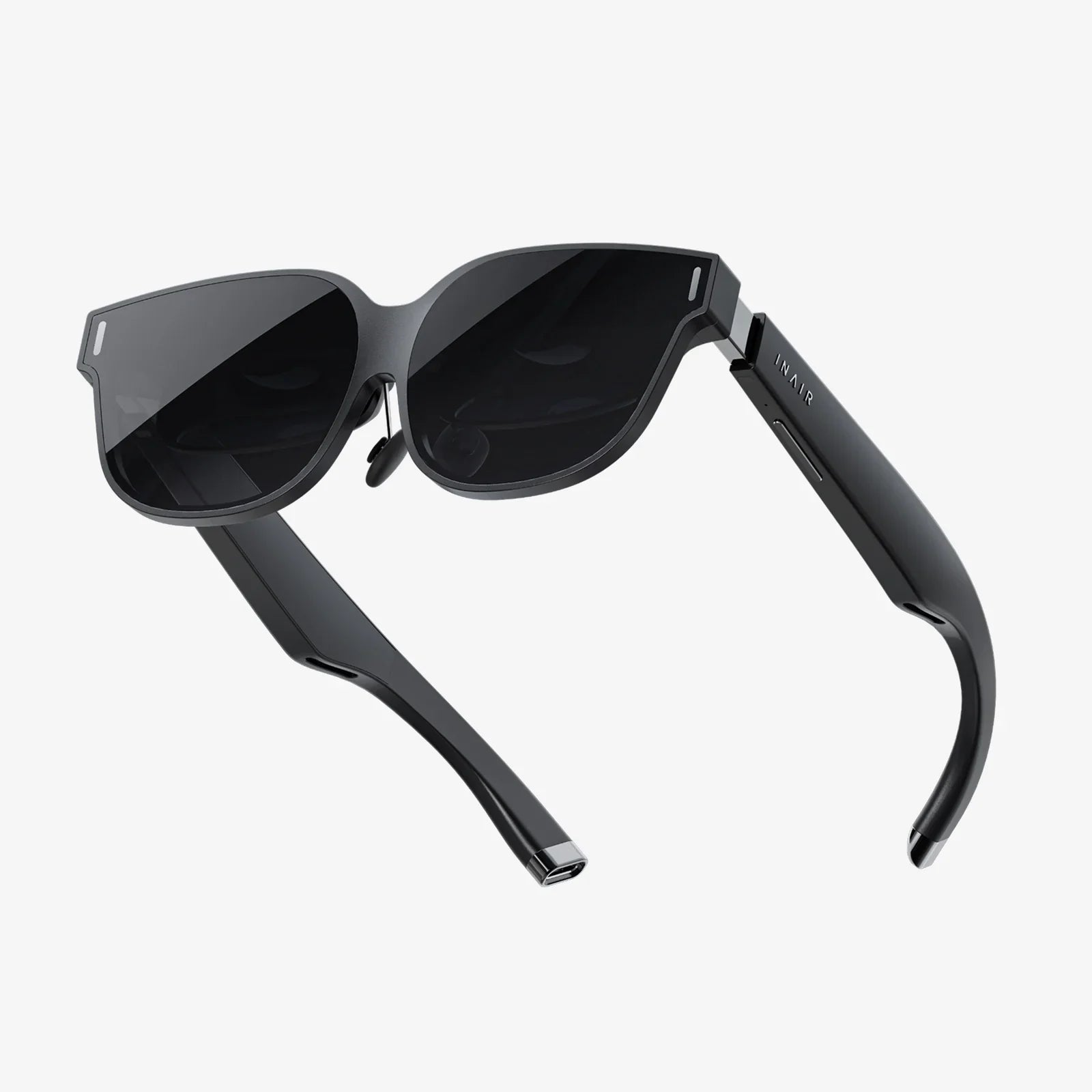
Finally, the system must present the composite image to the user. This is done through various display technologies. The most common method is through the screen of a smartphone or tablet, which acts as a window into the augmented world. More advanced systems use head-mounted displays like smart glasses. These can employ either optical see-through displays, where digital light is projected onto transparent lenses, or video see-through, where cameras capture the real world and a screen displays the combined reality and virtual imagery. Each method has its trade-offs in terms of immersion, field of view, and cost.
Beyond the Hype: The Multifaceted Applications of AR
While playful filters and games brought AR to the masses, its true value lies in its profound utility across a vast spectrum of professional and personal domains.
Revolutionizing Retail and E-Commerce
AR is solving one of the oldest problems of online shopping: the inability to try before you buy. Customers can now use their phones to see how a new sofa would look in their living room, accurately scaled to the inch. They can virtually try on glasses, makeup, or even clothes, dramatically reducing purchase uncertainty and return rates. For furniture retailers, this has become an indispensable tool, allowing customers to confidently visualize products in their own space.
Transforming Education and Training
Textbooks become living, breathing entities with AR. Students can explore a human heart in 3D, watching it pump and rotate it to understand its structure. History lessons can be brought to life with animated historical figures and events unfolding on the desk. In corporate and industrial training, the implications are staggering. Mechanics can learn to repair complex machinery with step-by-step instructions overlaid on the actual equipment. Medical students can practice procedures on detailed anatomical models without needing a physical cadaver. This hands-on, visual learning dramatically improves knowledge retention and skill acquisition.
Enhancing Industrial and Field Work
In fields like manufacturing, logistics, and maintenance, AR is a powerful tool for efficiency and accuracy. Warehouse workers can use AR glasses to see the most efficient picking routes and instantly identify items, speeding up fulfillment. Engineers on a factory floor can see schematics and diagnostic data overlaid on the machinery they are servicing, freeing their hands and allowing for faster, safer repairs. Architects and construction workers can visualize building plans on the actual construction site, identifying potential issues before they become costly problems.
Advancing Healthcare
In healthcare, AR is moving from a novelty to a life-saving technology. Surgeons can use AR for pre-operative planning, visualizing a patient’s anatomy in 3D before making an incision. During surgery, AR can project critical information, like the location of blood vessels or tumors, directly onto the surgeon’s field of view, increasing precision and safety. It can also aid in complex procedures like vein detection, making it easier for nurses to draw blood, and in physical therapy, providing patients with interactive guides for their exercises.
The Challenges on the Horizon: The Path to Ubiquity
Despite its immense potential, AR is not without significant hurdles that must be overcome to achieve true mainstream adoption.
The Hardware Conundrum
For AR to become as ubiquitous as the smartphone, the hardware must become smaller, lighter, more powerful, and more socially acceptable. While smartphone-based AR is accessible, it is a compromised experience, requiring users to hold up a device. Smart glasses are the future, but current models often struggle with a limited field of view, short battery life, high cost, and a design that many are not yet comfortable wearing in public. The holy grail is a pair of glasses that are indistinguishable from regular eyewear but pack the computational power of a supercomputer.
The Digital Divide and Privacy Concerns
As with any advanced technology, there is a risk of a new digital divide, where access to powerful AR tools and the skills to use them become a marker of socioeconomic privilege. Furthermore, AR’s need to constantly scan and understand our environments raises profound privacy questions. Who has access to the continuous video feed of our lives? How is that spatial data stored and used? The concept of "augmented surveillance" is a legitimate concern that requires robust ethical frameworks and transparent privacy policies from developers.
The Content Chasm
Hardware is useless without compelling software and content. We are still in the early days of discovering the true language and grammar of AR storytelling and application design. Creating high-quality, persistent AR experiences that are useful, engaging, and contextually aware is a complex and expensive challenge. Building a thriving ecosystem for developers and creators is essential to filling the AR world with meaningful content that goes beyond gimmicks.
A Glimpse into the Future: The AR World to Come
Looking ahead, the trajectory of AR points toward a world where the technology becomes an invisible, indispensable part of our daily fabric. We are moving toward always-on, contextual computing where information is presented to us exactly when and where we need it, without us ever having to look down at a screen. Your AR glasses could translate foreign street signs in real-time, display the name and latest project of a colleague you meet at a conference, or guide you through a recipe with instructions floating above your mixing bowls.
The concept of the spatial web or metaverse is deeply intertwined with this future. This is a vision of the internet not as something we look at on a page, but as a layer of information and experience integrated into our physical reality. Digital art could be permanently installed in a public park, viewable only through AR. Social interactions could be enhanced with shared digital objects and avatars, allowing for new forms of remote collaboration and connection. The line between being "online" and "offline" will blur into irrelevance.
Ultimately, to describe augmented reality is to describe a new lens through which we will perceive and interact with our world. It is a bridge between human intuition and digital intelligence, between the tangible past and the infinite possibilities of the future. It’s a tool for enhancing human capability, enriching our understanding, and adding a layer of wonder to the mundane. The screen that has dominated our digital lives for decades is beginning to fade away, and in its place, the entire world is becoming our interface. The question is no longer what augmented reality is, but what we will choose to make of it.
The potential is staggering—a world where digital helpers guide our hands during complex tasks, where historical ghosts walk beside us on city streets, and where learning is a deeply immersive, interactive adventure. This isn't just a new type of technology; it's the beginning of a new human sensory experience, and it's arriving faster than we think. The next time you look around your room, just imagine what could be there, waiting to be seen.
Share:
AR VR Technology Overview: A Deep Dive Into Our Digital Future
AR VR Market Trends: The Next Digital Revolution Is Already Here