


- by wangfred
Human Computer Interaction Devices: The Silent Revolution Reshaping Our Digital Lives
- by wangfred
Imagine a world where your computer understands a subtle gesture, a fleeting glance, or the tone of your voice as effortlessly as another person. This isn't the distant future; it's the unfolding reality, powered by an extraordinary evolution in the tools we use to communicate with our machines. The silent revolution of human computer interaction devices is reshaping every facet of our existence, from how we work and create to how we connect and play. The humble mouse and keyboard were just the beginning; we are now on a thrilling journey towards a truly seamless fusion of human intent and digital action.
The story of human computer interaction devices is a chronicle of our relentless pursuit of a more intuitive and efficient dialogue with technology. In the earliest days of computing, this dialogue was a complex, one-sided affair. Users communicated with room-sized behemoths using punched cards and paper tape, a process that was slow, cumbersome, and required expert knowledge. The command-line interface (CLI) that followed, while a monumental leap forward in software terms, still relied on the keyboard as the sole input device, demanding users learn a specific syntactic language to issue commands.
The paradigm shift arrived with the development of the graphical user interface (GUI). The GUI required a new kind of device—one that could manipulate objects on a screen directly. This need gave birth to the computer mouse, arguably the most influential HCI device of the late 20th century. Paired with the keyboard, it established the dominant paradigm for decades. The keyboard itself evolved from a mere typewriter analogue into a sophisticated input tool, with function keys, modifiers, and eventually programmable keys becoming standard, allowing for complex commands and shortcuts that accelerated digital workflows.
If the mouse made computing accessible, touchscreens made it intimate and portable. The proliferation of smartphones and tablets marked a seismic shift, moving the primary interface from a separate peripheral directly onto the display itself. Multi-touch technology transformed our fingers into the most natural pointing devices imaginable, enabling gestures like pinch-to-zoom, swipe, and tap that felt instinctive. This tactile revolution democratized computing, making powerful devices usable by toddlers and seniors alike without a manual.
This mobility was further enhanced by a suite of other sensors and inputs. Accelerometers and gyroscopes allowed devices to understand their orientation and movement, enabling new forms of control in games and applications. High-quality microphones, once primarily for voice calls, became central to interaction through digital assistants. Front-facing cameras ceased to be just for video calls and became sophisticated sensors for facial recognition, enabling biometric authentication and animated avatars. This period saw the device ecosystem explode from a simple keyboard-and-mouse duo to a multifaceted array of touch, motion, and voice inputs, all packed into a single, handheld computer.
As powerful as touchscreens are, they lack a crucial element of real-world interaction: physical feedback. This limitation sparked innovation in haptic technology, which simulates the sense of touch through vibrations, forces, and motions. Advanced haptic engines in controllers and mobile devices can simulate the click of a dial, the texture of a surface, or the recoil of a trigger, adding a rich, tactile layer to digital experiences. This feedback is crucial for immersion and for creating interfaces that can be used without looking at a screen, such as in automotive controls.
Pushing this concept even further are tangible user interfaces (TUIs). TUIs bridge the gap between the physical and digital worlds by giving a physical form to digital information. Imagine rotating a physical knob to adjust a virtual parameter in a music studio application or moving building blocks on a table to design a structure in 3D modeling software. These devices move beyond abstract commands to leverage our innate human dexterity and understanding of physical objects, making complex digital manipulation more intuitive.
Speech is our most fundamental form of communication, and its integration as an HCI device has been a long-standing goal. Early speech-to-text systems were clumsy and required trained, stilted speech. Today, powered by vast datasets and sophisticated neural networks, voice recognition is remarkably accurate and natural. Microphones have become the key hardware enabling this, evolving from simple recorders to advanced arrays capable of beamforming and noise cancellation to isolate a user's voice in a noisy room.
This has given rise to the always-listening digital assistant, a paradigm where the interaction device is not something you hold, but an ambient intelligence you speak to. This shifts HCI from a deliberate, engaged activity to a passive, background one. We now ask questions, set reminders, and control our smart homes through simple voice commands, making technology feel less like a tool and more like an invisible butler. The microphone, in this context, has become a perpetually open channel for human-computer dialogue.
The webcam's journey from a novelty for video chats to a core HCI device is a testament to software's ability to redefine hardware. Computer vision algorithms now allow cameras to track user movement, interpret gestures, and understand the environment. This enables gesture control, where a wave of a hand can advance a presentation or control a media player, a feature increasingly common in virtual reality and automotive infotainment systems.
More profoundly, depth-sensing cameras, like those used in structured light or time-of-flight systems, can create a real-time 3D map of their surroundings. This technology is the bedrock of modern motion capture systems and a crucial sensor for augmented reality, allowing digital objects to interact convincingly with the physical world. Furthermore, eye-tracking technology uses cameras to monitor where a user is looking on a screen. This provides incredibly rich data that can be used for everything from adaptive user interfaces that change based on your gaze to new forms of accessibility control for individuals with limited mobility.
The most personal evolution of HCI devices is their migration onto our bodies. Wearables represent the ultimate goal of seamless, ambient computing. Smartwatches and fitness trackers act as secondary, glanceable interfaces to our digital lives, filtering notifications and providing information without requiring us to unlock a phone. Their value as HCI devices is amplified by their sensors: optical heart rate monitors, bioimpedance sensors, and increasingly, electrocardiogram (ECG) capabilities. They are turning our own physiology into an input, using data about our body to provide feedback and context.
At the cutting edge are brain-computer interfaces (BCIs) and electromyography (EMG) devices. While still primarily in research and niche medical applications, BCIs aim to translate brain signals directly into digital commands, offering the potential for control through pure thought. More immediately viable are EMG bands that read the electrical signals from neuron firings in your forearm muscles. These devices can detect intended finger and hand gestures even before you move, potentially allowing for subtle, invisible control of devices—a silent whisper of command to your machine.
The explosion of HCI modalities brings with it a profound responsibility. Ergonomics is no longer just about a comfortable mouse shape; it must now consider the physical strain of holding a tablet, the ocular fatigue of VR headsets, and the long-term effects of repetitive gestures on touchscreens. Designing devices that are comfortable and sustainable for long-term use is a critical challenge.
Perhaps the most important role of modern HCI devices is in accessibility. Alternative input devices have transformed lives. Sip-and-puff switches, foot pedals, eye-trackers, and custom-designed controllers enable individuals with limited mobility to fully engage with computing and gaming. Voice control and screen readers provide access for those with visual impairments. Every advance in mainstream HCI technology creates new opportunities to build adaptive and assistive tools, making the digital world inclusive for all.
This power also introduces serious ethical considerations. Always-on microphones and cameras raise legitimate privacy concerns. The biometric data collected by wearables is deeply personal and must be protected. There is a risk of a digital divide where those who cannot afford or adapt to new interaction paradigms are left behind. Furthermore, as devices become more intuitive and persuasive, the potential for manipulation and addictive design increases. Navigating these issues is as crucial as the technological innovation itself.
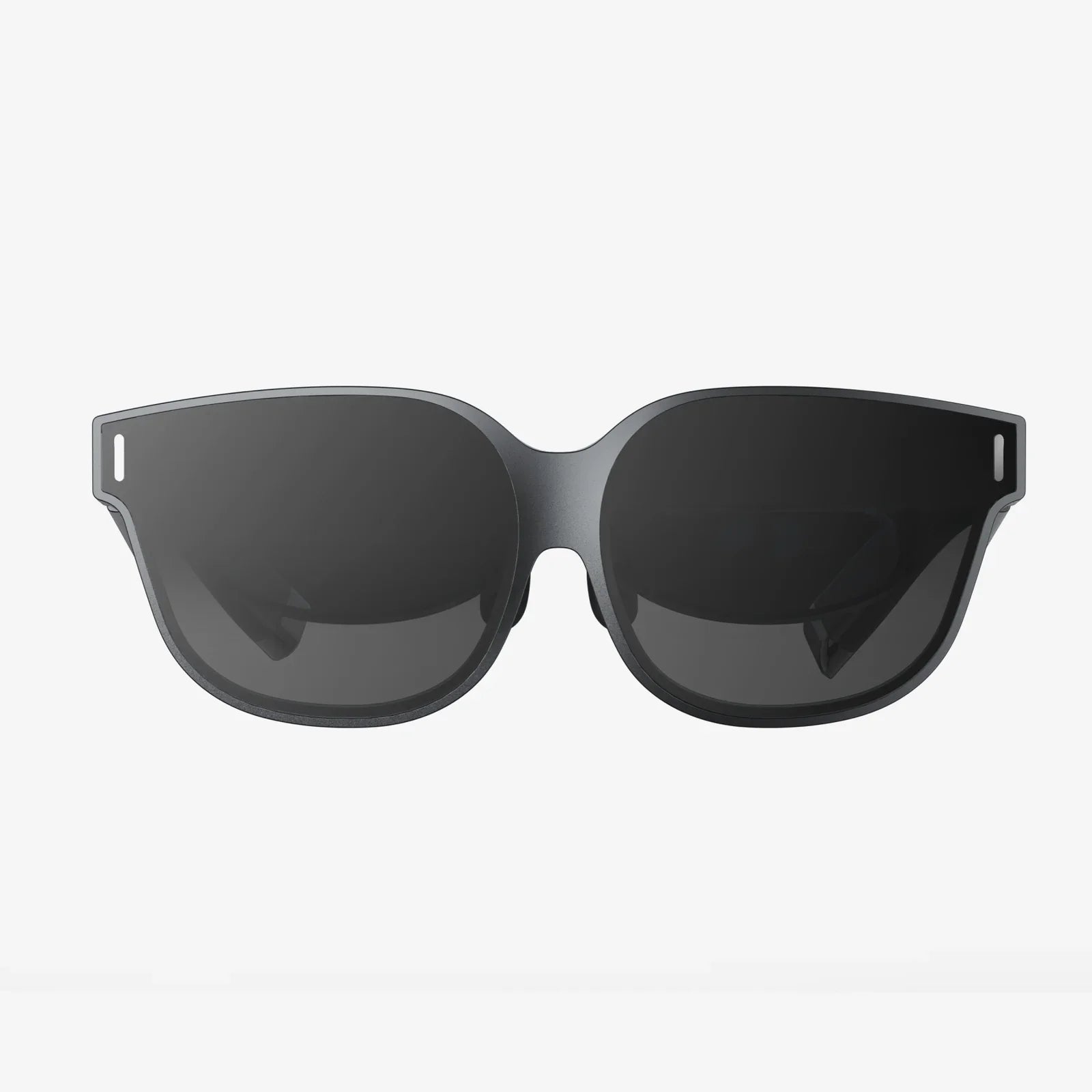
The future of human computer interaction devices is not about a single new gadget; it's about the intelligent, contextual integration of all these modalities. The next generation of devices will be anticipatory, using artificial intelligence to predict user intent. Your environment might sense you are looking for your keys and gently highlight them with an AR glow through your smart glasses. Your car might detect drowsiness in your steering patterns and suggest a break.
The ultimate goal is invisible computing—technology that recedes into the background of our lives until it is needed. The interaction will feel less like using a device and more like a natural extension of human capability. We are moving towards a world of ambient intelligence, where the boundaries between ourselves, our devices, and our environment blur into a cohesive, interactive whole. The devices themselves will become smaller, more distributed, and more specialized, working in concert to create a seamless fabric of interaction.
We stand at the precipice of this new era, our pockets and homes filled with sensors waiting to be orchestrated by smarter software. The evolution of the mouse and keyboard into this vast ecosystem of touch, voice, vision, and wearables is one of the most understated yet transformative narratives in technology. It is a journey from explicit command to implicit understanding, from learning the machine's language to having the machine learn ours. The next time you ask a question into the air, scroll through a photo with a flick of your wrist, or feel a controller pulse in your hand, remember—you are not just using a tool, you are engaging in a silent, sophisticated, and endlessly fascinating conversation with the digital world.