


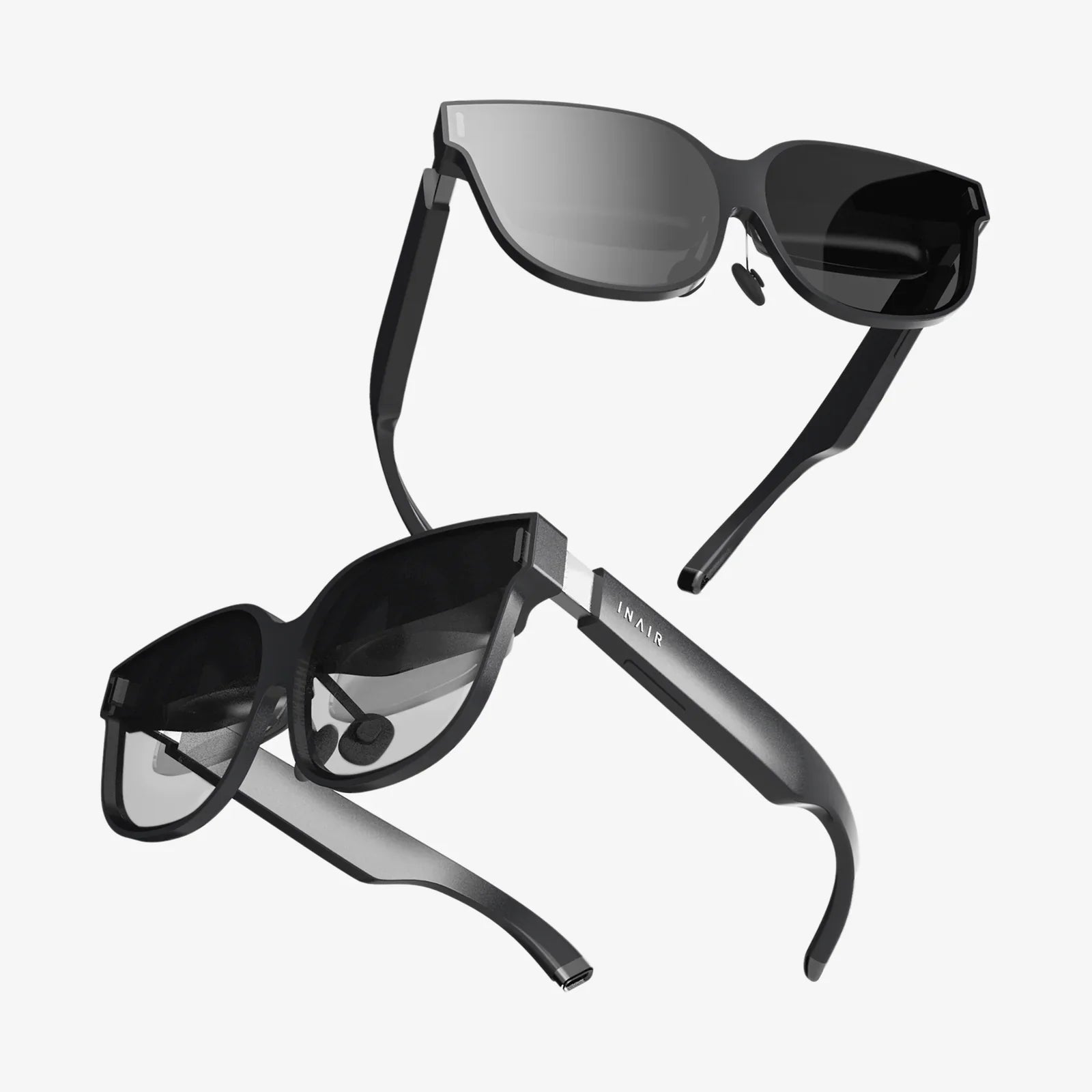
Imagine a world where your computer doesn't just wait for your command—it anticipates your needs, understands your frustration, and responds to the subtle shift in your tone of voice. This isn't science fiction; it's the rapidly approaching reality forged by the relentless evolution of Human Computer Interaction Technology. This invisible bridge between human intention and digital execution is quietly orchestrating a revolution in how we live, work, and connect, moving far beyond the mouse and keyboard to create experiences that are intuitive, immersive, and profoundly human.
The Genesis of a Dialogue: From Punch Cards to Direct Manipulation
The story of Human Computer Interaction (HCI) technology is one of a relentless pursuit to close the gap between human cognition and machine logic. In the earliest days of computing, interaction was a one-sided affair, conducted through the arduous language of punch cards and batch processing. Users were not 'interacting' in any meaningful sense; they were submitting a request and waiting, often for hours, for a response. The interface was a barrier, a series of complex commands that required deep technical knowledge to navigate.
The first true paradigm shift arrived with the graphical user interface (GUI), pioneered by research projects and popularized in the 1980s. This was a monumental leap. The GUI introduced the metaphor of the desktop, complete with folders, documents, and a trash can. It relied on the concept of direct manipulation, where users could point, click, and drag digital objects with a physical device—the mouse. This WIMP (Windows, Icons, Menus, Pointer) model dramatically lowered the barrier to entry, transforming computers from tools for experts into appliances for the masses. It established a foundational principle of HCI: making the system's functions visible and manipulable through a coherent conceptual model.
The Multimodal Revolution: Engaging All the Senses
The true explosion of HCI technology began when we broke free from the confines of the screen-keyboard-mouse triad. The quest for more natural, efficient, and accessible interaction gave rise to multimodal interfaces, which combine multiple channels of input and output.
Voice: The Most Natural Interface
Voice User Interfaces (VUIs) represent perhaps the most intuitive form of interaction. Speaking is a fundamental human ability, and VUIs leverage advances in natural language processing (NLP) and automatic speech recognition (ASR) to allow users to communicate with systems through conversation. From setting timers to controlling smart homes and querying vast databases, voice technology has made computing hands-free and accessible. The challenge lies in overcoming issues of background noise, accents, and the inherent ambiguity of human language, but the trajectory is toward systems that understand not just words, but intent, context, and emotion.
Touch and Gesture: The Power of the Physical
The proliferation of capacitive touchscreens, ignited by the smartphone revolution, made direct manipulation even more direct. We no longer needed an intermediary device like a mouse; our fingers became the pointer. This tactile interaction feels immediate and intuitive, especially for navigating spatial data like maps or manipulating photos. Building on this, gesture control technology uses cameras and sensors to interpret body movements. From waving a hand to dismiss a notification to complex sign language translation, gesture-based HCI offers powerful possibilities for public displays, automotive interfaces, and virtual environments, creating a more embodied computing experience.
Vision and Context: The Seeing Computer
Perhaps the most significant frontier in HCI is giving computers the ability to see and interpret the world. Computer vision technology, powered by sophisticated machine learning algorithms, allows systems to recognize faces, track eye gaze, and understand gestures. This enables context-aware computing. Your device can know if you are alone or in a meeting and adjust notifications accordingly. It can see that you're struggling to read small text and zoom in automatically. Eye-tracking can be used not just for accessibility but also as a rich input source, allowing for hands-free control and providing deep insights into user attention and cognitive load.
The Immersive Frontier: Blurring the Lines Between Real and Digital
While traditional screens act as windows into the digital world, Virtual Reality (VR) and Augmented Reality (AR) technologies aim to dissolve the frame entirely.
- Virtual Reality (VR): VR uses head-mounted displays and motion tracking to fully immerse a user in a synthetic environment. The HCI challenge here is total. Interaction must be spatial and holistic. Controllers that mimic hands, haptic feedback suits that simulate touch, and omnidirectional treadmills that allow for virtual locomotion are all part of creating a compelling and believable sense of presence. The goal is to make the interface the world itself.
- Augmented Reality (AR): AR overlays digital information onto the user's view of the physical world, typically through glasses or a smartphone camera. The HCI paradigm shifts from manipulation to integration. Interactions involve pinning digital objects to physical surfaces, using real-world gestures to control virtual elements, and accessing contextual information simply by looking at an object. This seamless blend of the real and digital, often called the metaverse or spatial computing, promises to be the next major platform for work, social connection, and entertainment.
The Invisible Interface: Affective Computing and Proactive Assistance
The next evolutionary step for HCI technology is to move beyond responding to explicit commands and toward understanding implicit human states. This is the domain of affective computing, or emotion AI. By analyzing facial expressions, vocal patterns, heart rate, and even skin conductance, systems can begin to infer a user's emotional state—frustration, confusion, excitement, or boredom.
This capability enables a shift from reactive to proactive interaction. Imagine a word processor that suggests a break when it detects signs of fatigue, an educational program that offers encouragement when it senses a student's frustration, or a navigation system that reroutes you to a calmer path after detecting stress in your voice. This creates a more empathetic and supportive relationship between human and machine, transforming technology from a simple tool into a collaborative partner.
The Ethical Imperative: Designing for Humanity
As HCI technology becomes more powerful, pervasive, and personal, it raises profound ethical questions that must be addressed with urgency and care.
- Privacy and Surveillance: Always-listening microphones, always-watching cameras, and emotion-tracking sensors generate an unprecedented amount of intimate personal data. How is this data stored, used, and protected? The potential for misuse and surveillance is immense, demanding robust ethical frameworks and transparent user control.
- Bias and Fairness: Machine learning models are trained on data, and if that data reflects human biases, the technology will perpetuate and even amplify them. We've seen this in voice recognition that fails with certain accents and facial analysis that performs poorly on darker skin tones. Ensuring equitable and fair HCI requires diverse datasets and a commitment to inclusive design from the ground up.
- Autonomy and Agency: As systems become more proactive, a critical question emerges: who is in control? There is a fine line between helpful suggestion and paternalistic override. HCI must be designed to augment human intelligence and agency, not replace it. Users must always have the final say, understanding why a system is making a recommendation and having the clear option to dismiss it.
- Accessibility: Perhaps the greatest promise of modern HCI is its potential to create a more accessible world. Voice control empowers those with limited mobility, computer vision can describe the world for the visually impaired, and AR can provide real-time captioning for the hearing impaired. Designing for accessibility from the outset isn't just ethical; it often results in better, more robust products for everyone.
The Future is Felt: Haptic Technology and Neural Interfaces
Looking ahead, the frontier of HCI technology is pushing into even more intimate territory. Haptics, the science of touch, is moving beyond simple phone vibrations to sophisticated systems that can simulate the texture of a fabric on a touchscreen or the recoil of a virtual weapon. This will be crucial for creating truly convincing virtual and remote experiences, from tele-surgery to online shopping.
Even further on the horizon are brain-computer interfaces (BCIs). While still largely in the research phase, BCIs aim to create a direct communication pathway between the brain and an external device. The potential to restore movement and communication for people with severe disabilities is staggering. In the long term, it could lead to a form of interaction based purely on thought, the ultimate seamless interface. However, this also raises the most complex ethical dilemmas imaginable concerning privacy, identity, and the very nature of human experience.
The bridge between human and computer is no longer a simple wooden footpath; it has become a vast, intelligent, and multi-layered structure, constantly expanding and reshaping itself. It's a bridge built on a deep understanding of human cognition, emotion, and physiology. The choices we make today in how we design and deploy this technology will fundamentally shape the society of tomorrow, determining whether this incredible tool will amplify our humanity or obscure it. The goal is no longer just efficiency—it is empowerment, understanding, and a deeper, more symbiotic relationship with the technology that defines our age.
Share:
Office Collaboration: The Ultimate Guide to Building a Cohesive and High-Performing Team
Wearable Tech Integration: The Seamless Fusion of Human and Machine