


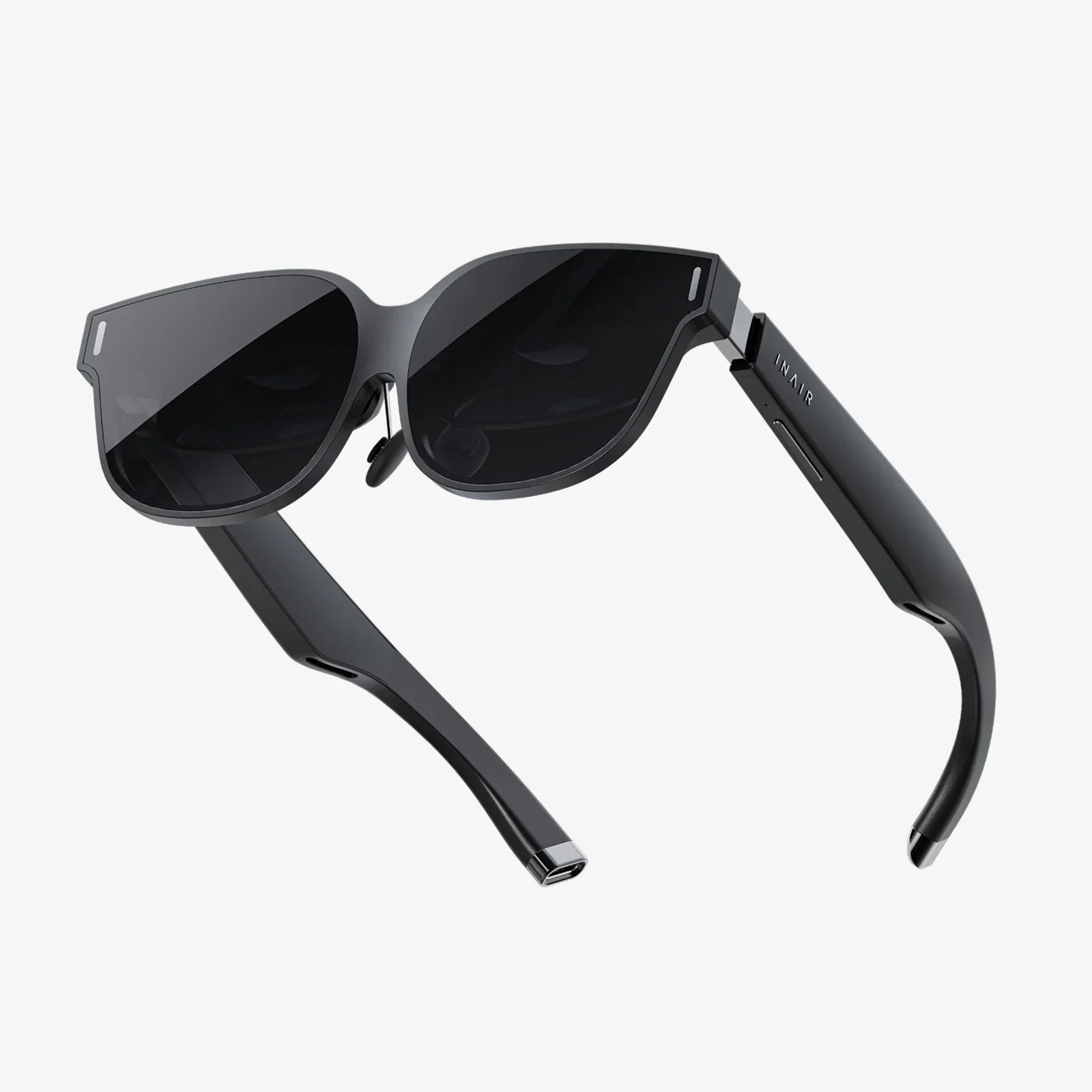
Imagine controlling your digital world not with a click, a tap, or a spoken command, but with the simple, intuitive wave of a hand—a future where the boundary between our physical actions and digital responses dissolves into thin air. This is the captivating promise of human-computer interaction using hand gestures, a field that has leapt from the silver screen fantasies of movies like 'Minority Report' into the very real laboratories, living rooms, and workspaces of today. It represents a fundamental shift away from intermediary devices, proposing a more natural, embodied, and direct dialogue between humans and machines. The allure is undeniable: to command complex systems with the same effortless gestures we use to communicate with each other.
The Historical Arc: From Punch Cards to Palm Readings
The journey of human-computer interaction is a story of constant evolution toward greater abstraction and intuitiveness. In the beginning, interaction was profoundly physical and complex, requiring users to manually rewire massive machines or feed them stacks of punch cards. The command-line interface (CLI) that followed was a step toward abstraction, but it demanded the memorization of an arcane syntax. The true revolution came with the Graphical User Interface (GUI) and the mouse, which introduced a spatial metaphor—pointing, clicking, and dragging—that was instantly more accessible. The multi-touch screens of smartphones then brought interaction even closer, allowing for direct manipulation with our fingers.
Gesture-based interaction is the next logical step in this progression. Early research can be traced back to the 1960s and 70s, but it was the advent of sophisticated sensing technologies in the 21st century that truly unlocked its potential. Initially confined to high-budget research projects and military applications, the technology has now become accessible, driven by consumer electronics and a relentless pursuit of more natural user experiences. It seeks to remove the last remnants of the physical barrier, the device itself, enabling what researchers call 'embodied interaction,' where the body itself becomes the controller.
How It Works: The Magic Behind the Motion
The seamless experience of waving a hand to pause a movie belies a complex technological ballet happening in real-time. This process can be broken down into a continuous pipeline of three core stages.
1. Sensing and Data Acquisition
This is the critical first step of capturing raw data about the hand's position, shape, and movement. Different technologies approach this challenge in unique ways:
- Optical Sensing (Computer Vision): This is perhaps the most common method, using cameras (from standard RGB to specialized depth-sensing cameras) to capture visual data. Algorithms then analyze these images or video streams to infer the hand's pose and gestures. Depth-sensing cameras, which project a grid of infrared dots and measure their distortion, are particularly effective as they provide precise 3D spatial data, working reliably in varying lighting conditions.
- Electromagnetic and Inertial Sensing: Often used in specialized gloves or wearables, this method employs sensors like accelerometers, gyroscopes, and magnetometers to track the movement and rotation of the hand and individual fingers. While highly accurate, it requires the user to wear a device, which some argue detracts from the goal of 'device-free' interaction.
- Radar-based Sensing: Emerging technology utilizes miniature radar chips that emit electromagnetic waves and detect their reflections. These sensors are exceptionally precise, capable of detecting sub-millimeter motions of fingers, and can even work through certain materials, offering new possibilities for embedding interaction into environments.
- Surface Electromyography (sEMG): A more futuristic approach, sEMG involves placing sensors on the forearm to detect the electrical activity generated by muscles when they contract. This allows the system to infer hand gestures even before the hand fully forms them, by reading the 'intent' from the neuromuscular signals.
2. Processing and Gesture Recognition
The raw sensor data is meaningless without interpretation. This stage involves sophisticated software and algorithms that transform data into understanding.
- Machine Learning and Deep Learning: This is the engine of modern gesture recognition. Convolutional Neural Networks (CNNs) are exceptionally good at classifying visual data, making them ideal for recognizing hand shapes from camera feeds. Recurrent Neural Networks (RNNs), particularly Long Short-Term Memory (LSTM) networks, are used to recognize dynamic gestures that unfold over time (e.g., a waving or swiping motion). These models are trained on vast datasets of labeled hand gestures, learning to generalize and recognize them with high accuracy even in novel situations.
- Model-Based Tracking: This approach uses a predefined 3D model of a human hand. The algorithm's job is to fit this model to the sensor data in real-time, adjusting the model's joint angles and position to match the observed data as closely as possible. This provides a rich skeletal output of the hand, including the position of every knuckle.
3. Application and Response
The final step is the translation of the recognized gesture into a meaningful digital command. This requires a carefully designed mapping between the gesture lexicon (the set of defined gestures) and system functions. A closed fist might grab a virtual object, a thumbs-up might signify 'like,' and a swift swipe might dismiss a notification. The application programming interfaces (APIs) then execute the corresponding action, completing the loop from physical movement to digital reaction.
A Universe of Applications: Beyond the Novelty
While controlling a presentation with a wave seems cool, the true value of gesture interaction is revealed in applications where it solves a real problem or enables something previously impossible.
Gaming and Immersive Entertainment
The gaming industry was an early adopter, using gesture control to create deeply immersive experiences. In virtual reality (VR) and augmented reality (AR), hand gestures are transformative. Instead of holding a controller with buttons, users can reach out and manipulate virtual objects with their actual hands—pulling a lever, throwing a ball, or crafting a tool. This profound sense of presence and agency is unmatched by any other input method and is crucial for achieving true immersion in virtual worlds.
Automotive and Smart Environments
Inside the modern car, touchscreens can be distracting and dangerous to use while driving. Gesture control offers a solution. A simple rotating gesture near the dashboard can adjust volume, while a swiping motion can answer a phone call, allowing the driver to keep their eyes on the road. Similarly, in smart homes, gestures can control lighting, audio systems, or thermostats without having to locate a phone or a physical switch, especially useful when your hands are dirty or wet.
Healthcare and Sterile Environments
This is one of the most compelling use cases. In an operating room, surgeons cannot touch non-sterile keyboards or touchscreens to view patient scans during a procedure. Gesture control allows them to navigate through MRI or CT images hands-free, using simple gestures to zoom, rotate, or pan, maintaining a completely sterile field and improving surgical workflow and efficiency.
Assistive Technology and Accessibility
For individuals with mobility challenges, gesture control can be life-changing. It can provide an alternative input method for operating computers, communicating, or controlling a wheelchair. Customizable gesture lexicons can be tailored to an individual's specific range of motion, empowering them with greater independence and control over their environment and devices.
Industrial and Professional Settings
On factory floors, technicians often need to consult manuals or schematics while their hands are occupied with tools. Gesture-controlled AR headsets can project information into their field of view, which they can navigate with subtle gestures without stopping their work. Architects and engineers can manipulate 3D models of their designs at full scale, walking around them and making adjustments with intuitive gestures.
The Challenges on the Path to Widespread Adoption
Despite its promise, gesture interaction is not without significant hurdles that must be overcome to move from niche applications to mainstream dominance.
The 'Gorilla Arm' Effect and Fatigue
A classic problem identified early on is the fatigue caused by holding an arm outstretched to perform gestures for extended periods. This 'gorilla arm' effect makes sustained interaction uncomfortable and impractical, a stark contrast to the relaxed posture of using a mouse on a desk. Solutions require careful design that minimizes large, repetitive arm motions in favor of smaller, more relaxed gestures.
Precision, Accuracy, and Feedback
Gestures can lack the pixel-perfect precision of a mouse cursor. This makes tasks like detailed design work or accurately selecting small UI elements frustrating. Furthermore, the lack of tactile feedback is a major issue. We receive no physical confirmation that a gesture has been registered, leading to uncertainty and a need for clear and immediate visual or auditory feedback from the system.
Standardization and the Midas Touch Problem
Unlike the standardized QWERTY keyboard or the near-universal mouse, there is no agreed-upon lexicon for gestures. Is a swipe left-to-right 'next' or 'previous'? This lack of standards can confuse users. Furthermore, the 'Midas Touch' problem—where the system constantly interprets every casual hand movement as an intentional command—remains a challenge. Systems need to have a very clear and reliable way to discern 'command mode' from 'rest mode,' often through a specific initiating gesture or context.
Privacy and Social Acceptance
Systems reliant on cameras raise legitimate privacy concerns. The constant monitoring required for gesture recognition can feel intrusive. Furthermore, performing large gestures in public spaces can feel socially awkward or draw unwanted attention, limiting its use in mobile settings like a coffee shop or airport.
The Next Frontier: Where Do We Go From Here?
The future of human-computer interaction using hand gestures lies not in replacing other modalities, but in seamlessly integrating with them. The most powerful interfaces will be multimodal, combining gestures, voice, gaze tracking, and traditional inputs contextually. You might use your voice to initiate a command ('show me the blueprint'), your gaze to select a component, and a pinch gesture to zoom in on it.
Advancements in AI will lead to more nuanced and adaptive recognition, capable of understanding subtle gestures, cultural variations, and even the emotional intent behind a movement. We are also moving toward more miniaturized and power-efficient sensors that can be embedded anywhere—in wearables like smart rings or glasses, or directly into the fabric of our environments, making the technology ever more pervasive and invisible.
The ultimate goal is a form of interaction so natural and effortless that the technology itself fades into the background. It will be an interaction that leverages our lifelong motor skills and intuitive understanding of our physical world, allowing us to focus on our goals and creativity rather than on the mechanics of the interface. We are steadily progressing toward a world where our digital and physical realities are not just connected, but harmoniously intertwined, controlled by the most ancient and powerful tools we possess: our hands.
The silent language of our hands, once confined to human-to-human communication, is now becoming the next lexicon for commanding the technology that shapes our lives. This isn't just a new way to click a button; it's the dawn of a more intimate and human-centric computing paradigm, where our innate physical expressiveness becomes the ultimate remote control for a world increasingly built of bits. The power to navigate, create, and connect lies literally at your fingertips, waiting for a gesture to begin.
Share:
Virtual Holographic Display: The Future of Immersive Interaction is Here
Cheap Wearables Are Reshaping Our Relationship With Technology and Health