


- by wangfred
I Want to Buy AI Glasses: The Ultimate Guide to the Next Computing Revolution
- by wangfred
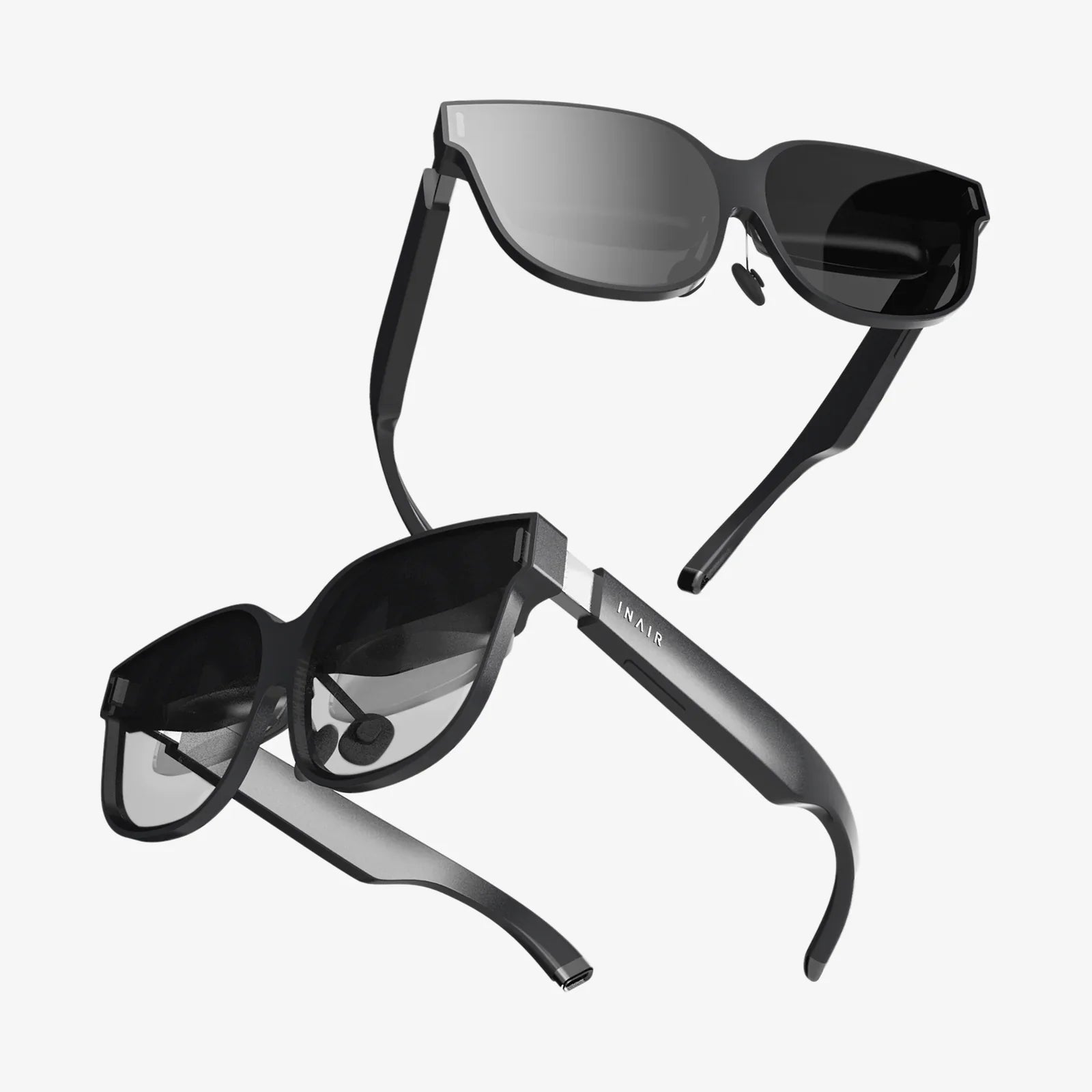
The future is not in your hand; it's on your face. The once-futuristic dream of AI glasses, capable of overlaying a digital world onto our physical reality and understanding our environment in real-time, is now a tangible consumer reality. For anyone thinking, I want to buy AI glasses, the market is evolving from clunky prototypes to sleek, powerful wearables that promise to redefine our interaction with technology. This isn't just another gadget; it's a gateway to a more intuitive, informed, and interconnected way of living. Stepping into this new era requires knowledge, and this guide is your essential map to navigating the exciting, complex landscape of AI eyewear.
Before diving into specifications and models, it's crucial to understand the core capabilities that define this category. Modern AI glasses are more than just a display; they are a sophisticated fusion of sensors, processors, and software designed to perceive, process, and project.
This is perhaps the most immediate and powerful application. Through their integrated camera and onboard AI, these glasses can identify objects, text, and people in your field of view. Imagine walking through a foreign city where street signs, menus, and conversations are instantly translated and overlaid in your native language. Or picture a technician looking at a complex machine and seeing step-by-step repair instructions superimposed on the components. This is the power of contextual, visual AI, and it dissolves language and knowledge barriers in real-time.
Audio is a critical component. High-fidelity microphones allow for clear voice commands and call functionality, while bone conduction or miniature speakers deliver audio directly to your ears without blocking ambient noise. This enables a truly hands-free experience where you can ask complex questions, dictate messages, or get directions without ever touching a device. The AI acts as a constant, conversational companion, processing your requests through natural language commands.
AI glasses serve as a first-person perspective camera for your life. They can discreetly capture photos and record videos, offering a new way to document experiences without the barrier of a smartphone screen. This content is often streamed or saved to a connected device, ready for sharing or later review. For creators, professionals, and everyday users, this represents a paradigm shift in content creation, moving from a deliberate act to an intuitive, continuous one.
By combining GPS, computer vision, and data from the internet, AI glasses can project contextual information onto your world. Directions can appear as floating arrows on the sidewalk, pointing you to your destination. Information about a restaurant you're looking at—its reviews, menu, and hours—can pop up before you even decide to approach. This layer of contextual data turns the entire world into an interactive interface.
With the capabilities in mind, the next step is a serious self-assessment. Not all AI glasses are created equal, and the right choice depends heavily on your individual needs, lifestyle, and tolerance for certain trade-offs.
Are you a tech enthusiast seeking the latest innovation? A professional looking for a hands-free tool to enhance productivity? A traveler wanting to break down language barriers? Or a content creator searching for a new perspective? Your primary goal will dictate the most important features. Prioritize translation and visual search for travel, or battery life and display clarity for professional use. A clear use case is the best compass for your purchasing decision.
This is one of the biggest challenges for manufacturers. Early models were often bulky and clearly identifiable as tech, which can be a social and practical barrier to adoption. The current generation is trending toward a more classic eyewear design. Consider the weight, fit, and overall aesthetics. Will you feel comfortable wearing them all day? Do they look like something you'd wear even without the technology? The best AI glasses are those you forget you're wearing, both physically and socially.
Powering a display, multiple sensors, an AI processor, and connectivity is incredibly demanding. Battery life is a significant constraint. Some models house the battery in the frames, while others use a separate battery pack that connects via a cable and can be stored in a pocket. Realistically, expect anywhere from two to six hours of active use, depending on the intensity of tasks like continuous video recording or translation. Always check if the quoted battery life is for active use or standby mode.
Most AI glasses currently on the market are companion devices. They rely on a Bluetooth connection to a smartphone to access cellular data and leverage its processing power for more complex AI tasks. This setup conserves battery and keeps the glasses lightweight. However, a new category of standalone AI glasses is emerging with their own cellular connectivity and advanced onboard processors, offering true independence but at the cost of increased size, weight, and price. Your preference for a tethered or standalone experience is a fundamental choice.
Wearing a camera on your face inherently raises privacy concerns, both for you and for those around you. It's essential to understand the privacy controls of any device you consider. Look for features like a recording indicator light that is always visible to others, clear physical buttons for activating the camera, and transparent data policies. Being a responsible early adopter means respecting the comfort levels of others and being mindful of recording in private spaces.
The method by which information is projected into your vision is a key differentiator. Some use MicroLED projectors that bounce light off a transparent lens, while others use waveguides to channel light directly into the eye. The critical factors are brightness (for outdoor visibility), clarity, and field of view. A larger field of view creates a more immersive experience but is more complex to engineer. Consider whether you need a full-color display or if monochrome projections for text and basic graphics are sufficient for your needs.
Purchasing AI glasses is not just buying hardware; it's buying into an ecosystem. The long-term value of your device will be heavily influenced by the software platform it runs on and the developer community supporting it.
The true potential of any computing platform is unlocked by third-party applications. Investigate whether the manufacturer has a robust software development kit (SDK) and is actively encouraging developers to build new experiences. A closed ecosystem with few apps may become stagnant, while an open one can continuously evolve with new and unexpected functionalities long after you've made your purchase.
These devices process a tremendous amount of personal and visual data. It is imperative to research the company's stance on data privacy. Where is the data processed? Is it on the device, on your phone, or in the cloud? Is it used for training AI models? How can you access and delete your data? Transparent answers to these questions are non-negotiable for a device that sees and hears so much of your life.
The current generation of AI glasses is impressive, but it is merely the foundation. We are rapidly moving toward devices with more powerful and efficient dedicated AI chips (NPUs), longer battery life, more socially acceptable designs, and richer displays. Features like advanced augmented reality for gaming and 3D design, more nuanced environmental understanding, and deeper health monitoring are on the horizon. Buying now means getting in on the ground floor of a revolution, but it also means accepting that your device may be surpassed by more advanced models in the coming years.
Taking the plunge into AI eyewear is a decision that sits at the intersection of personal utility and technological curiosity. It requires a careful balance of managing current limitations while embracing a transformative future. By thoroughly understanding your needs and scrutinizing the available options against the criteria outlined above, you can move beyond the simple desire of I want to buy AI glasses and make an informed, confident choice. This isn't just about purchasing a product; it's about choosing a new lens through which to see the world—one where information is effortless, assistance is immediate, and the line between the digital and the physical beautifully blurs. The next era of personal computing is waiting to be worn.
Share:
AR VR Headset Market Forecast 2030: A Glimpse into the Next Digital Revolution
AR VR Headset Market Forecast 2030: A Glimpse into the Next Digital Revolution