


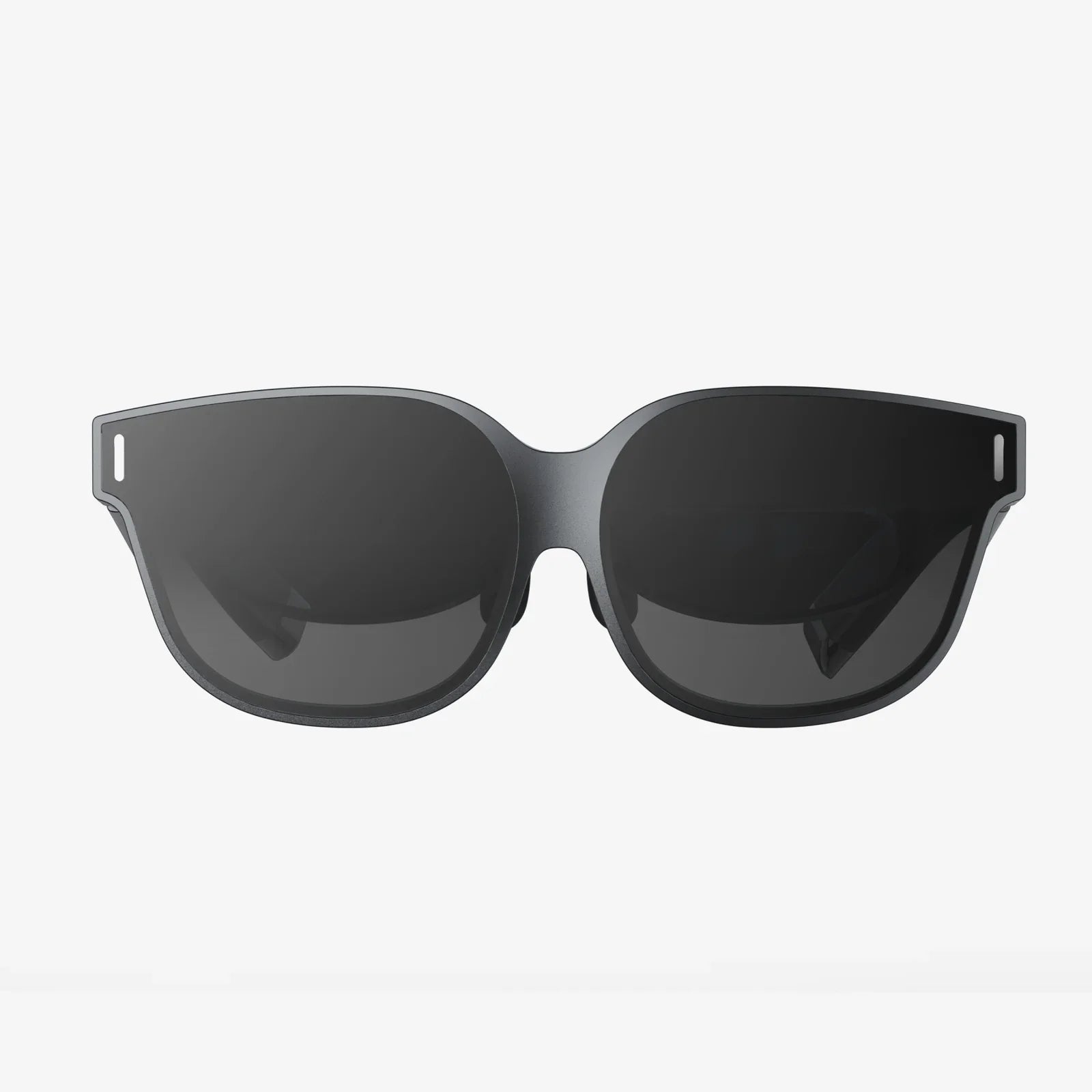
- by wangfred
Immersed Mixed Reality The Ultimate Fusion of Digital and Physical Worlds
- by wangfred
Imagine a world where the digital and the physical are not just adjacent realities but a single, seamless tapestry of experience. This is the promise of immersed mixed reality, a technological evolution that is not merely knocking on our future's door but is already stepping across the threshold. It’s a realm where holographic colleagues sit across your kitchen table, intricate engine schematics float in mid-air for mechanics to disassemble with a gesture, and historical events unfold around you as if you’ve stepped through a temporal portal. This isn't science fiction; it's the burgeoning domain of a technology poised to revolutionize everything from how we work and learn to how we connect and create. The line between what is real and what is digitally rendered is becoming beautifully, functionally blurred.
To truly appreciate the depth of immersed mixed reality, we must first understand its place on the broader spectrum of immersive technologies. Often, terms like Augmented Reality (AR), Virtual Reality (VR), and Mixed Reality (MR) are used interchangeably, but they represent distinct points on a continuum of immersion.
On one end, we have Augmented Reality (AR). AR overlays digital information—text, images, simple 3D models—onto the user's view of the real world. Think of navigation arrows projected onto the road through your smartphone screen or a virtual character appearing in your living room via a mobile app. The real world remains the primary stage, with digital elements serving as supportive actors.
On the opposite end lies Virtual Reality (VR). VR is a fully digital, immersive experience that completely occludes the physical world. By wearing a headset, users are transported to entirely computer-generated environments, from fantastical game worlds to simulated training grounds. The physical world is replaced, offering escapism and total control over the environment at the cost of isolation from one's immediate surroundings.
Immersed Mixed Reality occupies the crucial, complex middle ground. It doesn't just overlay digital content; it anchors it intelligently and interactively within the user's physical space. More than simply seeing a digital object in your room, true MR allows that object to understand and interact with your environment. A virtual ball in MR will bounce off your real couch, a digital lamp will cast light onto your physical desk, and a holographic character will convincingly walk behind your very real table. This requires a sophisticated understanding of the geometry, lighting, and physics of the user's surroundings—a capability that sets immersed MR apart as the most advanced and contextually aware form of immersive computing.
Creating this seamless fusion is a feat of engineering that relies on a symphony of advanced technologies working in perfect harmony. The magic of an immersed MR experience is powered by several core components.
The foundation of any MR system is its ability to perceive and comprehend the physical world. Using a combination of advanced sensors, cameras, LiDAR (Light Detection and Ranging), and infrared projectors, MR devices continuously scan their environment. They create a precise, real-time 3D mesh or "point cloud" of the space, identifying floors, walls, ceilings, furniture, and other objects. This process, known as spatial mapping, allows the digital content to be placed persistently and accurately. The system doesn't just see a flat surface; it understands depth, contours, and spatial relationships, enabling digital objects to behave as if they truly belong.
For immersion to hold, the system must know exactly where the user is located in relation to both the physical and digital worlds. This is achieved through inside-out tracking. Unlike early VR systems that required external sensors placed around a room, modern MR headsets have cameras and sensors built directly into the device. They track the user's head movements (rotational and positional) with six degrees of freedom (6DoF), meaning you can lean in, crouch down, and walk around digital objects, viewing them from any angle without lag or drift. This precise tracking is what sells the illusion of reality, making a hologram feel solid and present.
Interacting with this blended world should feel intuitive, not like operating a complex machine. Immersed MR systems employ several methods for natural interaction:
The final piece of the puzzle is visual fidelity. High-resolution displays are crucial, but so is the quality of the "passthrough"—the video feed of the real world that is augmented with digital content. Advanced MR systems use high-fidelity color cameras to provide a clear, low-latency view of your surroundings. Simultaneously, the graphics engine must render digital objects with realistic lighting, shadows, and occlusion (where digital objects can be hidden by physical ones, and vice-versa). This complex interplay of light and shadow is essential for convincing the user's brain that the two worlds are one.
While the technology is fascinating, its true value lies in its transformative applications across countless sectors. Immersed mixed reality is moving beyond novelty to become a critical tool for innovation and efficiency.
In industrial settings, MR is a game-changer. Designers and engineers can collaborate on full-scale, interactive 3D prototypes without the cost of physical materials. Architects can walk clients through virtual buildings long before ground is broken. On the factory floor, technicians wearing MR headsets can see animated repair instructions overlaid directly onto the complex machinery they are servicing, highlighting specific components and providing step-by-step guidance. This "see-what-I-see" capability also allows remote experts to guide on-site workers, drawing arrows and annotations into their field of view, reducing downtime and errors dramatically.
The applications in medicine are both profound and life-changing. Surgeons can use MR to visualize CT scans and MRI data as 3D holograms superimposed onto a patient's body during pre-surgical planning, providing an anatomical roadmap. Medical students can practice procedures on virtual patients, and therapists can use immersive environments to treat phobias or aid in physical rehabilitation by turning exercises into engaging games. It democratizes access to expert knowledge and creates new, safer ways to practice and deliver care.
Immersed MR has the potential to solve the fundamental limitations of video conferencing. Instead of talking to faces in boxes on a screen, teams can meet in a shared virtual space around a 3D model, a virtual whiteboard, or even a simulation. Colleagues from across the globe can appear as lifelike avatars or holograms, able to gesture, interact with shared objects, and convey body language. This creates a sense of "co-presence"—the feeling of being together in the same room—that is impossible to achieve with any other technology, making remote collaboration more natural, effective, and human.
Learning becomes experiential and unforgettable in mixed reality. History students can witness historical events unfold around them. Chemistry students can safely combine volatile virtual elements. Mechanics can take apart a virtual jet engine. This learning-by-doing in a simulated, risk-free environment accelerates comprehension and retention. It provides a scalable way to deliver hands-on training for complex and dangerous tasks, from operating heavy machinery to responding to emergency situations.
Despite its immense potential, the widespread adoption of immersed mixed reality faces significant hurdles that must be addressed.
Technical Hurdles: For true immersion, devices need to become smaller, lighter, more comfortable, and offer all-day battery life. They need even higher-resolution displays, wider fields of view, and more powerful processing, all while remaining affordable. Achieving photorealistic holograms that are indistinguishable from real objects remains a long-term goal.
The Social and Ethical Dimension: As this technology becomes more integrated into daily life, it raises critical questions. How do we manage privacy when devices are constantly scanning our homes and offices? What are the psychological effects of long-term immersion in blended realities? How do we prevent the creation of a "digital divide" between those who have access to these tools and those who do not? Establishing clear ethical guidelines and robust data security protocols is not an option; it is a necessity for building trust.
Designing for Humanity: The user experience must be paramount. Interfaces need to be intuitive and accessible, avoiding overwhelming users with information. Designers must learn the language of this new medium, understanding how to create experiences that are helpful, not distracting, and that enhance our reality rather than detract from it.
The journey ahead is one of refinement and responsibility. It requires collaboration between technologists, designers, ethicists, and users to ensure that immersed mixed reality develops in a way that augments human potential without compromising our humanity.
We stand at the precipice of a new layer of existence, a spatial web where information is no longer confined behind glass but is woven into the very fabric of our perception. Immersed mixed reality is the key that unlocks this world, offering a canvas limited only by our imagination. It challenges us to rethink the nature of reality itself, not as a fixed state, but as a dynamic medium for creation, connection, and exploration. The future is not something we will merely watch unfold on a screen; it is something we will step into, shape with our hands, and experience with our entire being. The invitation to immerse ourselves is now open.
Share:
Windows Mixed Reality: The Comprehensive Guide to the Immersive Ecosystem
120 Virtual Screen: The Ultimate Guide to Unlocking Your Digital Workspace