


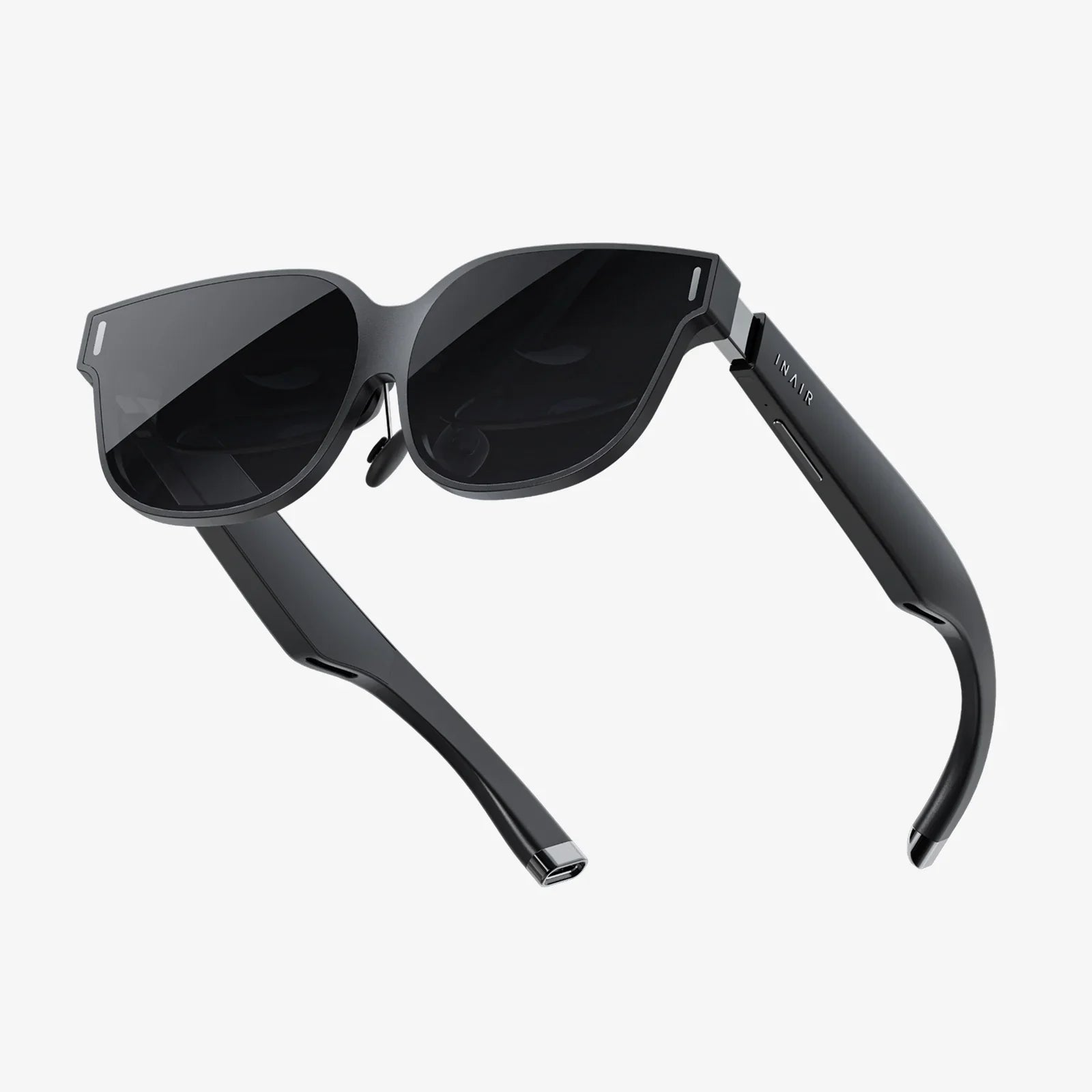
Imagine a world where the line between the digital and the physical isn't just blurred—it's erased. Where you can learn complex surgery by practicing on a holographic heart, design a new car engine on your kitchen table, or sit front row at a concert happening on another continent, all from your living room. This is no longer the stuff of science fiction. It is the palpable, accelerating reality being built today through the power of immersive AR and VR. These technologies are poised to become the next great computing platform, fundamentally altering how we work, play, connect, and understand the world around us. The journey into this new dimension starts now, and it promises to be the most transformative technological shift of our generation.
The Spectrum of Immersion: Understanding AR, VR, and the Spaces Between
To grasp the full potential of this revolution, we must first understand the distinct yet increasingly interconnected realms of immersive technology. They exist on a spectrum, often referred to as the 'virtuality continuum,' each offering a different relationship with reality.
Virtual Reality (VR): The Total Escape
Virtual Reality is the art of complete immersion. By donning a head-mounted display, users are transported into entirely computer-generated environments. These are fully digital worlds, constructed from polygons and pixels, that can be anything from a photorealistic simulation of a real place to a fantastical landscape that defies the laws of physics. The key to powerful VR is the combination of three elements: visual immersion, audio immersion, and interactivity. High-resolution displays fill the user's field of view, cutting off the physical world. Spatial audio tricks the brain into perceiving sounds coming from specific locations within the virtual space. And most importantly, motion-tracked controllers and, increasingly, hand-tracking allow users to reach out, grab, manipulate, and influence this digital world. This creates a profound sense of presence—the undeniable feeling of 'being there'—which is the holy grail of VR development.
Augmented Reality (AR): The Enhanced World
If VR is about escape, Augmented Reality is about enhancement. AR overlays digital information—images, text, 3D models, animations—onto the user's view of their real-world environment. This is most commonly experienced today through smartphone cameras, but its true potential is unlocked through transparent glasses or lenses. Unlike VR, AR does not seek to replace reality but to augment it with a contextual and interactive digital layer. Imagine looking at a historical monument and seeing a reconstruction of how it looked centuries ago superimposed onto your view. Or a mechanic seeing the internal wiring diagram of an engine hover over the actual engine block. AR acts as a digital superpower, providing information and capabilities that are seamlessly integrated into our immediate surroundings.
Mixed Reality (MR) and the Blended Future
Occupying the middle ground is Mixed Reality. MR is more than just an overlay; it represents a true fusion where digital and physical objects coexist and interact in real-time. In a robust MR experience, a virtual character could sit on your real sofa, casting a shadow and even being occluded by your real coffee table. Or a digital tennis ball could bounce off your actual walls. This requires advanced sensors and cameras to constantly map and understand the geometry and lighting of the physical environment, allowing the digital content to behave in a physically believable way. MR is often seen as the ultimate expression of immersive technology, as it leverages the best of both the real and the virtual.
The Engine Room: The Technologies Powering the Dream
The magic of immersive experiences doesn't happen by accident. It is powered by a sophisticated stack of hardware and software technologies working in concert.
Hardware: The Gateways to New Realities
The primary interface is the headset, which has evolved from clunky, wired prototypes to sleek, standalone devices and high-powered tethered systems. Inside these devices, a miniaturized technological marvel exists:
- Displays: High-resolution, fast-switching LCD or OLED screens are crucial for clarity and reducing the 'screen door effect.'
- Lenses: Precision Fresnel or pancake lenses focus the image and create a wide field of view for greater immersion.
- Tracking Systems: Six degrees of freedom (6DoF) tracking, using inside-out or outside-in cameras and sensors, is essential. It tracks not just the rotation of your head but its precise position in space, allowing you to lean, dodge, and move naturally within the experience.
- Haptics and Controllers: Advanced controllers provide tactile feedback through vibrations and force feedback. The next frontier is full-body haptic suits and gloves that simulate touch, pressure, and temperature, deepening the sense of embodiment.
Software: Building the Worlds
On the software side, powerful game engines are the unsung heroes. These real-time 3D creation platforms provide the tools for artists and developers to build, light, and animate vast virtual worlds. They handle the complex physics simulations, artificial intelligence for characters, and most importantly, the rendering—generating two high-frame-rate, perspective-correct images for each eye, dozens of times per second, to maintain smooth immersion and avoid motion sickness.
Connectivity: The 5G Catalyst
The advent of high-speed, low-latency 5G networks is a critical enabler. It allows for cloud rendering, where the immense processing power required for high-fidelity VR and AR is handled on remote servers, and the experience is streamed to a lighter, less expensive headset. This democratizes access to high-end immersion and paves the way for persistent, shared experiences that are always available and constantly evolving.
Transforming Industries: The Practical Power of Immersion
While entertainment is the most visible application, the most profound impact of immersive AR and VR is happening in enterprise, education, and healthcare.
Revolutionizing Education and Training
Immersive technology is creating the ultimate learning tool: learning by doing, without real-world consequences. Medical students can perform intricate virtual dissections and surgical procedures. Mechanics can practice repairing complex jet engines. Corporate employees can undergo realistic soft-skills training, like handling a difficult conversation with a virtual human. This experiential learning dramatically improves knowledge retention, skill acquisition, and confidence.
Reimagining Healthcare and Therapy
In healthcare, VR is being used for exposure therapy to treat PTSD and phobias in a safe, controlled environment. It provides powerful distraction therapy for burn victims during painful wound care. Surgeons use AR overlays to visualize patient data, such as MRI scans, directly on their field of view during operations, improving precision and outcomes. Remote specialists can even 'be' in an operating room anywhere in the world through a live AR feed, guiding local surgeons.
Empowering Design and Manufacturing
From automotive to aerospace, engineers and designers are using VR to prototype and interact with 3D models at full scale long before a physical prototype is built. They can identify ergonomic or design flaws early, saving millions in development costs. On the factory floor, AR smart glasses can guide technicians through complex assembly processes, overlaying step-by-step instructions and highlighting exactly which part to install and where, reducing errors and training time.
Enabling Remote Collaboration and the Metaverse
The concept of the 'metaverse'—a persistent network of shared 3D virtual spaces—is built on the backbone of immersive technology. It promises a new paradigm for remote work and social connection. Instead of a grid of faces on a video call, teams from across the globe can meet as lifelike avatars in a virtual boardroom, brainstorm ideas on a 3D whiteboard, or inspect a architectural model together as if they were on-site. This sense of shared presence fosters a level of collaboration and connection that flat screens cannot match.
The Human Factor: Challenges and Ethical Considerations
For all its promise, the path to a fully immersive future is not without significant hurdles and profound questions.
Technical and Social Hurdles
Issues like simulator sickness, visual fatigue, and the sheer weight and cost of hardware remain barriers to mass adoption. The 'social acceptance' of walking around in public wearing AR glasses is yet to be determined. Furthermore, creating truly compelling and useful content is expensive and requires specialized skills, creating a potential content gap.
The Privacy Paradox
Immersive devices are data collection machines. They have cameras, microphones, and sensors that map our physical spaces, track our eye movements, and record our interactions. This data is invaluable for improving experiences but poses a monumental privacy risk. Who owns this data? How is it stored and used? The potential for pervasive surveillance and targeted manipulation is a serious concern that must be addressed with robust ethical frameworks and regulation.
The Blurring of Reality
As experiences become more photorealistic and persuasive, the line between virtual and actual events could become dangerously thin. The potential for misuse in creating deepfakes, spreading misinformation, or causing psychological distress is real. Society will need to develop new media literacy skills to navigate this hyper-real digital landscape and establish clear norms to distinguish between recorded reality and synthetic experiences.
The door to a new layer of existence is swinging open, and immersive AR and VR are the keys. This is more than an upgrade to a screen; it's a fundamental rewiring of our interaction with information and with each other. The challenges are daunting, but the opportunity is historic—a chance to build a more empathetic, efficient, and astonishingly creative future from the ground up. The next era of human experience won't be watched on a display; it will be lived, felt, and built inside it. The question is no longer if this future will arrive, but how boldly we will choose to step through.
Share:
Augmented Reality Market Growth: A Comprehensive Analysis of the Digital Revolution
Who Makes AI Glasses: The Architects of a Wearable Intelligence Revolution