


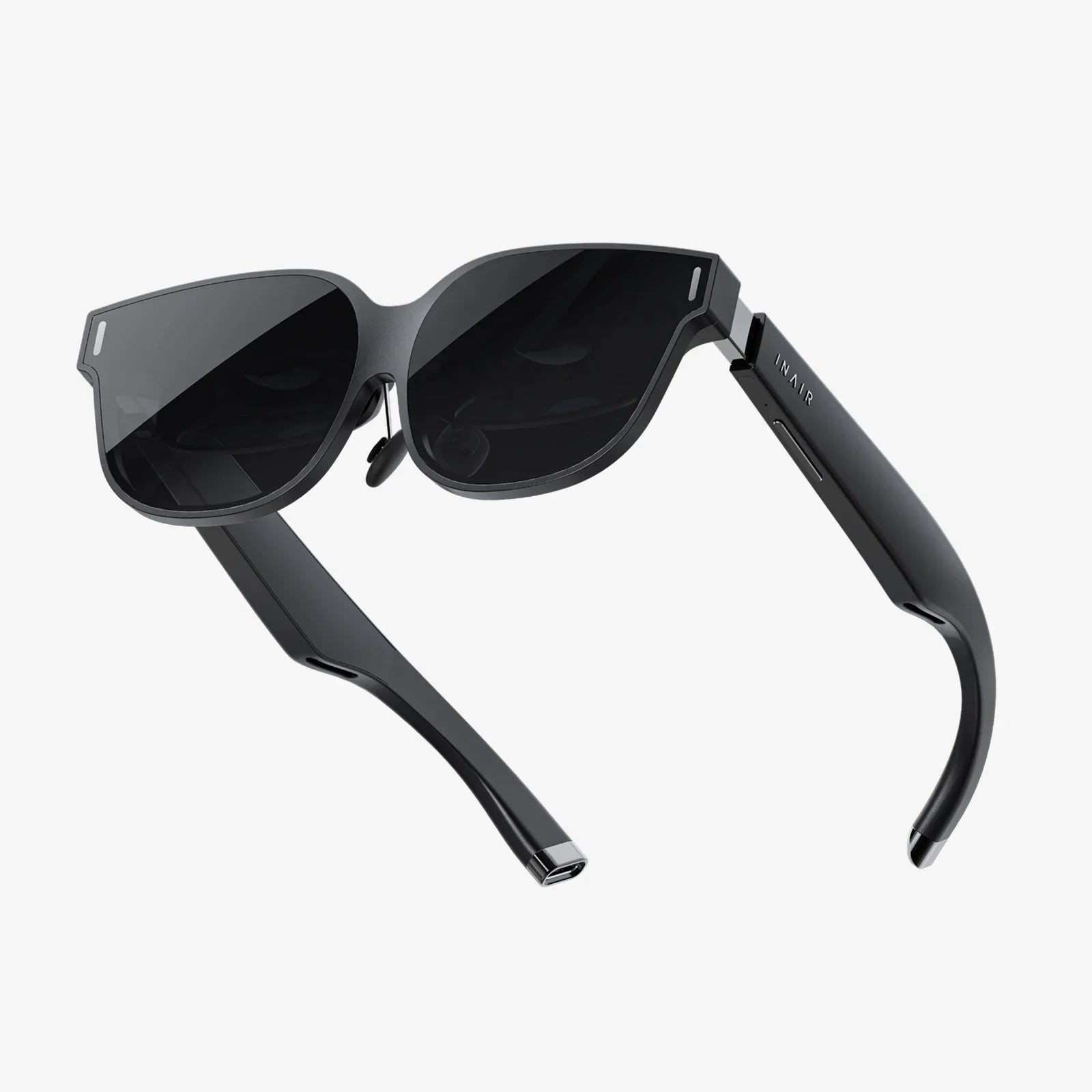
You put on the headset. A breathtaking alien landscape unfolds before your eyes, a world of impossible colors and intricate detail. You turn your head, marveling at the visual fidelity, but something feels… off. The world is silent, flat, and disconnected. It’s a beautiful painting, not a place you inhabit. Then, you hear it. The distant, echoing call of a unknown creature from behind and to your left. A gentle wind rustles through strange foliage, its source moving around you as you turn. A rock clatters down a ravine to your right, its trajectory mapped perfectly in your mind through sound alone. Suddenly, the world snaps into focus. It is real. This is the transformative, and often overlooked, power of immersive audio for VR AR. It is the final, crucial piece that bridges the gap between seeing a digital world and truly feeling present within it.
The Illusion of Presence: More Than Meets the Eye
Presence—the elusive and magical sensation of actually "being there" in a virtual environment—is the holy grail of VR and AR development. For years, the industry pursued this goal through a relentless focus on visual improvements: higher resolutions, wider fields of view, and more realistic graphics. While these are undoubtedly important, they address only half of the human sensory equation. Vision tells us where we are, but sound tells us what is happening there and, more importantly, what it means.
Our auditory system is a masterclass in evolutionary engineering, fine-tuned for survival. It is inherently 360 degrees, operates even when we sleep, and is hardwired to our emotional centers and instinctual fear responses. A sudden noise from behind triggers an immediate physiological reaction, a relic of our need to detect predators. This is why immersive audio is so fundamental. It speaks directly to our primal brain, convincing it on a subconscious level that the experience is authentic. Without accurate, three-dimensional sound, the illusion remains fragile, easily broken by the slightest disconnect between what we see and what we hear.
From Stereo to Sphere: Understanding Spatial Audio
To appreciate the revolution of immersive audio, one must first understand what it replaces. Traditional stereo audio, the standard for music, films, and games for decades, is fundamentally channel-based. Sound is assigned to specific speakers—left, right, and center. Your perception of direction comes from the relative volume and timing of a sound reaching each ear from these fixed points. This works well for a screen directly in front of you but falls apart completely in an environment where you can look anywhere.
Immersive audio for VR AR, often called 3D spatial audio or binaural audio, is object-based. Instead of being tied to speakers, individual sounds are treated as distinct objects placed at specific coordinates within a three-dimensional space (e.g., X, Y, Z coordinates). The audio engine then, in real-time, calculates how that sound should be heard based on the listener's precise head position and orientation.
This process, known as Head-Related Transfer Function (HRTF), is the digital magic trick. An HRTF is a set of filters that mimics the way our own unique head, torso, and outer ears (pinnae) modify a sound before it reaches our eardrums. These subtle modifications, including tiny delays, frequency shifts, and volume changes, provide our brain with the cues it needs to pinpoint the exact location of a sound source—whether it's above, below, in front, behind, or anywhere in between.
When you wear headphones, a well-tuned spatial audio engine uses your head-tracking data and applies the appropriate HRTF filters to each sound object, creating the perception that sounds are coming from all around you in the virtual world, not from the headphones themselves. This is what creates the uncanny sensation of a voice speaking directly over your shoulder or a bee buzzing in a perfect circle around your head.
The Technical Symphony: Building Blocks of 3D Soundscapes
Crafting a believable auditory world is a complex technical endeavor that relies on several key components working in harmony.
1. Advanced Audio Engines and Middleware
Specialized audio engines form the core of any immersive audio implementation. These powerful software frameworks provide the tools for developers to place, manipulate, and manage sound objects in 3D space. They handle the complex mathematical calculations for real-time HRTF processing, acoustic modeling, and propagation effects. Features include:
- Occlusion and Obstruction: Simulating how sounds are muffled when passing through walls or other solid objects, and how they are diffracted around corners.
- Reverberation: Accurately modeling the echo and decay of sound in different environments, from a small tiled bathroom to a vast, open cathedral.
- Doppler Effect: Mimicking the pitch shift of a sound source moving quickly past the listener, like a spaceship flying by.
2. High-Fidelity Head-Tracking
The illusion of spatial audio is entirely dependent on ultra-low-latency and highly accurate head-tracking. The system must know the exact orientation of your head down to a fraction of a degree and update the sound field faster than your brain can perceive the delay—typically under 20 milliseconds. Any lag between your head movement and the corresponding shift in the audio panorama immediately shatters the sense of presence and can induce simulator sickness. The inside-out tracking systems modern headsets rely on are therefore not just for visuals; they are critical audio components.
3. Ambisonics and Field Recordings
For ambient environmental sounds—a forest, a busy city street, a spaceship cockpit—a technique called Ambisonics is often used. Unlike object-based audio, Ambisonics captures a full sphere of sound from a single point in space. This recording, known as a soundfield, can then be rotated and re-oriented in real-time to match the listener's head movement, providing a convincing and cohesive background bed of noise that perfectly complements the discrete sound objects placed within it.
Beyond Entertainment: The Practical Applications of Immersive Sound
While gaming is the most obvious beneficiary, the impact of immersive audio extends far into professional and educational fields.
Training and Simulation
For training scenarios where situational awareness is a matter of life and death—such as for soldiers, pilots, or first responders—audio cues are paramount. A firefighter in a VR training simulation must learn to identify the crackle of fire behind a closed door, the direction of a collapsing beam, or the faint call for help from a specific room. Immersive audio trains their ears alongside their eyes, building muscle memory and instinctual reactions in a safe, controlled environment.
Remote Collaboration and Virtual Workspaces
In virtual meeting rooms, spatial audio can make conversations feel natural and intuitive. Instead of a chaotic conference call where everyone's voice comes from the same central point, participants' voices can be placed around a virtual table. This allows users to easily distinguish who is speaking, focus on one conversation in a crowded room, and naturally turn to address a colleague, making remote collaboration feel significantly more human and less fatiguing.
Education and Cultural Preservation
Imagine a history lesson where students can stand in the Roman Forum, not only seeing the ruins restored to their former glory but hearing the echoes of conversations in Latin, the clamor of the market, and the footsteps on stone from all directions. Or a music class where students can sit in the midst of a symphony orchestra, hearing the precise spatial relationship between the violins, cellos, and brass sections. Immersive audio brings depth, context, and emotional resonance to educational content, creating powerful and memorable experiences.
The Future Sound of Reality: Emerging Trends and Challenges
The field of immersive audio is not static; it is rapidly evolving with several exciting frontiers on the horizon.
Personalized HRTFs
The Achilles' heel of current spatial audio is that generic HRTFs don't work perfectly for everyone. Because our anatomy is unique, a sound that appears to come from directly in front for one person might seem slightly elevated for another. The future lies in personalized HRTFs, created through 3D scans of a user's pinnae or through calibration processes where users identify sound locations until the system learns their specific auditory profile. This will unlock a new level of precision and realism for everyone.
Cross-Reality Audio
For Augmented Reality, the audio challenge is even more complex: blending digital sound objects seamlessly with the real soundscape. Advanced systems will need to use passthrough cameras and microphones to analyze the acoustic properties of the user's physical environment and then apply similar reverb and occlusion effects to the virtual sounds, making a cartoon character hiding behind your real-world couch sound like it is actually there.
Haptic Integration and Bone Conduction
The next step is to move beyond the ears. Integrating audio systems with haptic feedback vests and controllers can create a truly multisensory experience. Feeling the deep thump of an explosion in your chest at the same time you hear it spatially overhead completes the feedback loop. Furthermore, bone conduction technology, which transmits sound through vibrations in the skull, can be used to simulate sounds that are "inside" the user's head (like a character communicating via telepathy) while leaving the ears free to hear ambient environmental sounds, offering new creative possibilities for storytellers.
The Unheard Artist: A New Discipline for Sound Design
This new paradigm demands a fundamental shift in the art of sound design. The sound artist is no longer just a creator of sounds but an architect of acoustic space. They must think in three dimensions, considering:
- Audio as a Navigation Tool: Using sound to subconsciously guide a user's attention or lead them through an environment.
- Emotional Acoustics: How does the reverb of a space make the user feel? A cold, metallic echo creates anxiety, while a warm, soft room feels safe.
- Interactive Soundscapes: Designing systems where sound reacts dynamically to user interaction and movement, ensuring the world feels alive and responsive.
It is a discipline that combines technical mastery with profound artistic intuition, and its practitioners are quietly building the emotional core of our digital futures.
We stand on the threshold of realities yet unimagined, worlds built not just of light and polygons, but of sound and space. The headset offers a window, but it is immersive audio that builds the door and invites you to step through. It is the whisper in the dark that tells you you’re not alone, the crunch of gravel underfoot that grounds you on an alien planet, and the subtle cue that makes you turn around just in time to see what’s coming. This is the promise of true immersion—a symphony for the senses, waiting for its conductor. The next time you enter a virtual world, close your eyes for just a moment. Listen. The future is speaking, and it’s coming from everywhere at once.
Share:
Are Aura Frames Secure? A Deep Dive into Digital Privacy and Protection
AR VR Skills: The Ultimate Guide to Building a Career in the Metaverse