


- by wangfred
Immersive Mixed Reality Technology is Redefining Our Digital and Physical Worlds
- by wangfred
Imagine a world where your digital life doesn’t end at the edge of a screen. Where instructions for a complex surgical procedure or the schematics of a jet engine float seamlessly in your field of vision, perfectly aligned with the physical objects in front of you. Where a history lesson transforms your classroom into ancient Rome, and a virtual colleague can sit on your real-world couch to collaborate. This is the promise, and increasingly the reality, of immersive mixed reality technology. It’s a paradigm shift that is poised to dissolve the final barriers between the digital and the physical, reshaping everything from entertainment and education to manufacturing and medicine. This isn't just an evolution of computing; it's a revolution in human experience, and it's happening now.
To truly grasp the significance of immersive mixed reality, we must first place it within the broader context of Extended Reality (XR). XR is an umbrella term encompassing all technologies that blend the virtual and real worlds, existing on a spectrum known as the Virtuality Continuum.
On one end of this spectrum lies Virtual Reality (VR). VR is a fully digital, immersive experience that completely occludes the physical world. By wearing a headset, users are transported to computer-generated environments, whether that's a game world, a simulated training scenario, or a virtual meeting space. The key characteristic of VR is its isolation; it replaces reality entirely.
On the opposite end is Augmented Reality (AR). AR overlays digital information onto the real world, typically viewed through a smartphone screen, tablet, or transparent lenses like smart glasses. Think of popular mobile games that placed fantastical creatures in your local park or furniture apps that let you see how a new sofa would look in your living room. AR adds a digital layer on top of the physical world but does not understand or interact with it in a spatially meaningful way.
Occupying the crucial middle ground is immersive mixed reality technology. MR is the next evolutionary step, combining the best of both VR and AR. It doesn't just overlay digital content; it anchors it to the real world, allowing for genuine interaction between the user, physical objects, and digital entities. In a true MR experience, a virtual character can hide behind your actual sofa, a digital control panel can be affixed to a real machine, and your real hands can manipulate a holographic model. The environment understands itself, creating a cohesive and believable fusion of realities.
The magic of MR doesn't happen by accident. It is the result of a sophisticated symphony of advanced technologies working in perfect harmony to create a convincing and responsive experience.
At the heart of any MR system is its ability to perceive and comprehend the environment. This is achieved through a suite of sensors, including depth-sensing cameras, LiDAR (Light Detection and Ranging) scanners, and high-resolution photogrammetry. These sensors constantly scan the surroundings, creating a precise, real-time 3D map of the space. The system doesn't just see a flat surface; it understands the geometry, dimensions, and properties of objects—identifying floors, walls, tables, and chairs. This digital twin of the physical world allows virtual objects to respect the rules of physics, enabling occlusion (where a real object can block a virtual one), realistic lighting and shadows, and persistent placement of holograms.
Presenting the blended reality to the user is a monumental challenge. MR headsets utilize cutting-edge display technology, often involving waveguide optics or holographic lenses. These systems project light onto transparent lenses, making digital images appear to exist in the real world at various focal depths. This solves the vergence-accommodation conflict—a major source of discomfort in earlier AR/VR systems—where the brain struggles to focus on an image that appears at a different depth than where the eyes are pointing. High-resolution, high-refresh-rate displays are crucial for maintaining the illusion and ensuring user comfort during extended sessions.
For immersion to hold, the digital world must remain locked in place as the user moves. This requires incredibly precise tracking of both the user's head and hands. Inside-out tracking, using cameras and sensors on the headset itself, monitors the user's position in the room (6 degrees of freedom). Simultaneously, hand-tracking cameras and controllers capture the subtleties of human gesture, allowing for intuitive interaction with holograms. Eye-tracking technology further refines the experience by enabling foveated rendering (where only the area you're directly looking at is rendered in full detail, saving processing power) and more natural social interactions with virtual avatars.
The immense data processing required for these tasks—from simultaneous localization and mapping (SLAM) to real-time rendering of complex 3D graphics—demands immense computational power. This is handled by a combination of onboard processors and, increasingly, cloud computing. Artificial Intelligence and machine learning algorithms are the unsung heroes, analyzing sensor data to classify objects (is that a wall or a curtain?), understand gestures, and even predict user intent to create a smoother, more intelligent experience.
While the futuristic potential is thrilling, immersive mixed reality technology is already delivering tangible value across a wide range of sectors today.
The enterprise space is arguably the leading adopter of MR. Here, the technology is not for play but for profound gains in efficiency, safety, and precision.
In healthcare, MR is moving from a novel tool to a critical technology for improving patient outcomes.
MR has the potential to unlock new dimensions of learning and human connection.
For all its promise, the widespread adoption of immersive mixed reality technology is not without significant hurdles.
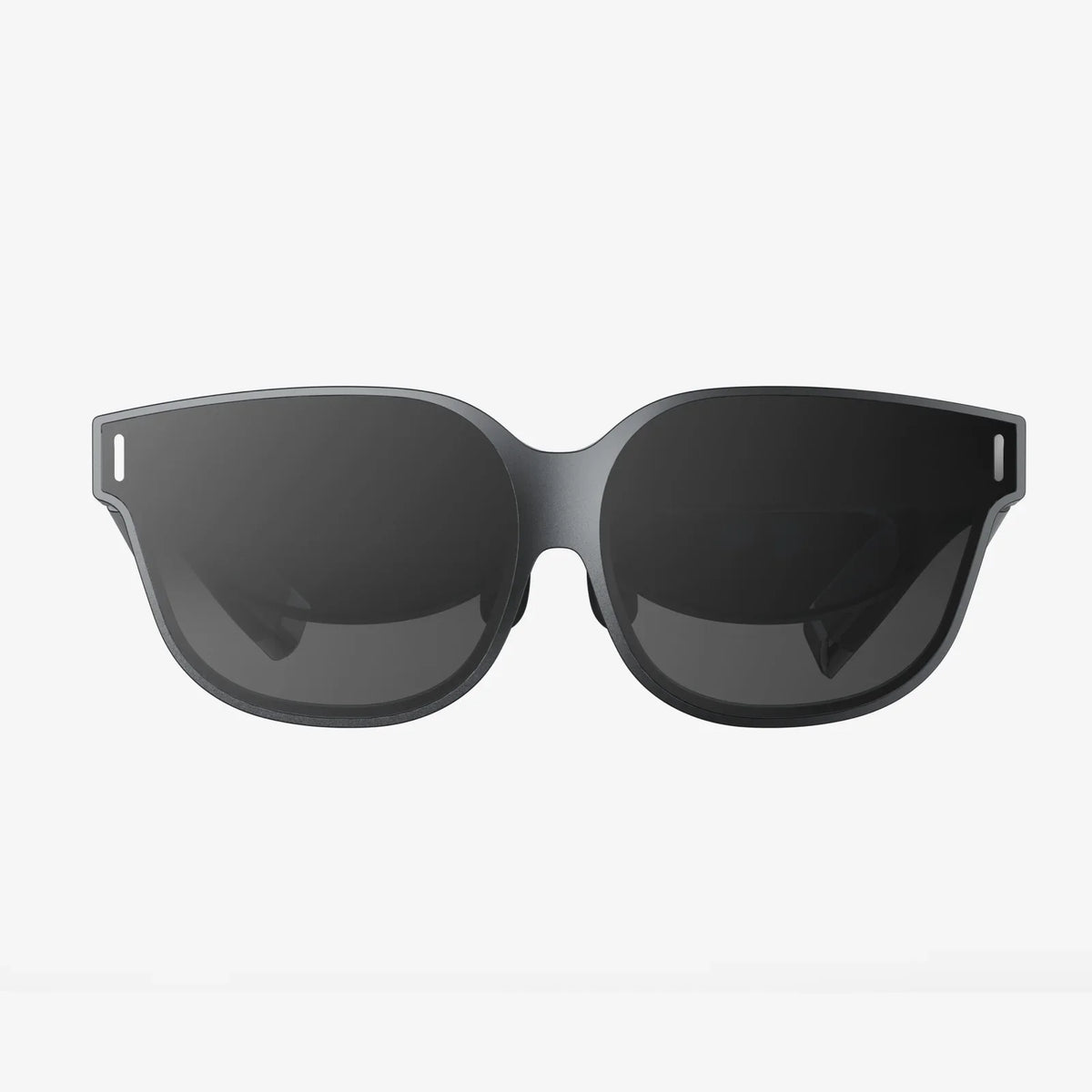
Hardware Limitations: Despite rapid advances, headsets can still be bulky, expensive, and have limited battery life. Achieving a form factor that is as socially acceptable and comfortable as a pair of eyeglasses remains the ultimate goal for consumer adoption.
The Social Acceptance Hurdle: Wearing technology on your face in social settings is still a barrier. Questions about etiquette, distraction, and the digital divide need to be addressed as these devices become more common.
Perhaps the most profound challenges are not technical but ethical. As MR blurs the line between what is real and what is digital, it raises critical questions.
These are not problems for engineers alone to solve. They require a broad societal conversation involving policymakers, ethicists, technologists, and the public to establish norms, regulations, and ethical frameworks for building this new layer of reality responsibly.
The journey of immersive mixed reality technology is just beginning. We are standing at the precipice of a new era, one where the digital and physical will cease to be separate realms. The devices will get smaller, smarter, and more integrated into our daily lives, moving from headsets to sleek glasses and eventually to contact lenses or neural interfaces. The applications we can't even conceive of today will become tomorrow's necessities. This technology holds the key to solving complex problems, unlocking human potential, and connecting us in ways previously confined to science fiction. But its ultimate impact rests in our hands. It is a tool, and like any powerful tool, its value will be determined by the wisdom, intention, and humanity with which we choose to wield it. The future isn't just something we enter; it's something we actively create, and mixed reality provides the canvas. The question is, what will we choose to paint on it?