


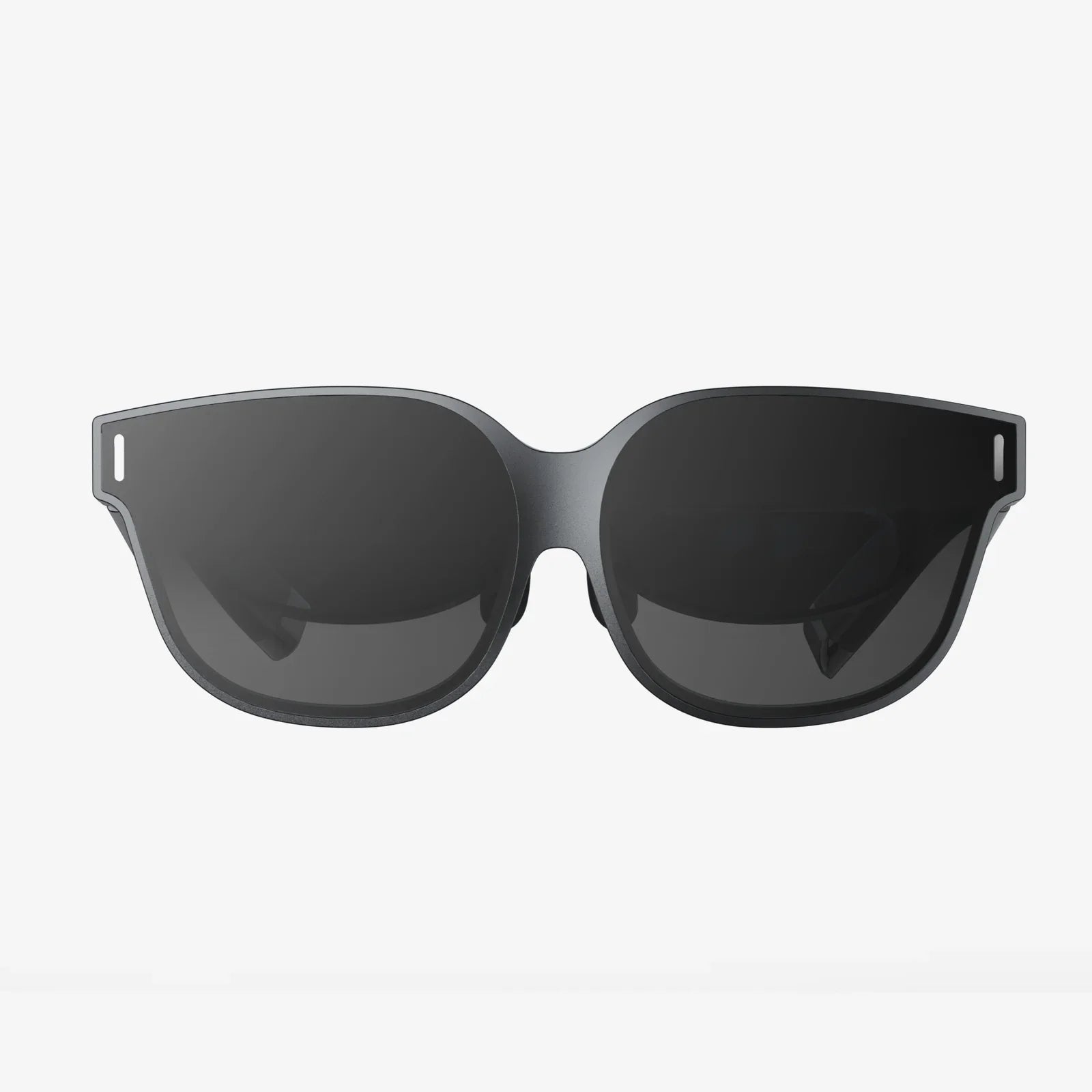
You’ve strapped on a headset and been transported to a new world. You’ve looked around, controlled a game with your gaze, and felt a sense of being somewhere else. But was it true immersion, or just a compelling glimpse? The distinction between standard virtual reality and its more advanced cousin, immersive virtual reality, is the difference between watching a documentary about the ocean and scuba diving through a coral reef. One is an experience you observe; the other is an environment you inhabit. This isn't just a matter of semantics or marketing jargon—it's a fundamental chasm in technological capability and human experience that is reshaping everything from entertainment to enterprise. Understanding this divide is the first step to navigating the future of digital interaction.
Defining the Realms: From Simulation to Sensation
To understand the battle of 'immersive virtual reality vs virtual reality,' we must first establish clear definitions. Often used interchangeably in casual conversation, these terms represent two distinct points on a spectrum of technological immersion.
What is Virtual Reality (VR)?
At its core, Virtual Reality is a computer-generated simulation of a three-dimensional environment. Users can interact with this environment using specialized electronic equipment, primarily a head-mounted display (HMD). The goal of traditional VR is to create a convincing enough illusion to temporarily suspend the user's disbelief. It replaces the real world with a digital one, but the user often remains acutely aware of the technology mediating the experience. Interaction is typically limited—perhaps to a game controller or simple hand-tracking—and the sensory engagement is primarily visual and auditory. The user is an operator within a simulation.
What is Immersive Virtual Reality (IVR)?
Immersive Virtual Reality is the evolution of this concept. It doesn't just aim to show you a new world; it aims to make you forget the old one entirely. IVR is an umbrella term for an experience that uses a combination of hardware and software to create a multi-sensory, interactive, and psychologically convincing digital environment. The key differentiator is presence—the undeniable, gut-level feeling of actually being in the virtual space. This is achieved through a holistic approach that engages more of the user's senses and allows for natural, intuitive interaction. The user isn't an operator; they are a participant, an inhabitant.
The Pillars of True Immersion: What Separates IVR from VR
The line between VR and IVR is drawn across several technological and experiential axes. It's not defined by any single product but by the combination of features that work in concert to produce a state of deep immersion.
1. Degrees of Freedom (DoF): The Freedom to Move
This is one of the most fundamental technical differentiators.
- 3DoF (Three Degrees of Freedom): Associated with simpler, often mobile-powered VR systems. It tracks rotational movement only: pitch (tilting your head up and down), yaw (turning your head left and right), and roll (tilting your head side to side). It's like sitting in a swivel chair; you can look around your environment, but you cannot lean forward or move through it physically. This is a hallmark of basic VR.
- 6DoF (Six Degrees of Freedom): The cornerstone of Immersive VR. It tracks rotational movement and positional movement. This means it adds tracking for moving forward/backward, up/down, and left/right. With 6DoF, you can duck to avoid a virtual object, lean over a virtual railing, or walk around a virtual object to inspect it. This ability to move freely within the space is critical for fostering presence and is non-negotiable for a true IVR experience.
2. Tracking Systems: The Unseen Guide
How a system achieves 6DoF is another key differentiator.
- Outside-In Tracking: Uses external sensors or base stations placed around the room to track the position of the headset and controllers. It's highly accurate but requires setup and is confined to a specific, calibrated space.
- Inside-Out Tracking: The headset itself has built-in cameras and sensors that map the environment and track its own position relative to the room. This eliminates external hardware, making the system more portable and easier to set up, which is a significant step towards broader accessibility for IVR.
3. Interaction Fidelity: Your Hands in the Machine
Basic VR often relies on traditional gamepads or simple laser-pointer style controllers. IVR demands more. It utilizes motion-tracked controllers that mimic hand movements, allowing for intuitive actions like grabbing, throwing, pushing, and pulling. The next frontier is haptic feedback—technology that simulates the sense of touch. This can range from simple vibrations that simulate a weapon's recoil to advanced force feedback that creates resistance when you push against a virtual wall or touch a virtual object. This tactile engagement is a massive leap towards full immersion, making digital interactions feel tangible and real.
4. Field of View (FoV) and Resolution: Filling Your Vision
A standard VR headset might have a field of view of around 90-110 degrees. While this is wide, users often describe it as looking through a diving mask or a pair of binoculars; you can see the world, but the black borders of the display are always present, reminding you of the headset's confines. IVR strives for a much wider FoV, ideally approaching the human peripheral vision of around 180-220 degrees. Coupled with high-resolution displays that eliminate the "screen door effect" (the visible lines between pixels), a wide FoV is essential for selling the illusion of reality and making the digital world feel boundless.
5. Audio: The 360-Dimension Soundscape
Immersion is shattered by generic stereo sound that doesn't change as you move your head. IVR employs advanced 3D spatial audio. This technology mimics how sound waves interact with the human ears and the environment, allowing sounds to come from specific points in 3D space. The chirp of a bird will sound like it's above and behind you. An opponent's footsteps will grow louder and change directionality as they approach from your left. This auditory realism is arguably just as important as visual realism for creating a convincing sense of place.
The Experience Spectrum: From Consumption to Embodiment
The technological differences manifest as a vast gulf in user experience and application.
The Standard VR Experience
Traditional VR is fantastic for consumed experiences. It excels in:
- 360-Video Viewing: Watching recorded videos from a fixed point.
- Simple Mobile Games: Experiences designed for 3DoF, often with gaze-based controls.
- Basic Architectural Visualizations: Static walkthroughs of a digital building model.
The user is essentially a camera on a tripod within the digital world—able to look around but not truly explore.
The Immersive VR Experience
IVR enables embodied experiences. Its applications are profound and transformative:
- High-Fidelity Training Simulations: Surgeons can practice complex procedures on virtual anatomy with haptic feedback that simulates tissue resistance. Astronauts can train for spacewalks where every movement and tool interaction is physically simulated.
- Social VR Platforms: These are not just chat rooms with avatars. In IVR social spaces, your avatar's movements mirror your own. You can make eye contact, use hand gestures to communicate, and share a sense of personal space with others, creating a powerful and genuine sense of togetherness that flat screens cannot replicate.
- Complex Design and Engineering: Designers can step inside their 3D models of cars or buildings, inspecting every weld or electrical conduit at life-size scale, manipulating parts with their hands in an intuitive way that a mouse and keyboard could never allow.
- Physical Rehabilitation: Patients recovering from injuries can engage in gamified physical therapy within IVR, where their full-body movements are tracked and guided, turning repetitive exercises into engaging adventures.
The Future Trajectory: Where Are We Headed?
The distinction between VR and IVR will likely blur and then vanish entirely as technology progresses. Standard VR is the stepping stone, the proving ground for the concepts that will define the fully immersive metaverse. The future of IVR is focused on overcoming the final barriers to true presence.
- Photorealistic Graphics: Powered by evermore powerful processors and real-time ray tracing.
- Varifocal Displays: Systems that track your eyes and adjust the focal plane of the image to mimic how we focus on near and far objects in reality, reducing eye strain and increasing visual realism.
- Advanced Haptics: Full-body haptic suits that let you feel rain, wind, and impact, and ultrahaptics that use focused ultrasound to create tactile sensations in mid-air.
- Brain-Computer Interfaces (BCI): The ultimate frontier, potentially allowing us to control virtual environments with our thoughts and receive sensory information directly, bypassing traditional hardware altogether.
This evolution will see IVR become less of a designated activity—something you 'do' with a headset—and more of a persistent layer integrated into our daily lives, a utility for work, connection, and creativity.
Choosing Your Reality: A Matter of Purpose
For the consumer or enterprise today, the choice between VR and IVR is not about which is 'better,' but about which is appropriate for the task at hand. Basic VR offers an accessible and often more affordable entry point for casual entertainment and simple applications. Immersive Virtual Reality is the tool for when the experience itself is the product—when the goal is training, deep social connection, sophisticated design, or creating memories that feel as real as any physical trip.
The journey into virtual worlds is one of the most exciting technological narratives of our time. That first moment you instinctively ducked under a virtual beam or reached out to touch a digital creature wasn't just a neat trick; it was a preview of a fundamental shift in human-computer interaction. The gap between looking at a simulation and living within it is the entire story of immersive virtual reality vs virtual reality. As the technology continues its relentless march forward, that line will not just be crossed—it will be erased, leaving us with a future where our digital and physical realities are seamlessly, and irresistibly, intertwined.
Share:
What Is Virtual Reality Simple Explanation: A Beginner's Guide to the Digital Universe
Mixed Reality vs Virtual Reality Differences: A Complete Guide to Immersive Technologies