


- by wangfred
What Is Virtual Reality Simple Explanation: A Beginner's Guide to the Digital Universe
- by wangfred
Have you ever dreamed of stepping through your screen, of visiting impossible places, or of experiencing a story not as an observer but as a participant? This is the fundamental promise of virtual reality, a technology that has captured the global imagination and is rapidly moving from science fiction to everyday life. It’s a concept that sounds complex, shrouded in technical jargon, but at its heart, it is a profoundly simple and human endeavor: the quest to create and experience new worlds.
At its most basic, virtual reality (VR) is a computer-generated simulation of a three-dimensional environment that a person can interact with in a seemingly real or physical way. Think of it as the ultimate illusion. Instead of watching a screen in front of you, you are placed inside an experience. You can look around in all directions—up, down, sideways, behind you—and the world responds to your movements. This feeling of actually "being there" is known as presence, and it is the magic ingredient that separates VR from any other form of media.
Imagine putting on a headset and suddenly finding yourself on the surface of Mars. The red, dusty landscape stretches out to the horizon. You can kneel down to examine a rock formation, look up at the pinkish sky, and even see your own digital hands if you reach out. This isn't a pre-recorded video; it's a 360-degree, interactive world generated in real-time. Your brain, convinced by the visual and auditory cues, accepts this digital reality as your current truth. That is the simple, powerful goal of VR.
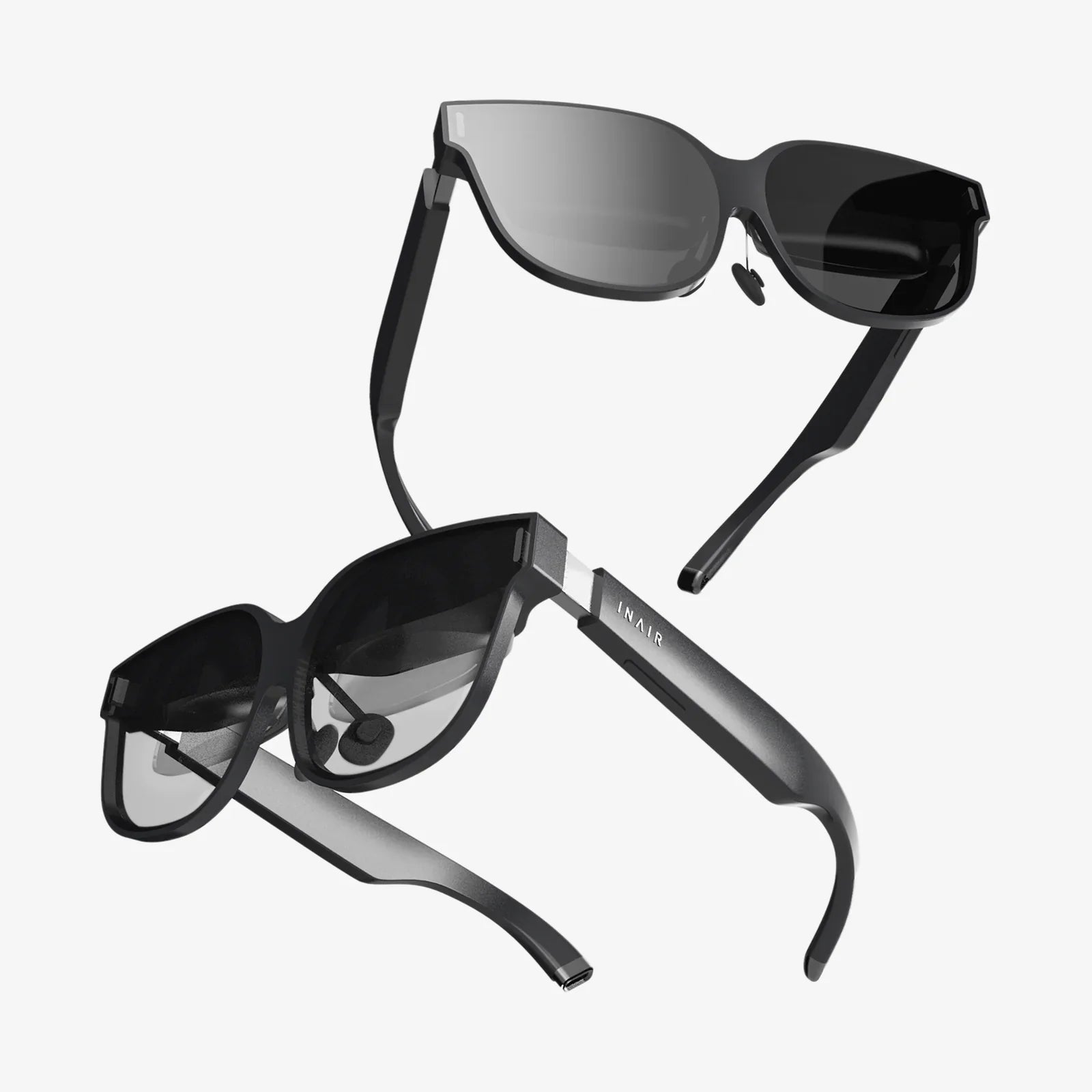
Creating this illusion requires some key pieces of technology that work in harmony. The experience typically begins with a headset, often called a head-mounted display (HMD). This is the wearable device that contains the screens you look into, one for each eye. This dual-screen setup is crucial because it creates a stereoscopic 3D effect, giving depth to the world, just like how our two eyes perceive depth in the real world.
These headsets are also packed with sensors—gyroscopes, accelerometers, and magnetometers—that constantly track the rotation and orientation of your head. This is called head tracking. When you turn your head to the left, the sensors detect this movement and the image on the screens shifts instantly to the left, showing you the virtual world to your left. This low latency, or minimal delay, is critical. If there's even a slight lag between your movement and the world's response, it can break the sense of immersion and even cause discomfort.
Many advanced systems also incorporate motion tracking, which goes beyond just your head. Using external cameras or sensors placed around the room, or cameras on the headset itself (inside-out tracking), the system can track the position of your entire body and especially your hands, often through controllers you hold. This allows you to reach out, grab objects, push buttons, or wield a virtual sword. Your real-world movements are directly mapped onto your digital avatar.
Finally, high-quality audio delivered through headphones completes the sensory package. Spatial audio is a key technology here. It mimics how sound behaves in the real world; if a bird is chirping to your right in the virtual forest, you will hear it more prominently in your right ear. This auditory trick is surprisingly effective at convincing your brain of the reality of the scene.
It's helpful to understand that "virtual reality" exists on a spectrum of technologies often grouped under the term "extended reality" or XR. The two closest relatives to VR are often confused with it.
If VR is about replacing your reality with a digital one, Augmented Reality (AR) is about adding digital elements to your real world. Using a device like a smartphone, tablet, or transparent glasses, AR overlays computer-generated images onto your live view of your surroundings. A classic example is the popular mobile game that placed cartoon creatures in your local park, viewable through your phone's camera. AR is about enhancement rather than escape.
Mixed Reality (MR) is a more advanced blend of both VR and AR. In MR, digital objects don't just overlay the real world; they can interact with it. A virtual character might jump up and sit on your real-world sofa, or a digital ball could bounce off your actual wall. This requires sophisticated understanding of the physical environment, usually achieved through advanced cameras and sensors that scan and map the room. MR represents the frontier where the digital and physical worlds coalesce.
In simple terms: VR replaces reality, AR adds to it, and MR allows both to interact seamlessly.
While gaming is the most famous and lucrative application, providing unparalleled immersive adventures, the potential of VR stretches far beyond entertainment. Its ability to simulate any environment safely and repeatedly is revolutionizing numerous fields.
VR is the ultimate field trip. Students can walk through ancient Rome, explore the human bloodstream from the inside, or practice complex chemistry experiments without any risk of explosion. For training, the applications are even more profound. Surgeons can practice delicate procedures on virtual patients, mechanics can learn to repair complex engines before touching a real tool, and astronauts can simulate spacewalks. This "learn by doing" in a risk-free environment dramatically improves retention and skill acquisition.
Therapists are using VR for exposure therapy, helping patients with phobias like fear of heights or flying to confront their anxieties in a controlled, gradual way. It's also used for pain management, as the immersive experience can distract the brain from processing pain signals. Furthermore, VR is a powerful tool for physical rehabilitation, turning repetitive exercises into engaging games that motivate patients to complete their routines.
Imagine being able to walk through a building before the foundation is even poured. Architects and designers use VR to create virtual walkthroughs of their plans. Clients can experience the scale, lighting, and flow of a space, allowing them to make changes early in the design process, saving immense time and resources. Car manufacturers use it to prototype new vehicle interiors, testing ergonomics and aesthetics long before a physical model is built.
VR is evolving into a new platform for social interaction. Platforms exist where people can meet as digital avatars, watch movies together in a virtual cinema, attend live concerts, or simply hang out in a digital living room. For business, this translates to virtual meeting rooms where colleagues from across the globe can collaborate as if they were in the same space, examining 3D models of products or brainstorming on virtual whiteboards.
The technology is advancing at a breathtaking pace. Headsets are becoming smaller, wireless, and more comfortable, with resolutions so high the digital screen door effect is disappearing. Haptic feedback technology, which provides touch sensations through gloves or suits, is developing rapidly, promising to add the sense of touch to the visual and auditory immersion.
The long-term vision for many in the industry is the concept of the "metaverse"—a persistent, shared, and interconnected universe of virtual spaces. It’s envisioned as the next evolution of the internet, a embodied space where we will work, play, and socialize. While this remains a speculative future, the foundational technology being built today through VR is what will make it possible.
If this simple explanation has piqued your curiosity, experiencing VR for yourself is easier than ever. The entry point can be as simple as using your smartphone with an inexpensive headset holder, allowing you to experience basic 360-degree videos. For a more interactive and high-quality experience, standalone headsets are widely available. These all-in-one devices require no connection to a powerful computer, making them user-friendly and accessible. For the ultimate high-fidelity experience, often preferred by hardcore gamers, there are PC-connected headsets that leverage the processing power of a desktop computer for the most stunning and complex virtual worlds.
The true power of virtual reality is not in the complexity of its technology, but in the simplicity of its promise: to transcend the limits of our physical reality. It is a tool for empathy, allowing us to see the world through another's eyes. It is a tool for creation, enabling us to build and experience the impossible. It is, ultimately, a new canvas for the human experience, limited only by our imagination. This is not just the future of entertainment; it is a new chapter in storytelling, connection, and human understanding, and it's an adventure that is just beginning.
Share:
Data Virtual Reality Uses: A Deep Dive into Immersive Analytics and Beyond
Immersive Virtual Reality vs Virtual Reality: A Deep Dive into the Digital Divide