


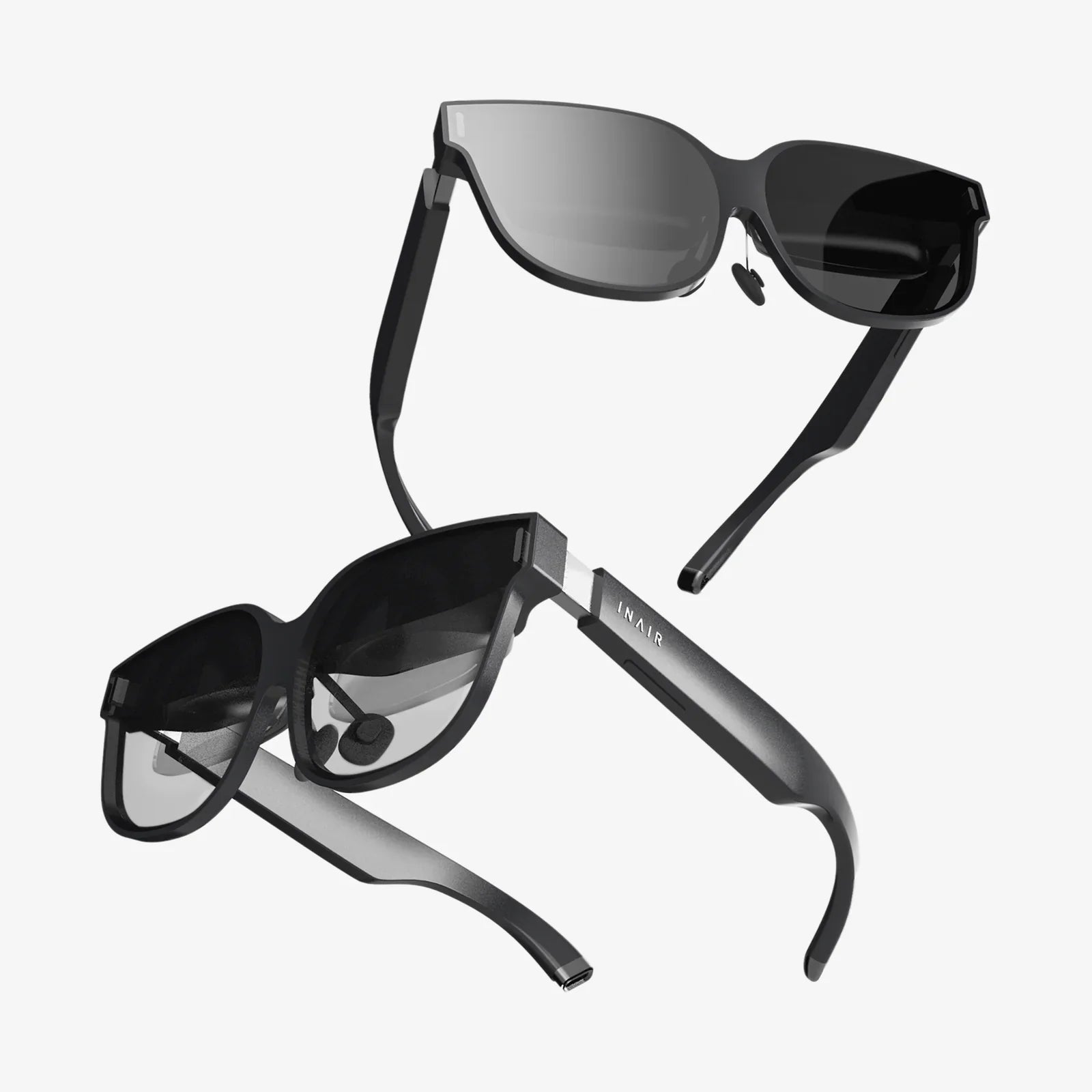
Imagine stepping through a portal into another world. Not on a screen, but all around you. The ground beneath your feet feels alien, the sounds are spatially precise, and your own hands—your real hands—are manipulating a digital environment. This is no longer the stuff of science fiction; it is the palpable, present reality being forged by immersive VR technology. This technological leap is not merely an upgrade to entertainment; it is a fundamental shift in how we interact with information, with each other, and with the very fabric of experience itself. It promises to dissolve the barriers of geography, physics, and even perception, placing us at the center of digital worlds that feel as real and consequential as our own.
The Pillars of Presence: How True Immersion is Engineered
At its heart, the goal of immersive VR technology is to achieve a state known as "presence"—the undeniable, subconscious feeling of being in a place other than your physical location. This is the holy grail, and it is accomplished through a sophisticated convergence of hardware and software designed to trick the human sensory system.
Visual Fidelity: The Window to Another World
The primary gateway to immersion is sight. Early VR was plagued by low-resolution displays and a "screen door effect," where users could see the gaps between pixels, shattering the illusion. Modern immersive VR technology employs high-resolution OLED or LCD panels with incredibly high pixel density, effectively eliminating this barrier. Furthermore, a high field of view (FOV), often exceeding 100 degrees, ensures our peripheral vision is engaged, preventing the feeling of looking through binoculars. Perhaps most critically, a high refresh rate—90Hz or higher—is essential. This ensures smooth, low-latency motion that keeps up with our head movements. Any lag between physical movement and the visual response creates latency, the single biggest cause of simulator sickness and a direct antagonist to presence.
Audio: The Unseen Architect of Space
While visuals capture our focus, 3D spatial audio is the unseen architect that builds the world around us. It is what tells us if a sound is coming from behind, above, or far away. Immersive VR technology uses advanced head-related transfer function (HRTF) algorithms to simulate how sound waves interact with the unique shape of a user's head and ears. This creates a soundscape that is dynamically responsive to head position and orientation. The creak of a floorboard directly to your left, the distant echo of thunder that feels miles away, or the whisper of a character right over your shoulder—these audio cues are non-negotiable for convincing our brains that the virtual environment is a real, physical space.
Haptics and Interaction: The Language of Touch
True immersion cannot be a spectator sport; it requires interaction. This is where haptic feedback and intuitive controllers come into play. Early controllers were simple wands, but today's systems feature ergonomic designs with finger-tracking capabilities, allowing for natural gestures like pointing, grabbing, and throwing. Haptic feedback provides the crucial sense of touch through precise vibrations and force feedback. You can feel the texture of a virtual stone, the recoil of a tool, or the impact of a virtual object. The frontier of haptics is expanding into full-body suits and gloves that can simulate pressure, temperature, and resistance, moving us closer to a future where digital touch is indistinguishable from the real thing.
Tracking: The Dance of the Physical and Digital
All these elements are held together by robust tracking systems. Inside-out tracking, where cameras on the headset itself map the environment, and outside-in tracking, using external sensors, work to create a millimeter-accurate understanding of the user's position in space. This allows for six degrees of freedom (6DoF) movement—the ability to not just rotate your head (3DoF) but also to lean, crouch, and walk around within a defined play area. This precise translation of real-world movement into the digital realm is what completes the feedback loop, making your body an active participant in the experience.
Beyond the Game: The Expansive Applications of Immersive VR
While gaming remains a powerful driver of consumer adoption, the true revolution of immersive VR technology is happening far beyond the living room. It is becoming a critical tool in fields where experience, empathy, and precision are paramount.
Revolutionizing Education and Training
Immersive VR technology is transforming pedagogy from a passive exercise into an active, experiential journey. Instead of reading about ancient Rome, history students can walk its streets, hear the forum's debates, and witness the scale of its architecture. Medical students can practice complex surgical procedures on virtual patients, making mistakes without consequence and mastering techniques through repetition in a risk-free environment. Astronauts, pilots, and heavy machinery operators all use VR simulators to train for high-stakes scenarios that would be too dangerous or costly to replicate in the real world. This "learning by doing" in a fully simulated environment dramatically improves knowledge retention and skill acquisition.
The Scalpel and the Simulation: VR in Healthcare
In healthcare, VR is a tool for both healing and innovation. Surgeons use detailed, patient-specific 3D models derived from CT and MRI scans to plan and rehearse complex operations, leading to shorter surgery times and improved outcomes. For patients, immersive VR technology is a powerful weapon against pain and anxiety. It is used as a form of cognitive behavioral therapy for treating phobias, PTSD, and severe anxiety disorders by allowing controlled exposure to triggers in a safe setting. It also serves as a potent distraction technique for patients undergoing painful procedures like wound care or chemotherapy, transporting them to calming, engaging environments that reduce perceived pain levels.
Architecting the Future and Revisiting the Past
In architecture, engineering, and construction (AEC), immersive VR technology is revolutionizing the design process. Architects and their clients can don a headset and walk through a full-scale, photorealistic model of a building long before the foundation is poured. They can test sightlines, assess spatial relationships, and identify design flaws that would be invisible on a 2D blueprint. This not only saves enormous costs on future changes but also ensures the final product perfectly aligns with the client's vision. Similarly, historians and archaeologists are using VR to digitally preserve and reconstruct historical sites, allowing the public to experience them in their original glory, untouched by time or tourism.
The Virtual Workspace: Redefining Remote Collaboration
The rise of remote work has exposed the limitations of flat video conferencing. Immersive VR technology offers a compelling alternative: the virtual meeting room. Colleagues from across the globe can gather as lifelike avatars in a shared digital space, interacting with 3D models, whiteboards, and data visualizations as if they were physical objects. This fosters a much stronger sense of shared presence and collaboration than a grid of video feeds ever could, making complex design reviews, brainstorming sessions, and training programs far more effective and human-centric.
The Human Factor: Navigating the Ethical and Social Frontier
As with any transformative technology, the rise of immersive VR brings a host of profound ethical, psychological, and social questions that society must grapple with.
The Privacy Paradox in a Captured World
VR headsets are arguably the most intimate data-collection devices ever created. They don't just track what you look at; they track how you look at it—your gaze, your pupil dilation, your precise movements, and your reactions within a simulated environment. This biometric data is a treasure trove of information about your subconscious preferences, cognitive state, and even your emotional responses. The question of who owns this data, how it is used, and how it is protected is paramount. The potential for manipulation, targeted advertising, and psychological profiling is unprecedented, demanding robust ethical frameworks and privacy regulations specifically designed for this new medium.
The Blurred Lines of Reality and Consequences
As experiences become more real, the line between virtual actions and their real-world consequences may blur. Studies have shown that experiences in VR can feel authentic and can have lasting psychological effects, both positive and negative. This raises questions about accountability for actions within virtual spaces and the potential for new forms of trauma. Furthermore, the concept of "virtual crime"—harassment or assault in a VR social platform—presents a legal gray area. While no physical harm occurs, the psychological impact on the victim can be very real, challenging our existing legal and social norms.
The Specter of the Metaverse and Digital Inequality
The concept of a persistent, interconnected metaverse—a network of virtual worlds—is a direct extension of immersive VR technology. While promising a new frontier for social and economic activity, it also risks exacerbating existing social inequalities. Access to high-quality VR requires significant financial resources, potentially creating a divide between those who can afford to participate in these new digital economies and social spheres and those who cannot. There is also a risk of escapism, where individuals may prefer a curated virtual reality to the complexities of the physical world, leading to social isolation and disengagement.
The Next Frontier: Where Do We Go From Here?
The current state of immersive VR technology, while advanced, is still just the beginning. The next decade will be defined by several key trends that will push the boundaries of immersion even further. Brain-computer interfaces (BCIs) are being developed to allow direct neural control of virtual environments, potentially bypassing controllers entirely. Advancements in haptics will lead to clothing that can simulate touch, temperature, and pressure. Eye-tracking technology will enable foveated rendering, where graphics are rendered in high resolution only where the user is looking, drastically reducing the computational power required for photorealistic visuals. Artificial intelligence will be used to generate dynamic, responsive worlds that adapt to the user in real-time.
The journey into the virtual is accelerating, and it is a path that will redefine the human experience in ways we are only beginning to comprehend. It is a tool of immense power—for creation, connection, and understanding. The challenge ahead is not just technological; it is human. It is our responsibility to guide its development with careful consideration, ensuring that these new worlds we build are designed not to escape our humanity, but to enhance it, creating a future where our physical and digital lives coexist in a richer, more meaningful symbiosis. The headset is becoming a gateway, and on the other side lies not just entertainment, but a new layer of reality itself.
Share:
Virtual Places Are Redefining Reality, Community, and Human Experience
Best AI Meeting Summary Tool: The Ultimate Guide to Reclaiming Your Time