


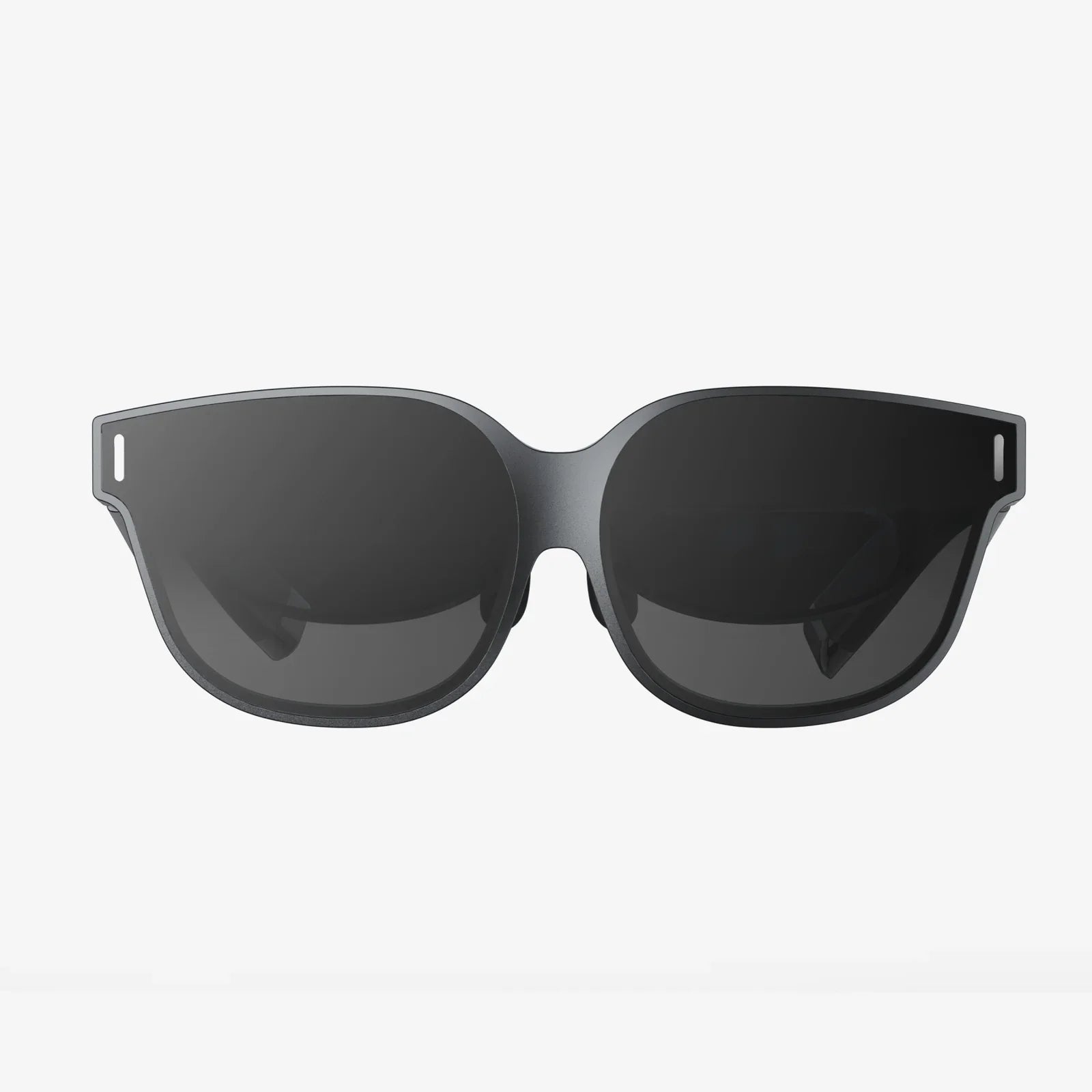
- by wangfred
Immersiverse VR Virtual Reality Viewer: Your Portal to Uncharted Digital Realms
- by wangfred
Imagine slipping on a sleek, technological visor and, in an instant, the walls of your room dissolve into the crystalline depths of a coral reef, the bustling stands of a Roman coliseum, or the silent, awe-inspiring vastness of a Martian canyon. This is no longer the stuff of science fiction; it is the immediate, breathtaking reality offered by the modern immersiverse VR virtual reality viewer. This device is far more than a piece of hardware; it is a key, a conduit, a personal stargate that unlocks doors to experiences previously confined to our dreams. The journey from a novel gadget to a foundational technology for the next era of human-computer interaction is a story of rapid innovation, profound potential, and a vision of a future where the digital and physical seamlessly merge. This is the story of your next window to the world, and to worlds beyond.
At its core, a contemporary immersiverse VR virtual reality viewer is a masterpiece of miniaturized engineering, a symphony of components working in perfect harmony to craft the illusion of reality. Understanding its architecture is key to appreciating the magic it produces.
The journey into virtuality begins with the eyes. Modern viewers employ twin high-resolution OLED or LCD screens, one for each eye, positioned behind a complex series of lenses. These lenses are the unsung heroes, performing the critical task of focusing and reshaping the light from the tiny screens to fill your entire field of view, eliminating the distracting edges of a monitor and creating a continuous, panoramic visual field. The pursuit of higher resolutions and faster refresh rates is relentless, aimed at banishing the "screen door effect" and achieving visual fidelity so crisp and fluid that the digital becomes indistinguishable from the organic.
For a virtual world to feel authentic, it must respond to your every movement with imperceptible latency. This is achieved through a sophisticated array of sensors known as Six Degrees of Freedom (6DoF) tracking. Inertial Measurement Units (IMUs)—gyroscopes, accelerometers, and magnetometers—track the orientation of your head (rotation: pitch, yaw, and roll).
Complementing this, external cameras or outward-facing sensors on the viewer itself perform inside-out tracking, mapping the physical room and tracking its position within it (translation: moving forward/back, left/right, up/down). This combination allows you to naturally duck under a virtual low-hanging branch, lean over a digital railing to peer into an abyss, or walk around a holographic object to examine it from every angle. The virtual environment becomes a stable, persistent space that respects the laws of physics and your presence within it.
Visuals are only half the experience. True immersion is shattered if a sound doesn't behave as it should in the real world. Advanced viewers incorporate spatial audio technology, which uses Head-Related Transfer Functions (HRTF) to simulate how sound waves interact with the human head and ears. The result is breathtakingly realistic 3D sound. You can hear the faint whisper of an character approaching from behind you, the distinct echo of your footsteps in a vast cathedral emanating from below, or the precise location of a buzzing bee circling your head. This auditory layer is not an accessory; it is a fundamental pillar that anchors you firmly within the immersiverse.
Our interaction with the world is not passive; we touch, grab, push, and pull. VR controllers are the extensions of our hands in the digital realm. Equipped with their own tracking sensors and a suite of buttons, joysticks, and triggers, they translate our physical gestures into digital actions. The real magic, however, lies in haptic feedback. Advanced rumble motors and, on the horizon, more exotic technologies like ultrasonic or muscle stimulation, provide tactile sensations. You can feel the subtle vibration of a virtual bowstring being drawn, the jarring kick of a digital tool, or the weight of an object placed in your hand. This feedback closes the loop, transforming a visual spectacle into a tangible, interactive experience.
While gaming remains a powerful and popular driver of adoption, the true potential of the immersiverse VR virtual reality viewer extends far beyond entertainment, seeping into the very fabric of professional, educational, and social spheres.
Imagine medical students performing intricate virtual dissections without ever touching a cadaver, or practicing complex surgical procedures in a risk-free environment. Envision apprentice mechanics taking apart a hyper-realistic simulation of a jet engine, or history students standing witness to the signing of a pivotal historical document. VR viewers enable experiential learning, transforming abstract concepts into lived experiences. This "learning by doing" in a safe, repeatable, and cost-effective virtual space dramatically improves knowledge retention and skill acquisition.
From architecture and real estate to manufacturing and retail, VR is reshaping business. Architects and clients can walk through full-scale 3D models of unbuilt structures, experiencing the flow of space and light long before ground is broken. Global design teams can collaborate in a shared virtual room, manipulating 3D prototypes of new products as if they were physical objects in front of them. Car manufacturers use VR for ergonomic studies and design reviews, saving millions in prototyping costs. The viewer becomes an essential tool for visualization, collaboration, and innovation.
The concept of "social media" is evolving into "social presence." VR platforms allow people to gather as lifelike avatars in virtual spaces—from concert halls and movie theaters to serene beaches and abstract worlds. The sense of shared presence, of being in the same room with someone who is physically thousands of miles away, is profound and emotionally resonant. Furthermore, filmmakers and artists are exploring VR as a new narrative medium, creating immersive documentaries and stories where you are not just a viewer but an occupant within the narrative, able to look anywhere and become part of the story.
The therapeutic applications of VR viewers are vast and growing. They are used for exposure therapy, helping patients safely confront and manage phobias like fear of heights or flying. They can create calming, guided meditative environments for stress reduction. For patients undergoing painful medical procedures or enduring long-term hospitalization, VR serves as a powerful distraction, transporting them to peaceful, engaging worlds that can reduce perceived pain and anxiety.
The path to a perfect immersiverse is not without its obstacles. Several challenges remain at the frontier of VR development.
Early viewers were often heavy, cumbersome, and tethered to powerful external computers. The industry has made monumental strides toward wireless, standalone devices that are lighter and more comfortable. However, issues like simulator sickness, caused by a disconnect between visual motion and the inner ear's sense of movement, can still affect some users. Future advancements in display technology, lens design, and ergonomics will be crucial to making VR comfortable for multi-hour sessions and accessible to an even broader audience.
Rendering two high-frame-rate, high-resolution feeds simultaneously is incredibly demanding on processing hardware. While standalone viewers have built-in processors, achieving photorealistic graphics requires immense computational power, often found in high-end gaming systems. The industry is engaged in a constant balancing act between visual fidelity, wireless freedom, and cost. Breakthroughs in cloud-based rendering, where the heavy processing is done on remote servers and the video stream is beamed to the viewer, promise a future where hardware limitations are vastly reduced.
As these digital worlds become more compelling, questions arise about prolonged use, digital addiction, and the potential blurring of reality. Furthermore, the collection of vast amounts of biometric and behavioral data within VR raises significant privacy and security concerns. Establishing ethical guidelines, robust privacy protections, and promoting digital wellness will be as important as the technological advancements themselves to ensure the immersiverse develops as a positive force for humanity.
The immersiverse VR virtual reality viewer of today is a glimpse into a future that is arriving faster than many anticipated. The trajectory points toward devices that are lighter, more powerful, and more integrated with our lives. We are moving toward photorealistic graphics powered by real-time ray tracing, hyper-realistic avatars that mirror our facial expressions through advanced eye and face tracking, and haptic technology that evolves from simple vibrations to full-body suits providing nuanced tactile feedback.
The ultimate destination is the concept of the "Metaverse"—a persistent, interconnected network of virtual spaces and experiences, an embodied internet where we will work, socialize, learn, and play. The viewer will evolve from a device we put on to a always-ready pair of stylish glasses, and perhaps one day, even a neural interface, making the transition between the physical and digital worlds as effortless as a thought.
The humble viewer is the seed from which this vast digital ecosystem grows. It is the tool that allows us not just to consume content, but to step inside it, to live within it, and to co-create it. It empowers us to explore the outer limits of human creativity, to connect with others in profound new ways, and to experience the impossible. The door is now open. The only question that remains is: which world will you step into first?