


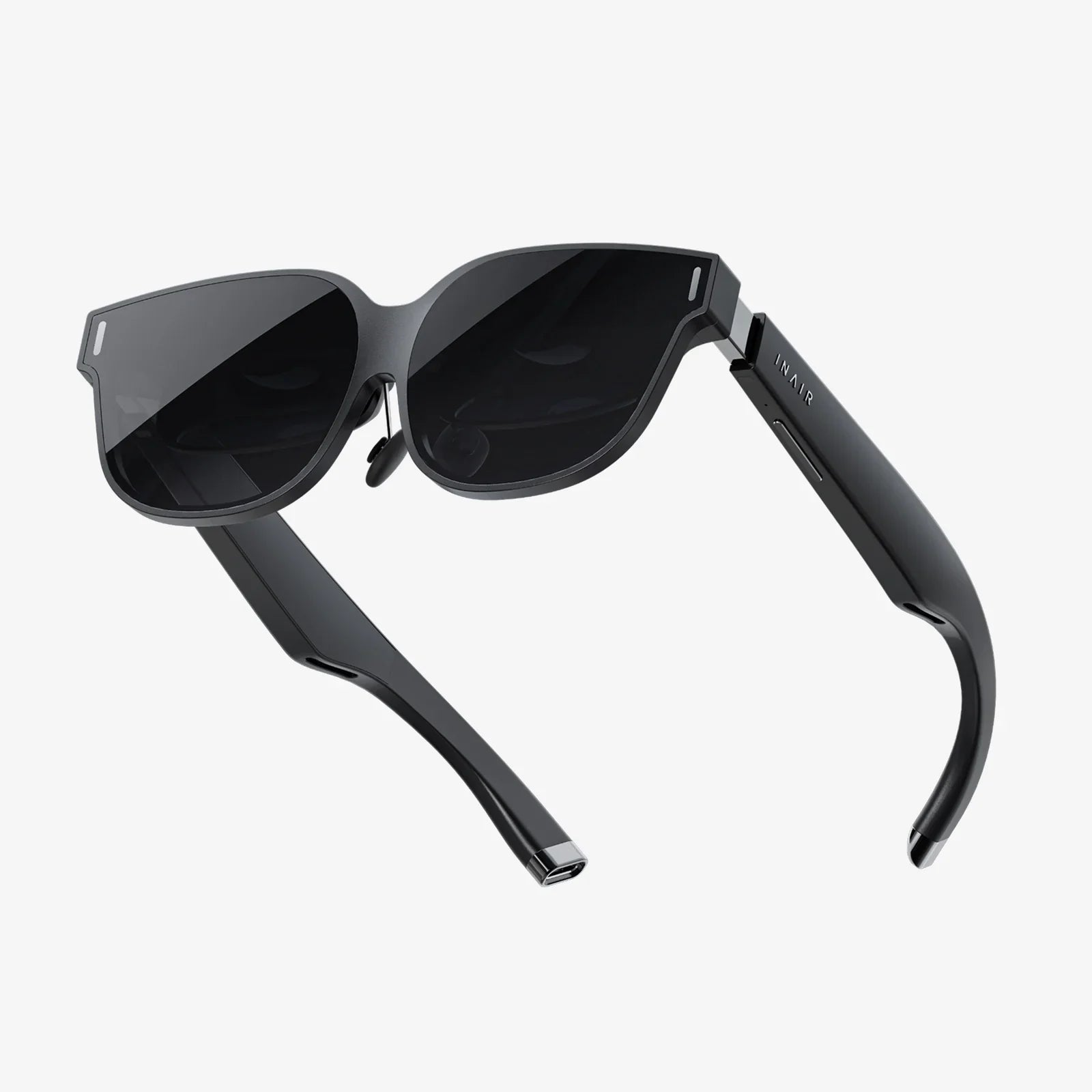
- by wangfred
Impacts of Virtual Reality in Everyday Life: A New Digital Dawn
- by wangfred
Imagine a world where your morning commute is a blink away, your doctor’s appointment happens in your living room, and your child’s history lesson is a fully immersive journey to ancient Rome. This is not a distant sci-fi fantasy; it is the rapidly emerging reality shaped by the pervasive and profound impacts of virtual reality in everyday life. Once confined to the realms of expensive gaming rigs and niche industrial applications, VR technology is now poised at the precipice of mass adoption, ready to seep into the very fabric of our daily routines, redefining how we work, learn, connect, and perceive the world around us. The headset is becoming the new portal, and on the other side lies a revolution that promises to be as disruptive as the smartphone, altering human experience in ways we are only beginning to comprehend.
The journey of virtual reality from a captivating concept to a practical tool is a story of exponential technological advancement. Early iterations were characterized by clunky hardware, low-resolution displays, and a tendency to induce motion sickness, effectively limiting their appeal. However, breakthroughs in processing power, display technology, and motion tracking have ushered in a new era. Modern standalone headsets are lighter, more comfortable, and significantly more powerful, offering high-fidelity visual and auditory experiences that foster a genuine sense of presence—the psychological phenomenon where a user feels truly "there" in the virtual environment. This enhanced sense of immersion is the key that unlocks VR's potential, transforming it from a passive viewing experience into an active, embodied one. This technological maturation is the catalyst, making the widespread impacts of virtual reality in everyday life not just possible, but inevitable.
Perhaps one of the most significant and life-altering applications of VR is within the field of healthcare. Its impact here is twofold: as a powerful tool for medical professionals and a transformative agent for patient care.
Surgeons are now using VR to step inside detailed, 3D reconstructions of a patient's anatomy long before making an incision. This allows for intricate preoperative planning, reducing risks and improving outcomes. Furthermore, VR simulation platforms provide medical students and seasoned surgeons alike with a risk-free environment to practice complex procedures. They can repeat operations countless times, encounter rare complications, and hone their skills without any danger to a patient, fundamentally elevating the standard of surgical training.
VR has emerged as a potent non-pharmaceutical tool for pain management. By immersing patients in calming, engaging virtual worlds, VR effectively distracts the brain from processing pain signals. This is particularly beneficial for burn victims during wound care or individuals suffering from chronic pain conditions. In physical rehabilitation, VR turns tedious and often painful exercises into engaging games and activities. A patient recovering from a stroke, for instance, might be motivated to repeatedly move their arm by playing a virtual game of tennis, thereby accelerating their motor skill recovery in a way that traditional physiotherapy struggles to achieve.
For mental health, VR exposure therapy (VRET) is breaking new ground. Therapists can safely and gradually expose patients to the sources of their phobias—such as heights, flying, or public speaking—within a completely controlled virtual setting. This controlled exposure allows patients to confront and manage their anxieties in a safe space, leading to effective treatment for PTSD, anxiety disorders, and phobias. The ability to create tailored, repeatable, and controllable therapeutic environments is a monumental leap forward for psychological care.
The traditional model of education, often criticized for its passive lecture-based format, is being upended by immersive VR experiences. The core impact here is the shift from learning about something to experiencing it.
Imagine a biology student not just reading about the human heart but being able to walk through its chambers, watching blood flow through the valves in real-time. Envision history students standing in the Roman Forum, listening to Cicero, or chemistry students manipulating molecules and observing reactions at an atomic level. VR makes this possible, fostering deep, experiential learning that dramatically improves knowledge retention and conceptual understanding. Abstract concepts become tangible, and distant historical events become visceral experiences.
Beyond academic settings, VR is revolutionizing vocational and corporate training. Mechanics can learn to repair complex machinery, airline pilots can practice emergency procedures in realistic cockpits, and factory workers can be trained on dangerous equipment—all within a virtual space that eliminates risk, reduces training costs, and prevents damage to physical assets. This "learning by doing" in a simulated environment builds muscle memory and competence far more effectively than any textbook or video tutorial.
In a world increasingly comfortable with remote interaction, VR introduces a new dimension of presence and connection, moving beyond the flat, grid-based interfaces of video calls.
The concept of the metaverse—a persistent network of shared, virtual spaces—is largely driven by VR technology. In these spaces, users are represented by avatars, allowing for a form of social interaction that captures non-verbal cues like eye contact, gestures, and body language in a way that a Zoom call cannot. Friends separated by oceans can feel like they are sitting together in a virtual cinema, attending a concert, or simply chatting in a digital living room. This fosters a deeper sense of togetherness and shared experience, potentially mitigating the loneliness and isolation that can accompany digital communication.
The future of remote work is likely to be profoundly shaped by VR. Instead of a webcam meeting, teams could gather in a virtual boardroom, brainstorming on a 3D model, writing on virtual whiteboards, and interacting with data visualizations that surround them. This spatial collaboration can replicate and even enhance the creative and social dynamics of an in-person meeting, making remote work more engaging and productive. Architects and engineers could collaborate on 3D designs in real-time, manipulating them as if they were physical objects right in front of them.
While gaming was the initial driver of consumer VR, its entertainment applications are expanding rapidly, creating entirely new forms of media and commerce.
Gaming in VR is an entirely different medium from traditional screen-based games. The player is inside the game world, creating unparalleled levels of immersion and emotional engagement. This has given rise to new genres of experiential storytelling, where the user is not just an observer but an active participant in the narrative. Beyond games, VR concerts allow fans to have front-row experiences from their homes, and immersive documentaries enable people to witness events like the coral bleaching of the Great Barrier Reef or the expanse of the Serengeti with a powerful, empathetic perspective.
The retail sector is leveraging VR to solve a fundamental online shopping problem: the inability to physically interact with a product. Virtual showrooms allow customers to examine products from every angle. More importantly, augmented reality (AR), often integrated with VR, enables users to "place" furniture in their room to check for size and fit or to "try on" clothes and glasses using their avatar. This try-before-you-buy functionality drastically reduces purchase uncertainty and return rates, creating a more confident and satisfying consumer experience.
With such transformative power comes significant responsibility. The integration of VR into daily life is not without its perils and ethical quandaries that society must urgently address.
VR headsets are data collection powerhouses. They don't just track what you look at; they track how you look at it—your gaze, your pupil dilation, your body movements, and even your physiological responses. This biometric data is incredibly intimate, revealing unconscious reactions, attention spans, and emotional states. The potential for misuse by corporations for targeted advertising or by malicious actors is staggering. Establishing robust ethical frameworks and stringent data privacy regulations is paramount to prevent a dystopian future of unprecedented surveillance and manipulation.
As virtual experiences become more compelling than real ones, we risk fostering a phenomenon known as "reality apathy" or the "Paulov's VR" effect, where the real world feels dull by comparison. This could lead to increased escapism and social withdrawal. Furthermore, prolonged exposure to hyper-realistic virtual violence or traumatic scenarios could have unknown psychological consequences. The line between virtual and physical reality may become dangerously blurred, raising questions about desensitization and the nature of experience itself.
The adoption of high-quality VR requires significant financial investment in hardware and computing power. This threatens to create a new, more profound digital divide—not just between those who have access to information and those who don't, but between those who can experience reality in an enhanced dimension and those who are confined to the physical one. Ensuring equitable access to this transformative technology is a critical societal challenge to prevent exacerbating existing inequalities.
The virtual door is now open, and there is no turning back. The impacts of virtual reality in everyday life will only deepen, weaving this technology into the mundane and the magnificent moments of our existence. It offers a breathtaking toolkit for healing, learning, and connecting, promising to solve some of our most persistent challenges. Yet, this power demands our vigilant attention. The future we build in the virtual realm will be a direct reflection of our values, our ethics, and our unwavering commitment to ensuring that this powerful technology serves to enhance humanity, not escape from it. The next chapter of human experience is being written not on pages, but in pixels and polygons, and we all have a role to play in shaping its narrative.
Share:
Smartglasses: The Invisible Revolution Reshaping Our Digital and Physical Worlds
What Does Virtual Reality Feel Like? A Journey Beyond the Screen