


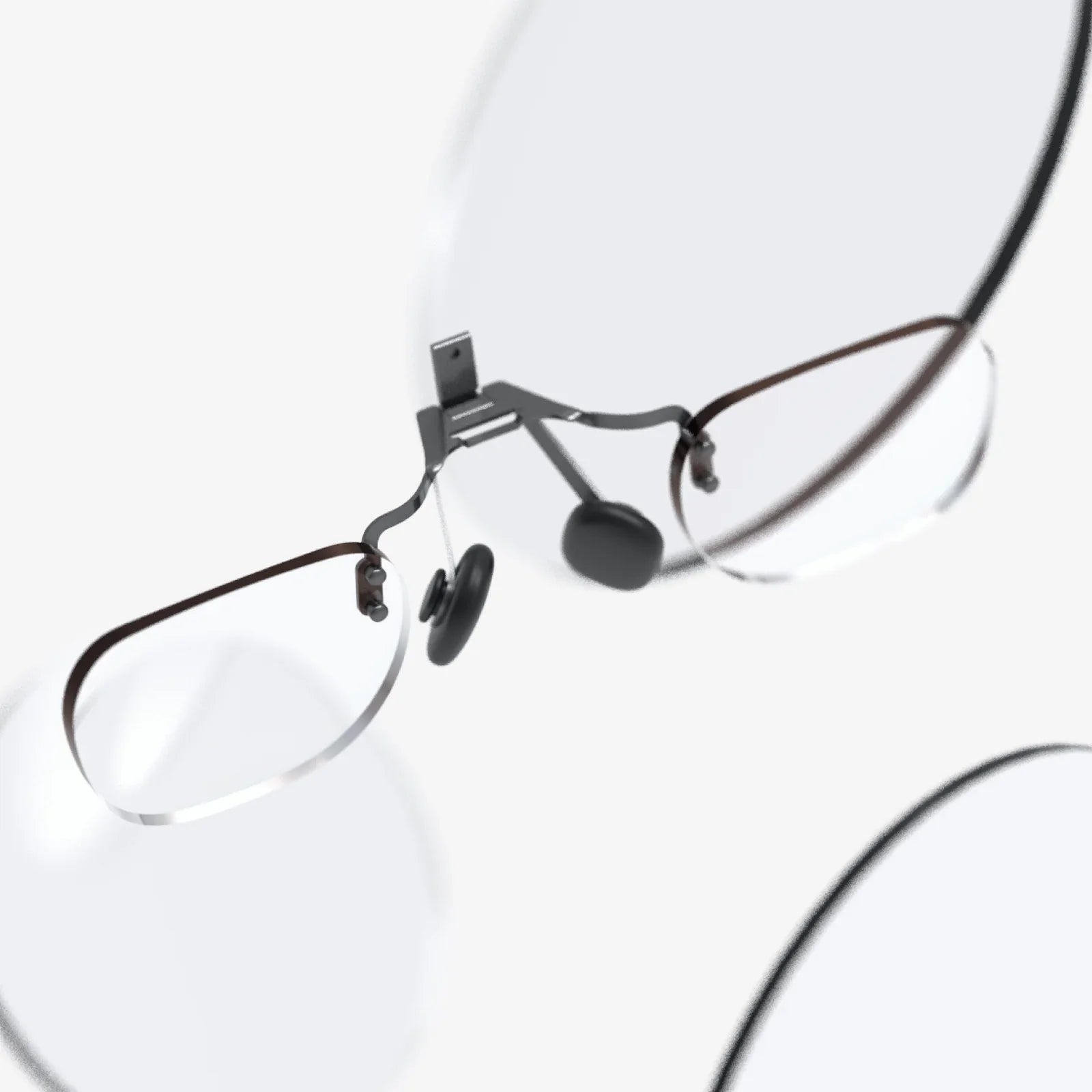
Imagine a world that feels so real you could reach out and touch it, a digital realm where surfaces have texture, light casts authentic shadows, and objects possess a weight and presence that defy their flat-screen origins. This is the captivating promise and power of design conceived in 3D style, a visual language that has exploded from a niche technical marvel into the very fabric of our visual culture. It’s more than just an effect; it’s a paradigm shift, inviting us to experience the digital not as a series of pages but as a space to inhabit. The journey into this dimension is one of artistic ambition, technological triumph, and a fundamental human desire to make the abstract feel concrete and tangible.
The Genesis: From Technical Blueprint to Artistic Vision
The concept of representing three-dimensional objects on a two-dimensional plane is ancient, with roots in the Renaissance mastery of linear perspective. Artists like Brunelleschi and Alberti developed mathematical systems to create the illusion of depth, making painted scenes feel like windows into other worlds. This was the original 3D style—a clever trick of the hand and eye. For centuries, this was the pinnacle of dimensional illusion.
The late 20th century, however, ushered in a revolution. The development of computer graphics and 3D modeling software provided creators with an entirely new set of tools. Initially, this was the domain of engineers and scientists, used for computer-aided design (CAD), architectural visualization, and complex scientific simulation. The visuals were wireframe models and flat-shaded polygons—functional but aesthetically primitive. The goal was accuracy, not artistry.
The pivotal turn came with the entertainment industry, particularly film and video games. Blockbusters like Tron (1982) and Jurassic Park (1993) demonstrated the emotional and narrative potential of computer-generated imagery. Suddenly, 3D wasn't just for diagrams; it was for creating believable creatures, epic environments, and thrilling action. This period marked the beginning of 3D style's transition from a purely technical practice to a potent artistic medium. Designers began to explore its aesthetic potential, not just its representational accuracy.
The Core Pillars of 3D Style Design
Creating a convincing and compelling 3D style, whether photorealistic or stylized, rests on the faithful application of fundamental principles that mimic how we perceive the real world.
Light and Shadow
Light is the soul of 3D design. It defines form, reveals texture, and establishes mood. In 3D style, designers meticulously craft lighting setups, considering:
- Key Light: The primary light source, determining the overall direction and intensity of illumination.
- Fill Light: Softens the shadows created by the key light, preventing them from becoming overly harsh and black.
- Rim Light (or Backlight): Placed behind the subject, it creates a glowing outline that helps separate the object from the background, enhancing the sense of depth.
Shadows are equally critical. They anchor objects to a surface, providing crucial visual cues about their position and the light's location. The softness or hardness of a shadow tells a story about the light's size and distance.
Texture and Materiality
A sphere is just a shape until you apply the properties of brushed metal, glossy ceramic, or rough concrete. Textures in 3D style are what sell the illusion of material. This is achieved through complex shaders and maps that simulate:
- Diffuse Map: The base color or pattern of the material.
- Normal Map: A clever trick that simulates small surface detail like bumps, scratches, and wrinkles without altering the actual geometry.
- Specular Map: Defines how shiny different parts of a surface are.
- Displacement Map: Actually modifies the geometry based on an image, creating true depth for larger details.
The goal is to create a visceral reaction—a desire to touch the screen because the material looks so convincingly cold, warm, smooth, or jagged.
Depth and Perspective
While lighting and texture create detail, perspective constructs the space. Techniques like parallax scrolling, where foreground elements move faster than background elements, mimic the way our eyes perceive depth in the real world. Depth of field, where objects outside a certain range are blurred, replicates photographic and ocular focus, guiding the viewer's eye and reinforcing the three-dimensional hierarchy of the scene. These techniques are essential for preventing a 3D composition from looking like a flat collage of layers.
The Apex: 3D Style in Contemporary UI and Branding
The most visible and impactful adoption of 3D style in recent years has been in user interface (UI) design and branding. The era of stark minimalism and flat design is being enriched by depth and dimension. This neo-skeuomorphic approach, often called "glassmorphism" or "claymorphism," uses 3D principles to create interfaces that are not only beautiful but also intuitively understandable.
Icons are no longer simple glyphs; they are miniature sculptures with light playing across their surfaces. Buttons appear to be pressable, with subtle shadows indicating they are raised above the canvas. Data widgets and cards float on semi-transparent "glass" panes above softly blurred backgrounds, creating a clear hierarchy and focus. This use of 3D style makes digital spaces feel more tactile and responsive. It provides users with affordances—visual clues about how an object can be used—making technology feel more accessible and less abstract.
In branding, 3D style has become a powerful differentiator. Logos are animated to rotate and shine, revealing their form. Product mockups are no longer static photos but fully rendered, interactive 3D models that users can spin and examine from every angle. This immersive experience builds confidence and desire, transforming a digital catalog into a virtual showroom. It allows brands to tell a richer story about their products, emphasizing quality, craftsmanship, and materiality in a way flat images never could.
The Artistic Frontier: Stylized 3D and Hyperrealism
As the tools have become more democratized, a fascinating divergence has occurred within 3D style. On one end of the spectrum lies hyperrealism—the pursuit of creating digital imagery that is indistinguishable from photography. This involves advanced techniques like ray tracing, which accurately simulates the physical behavior of light, global illumination, and incredibly detailed photoscanned textures. It is used in high-end product visualization, architectural walkthroughs, and visual effects, aiming for a flawless illusion of reality.
On the opposite end is the vibrant world of stylized 3D. Here, artists embrace the artificiality of the medium to create unique, often playful, worlds. This includes:
- Low-Poly Art: Intentional use of simple polygon counts and flat colors, evoking the early days of 3D gaming but with a refined, retro-futuristic aesthetic.
- Cel-Shading: Rendering 3D models to look like hand-drawn cartoons or comic book art, famously used in games and animated films.
- Voxel Art: Building forms out of digital cubes, reminiscent of Minecraft, to create a charming, blocky aesthetic.
- Whimsical and Exaggerated Forms: Pushing proportions, physics, and color palettes to create dreamlike and impossible worlds that could only exist digitally.
This branch of 3D style proves that the form is not solely about replicating reality but about expanding the visual vocabulary of art itself, creating new realities with their own internal rules and logic.
The Tools of the Trade and The Democratization of Depth
The explosion of 3D style is inextricably linked to the democratization of the software required to create it. For decades, powerful 3D suites were prohibitively expensive and had steep learning curves, gatekeeping the skill to professionals. The modern landscape is dramatically different.
A new generation of intuitive, real-time rendering engines, many based on game technology, has put immense power in the hands of independent artists and designers. These platforms feature node-based material editors, vast libraries of pre-made assets and textures, and incredibly fast previews that allow for instant feedback and iteration. Furthermore, the rise of powerful yet affordable subscription models and even free, open-source software has broken down the financial barriers to entry. Online learning platforms, video tutorials, and vibrant artist communities have dismantled the knowledge barriers, enabling anyone with passion and a computer to learn the craft of 3D style.
The Future is Dimensionally Rendered
The trajectory of 3D style points toward even deeper integration into our daily lives. The emergence of the metaverse—a persistent network of shared 3D virtual spaces—is fundamentally built upon this aesthetic. In this context, 3D style is not an option; it is the native language. It will define our virtual homes, workplaces, and social venues.
Augmented Reality (AR) overlays digital 3D objects onto our physical world through smartphone cameras or AR glasses. For this to be effective and believable, these objects must be rendered in a 3D style that convincingly matches the lighting, shadows, and perspective of the real environment. A poorly rendered 3D object in AR breaks immersion instantly, while a perfectly integrated one can create magical, useful experiences.
Finally, the rise of AI-powered image generation is beginning to intersect with 3D. AI models are now capable of generating stunning 3D-style imagery from simple text prompts, and tools are emerging to convert 2D images into 3D models. This will further accelerate the creation process, allowing designers to prototype ideas and visualize concepts at an unprecedented speed, potentially making 3D style as easy to generate as a filter on a photo.
We are standing at the threshold of a new visual era, one where the lines between the physical and the digital continue to blur. The language of this new world is written in light, shadow, and texture. It speaks of depth, dimension, and a tangible sense of place. From the first perspectival paintings to the immersive virtual spaces of tomorrow, the human drive to create and inhabit dimensional worlds has been a constant. To engage with design created in 3D style is to accept an invitation into that deeper, richer, and endlessly fascinating reality—a world you’ll not only want to see but will feel compelled to step into and explore for yourself.
Share:
What's Your Favorite Digital Product? The Psychology of Our Tech Companions
AR Fashion Business: Redefining Retail Through Digital Innovation and Immersive Experiences