


- by wangfred
Industrial AR Glasses News: The Next Wave of Enterprise Transformation Is Here
- by wangfred
Forget the futuristic hype and consumer-grade false starts; the real story in augmented reality is happening not in living rooms, but on factory floors, in remote wind farms, and within complex surgical theaters. The latest industrial AR glasses news points to a market that has quietly matured, shedding its novelty skin to reveal a robust, powerful, and utterly transformative class of enterprise hardware. This isn't about playing games or overlaying digital dinosaurs; this is about solving multi-billion dollar problems in efficiency, accuracy, and safety. If you thought the AR revolution was still years away, the developments of the past eighteen months will prove you decisively wrong. The next wave of industrial transformation is not coming—it is being worn on the faces of frontline workers right now.
The single greatest barrier to widespread industrial AR adoption has historically been the hardware itself. Early iterations were often criticized for being too heavy, offering limited battery life, and possessing a field of view that felt more like looking through a mail slot than a window into a digital world. Recent industrial AR glasses news, however, is dominated by breakthroughs that are systematically dismantling these obstacles.
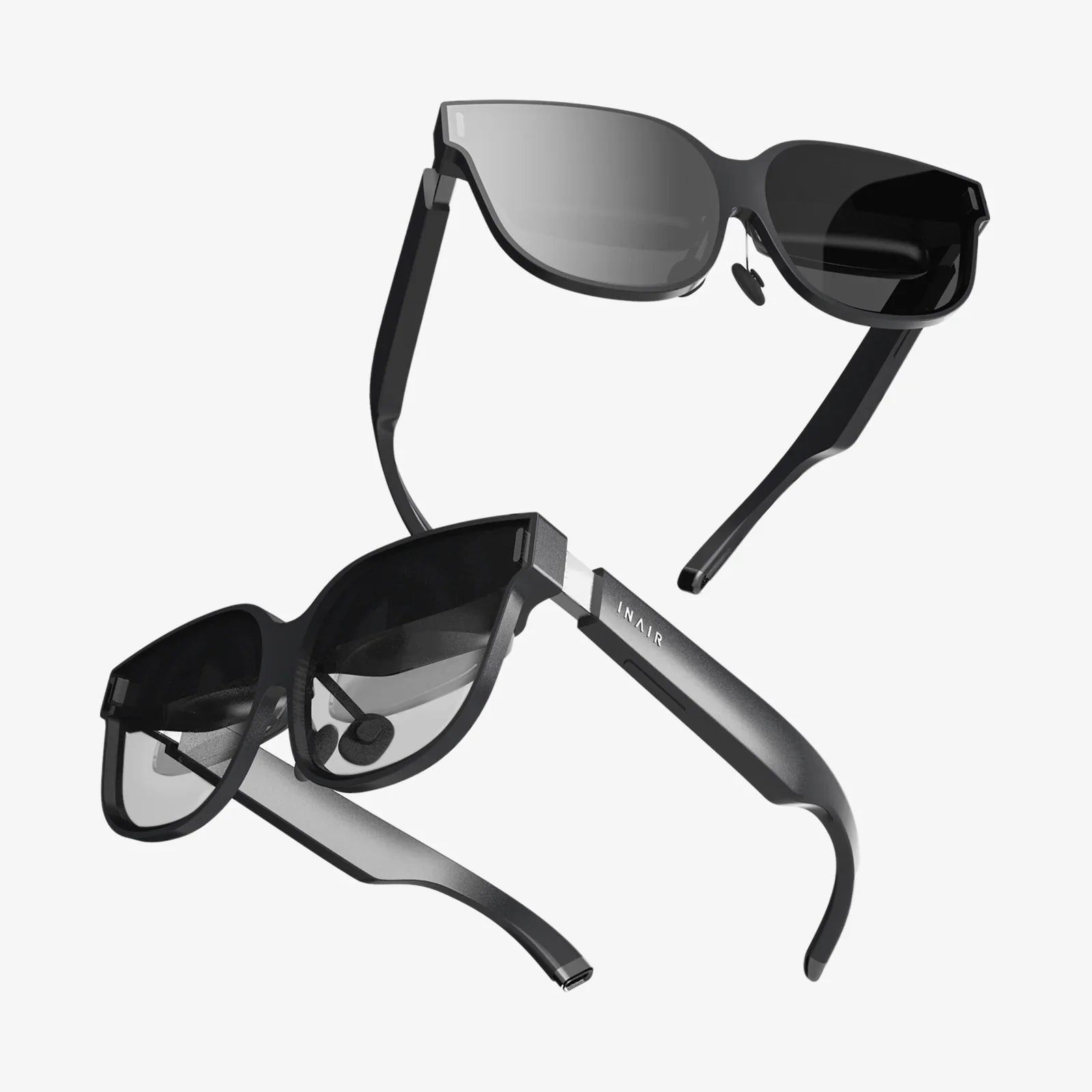
Newer generations of devices are showcasing significant ergonomic improvements. The use of advanced polymers and lightweight metal alloys has drastically reduced weight without compromising durability. This is critical for an operator who must wear the device for an entire eight or twelve-hour shift. Furthermore, the advent of modular designs is gaining traction. Instead of a single, monolithic unit, systems are now often split between the display unit worn on the head and a separate, pocketable compute unit or a direct tether to a powerful workstation. This clever distribution of weight enhances comfort immensely and allows for more powerful processing without overheating on the user’s temple.
Perhaps the most exciting hardware news revolves around display technology. Waveguide optics, once a expensive and complex solution, are becoming more refined and affordable. These transparent lenses allow digital information to be superimposed onto the real world with remarkable clarity. Innovations in laser beam scanning and microLEDs are pushing resolutions higher and enabling brighter displays that remain perfectly visible even under the harsh glare of a factory skylight or the bright sun at an outdoor worksite. Battery technology, a perennial challenge for all mobile electronics, is also seeing progress. While not revolutionary, smarter power management systems that prioritize core AR functions are enabling all-day usability, a non-negotiable requirement for industrial deployment.
Powerful hardware is useless without intelligent software to drive it. The software and platform ecosystem surrounding industrial AR glasses is evolving at a breakneck pace, moving from proprietary, single-use applications to open, flexible, and powerful platforms. The key trend here is the move towards no-code and low-code development environments.
These platforms empower subject matter experts—the engineers, trainers, and senior technicians who understand the workflows best—to create AR experiences without needing a team of dedicated software developers. Using intuitive drag-and-drop interfaces, they can author complex, interactive digital work instructions, overlaying 3D models, animations, and vital information directly onto physical machinery. This democratization of content creation is accelerating adoption faster than any hardware improvement alone could.
Another critical software advancement is deep integration with existing industrial tech stacks. Modern AR platforms are not isolated islands; they are built to plug directly into core business systems like Enterprise Resource Planning (ERP), Product Lifecycle Management (PLM), and Computerized Maintenance Management Systems (CMMS). This means a technician wearing AR glasses can access a machine’s entire service history, real-time sensor data, and inventory levels for replacement parts without ever looking away from the task at hand. The AR device becomes a seamless window into the company’s digital nerve center.
Furthermore, the rise of cloud-based AR authoring and deployment is enabling scalability and collaboration. Digital work instructions can be created at a headquarters in one country and instantly deployed to hundreds of technicians wearing AR glasses across the globe, ensuring consistency and compliance with the latest procedures. This also enables real-time remote expert guidance, a killer app that has proven its value countless times over.
The convergence of advanced hardware and sophisticated software is unlocking use cases that deliver undeniable Return on Investment (ROI). Companies are no longer experimenting; they are implementing and scaling.
In industries like aerospace, automotive, and heavy machinery, assembly processes are incredibly complex, with thousands of parts and a near-zero margin for error. AR glasses guide technicians through each step, highlighting the exact location for a part, specifying the torque for a bolt, and confirming the correct part number from inventory. This reduces errors by over 90%, slashes training time for new hires, and increases overall line speed. The system can also automatically verify that each step is completed correctly before allowing the worker to proceed, ensuring quality is built into the process.
This remains one of the most powerful and immediately valuable applications. When a field technician encounters a problem they cannot solve, they can don their AR glasses and initiate a video call with a senior expert located anywhere in the world. Using AR annotations, the expert can draw arrows, circles, and instructions directly into the technician’s field of view, literally pointing to the correct component to inspect or repair. This eliminates costly and time-consuming travel, dramatically reduces machine downtime, and captures the tacit knowledge of retiring experts for the next generation.
AR is revolutionizing industrial training. Instead of learning from static manuals or videos, new employees can train on virtual models overlaid onto real equipment. They can practice complex procedures, make mistakes, and learn in a safe, controlled environment without risking expensive machinery or their own safety. This experiential learning dramatically improves knowledge retention and confidence, preparing workers for the shop floor faster and more effectively than ever before.
In massive distribution centers, AR glasses are creating a paradigm of "hands-free, eyes-free" efficiency. Order pickers are guided by visual cues on their displays that show the most efficient route through the warehouse, exactly which item to pick, and its precise bin location. The system can verify the pick using integrated barcode or RFID scanning, all without the worker needing to fumble with a handheld scanner or clipboard. This results in staggering gains in picking accuracy and speed.
Despite the tremendous progress, challenges remain on the path to ubiquity. Connectivity can be an issue in large, metal-rich factory environments where Wi-Fi and cellular signals are weak. The industry is addressing this with solutions like private 5G networks, which offer high bandwidth, low latency, and widespread coverage ideal for AR data transmission.
Data security is another paramount concern. Transmitting live video feeds from a factory floor and overlaying it with proprietary design data requires robust, end-to-end encryption. Manufacturers and software providers are investing heavily in security frameworks to ensure that this new visual layer of data does not become a vulnerability.
Finally, there is the human factor. Change management is critical. Successfully deploying AR requires careful planning, clear communication of benefits to the workforce, and designing user experiences that are genuinely helpful, not intrusive or overwhelming. The technology must serve the worker, not the other way around.
Looking ahead, the industrial AR glasses news cycle will be dominated by a few key themes. Artificial Intelligence (AI) and Machine Learning (ML) will become deeply integrated, transforming glasses from passive display devices into active assistants. Imagine glasses that can visually identify a worn component and proactively suggest pre-emptive maintenance, or an AI that can analyze a worker’s movements and offer ergonomic suggestions to prevent injury.
Spatial computing will also take center stage. AR glasses will not just overlay information but will understand and interact with the full 3D space of the environment, creating a persistent digital twin of the physical world. This will enable even more sophisticated applications for design, simulation, and operations.
Finally, we will see a greater focus on specialization. While general-purpose AR glasses have their place, the future will bring devices specifically engineered for unique environments: intrinsically safe models for oil and gas rigs, ultra-ruggedized versions for mining, and sterilizable models for healthcare and cleanrooms.
The narrative has definitively shifted. The conversation is no longer about if industrial AR will become mainstream, but how fast and how profoundly it will reshape entire industries. The latest news confirms that the foundational pieces—compelling hardware, mature software, and proven ROI—are now firmly in place. We are standing at the precipice of a new industrial revolution, one where digital intelligence is seamlessly woven into the fabric of our physical work, empowering human potential in ways we are only beginning to imagine. The frontline workforce is getting a major upgrade, and the impact will reverberate across the global economy for decades to come.
Share:
Good Portable Computers: A Comprehensive Guide to Power and Portability in the Modern Age
List of AR Glasses: A Comprehensive Guide to the Augmented Reality Landscape