


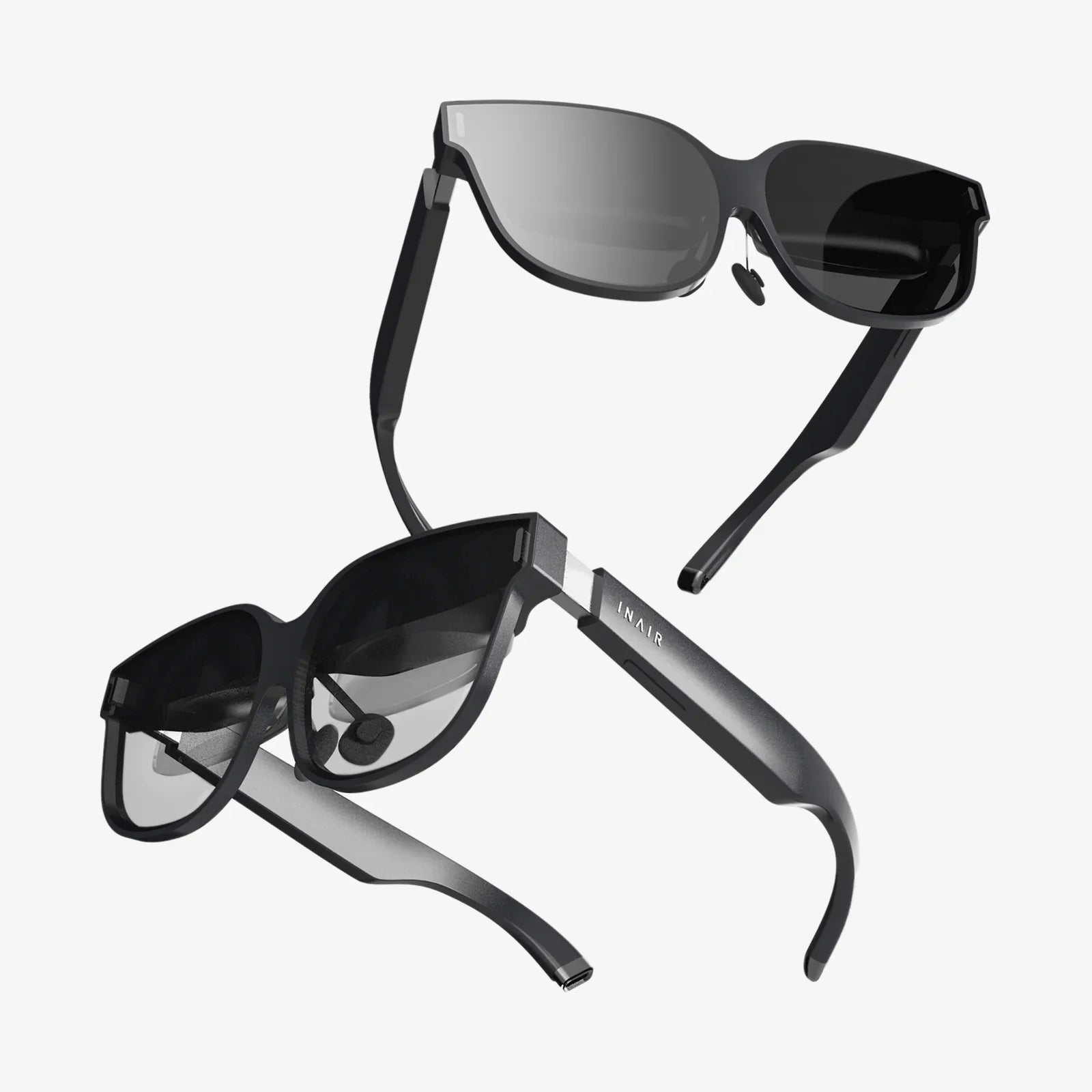
Imagine a world where digital information doesn’t just live on a screen but is seamlessly woven into the fabric of your physical reality, enhancing everything from how you shop to how skyscrapers are built. This is no longer the stuff of science fiction; it is the powerful, present-day reality being driven by industries using augmented reality. This technological revolution is quietly but fundamentally reshaping operational blueprints, redefining customer experiences, and creating new frontiers of possibility across the global economic landscape. The overlay of data, graphics, and interactive digital elements onto our real-world view is proving to be one of the most transformative tools of the 21st century, and its applications are as diverse as they are profound.
The Foundation: Understanding the AR Advantage
Before delving into specific sectors, it's crucial to understand why augmented reality is such a game-changer. Unlike Virtual Reality (VR), which creates a completely immersive digital environment, AR enhances the real world by superimposing computer-generated information onto it. This is typically achieved through devices like smartphones, tablets, smart glasses, and specialized heads-up displays (HUDs). The core value proposition of AR lies in its ability to provide:
- Contextual Information: Delivering real-time, relevant data exactly when and where it is needed, directly in the user's line of sight.
- Hands-Free Operation: Allowing professionals to access crucial information without interrupting their physical tasks, which is vital in fields like surgery or machinery repair.
- Visualization and Prototyping: Enabling the visualization of complex 3D models, architectural designs, or anatomical structures in a real-world context, reducing errors and improving understanding.
- Remote Collaboration: Connecting experts with on-site personnel by allowing the expert to see what the worker sees and annotate the live view with instructions.
These capabilities are finding fertile ground in a multitude of industries, each adapting the technology to solve unique challenges and unlock new value.
Revolutionizing the Factory Floor: Manufacturing and Logistics
The manufacturing and logistics sectors were among the first to embrace industrial-grade augmented reality, and the impact has been nothing short of revolutionary. On complex assembly lines, workers equipped with AR smart glasses can see digital work instructions overlaid directly onto the physical components in front of them. These instructions can highlight the exact placement for a part, show the correct torque sequence for bolts with animated arrows, and even display safety warnings if a wrong move is detected. This drastically reduces assembly errors, slashes training time for new employees, and increases overall production efficiency. The days of constantly glancing back and forth between a physical engine and a paper manual or a distant computer screen are rapidly ending.
In massive warehouses, the power of AR is transforming logistics and inventory management. Pick-and-pack personnel can navigate vast aisles guided by digital arrows projected onto their smart glasses, leading them on the most efficient route to retrieve items. The technology can highlight the exact bin and shelf location, and even confirm the item and quantity needed, minimizing walking time and virtually eliminating mis-picks. Furthermore, AR is used for quality control, where inspectors can compare a physical product against its perfect digital twin overlay, with the system automatically flagging any discrepancies in color, shape, or assembly.
Precision and Practice: Healthcare and Medicine
Perhaps one of the most impactful applications of augmented reality is in the field of healthcare, where it is saving lives and improving patient outcomes. In surgical theaters, surgeons are using AR to gain what is essentially "X-ray vision." By overlaying CT or MRI scans directly onto a patient's body during an operation, a surgeon can see the precise location of tumors, blood vessels, and critical anatomical structures beneath the surface without making large, invasive incisions. This enhances surgical precision, reduces operative time, and minimizes risks to surrounding healthy tissue.
Beyond the operating room, AR is revolutionizing medical training and patient care. Medical students can practice complex procedures on interactive, holographic human anatomy models, dissecting layers and understanding spatial relationships in a way that textbooks or cadavers could never provide. For patients, AR apps can help explain a complex diagnosis or surgical procedure by visualizing the affected organ in 3D, leading to better understanding and less anxiety. It also aids in rehabilitation, where patients can perform physical therapy exercises within an engaging AR game, improving adherence and motivation.
Building the Future: Architecture, Engineering, and Construction (AEC)
The AEC industry is built on visualization, and augmented reality is providing the ultimate canvas. Architects and clients can now walk through a full-scale, holographic model of a building long before the foundation is even poured. They can experience the space, assess sightlines, and make changes to the design in real-time, avoiding costly modifications during construction. This immersive experience bridges the gap between abstract blueprints and tangible reality.
On construction sites, the benefits are immense. Engineers and construction workers can use AR-enabled tablets or helmets to see BIM (Building Information Modeling) data overlaid onto the physical construction site. They can visualize where internal systems like electrical wiring, plumbing, and HVAC ducts should run within a concrete slab, ensuring accurate implementation. This helps in clash detection, preventing situations where, for example, a pipe is scheduled to run directly through a steel beam. The technology also enhances safety by overlaying hazard warnings and displaying emergency exit routes directly in the worker's field of view.
Immersive Retail and Try-Before-You-Buy Commerce
The retail sector has been transformed by e-commerce, but augmented reality is now merging the best of online and in-store shopping. The classic problem of buying furniture or home décor online—will it fit and how will it look?—is being solved by AR. Apps allow customers to use their smartphone camera to place virtual sofas, tables, and art pieces into their actual living space at true-to-life scale. They can walk around the item, see how it looks from different angles, and confidently make a purchase decision, drastically reducing return rates.
The fashion industry is leveraging AR for virtual try-ons. Customers can see how sunglasses, makeup, or even clothes would look on their own face and body through their phone's screen. This interactive and personalized experience is becoming a powerful sales tool. Inside physical stores, AR can create engaging experiences; pointing a phone at a product might reveal additional information, video demonstrations, or customer reviews, enriching the shopping journey and empowering consumer choice.
Knowledge at a Glance: Field Service and Maintenance
For field service technicians tasked with maintaining and repairing complex machinery, augmented reality is an indispensable assistant. When faced with a malfunctioning piece of equipment, a technician can wear AR glasses that recognize the machine and automatically display the relevant schematic diagrams, service history, and repair manuals. An expert located thousands of miles away can see the technician's live view and annotate the display with arrows, circles, and notes to guide them through the repair process step-by-step. This "see-what-I-see" remote collaboration empowers less-experienced technicians to perform complex repairs, reduces the need for costly expert travel, and minimizes equipment downtime, which is critical for industrial operations.
Engaging the Mind: Education and Training
Education is being fundamentally reshaped by AR's ability to make learning interactive and immersive. History lessons can come alive as students point their tablets at a textbook image to see a historical event play out in 3D on their desk. Biology students can explore a detailed, interactive human heart, watching it beat and understanding blood flow. Chemistry students can manipulate virtual molecules to see how they interact. This moves learning beyond passive absorption to active exploration, dramatically improving engagement and knowledge retention for students of all ages.
Navigating the Road Ahead: Automotive and Transportation
The automotive industry utilizes augmented reality in both the manufacturing process and within the vehicle itself. On the assembly line, AR guides workers through complex wiring harness installations and quality checks. For drivers, AR head-up displays (HUDs) are being integrated into windshields, projecting crucial information like speed, navigation arrows, and safety alerts directly onto the road ahead. This allows drivers to keep their eyes on the road while accessing information, significantly enhancing safety. Navigation becomes intuitive as virtual arrows appear to show the exact lane to take or turn to make, seamlessly integrated with the real environment.
Challenges and The Future Horizon
Despite its immense potential, the widespread adoption of augmented reality faces hurdles. The cost of enterprise-grade hardware, such as durable and high-performance smart glasses, remains significant. Issues of user privacy, data security, and digital distraction in certain environments must be carefully managed. Furthermore, creating high-quality, reliable AR content requires specialized skills and can be resource-intensive. There is also the challenge of technological infrastructure, as complex AR systems often require robust connectivity and computing power, either on-device or through edge/cloud computing.
However, the trajectory is clear. As hardware becomes more affordable, powerful, and comfortable, and as software and development platforms become more sophisticated, these barriers will diminish. The future will likely see the rise of the AR cloud—a persistent, shared digital layer over the entire world that allows for persistent AR experiences tied to specific locations. The convergence of AR with Artificial Intelligence and 5G connectivity will unlock even more powerful applications, from real-time language translation overlayed onto street signs to AI-powered assistants that can visually identify objects and provide instant information.
The silent integration of digital information into our physical perception is steadily moving from a novelty to a utility, poised to become as commonplace and essential as the smartphone is today. The industries first touched by this wave are already reaping the rewards of increased efficiency, enhanced safety, and deeper engagement. As the technology matures, its tendrils will extend into every corner of professional and personal life, forever altering our relationship with information and the world around us. The question is no longer if augmented reality will become mainstream, but how quickly we will adapt to and adopt this new, enhanced layer of reality.
Share:
Augmented Reality Market Segmentation: A Deep Dive into the Layers of a Digital Revolution
Augmented Reality Market Segmentation: A Deep Dive into the Layers of a Digital Revolution