


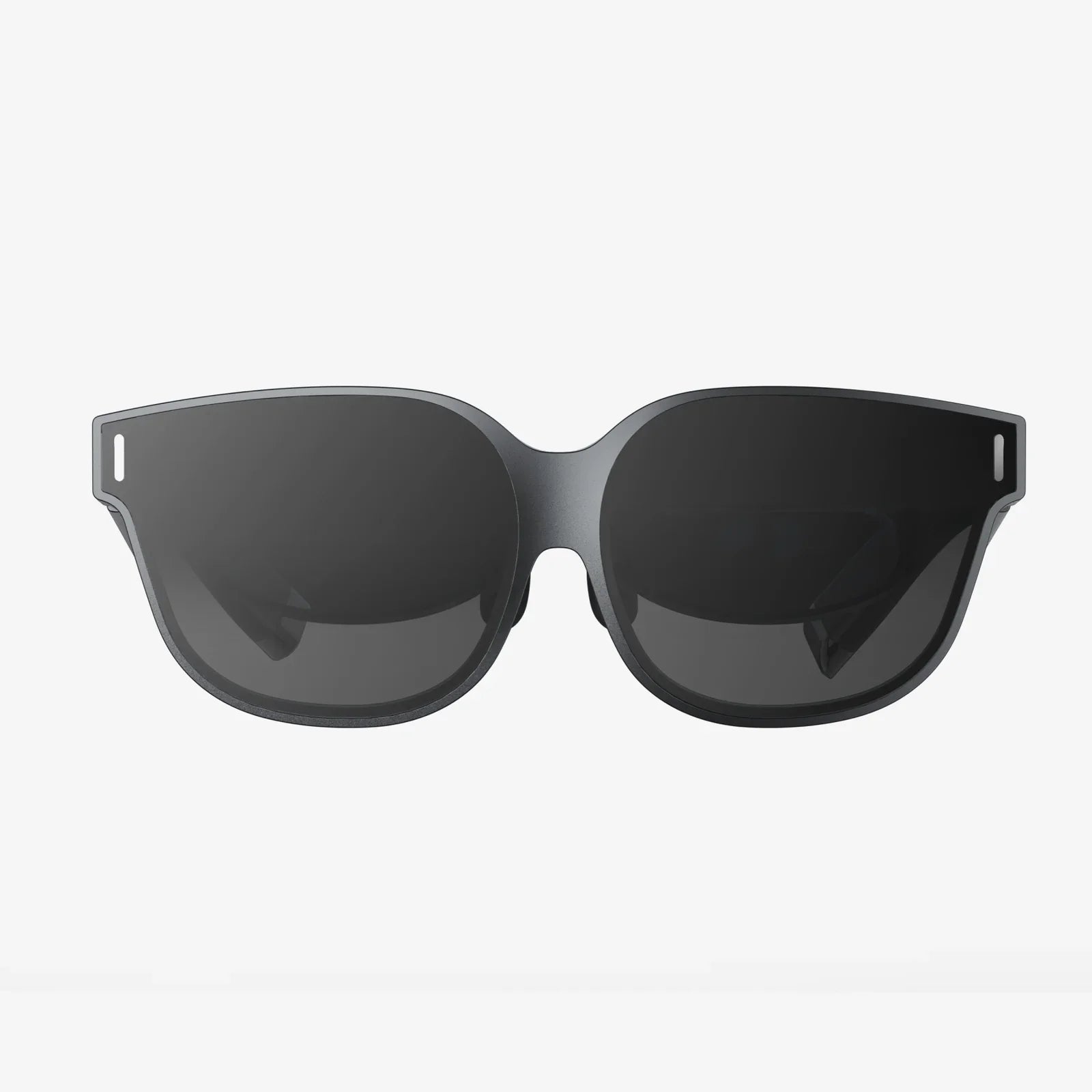
Imagine a world where the boundaries between you and your digital universe simply vanish. Where the rigid, physical confines of your devices melt away, leaving only a seamless, boundless canvas of information, entertainment, and connection. This isn't a distant dream from a cyberpunk novel; it is the imminent future promised by the infinite screen, a technological paradigm shift poised to redefine our very relationship with technology.
Beyond the Bezel: Deconstructing the Infinite Screen
At its core, the infinite screen is not merely a product but a philosophy of design and interaction. It represents the culmination of a decades-long journey to minimize the physical and software-based barriers—the bezels, the frames, the home buttons—that have traditionally delineated the edges of our digital experiences. The goal is to create a state of immersive flow where the user's focus remains entirely on the content, uninterrupted by the hardware that delivers it.
This vision is powered by a symphony of cutting-edge technologies. Flexible display substrates allow screens to curve, fold, and even roll, challenging our perception of a screen's fixed form factor. MicroLED and advanced OLED technologies enable stunning visual fidelity with perfect blacks and high dynamic range, making the content feel more real and less like an image on a glass pane. Perhaps most critically, sophisticated software and user interface (UI) frameworks are the true magicians here. They manage the transition of content across folding seams, enable intuitive gesture controls that replace physical buttons, and create visual continuations that trick the eye into perceiving a limitless expanse.
The Seamless Ecosystem: How Infinite Screens Will Work
The true power of the infinite screen is unlocked not in isolation, but as part of a cohesive ecosystem. The concept extends beyond a single device to encompass a fluid, multi-device experience.
- Cross-Device Continuity: Imagine starting a movie on your personal device on the subway. As you enter your home, the video effortlessly transfers to a larger, wall-mounted display, continuing exactly where you left off without a single tap. Your work documents could flow from a compact device in your bag to a full desktop setup in the office, with the operating system intelligently adapting the UI to the new, expansive canvas.
- Adaptive User Interfaces: Static, one-size-fits-all interfaces will become obsolete. UI elements will dynamically reposition, resize, and even hide based on the available screen real estate and the user's current task. In a compact form, you might see a single app; unfolded, the same device could present a multi-window workspace reminiscent of a desktop environment.
- Context-Aware Content: The infinite screen will be deeply connected to its environment. Augmented Reality (AR) overlays will blend digital information with the physical world on transparent displays. Your car's windshield could project navigation arrows onto the road itself, while smart windows in your home could display the weather forecast, your calendar, or an art gallery, all while remaining transparent when not in use.
A Revolution in Experience: Applications Across Industries
The implications of a borderless display are profound, set to disrupt nearly every facet of modern life.
Entertainment and Gaming
The entertainment industry will be transformed. Cinematic content will no longer be constrained to a 16:9 or 21:9 aspect ratio. Filmmakers could create narratives that fill your entire field of vision, with the action unfolding around you. Gaming will achieve unprecedented levels of immersion. Strategy games could utilize vast, scrollable maps, while role-playing games could create living worlds that feel truly continuous and unbroken by loading screens or UI clutter. Virtual concerts and social events could be experienced on a scale that makes every participant feel present in the same boundless space.
Productivity and Work
The concept of the desktop will be completely reimagined. Instead of juggling multiple monitors with physical bezels breaking up your workflow, professionals could have a single, vast digital workspace. Financial analysts could view live data streams, charts, and reports on a seamless canvas. Architects and designers could manipulate 3D models at an immense scale. Coders could have endless lines of code, documentation, and debugging tools open simultaneously, dramatically enhancing efficiency and reducing context switching.
Urban Design and Architecture
The infinite screen will escape our pockets and permeate our cities. Building facades could become dynamic, ever-changing pieces of public art or information hubs. Retail stores could transform their windows to adapt to the time of day, the weather, or specific promotions, creating a responsive storefront. In public transportation, entire walls of a train carriage could become interactive maps, news feeds, or advertising spaces that feel cohesive and integrated rather than a collection of separate panels.
Education and Collaboration
Education will move from static textbooks and limited projector screens to dynamic, explorable knowledge landscapes. History students could zoom along a limitless timeline of events. Biology students could dive into a continuously scalable 3D model of a human cell. Remote collaboration will feel more natural, with digital whiteboards that teams can scroll through indefinitely, brainstorming and building ideas together without ever running out of space.
Navigating the Challenges: The Flip Side of Infinity
For all its promise, the path to a bezel-less future is fraught with technical, practical, and ethical hurdles that must be addressed.
- Technical Hurdles: Durability remains a significant concern for flexible and folding screens. Manufacturing flawless, large-format displays with zero defects is immensely complex and costly. Power consumption for such vast, bright canvases is another major engineering challenge, requiring breakthroughs in battery technology and power management.
- User Experience (UX) Design: How does one design for a canvas with no edges? Traditional UI principles rely on boundaries. Designers must invent new metaphors for navigation, multitasking, and system controls that feel intuitive without a clear frame of reference. Avoiding user disorientation is paramount.
- The Attention Economy and Digital Wellness: If today's devices are designed to capture our attention, an infinite screen could be the ultimate attention vacuum. The potential for distraction and information overload is immense. Designing for digital wellness—allowing users to create focus zones, set boundaries, and disconnect—will be more critical than ever.
- Privacy and Security: As screens become larger and more public, the risk of "shoulder surfing" and unauthorized viewing increases. In always-on ambient computing environments, the line between public and private information could easily blur, requiring robust new security protocols and user-controlled privacy settings.
The Philosophical Horizon: What Does Infinity Mean for Us?
The infinite screen is more than a feature; it is a gateway to a new mode of existence. It challenges the long-held metaphor of the computer as a "window" to a digital world. A window has a frame; it implies a separation between the viewer and the viewed. The infinite screen suggests a "door" or, even more profoundly, a dissolution of that barrier altogether. We are not looking at a representation of reality; we are stepping into a new one.
This blurring of lines raises profound questions. How will our perception of reality change when the digital and physical are so seamlessly intertwined? Will it enhance our understanding of the world by overlaying valuable data, or will it cause us to retreat into personalized digital cocoons, filtering out the raw, unfiltered physical world around us? The technology itself is neutral, but its impact will be shaped by the values and intentions we embed into its design from the very beginning.
The journey toward the infinite screen is a journey toward a more natural, human-centric form of computing. It is an attempt to make the technology itself recede into the background, allowing human creativity, communication, and exploration to take center stage on a canvas without end. The bezel has been a necessary constraint for a century of computing; its impending disappearance marks the beginning of a thrilling new chapter, inviting us to imagine, create, and experience in ways we are only beginning to fathom.
The four edges of your world are about to dissolve, offering a glimpse into a future where your digital horizon is limited only by your imagination. The next time you look at your device, try to see past its physical limits—the boundless era of connection and creation is already beginning to unfold.
Share:
How to Make Virtual Reality Lenses: A Comprehensive Guide to DIY Optics
How to Make Virtual Reality Lenses: A Comprehensive Guide to DIY Optics