


- by wangfred
Infinity Augmented Reality Glasses: Redefining Reality and Reshaping Our World
- by wangfred
Imagine a world where your reality is not a fixed, immutable canvas but a dynamic, interactive layer cake of information, experience, and pure imagination. A world where the line between the digital and the physical doesn't just blur—it vanishes entirely. This is the profound promise, the tantalizing horizon, offered by the next evolution in personal computing: a pair of sleek, sophisticated infinity augmented reality glasses. This isn't about escaping into a virtual world; it's about enhancing the one we already inhabit, unlocking a new dimension of human potential and perception that was once the sole domain of science fiction.
At first glance, the concept seems simple: transparent lenses that overlay digital imagery onto your view of the real world. The engineering reality, however, is a breathtaking symphony of advanced technologies working in perfect, micro-second harmony. Unlike their virtual reality counterparts, which seek to replace your environment, these glasses must first understand it with an almost sentient level of comprehension.
The foundation of this understanding is built upon a suite of sophisticated sensors. High-resolution cameras act as the device's eyes, continuously scanning the environment. They are not capturing images for you to look at, but for the onboard processor to deconstruct and analyze. This visual data is fused with input from inertial measurement units (IMUs)—gyroscopes and accelerometers—that track the precise orientation and movement of your head, down to the subtlest turn or nod. For spatial mapping on a grand scale, many systems incorporate Light Detection and Ranging (LiDAR) scanners, which fire out invisible laser beams to measure the exact distance to every surface in a room, building a meticulous, real-time 3D depth map of your surroundings.
This torrent of spatial data is processed by a powerhouse of a chipset, often a dedicated processing unit (HPU) working alongside a central processor (CPU) and graphics unit (GPU). This is where the true magic happens. Using complex algorithms and machine learning models, this system performs simultaneous localization and mapping (SLAM). In essence, it answers two critical questions simultaneously: "What does the world around me look like?" and "Where am I within it?" It identifies flat surfaces like tables and walls, recognizes objects, and understands the geometry of the space, all in real-time.
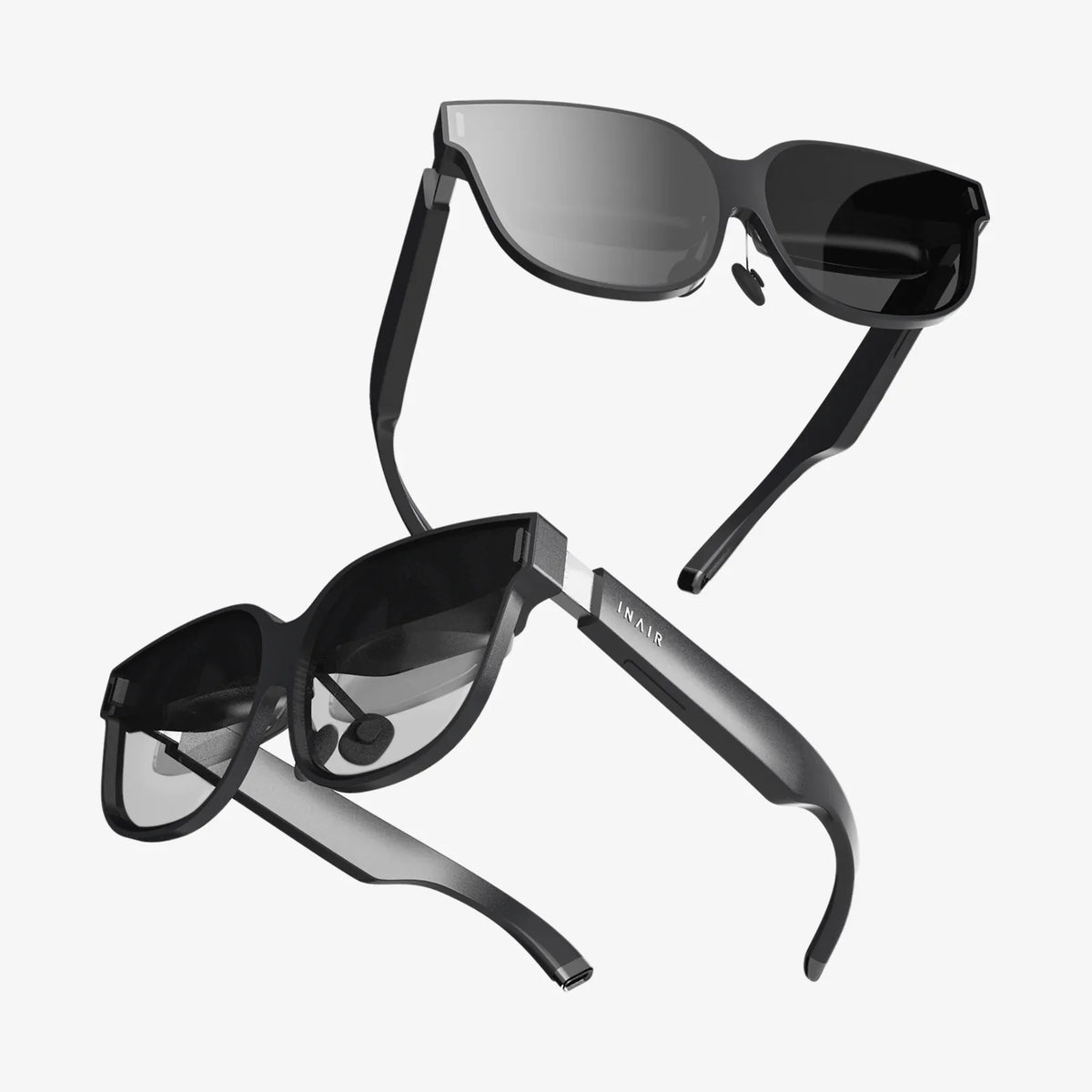
Only after this comprehensive environmental audit is complete can the device begin its second act: projection. The display technology is the crown jewel. Through a combination of waveguides, holographic optical elements, and micro-LED projectors, digital light is precisely channeled onto the lenses. This creates the illusion that vibrant, high-fidelity images, videos, and interfaces are not on the lens but are anchored firmly in the world itself—sitting on your desk, floating next to a product on a store shelf, or superimposed onto a machine you are learning to repair. The result is a seamless blend, a true augmentation where the digital and physical coexist as one unified experience.
The true power of this technology lies not in the hardware itself, but in the infinite spectrum of software and experiences it enables. Its applications will ripple through every facet of professional and personal life, transforming how we work, learn, connect, and play.
For the modern professional, the concept of a fixed workstation becomes obsolete. With infinity augmented reality glasses, your entire digital workspace becomes portable and contextual. Imagine an architect walking through a construction site, seeing the finalized 3D blueprints of the building overlaid perfectly onto the unfinished steel girders, identifying potential structural conflicts before they become costly errors. A surgeon could have vital signs, 3D anatomical models from real-time scans, and procedural guidance visually pinned within their field of view, their hands remaining sterile and focused on the task. A field engineer repairing a complex piece of machinery could see animated repair instructions, part numbers, and torque specifications superimposed directly onto the components they are working on, guided remotely by an expert thousands of miles away who can see their perspective and draw annotations into their reality.
Learning shifts from a passive, abstract activity to an active, immersive experience. A medical student could practice complex procedures on a hyper-realistic virtual cadaver. A history class could don their glasses on a field trip to ancient ruins and witness a breathtaking reconstruction of the site in its heyday, with virtual citizens going about their daily lives. Mechanics-in-training could learn to dismantle and reassemble an engine, with each step visually highlighted and explained, reducing training times and improving comprehension dramatically.
Social interaction will be fundamentally transformed. Instead of flat video calls on a screen, you could share a virtual space with a friend or family member across the globe. Their life-sized, volumetric avatar could sit on your couch, and you could watch a movie together on a virtual cinema screen, feeling a genuine sense of shared presence. Storytelling, both in gaming and narrative media, will break the fourth wall entirely. A mystery game could have clues hidden in your actual living room, and a guided historical tour could have a virtual historian walking beside you, narrating the events that unfolded on the very ground you stand on.
On a more mundane but equally impactful level, these glasses will serve as the ultimate contextual assistant. Navigating a new city becomes intuitive as glowing directional arrows are painted onto the sidewalk. Shopping for groceries could reveal product information, recipes, and allergy warnings simply by looking at an item. You could receive real-time language translation of street signs and conversations. Your morning workout could be guided by a virtual personal trainer demonstrating correct form right in front of you. The smartphone's pull-to-refresh paradigm is replaced by a glance-to-know reality.
For all its promise, the path to a ubiquitous augmented future is fraught with significant technological, social, and ethical challenges that must be thoughtfully addressed.
The dream is a pair of glasses indistinguishable in weight and form factor from standard eyewear. The current reality often involves trade-offs between performance, battery life, size, and cost. Achieving all-day battery life with powerful processing and bright displays is a monumental task, potentially requiring breakthroughs in battery chemistry or ultra-low-power chip design. The visual experience must be flawless: high resolution, a wide field of view, and accurate depth perception to avoid eye strain and the "vergence-accommodation conflict" that can cause nausea. Furthermore, they must be adaptable, offering prescription lenses so they are accessible to all, not just those with 20/20 vision.
This is perhaps the most profound challenge. A device that sees what you see, hears what you hear, and maps your every movement is a privacy advocate's nightmare. The continuous collection of first-person visual and audio data from both public and private spaces raises alarming questions. Who owns this data? How is it stored, processed, and used? Could it be used for pervasive surveillance, either by corporations or governments? The potential for unauthorized facial recognition and behavior tracking in real-time is a serious threat. Robust, transparent, and user-centric data governance frameworks must be established and hardwired into the technology's core, not bolted on as an afterthought.
There is a real risk that this technology could exacerbate existing social and economic inequalities, creating a new kind of digital divide between those who can afford this enhanced reality and those who cannot. Furthermore, social norms will need to adapt. How do we interact with someone who is partially immersed in a digital layer? Is it rude to wear them during a conversation? Will public spaces become fractured, with some people engaged with the physical world and others in their own personalized digital bubbles? Establishing new etiquettes for what is undoubtedly a new form of communication will be a gradual and complex social process.
Looking beyond the immediate next generation of devices, the long-term trajectory of this technology points toward even more profound integration with our lives and ourselves. We are moving toward a future of contextual and ambient computing, where technology fades into the background, anticipating our needs and providing information without explicit commands. The goal is not a device you interact with, but an intelligent environment you exist within.
Further out, the line between external wearable and internal enhancement may blur. Research into direct neural interfaces, while in its infancy, suggests a future where digital information could be perceived not through our eyes, but directly by our brains. This would represent the ultimate endpoint of the journey that begins with a pair of glasses—a complete and seamless merger of human cognition and machine intelligence, a true infinity of experience.
The journey toward this future is already underway. It's a collaborative effort between engineers, designers, ethicists, artists, and users. It will require not just technological innovation, but deep philosophical and societal discourse. We must be active participants in shaping this future, ensuring it amplifies our humanity rather than diminishes it, that it connects us more deeply to each other and our world rather than isolating us in personalized digital silos.
We stand at the precipice of a new sensory paradigm, one where the very fabric of our perceived reality becomes a customizable, interactive medium. The infinity augmented reality glasses are not merely a new gadget; they are a portal, a key to unlocking a layer of existence that has always been there, waiting for the technology to make it visible. The question is no longer if this future will arrive, but how we will choose to build it, and more importantly, who we will become when we finally step through the looking glass and into an infinitely augmented world.