


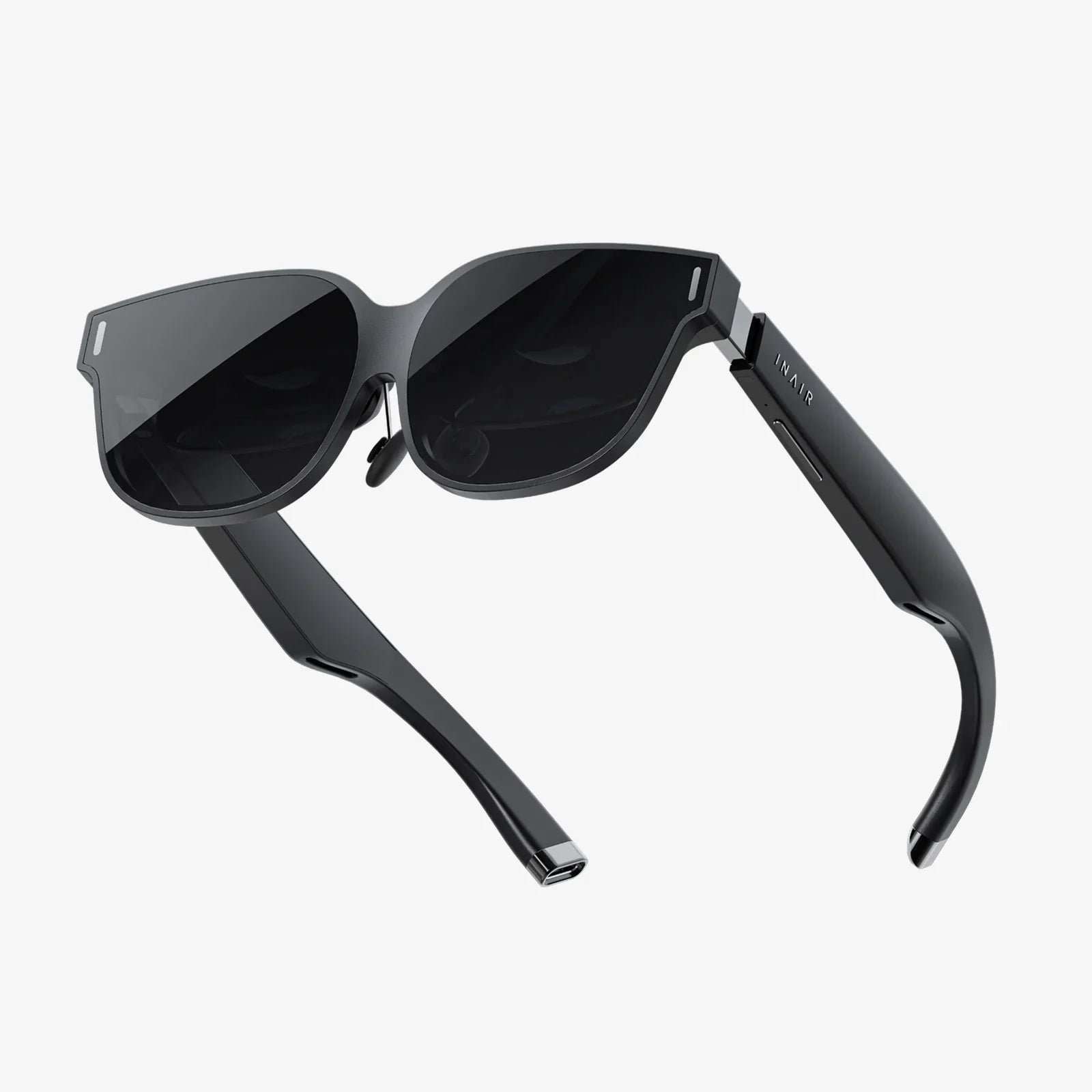
Imagine stepping through a portal into another world, a realm where the only limit is the imagination of its creator. You can walk on the surface of Mars, shrink down to the size of a blood cell, or practice a complex surgical procedure—all without leaving your living room. This is the captivating promise of virtual reality (VR), a technology that has exploded from the pages of science fiction into a tangible, rapidly evolving force poised to reshape entertainment, education, work, and human connection itself. The journey to understand this digital frontier is as fascinating as the experiences it creates.
The Genesis of an Idea: A Brief History of Virtual Reality
While VR feels like a distinctly modern invention, its conceptual roots run deep. The desire to simulate an artificial environment is not new. In the 19th century, panoramic paintings aimed to immerse viewers in a scene, and the stereoscope, invented by Sir Charles Wheatstone in 1838, provided the illusion of depth by presenting slightly different images to each eye—a principle that remains foundational to today's VR headsets.
The term "virtual reality" itself was popularized in the late 1980s by Jaron Lanier, a pioneer in the field whose company developed some of the first commercial goggles and gloves. However, the foundational technology was developed decades earlier. In 1968, computer scientist Ivan Sutherland and his student Bob Sproull created the "Sword of Damocles," widely considered the first head-mounted display (HMD) system. This intimidating apparatus, which hung from the ceiling, presented simple computer-generated wireframe graphics that changed perspective as the user moved their head, establishing the core tenets of immersive, interactive VR.
The 1980s and 1990s saw VR capture the public's imagination, albeit with clunky and expensive hardware that failed to deliver on the hype. Films like Tron and The Lawnmower Man introduced the concept to mainstream audiences, while early arcade cabinets offered brief, primitive VR experiences. For decades, VR remained a niche technology, confined to high-budget research labs and specific industrial or military simulations, waiting for the rest of the technological world to catch up to its ambitious vision.
How It Works: Deconstructing the Magic of Immersion
The magic of VR is not magic at all, but a sophisticated orchestration of hardware and software designed to trick the human brain into accepting a digital world as real. This phenomenon, known as "presence," is the holy grail of VR development. It is achieved through several key technological components working in unison.
The Head-Mounted Display (HMD): Your Window to Another World
The HMD, or headset, is the most recognizable piece of VR hardware. It is essentially a pair of high-resolution screens housed in a visor worn on the head, coupled with a series of critical sensors. Each screen is dedicated to one eye, displaying two slightly different perspectives to create a stereoscopic 3D effect, providing depth perception. Lenses are placed between the eyes and the screens to focus and reshape the picture, filling the user's field of view to minimize distraction from the physical world. Modern headsets also incorporate precise head-tracking technology using gyroscopes, accelerometers, and external or internal cameras to monitor the orientation and position of your head. This data is processed in real-time, adjusting the virtual scene accordingly with incredibly low latency to prevent motion sickness and maintain the illusion.
Tracking and Input: Bringing Your Body into the Experience
True immersion requires more than just looking around; it requires interaction. This is handled by tracking systems and input devices. Early systems used external sensors or cameras placed around a room to track the position of the headset and controllers. Inside-out tracking, now common in standalone headsets, uses cameras mounted on the HMD itself to observe the surrounding environment and track its own movement relative to the room, eliminating the need for external hardware.
Controllers are the primary means of interaction. These handheld devices are also tracked in 3D space, allowing your virtual hands to mimic your real-world movements. They feature buttons, triggers, thumbsticks, and haptic feedback motors that provide subtle vibrations to simulate touch, like the recoil of a virtual gun or the impact of a virtual tennis ball on a racket. More advanced systems are exploring hand-tracking technology, which uses cameras to directly interpret the movements of your bare hands and fingers, enabling more natural and intuitive interaction without the need to hold anything.
Audio and Haptics: Completing the Sensory Illusion
Visuals are only part of the story. Spatial audio, or 3D audio, is crucial for selling the illusion. Unlike standard stereo sound, spatial audio simulates how sound waves interact with the human head and ears. A sound coming from your left in the virtual world will be heard predominantly in your left ear, and it will change subtly as you turn your head, exactly as it would in reality. This allows users to locate objects and events based on sound alone, dramatically enhancing realism.
Haptic feedback extends beyond simple controller vibrations. Full-body haptic suits equipped with arrays of actuators can simulate sensations like rain, wind, or even the impact of a punch. While still emerging consumer technology, these devices represent the next step in total sensory immersion, aiming to make the virtual experience feel physically tangible.
Beyond Gaming: The Expansive Applications of VR
While gaming is the most prominent and lucrative application for consumer VR, its potential extends far beyond entertainment. The ability to create safe, repeatable, and cost-effective simulations is revolutionizing numerous professional fields.
Education and Training: Learning by Doing, Virtually
VR is transforming education from a passive activity into an active experience. Instead of reading about ancient Rome, history students can take a guided tour of a digitally reconstructed Colosseum. Medical students can practice complex surgical procedures on virtual patients, making mistakes without consequences and honing their skills in a risk-free environment. Similarly, VR is used for training pilots, soldiers, police officers, and astronauts, preparing them for high-stress scenarios that would be dangerous or prohibitively expensive to recreate physically.
Healthcare and Therapy: Healing Through Immersion
The healthcare sector is embracing VR for both treatment and therapy. It is used for physical rehabilitation, where engaging VR games can motivate patients to perform repetitive movements. Perhaps its most profound impact is in mental health. Exposure therapy for phobias (fear of heights, flying, spiders) can be conducted gradually and safely within a controlled virtual environment. VR is also being used to treat PTSD, manage anxiety, and even help with pain distraction for burn victims during wound care, by immersing them in a calming, snowy landscape that helps override pain signals.
Enterprise and Design: Prototyping in a Virtual Space
Architects and engineers are using VR to walk clients through unbuilt designs, providing a true sense of scale and space that blueprints or screen-based 3D models cannot match. Car manufacturers design and prototype new vehicles in VR, assembling virtual parts and identifying potential issues long before physical prototypes are built. This saves immense amounts of time, resources, and materials, streamlining the entire design process.
Social Connection and Remote Collaboration
VR has the potential to evolve remote communication from flat video calls into shared presence. Social VR platforms allow people to meet, talk, and interact using personalized avatars in virtual spaces, from conference rooms to fantasy worlds. This technology promises a new form of "telepresence," where colleagues from across the globe can collaborate on a 3D model as if they were standing in the same room, potentially reshaping the future of remote work and social interaction.
Navigating the Challenges and Ethical Considerations
Despite its incredible potential, the path forward for VR is not without significant hurdles and important ethical questions that society must address.
Technical and User Experience Barriers
Issues like motion sickness, known as simulator sickness, still affect a portion of users, often caused by a slight lag between physical movement and visual feedback, or a mismatch between perceived and actual motion. The form factor of headsets, while improving, still needs to become lighter, more comfortable, and less cumbersome for prolonged use. Finally, creating high-fidelity, interactive VR content remains a complex and expensive endeavor, which can limit the breadth of experiences available.
The Privacy Paradox in a Data-Hungry Medium
VR headsets are arguably the most data-intensive consumer devices ever created. They don't just track what you click; they can track your eye gaze, pupil dilation, hand gestures, body movements, vocal inflections, and even your precise physical environment. This biometric data is a goldmine for understanding human behavior and attention, but it also raises monumental privacy concerns. Who owns this deeply personal data? How is it stored, used, and protected? The industry is in its infancy regarding regulations and ethical standards for this type of data collection.
The Social and Psychological Impact
As worlds become more compelling, what are the effects of prolonged immersion? Questions about reality blurring, addiction, and escapism are valid. Furthermore, the concept of "virtual identity" through avatars presents new complexities. While it can be empowering for some, it could also lead to new forms of misrepresentation or harassment in virtual spaces that feel real. Establishing social norms, safety tools, and codes of conduct for these new digital frontiers is an ongoing challenge.
The Future Horizon: Where Do We Go From Here?
The current state of VR is merely a stepping stone. The trajectory points toward higher resolution, wider fields of view, and more photorealistic graphics. The convergence of VR with augmented reality (AR) is likely, leading to mixed reality (MR) headsets that seamlessly blend digital content with the physical world. The development of brain-computer interfaces, though far off, hints at a future where we could control virtual environments with our thoughts. The ultimate goal is the creation of a truly seamless and intuitive experience—one where the technology itself fades into the background, leaving only the wonder of the experience.
We are standing at the precipice of a new era of human experience, one defined not by our physical location but by the boundless landscapes of our collective creation. The next time you see someone wearing a headset, lost in a digital world, know that they are not just playing a game; they are an early explorer on a vast and uncharted frontier, testing the limits of a technology that promises to redefine reality itself. The journey into the virtual is just beginning, and its ultimate destination is a story we have only just started to write.
Share:
How to Turn On Virtual Keyboard on Login Screen: A Complete Guide
Spatial Audio Definition Technology: Redefining the Soundscape of Experience