


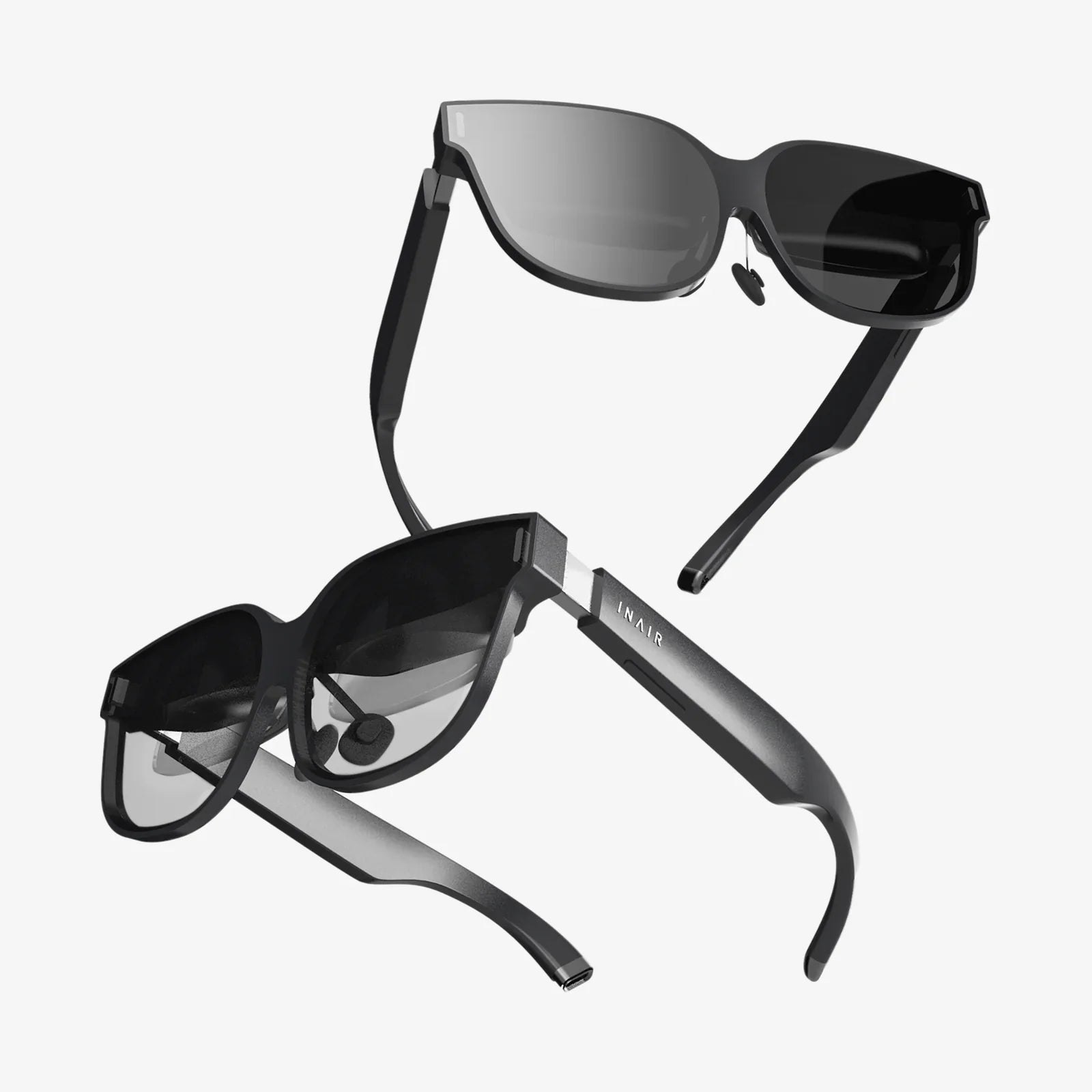
Imagine a world where the digital and physical seamlessly intertwine, where information floats before your eyes, and complex instructions are painted onto the very machinery you're repairing. This is no longer the stuff of science fiction; it is the burgeoning reality being built by a wave of innovative AR projects that are quietly, yet profoundly, reshaping our existence. From the operating room to the classroom, the factory floor to the art gallery, augmented reality is breaking free from the confines of novelty gaming apps to become one of the most transformative technologies of our time. The next time you look through your screen, you might just be looking at a new layer of the world.
Beyond the Filter: The Evolution of Augmented Reality
The public's first mass encounter with AR was often through whimsical social media filters or a global phenomenon that had everyone chasing digital creatures in parks. While these applications were incredibly effective at demonstrating the core concept—overlaying digital content onto the real world—they only scratched the surface of the technology's true potential. Today, innovative AR projects have evolved far beyond this, driven by advancements in hardware, computer vision, spatial mapping, and machine learning.
The core differentiator of these new projects is intent. They are not designed merely for entertainment; they are engineered for utility, empathy, education, and efficiency. They leverage AR's unique ability to provide contextual information exactly when and where it is needed, creating a symbiotic relationship between the user and their environment. This shift from passive viewing to active interaction is the engine powering AR's integration into the backbone of critical industries.
The Surgeon's New Scapel: AR in Healthcare and Medicine
Perhaps the most life-altering applications of AR are emerging in the medical field. Innovative AR projects are revolutionizing how medical professionals train, plan, and execute complex procedures.
- Surgical Precision and Planning: Surgeons are now using AR headsets to visualize CT scans and MRI data in three dimensions, projected directly onto a patient's body. This allows for incredibly precise incisions, as the surgeon can "see through" tissue to locate tumors, blood vessels, and critical structures without ever making a cut. It transforms surgery from a largely interpretive process into a data-guided one, reducing risk and improving patient outcomes.
- Medical Training and Education: Medical students are no longer limited to cadavers and textbooks. AR applications can overlay detailed anatomical models onto a peer, allowing students to study the human body's complex systems interactively. They can peel back layers of muscle, rotate a beating heart, and explore the nervous system in a way that was previously impossible, accelerating the learning curve dramatically.
- Patient Care and Rehabilitation: For patients, AR is providing new tools for understanding their conditions and adhering to treatment plans. An app might use AR to show a patient how their medication works inside their body or guide them through physical therapy exercises with proper form, ensuring they perform movements correctly to avoid re-injury.
Transforming the Classroom: Immersive Learning Through AR
The traditional classroom model is being upended by AR's power to create immersive, engaging educational experiences. Textbooks become portals, and desks transform into interactive landscapes.
Imagine a history lesson where students can walk through a digitally reconstructed ancient Rome, watching life unfold around them. Or a geography class where a 3D volcano erupts from the page of a textbook, demonstrating tectonic forces in real-time. Chemistry students can manipulate virtual molecules, combining elements to see reactions without the cost or danger of a physical lab. These innovative AR projects cater to diverse learning styles, making abstract concepts tangible and fostering a deeper, more intuitive understanding of the subject matter. They move education from rote memorization to experiential discovery, igniting curiosity and engagement in a new generation of learners.
The Industrial Metaverse: AR in Manufacturing and Maintenance
On factory floors and in remote field sites, AR is proving to be a monumental force for efficiency and accuracy. This industrial application is often referred to as the "industrial metaverse," where digital twins and real-world machinery converge.
- Complex Assembly and Guidance: Technicians assembling intricate machinery, from jet engines to complex circuit boards, can use AR glasses to see step-by-step instructions overlaid directly on the components they are handling. Arrows point to exact placement locations, torque values are displayed next to bolts, and warnings highlight potential errors before they happen. This drastically reduces assembly time, minimizes errors, and lowers the training required for new employees.
- Remote Expert Assistance: When a piece of equipment fails in a remote location, getting a specialist on-site can be costly and time-consuming. AR enables a local technician to wear smart glasses and share their first-person view with an expert thousands of miles away. The remote expert can then draw annotations—arrows, circles, notes—directly into the technician's field of view, guiding them through the repair process in real-time as if they were standing right beside them.
- Design and Prototyping: Engineers and designers are using AR to visualize new products at full scale within a real-world environment long before a physical prototype is built. A car designer can project a life-size model of a new vehicle into a studio, walk around it, and make adjustments to the design in real-time, saving millions in development costs.
A New Canvas: AR as a Medium for Art and Storytelling
Beyond practical utility, innovative AR projects are opening breathtaking new frontiers for artistic expression and narrative. Artists are using the world itself as their canvas, creating site-specific digital sculptures, immersive historical reenactments, and interactive stories that blend seamlessly with our physical surroundings.
Museums are deploying AR to bring exhibits to life, allowing statues to converse with visitors or paintings to unfold their stories. Public art installations can transform city squares into dynamic, interactive experiences that change based on the time of day or the number of people present. This new medium challenges our definitions of art and space, creating a shared, yet personalized, experience that exists only at the intersection of the digital and the real. It empowers creators to not just display art, but to create worlds and layers of meaning on top of our own.
The Invisible Architecture: The Tech Powering Innovation
The magic of these experiences is built on a complex foundation of converging technologies. Understanding a few key components reveals the genius behind these applications:
- Simultaneous Localization and Mapping (SLAM): This is the core technology that allows an AR device to understand its environment. SLAM algorithms use camera data and sensors (like LiDAR) to map the physical space in real-time while simultaneously tracking the device's position within that map. This creates the stable "anchor" that allows digital objects to stay locked in place.
- Computer Vision: This aspect of AI enables the device to not just see the world, but to understand it. It can recognize objects (e.g., "this is a coffee cup"), detect surfaces (floors, walls, tables), and track human gestures, enabling natural interaction with the digital overlay.
- Wearable Hardware: The evolution from smartphone-based AR to hands-free smart glasses is critical for many professional applications. These devices are becoming lighter, more powerful, and offer wider fields of view, making them practical for all-day use in demanding environments.
Navigating the New Frontier: Challenges and Considerations
Despite its immense potential, the path forward for AR is not without obstacles. Widespread adoption faces several significant hurdles that developers and society must address.
Privacy and Data Security: AR devices, by their very nature, are equipped with cameras and sensors that constantly scan their surroundings. This raises profound questions about data collection, storage, and usage. Who has access to the video feed of a factory floor or a user's living room? Establishing clear, ethical guidelines and robust security protocols is paramount.
Social Acceptance and Digital Etiquette: The sight of people interacting with a digital layer invisible to others can be disconcerting. Establishing new social norms—when is it appropriate to wear AR glasses?—will be crucial for comfortable public integration. Furthermore, the potential for digital vandalism or intrusive advertising ("spam" in the real world) is a real concern that must be mitigated.
Accessibility and the Digital Divide: As with any advanced technology, there is a risk that the benefits of AR will only be available to those who can afford the hardware and connectivity, potentially exacerbating existing social and economic divides. Ensuring the technology is developed inclusively is a critical challenge.
The wave of innovative AR projects sweeping across global industries is not merely adding a digital layer to our world; it is fundamentally altering how we work, learn, heal, and create. It is a technology that promises to make us more capable, more connected, and more knowledgeable by seamlessly blending the power of computing with the richness of physical reality. The boundary between the digital and the real is dissolving, and in its place, a new, augmented human experience is being built—one revolutionary project at a time. The future is not just in front of us; it's all around us, waiting to be unlocked.
Share:
Computer Science AI: The Engine of the Modern World and Its Future
Design for Virtual Content on NextGen IoT and Wearables: Shaping the Invisible Interface