


Imagine pointing your device at a seemingly empty room and watching as a life-sized virtual dinosaur lumbers across your floor, its footsteps echoing through your speakers. Or visualize holding up your screen to a complex piece of machinery and seeing animated, step-by-step repair instructions overlaid directly onto the physical components. This isn't science fiction; it's the tangible, accessible reality made possible by learning how to interact with AR AR Core. This powerful technology is quietly revolutionizing industries, enhancing creative expression, and fundamentally altering our relationship with the digital world, all from the palm of your hand. The barrier between what's real and what's rendered is dissolving, and it's an experience you won't want to miss.
The Foundation of Digital Interaction
To truly appreciate the magic of how we interact with AR AR Core, we must first understand its bedrock: the core principles that allow a device to seamlessly blend digital content with our physical environment. This isn't a simple overlay of graphics; it's a sophisticated dance of computer vision, motion tracking, and environmental understanding.
At its heart, the platform functions by using the device's camera to continuously analyze the world. It identifies unique feature points—distinct patterns, edges, and textures on surfaces—and uses them to triangulate its position in space. This process, known as concurrent odometry and mapping (COM), allows the device to understand not only its own movement but also the precise geometry of the surrounding area. It builds a sparse, real-time 3D map of the space, enabling digital objects to be placed and then remain persistently anchored to a specific point, even as you move around.
This environmental understanding is further enhanced by another critical capability: plane finding. The technology can detect horizontal surfaces like tables and floors, as well as vertical surfaces like walls. When you interact with AR AR Core, you are often placing digital objects onto these detected planes, giving them a believable presence in the world. This is why a virtual character can convincingly stand on your coffee table or hide behind your sofa. The system also utilizes light estimation, analyzing the ambient light in a room to adjust the lighting and shadows of virtual objects. This ensures that a digital lamp you place on a real table casts a shadow that matches the direction and softness of the room's actual light sources, dramatically increasing the illusion of reality.
Beyond the Screen: Modes of Interaction
Interacting with AR AR Core is a multi-sensory experience that moves far beyond simple touchscreen taps. The platform provides a suite of tools for developers to create intuitive and immersive interfaces.
Touch and Gesture Control
The most direct method of interaction remains the touchscreen. You can tap to place an object, drag to move it, and use pinch-to-zoom gestures to resize it. However, the interaction can be much more nuanced. Developers can program virtual buttons or levers within the AR scene itself, allowing you to press a virtual "start" button on a machine or pull a virtual lever to activate an animation, all by touching the screen where that object appears.
Motion and Position
Your physical movement is a primary input. To interact with AR AR Core is to engage in a physical exploration of the digital overlay. You walk around a virtual statue to see it from all angles. You crouch down to peer under a virtual car chassis. You lean in to examine the intricate details of a historical artifact. The experience is inherently kinetic, encouraging users to not just stare at a screen but to move within their space, blending physical activity with digital discovery.
Voice Commands and Audio
Voice input provides a hands-free method to interact with AR AR Core, which is incredibly valuable in practical applications. A mechanic with greasy hands can ask, "Show me the next step," to advance a repair guide. A shopper can say, "Show this in blue," to see a product recolor instantly. Spatial audio is another crucial layer; sounds emanate from their virtual point of origin. The roar of a virtual dragon will grow louder in your right ear if it's standing to your right, creating a deeply immersive and believable soundscape that reinforces the visual illusion.
Transforming Industries Through Augmented Interaction
The ability to interact with AR AR Core is not just for entertainment; it's a powerful tool driving innovation across numerous sectors.
Retail and E-Commerce
The "try before you buy" paradigm has been completely reinvented. Customers can now see how a new sofa would look in their living room, accurately scaled and colored, before making a purchase. They can virtually try on watches, glasses, and makeup, seeing how the products look from every angle under their own lighting. This reduces purchase hesitation and product returns, creating a more confident and satisfying shopping experience.
Education and Training
Education is being transformed from passive learning to active exploration. Students can interact with AR AR Core to dissect a virtual frog, explore the solar system in the middle of their classroom, or watch historical events unfold on their desk. For industrial training, the implications are profound. Trainee mechanics can practice procedures on a virtual engine overlay, medical students can study detailed human anatomy models, and field engineers can receive remote expert guidance with annotations directly on their field of view.
Navigation and Information
Wayfinding is becoming intuitive and contextual. Instead of looking at a 2D map, users can simply hold up their device and see large arrows and directions painted onto the road in front of them. In a museum, pointing a device at an exhibit can bring up information panels, related videos, and interactive 3D models of artifacts. This creates a rich, on-demand layer of information about the world around us.
The Developer's Playground: Building for Interaction
For creators, the power to build experiences that allow users to interact with AR AR Core is unlocked through robust software development kits (SDKs) and application programming interfaces (APIs). These tools abstract the incredibly complex computer vision algorithms into manageable functions, allowing developers to focus on creativity and user experience.
Developers can access the live camera feed, the detected feature points and planes, and the device's precise position and orientation. They can then use this data to perform hit-testing—sending a ray from the screen into the 3D world to determine where a user is tapping in real space. This is how virtual objects are placed and selected. They can also create occlusion materials, which allow real-world objects to pass in front of virtual ones. For example, if a virtual character walks behind your real sofa, the SDK ensures the character is correctly hidden by the sofa, a critical detail for maintaining immersion.
The community around this technology is vast and collaborative, with extensive documentation, sample projects, and forums where developers share techniques for creating ever more seamless and magical interactions. This thriving ecosystem is accelerating the pace of innovation, pushing the boundaries of what's possible.
Gazing into the Crystal Ball: The Future of AR Interaction
The current methods of interacting with AR AR Core, while impressive, are merely the first step. The future points towards even more natural and intuitive interfaces. We are moving towards a paradigm where the device itself may fade into the background.
The next evolution will likely involve advanced gesture recognition, allowing you to manipulate virtual objects with precise hand movements without ever touching the screen. Imagine twisting a virtual knob with your fingers or pushing a holographic button mid-air. Eye-tracking technology could allow interfaces to react to where you are looking, highlighting information or selecting options based on your gaze.
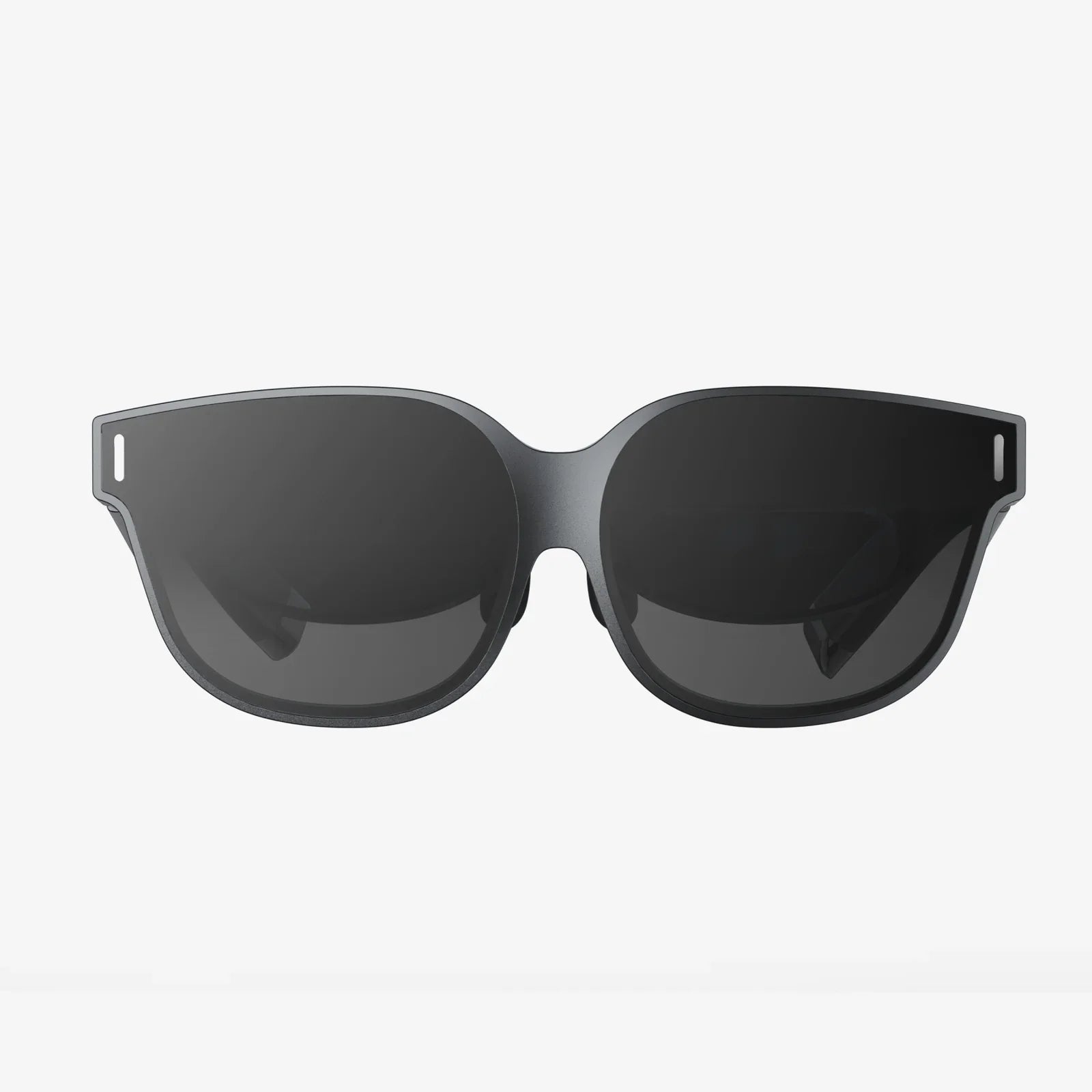
Ultimately, the goal is a shift from handheld devices to wearable technology like smart glasses. This will provide a truly persistent and hands-free augmented layer on reality. Interacting with the AR world will become as natural as interacting with the physical one—using voice, gesture, and gaze to command a digital universe that is seamlessly integrated into our own. The distinction between interacting with a device and interacting with your environment will vanish.
From its foundational tracking to its transformative applications, the journey to interact with AR AR Core is a journey into a new way of computing. It’s a shift from the abstract, confined world behind glass to a contextual, spatial experience woven into the fabric of our reality. This technology promises to make us more knowledgeable, more efficient, and more connected to both the digital and physical realms. The tools are here, the applications are growing more sophisticated by the day, and the door to an augmented world is wide open, waiting for you to take the next step and see what’s possible.
Share:
What Are the Different Types of Wearable Technology - A Comprehensive Guide to the Tech on You
AI Visibility Tool: The Ultimate Guide to Unlocking Unprecedented Digital Insights