


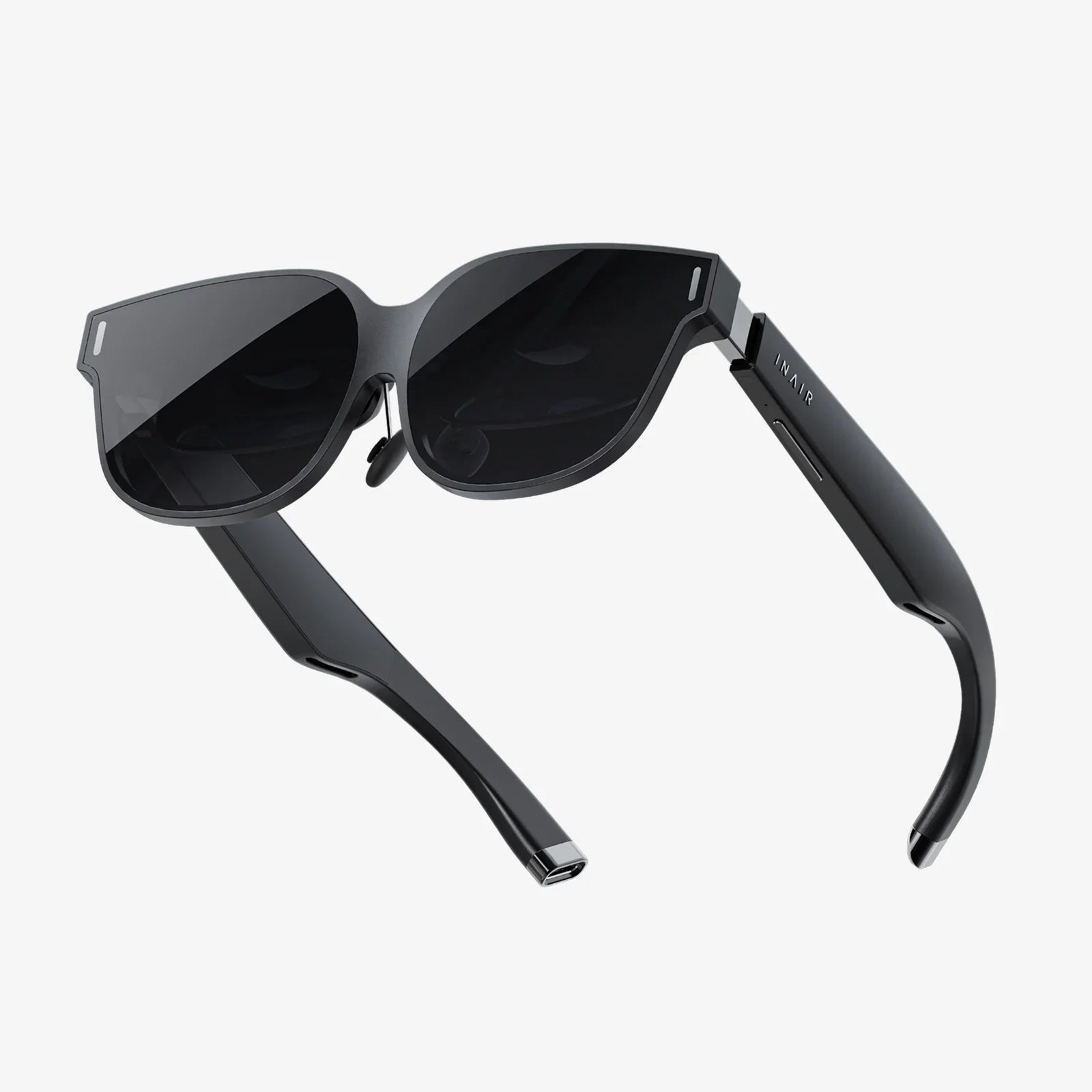
Imagine a world where your every gesture, word, and glance is intuitively understood by the devices around you—not as a science fiction fantasy, but as the tangible reality of modern human-computer interaction. The silent dialogue between human and machine has evolved from punch cards and command lines into a rich, multimodal symphony of input and output, a complex dance of intent and execution that defines our digital age. This intricate communication happens through carefully designed interaction types, the fundamental building blocks of our digital experiences that determine whether a piece of technology feels like a frustrating obstacle or a seamless extension of our own will.
The Foundational Framework: Defining Interaction Types
At its core, human-computer interaction (HCI) is a discipline concerned with the design, evaluation, and implementation of interactive computing systems for human use. The 'interaction types' are the established paradigms or styles through which this communication occurs. They are the conceptual models that define the language of exchange between the user and the system. Understanding these types is not merely an academic exercise; it is crucial for designers, developers, and product managers to create effective, efficient, and satisfying user experiences. The choice of interaction type directly influences learnability, usability, accessibility, and the overall user sentiment towards a system.
Direct Manipulation: The Illusion of Tangibility
Perhaps the most influential and widespread interaction type is direct manipulation. Pioneered by visionaries and popularized by the graphical user interface (GUI), this paradigm allows users to act on visible objects of interest directly, using physical, incremental, reversible actions whose effects are immediately visible. The classic example is the desktop metaphor, where users drag files into folders, click on icons to open applications, and manipulate scrollbars to navigate content.
The psychological power of direct manipulation lies in its ability to leverage our innate understanding of the physical world. It reduces the cognitive load by making the interface predictable and based on real-world metaphors. Users feel a sense of agency and control because the system provides continuous representation of the objects and actions of interest. However, its limitations become apparent when dealing with abstract tasks, large-scale data operations, or when the required physical precision exceeds a user's motor capabilities.
Menu-Based Navigation: Structured Choice and Guidance
Menu-based interaction presents users with a list of options or commands from which they can make a selection. This type excels at structuring complex functionality into a manageable and discoverable format. From the humble dropdown menu in a desktop application to the hamburger menu on a mobile website, this paradigm guides users, reduces memory load (recalling a command is harder than recognizing it from a list), and helps prevent errors by only presenting valid, context-appropriate choices.
Menus can be hierarchical, flat, or circular, and their design involves critical trade-offs between breadth and depth. A broad, shallow menu presents many options at once, potentially overwhelming users. A deep, narrow menu requires more navigation steps, increasing the interaction cost. Effective menu design is a cornerstone of information architecture, ensuring users can find what they need without getting lost in a labyrinth of choices.
The Command Line: Power and Precision Through Language
Before the GUI, there was the command-line interface (CLI). This interaction type requires users to issue specific, pre-defined textual commands to the system. While often perceived as archaic to novice users, the command line remains a powerful tool for experts due to its expressiveness, efficiency, and capacity for automation and scripting. A single concise command can accomplish what might take dozens of clicks in a GUI.
The primary challenge of command-based interaction is its high cognitive overhead. Users must learn a specific syntax and vocabulary, with little room for error or ambiguity. It offers poor discoverability—it's difficult to know what commands are available without prior knowledge or reference. Despite this, its power ensures its persistence in fields like system administration, software development, and data science, often complemented by modern features like autocomplete and command history.
Form Fill-In: Structured Data Entry
As the name implies, form fill-in interaction involves presenting users with a set of related fields, labels, and input controls to enter structured data. This is the workhorse of the web, facilitating everything from user registration and login to checkout processes and search filters. A well-designed form leverages various input controls—text fields, radio buttons, checkboxes, sliders, and date pickers—to make data entry as effortless and error-free as possible.
Key principles for effective form design include a logical flow and grouping of related fields, clear and concise labels, appropriate input constraints and validation, and proactive assistance. The goal is to minimize the user's effort and cognitive load during a task that is often perceived as tedious. Poorly designed forms, plagued by unclear instructions, excessive fields, and frustrating validation, are a major source of user abandonment.
Natural Language: The Quest for Conversational Fluency
Natural language interaction aims to be the most intuitive paradigm, allowing users to communicate with systems using everyday spoken or written language. This can be broken into two main categories: natural language understanding (for input, like voice assistants) and natural language generation (for output, like chatbots). The ultimate goal is to eliminate the need for users to learn a system-specific language, instead allowing them to interact in a human-like conversation.
Despite significant advances, this remains one of the most challenging interaction types to implement effectively. Natural language is fraught with ambiguity, context-dependency, slang, and varied syntactic structures. Systems must accurately parse intent from often-ungrammatical speech, resolve references, and handle disambiguation. When it works well, it feels magical and deeply accessible. When it fails, it leads to frustration and a breakdown of trust. This paradigm is rapidly evolving with advancements in large language models, pushing the boundaries of what conversational interfaces can achieve.
Beyond the Basics: Emerging and Hybrid Interaction Types
The landscape of HCI is not static. The five core types often blend and evolve to create new hybrid paradigms.
Gesture-Based Interaction
Moving beyond the click-and-drag of the desktop, gesture-based interaction uses bodily movements, typically of the hands and fingers, as input. Popularized by touchscreens (pinch-to-zoom, swipe-to-nav), it has expanded into the three-dimensional space with systems that use cameras and sensors to track user motion. This offers a more embodied and often more immersive experience but introduces challenges of learnability (gestures are not always visible or discoverable) and fatigue.
Haptic Interaction
This type engages the user's sense of touch through force feedback, vibrations, and other tactile sensations. It provides a crucial channel for feedback, confirming actions and creating a more tangible connection with digital content. From the subtle vibration of a controller to the sophisticated force feedback in medical simulators, haptics enrich interactions by making them multisensory.
Multimodal Interaction
The most significant trend in modern HCI is multimodality—the combination of multiple interaction types within a single, seamless experience. A user might start a search with a voice command (natural language), refine the results using touch gestures on a map (direct manipulation), and then fill in a form to complete a purchase. Each mode is used for the task it is best suited for, creating a fluid and flexible dialogue that more closely mirrors human-to-human interaction.
Choosing the Right Interaction Type: A Matter of Context
There is no single "best" interaction type. The optimal choice is a product of careful analysis of the user, the task, and the context.
- User Expertise: Novice users often benefit from the guided nature of menus and the intuitiveness of direct manipulation. Experts may prefer the speed and expressiveness of command lines or keyboard shortcuts.
- Task Nature: Data entry is suited for forms, object manipulation for direct control, and open-ended queries for natural language.
- Context and Environment: A voice interface is powerful when the user's hands are busy (e.g., driving), while a gesture-based system might be ideal for a collaborative, large-screen display in a meeting room.
- Device Constraints: The limited screen real estate of a smartwatch demands a different approach than the expansive canvas of a desktop monitor.
The most successful modern interfaces are often those that skillfully blend multiple types, allowing users to switch between modes fluidly based on their preference and the immediate task at hand.
The Future of Interaction: Invisible, Intelligent, and Immersive
The trajectory of HCI points towards interfaces that are increasingly invisible, intelligent, and immersive. We are moving towards calm technology that resides in the periphery of our attention until needed. Ubiquitous computing and the Internet of Things will embed interactivity into the very fabric of our environment. Artificial intelligence and machine learning will enable systems to move from merely responding to commands to proactively anticipating user needs, shifting the paradigm from manipulation to partnership.
Furthermore, the lines between the digital and physical will continue to blur through augmented and virtual reality, creating entirely new spatial interaction types where we will manipulate digital artifacts as if they were real. Brain-computer interfaces, though in their infancy, represent the ultimate frontier—the potential for direct neural interaction, bypassing traditional motor and sensory channels altogether.
The silent language of clicks, taps, swipes, and spoken words is the bedrock of our digital lives, a constantly evolving dialect that shapes how we create, connect, and comprehend. As these interaction types converge and new ones emerge, they promise a future not of complex commands to be memorized, but of intuitive, adaptive dialogues that understand not just what we ask for, but who we are and what we truly mean. The next time you effortlessly navigate a website or ask a device a question, remember—you're engaging in a sophisticated dance of interaction types, a testament to decades of research and design striving to make technology not just useful, but human.
Share:
Buy AR: The Ultimate Guide to Navigating the Augmented Reality Marketplace
Smart Glasses Prescription Options: A Complete Guide to Customizing Your Vision