


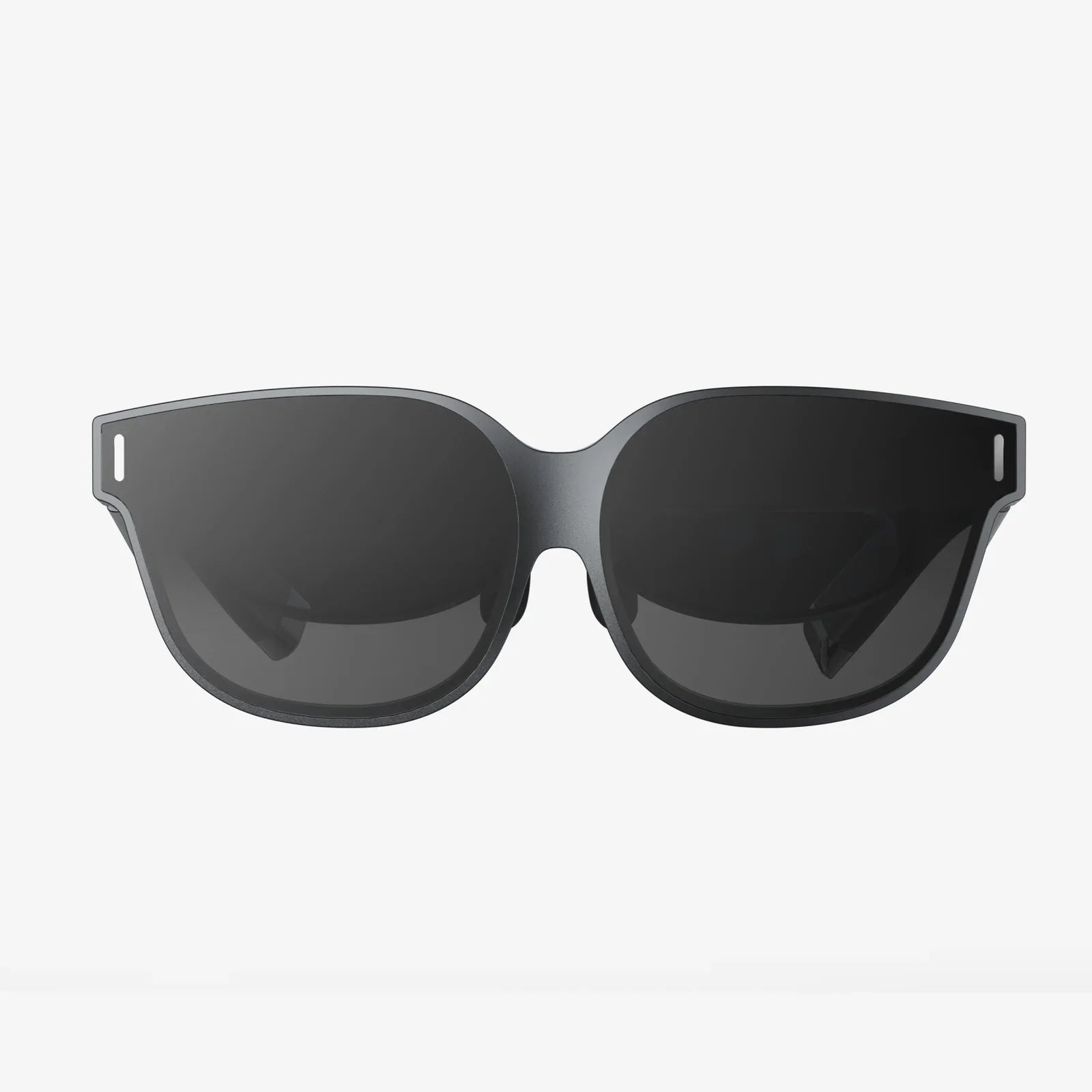
Imagine a world where digital information doesn’t just live on a screen but is seamlessly woven into the fabric of your everyday life—this is the promise of augmented reality, and the decision to buy AR technology is your ticket in. It’s more than a purchase; it’s an investment in a new way of seeing, interacting, and understanding the world around you. The marketplace is buzzing, options are vast, and the potential is staggering, but navigating it requires insight. Whether you're a curious consumer, a forward-thinking professional, or a business leader looking to gain an edge, understanding what to look for when you buy AR is the critical first step into this expanded universe. This guide will illuminate the path, ensuring your journey into augmented reality is informed, strategic, and ultimately, transformative.
The Expanding Universe of Augmented Reality
Before embarking on the journey to buy AR, it's essential to grasp what augmented reality truly is and the profound impact it's having. Unlike virtual reality, which creates a completely digital environment, AR overlays digital content—images, data, 3D models, animations—onto your real-world view. This blending of realms is revolutionizing how we work, learn, play, and connect.
The applications are as diverse as they are powerful. In enterprise, technicians use AR headsets to see repair instructions overlaid on complex machinery, surgeons visualize patient anatomy during procedures, and architects walk clients through digital models of unbuilt structures. In retail, customers can virtually try on clothes or see how a new sofa would look in their living room before they commit to a purchase. Education is being transformed as students explore the solar system in their classroom or dissect a virtual frog. The decision to buy AR is no longer a niche tech enthusiast's whim; it's a practical consideration for industries and individuals aiming for greater efficiency, engagement, and understanding.
Defining Your AR Purpose: Consumer vs. Enterprise
The first and most crucial step before you buy AR equipment is to define your 'why'. The intended use case dramatically narrows down the appropriate hardware and software, directly influencing cost and complexity. The market broadly splits into two categories: consumer-grade and enterprise-grade AR.
Consumer AR Experiences
For most individuals, the entry point to AR is already in their pocket: a smartphone. Mobile AR leverages the camera and sensors of a standard phone to deliver engaging experiences, from social media filters to immersive games. This is a low-cost, low-barrier way to experiment. The next step up is to buy AR glasses or headsets designed for consumers. These are typically focused on media consumption, gaming, and light productivity. They prioritize comfort, style, and affordability, often acting as a companion to a smartphone rather than a fully standalone computing device.
Enterprise AR Solutions
Enterprise solutions are a different beast altogether. When a corporation decides to buy AR for its workforce, the requirements are stringent. These devices are built for all-day wear in demanding environments like factory floors, construction sites, and hospital operating rooms. They prioritize functionality, durability, and performance over aesthetics. Features might include hands-free operation, robust data security, enterprise-grade software integration, and advanced sensors for precise spatial mapping. The investment is significantly higher, justified by the tangible return on investment through increased productivity, reduced errors, and enhanced remote collaboration.
A Deep Dive into AR Hardware Form Factors
The core of your AR experience is the hardware. When you decide to buy AR, you're primarily choosing between several form factors, each with its own strengths and trade-offs.
Smartphone-Based AR
This is the most accessible form. There's no need to buy AR-specific hardware; you simply use your existing device. The ubiquity of smartphones has democratized AR, allowing developers to reach a massive audience. However, the experience is limited by the phone's screen size, battery life, and the need to hold the device up, which isn't truly hands-free.
Standalone AR Glasses and Headsets
These are self-contained units with their own processor, battery, and display system. They offer a truly immersive and hands-free experience. When you buy AR glasses of this type, you're getting a portable all-in-one system. They range from lightweight glasses for everyday information display to more robust headsets for complex visualization tasks. Battery life and computing power can be limiting factors compared to tethered solutions.
Tethered AR Headsets
These units connect to a separate, powerful computer or console to handle the intense processing requirements. This setup allows for incredibly high-fidelity graphics and complex applications, making it a popular choice for advanced design, engineering, and high-end training simulations. The obvious drawback is the lack of mobility, as the user is tethered by a cable to a stationary computer.
Key Specifications to Scrutinize Before You Buy AR
Understanding the technical specs is vital to making an informed decision. Don't get lost in the jargon; focus on these key performance indicators.
Display Technology and Field of View (FoV)
How the digital images are projected into your eyes is fundamental. Different technologies like Waveguide, Birdbath, and MicroLED offer varying levels of brightness, clarity, and color accuracy. More important than the technology itself is the outcome: a bright, clear image that is visible even in well-lit conditions.
Closely related is the Field of View (FoV). This is the angular extent of the observable world seen through the device at any given moment, measured diagonally in degrees. A narrow FoV feels like looking through a small window, while a wide FoV offers a more immersive and natural experience where digital content fills more of your vision. Currently, a wider FoV is a premium feature.
Tracking and Sensors
For digital objects to stay locked in place in the real world, the device must understand its own position and the geometry of its environment. This is achieved through a suite of sensors:
- Cameras: Used for simultaneous localization and mapping (SLAM), which builds a 3D map of the space.
- Inertial Measurement Units (IMUs): Accelerometers and gyroscopes that track head movement and orientation.
- Depth Sensors: Precisely measure distances to surfaces, enabling more accurate occlusion (where real-world objects can hide virtual ones).
The quality and combination of these sensors directly impact the stability and realism of the AR experience.
Processing Power and Battery Life
These two specs are in a constant tug-of-war. High-end processors are needed to run complex SLAM algorithms and render detailed 3D graphics, but this consumes significant power. When you buy AR glasses, you must consider your use case. Do you need all-day battery life for fieldwork, or will you be near an outlet for shorter, more intensive sessions? There is always a trade-off between performance and longevity.
Comfort and Ergonomics
This is often overlooked but is perhaps the most critical factor for adoption. A device that is too heavy, too tight, or gets too hot will not be used, regardless of its technical prowess. Consider weight distribution, padding, adjustability, and whether it can be worn over prescription glasses. If possible, try before you buy AR hardware.
The Software Ecosystem: The Brain Behind the Lens
Hardware is nothing without software. The operating system and available applications define what you can actually do with your device.
Operating Systems and Platforms
Some devices run on custom, proprietary platforms, while others use more open operating systems designed specifically for spatial computing. The choice of platform determines the app store you have access to, the development tools available, and how the device integrates with your other technology, like cloud services or enterprise software suites.
App Stores and Content Availability
Before you buy AR from a specific vendor, investigate its ecosystem. Is there a healthy library of applications for your needs? For consumers, this might mean games and entertainment apps. For enterprises, it means checking for compatibility with existing business software or the availability of industry-specific solutions for manufacturing, healthcare, or logistics.
Development Tools
For businesses looking to create custom AR experiences, the availability of robust Software Development Kits (SDKs) and game engines that support the platform is paramount. A strong developer community and good documentation can significantly reduce the time and cost of building in-house AR solutions.
Navigating the Purchase: A Practical Checklist
Ready to make a decision? Use this checklist to guide your process to buy AR technology.
- Define Your Primary Use Case: Is it for work, play, or both? Be specific.
- Set a Realistic Budget: Remember to account for software, accessories, and potential development costs.
- Research Compatible Software: Ensure the apps you need exist for the platform you're considering.
- Prioritize Key Specs: Based on your use case, decide what's non-negotiable (e.g., FoV, battery life, comfort).
- Read Expert and User Reviews: Look for feedback on real-world usage, not just lab specs.
- Check Return Policies and Warranties: AR is a personal experience; ensure you have an exit strategy if the device doesn't meet your expectations.
- Consider Future-Proofing: Technology evolves rapidly. Assess the vendor's update roadmap and commitment to the platform.
The Future is Augmented: Where AR is Headed
The technology behind AR is advancing at a breathtaking pace. We are moving towards smaller, lighter, and more powerful devices with wider fields of view and longer battery life. The eventual goal is a pair of glasses that look entirely normal but can project rich, interactive information onto the world—a true ubiquitous computing interface.
Key trends to watch include the integration of Artificial Intelligence for more context-aware and intuitive interactions, the development of more sophisticated haptic feedback to simulate touch, and the emergence of the AR cloud—a persistent, shared digital layer over the physical world that will allow experiences to be anchored to specific locations for everyone to see. The decision to buy AR today is a step into a technology that is only going to become more central to our digital lives.
The journey to buy AR is an exciting foray into the next paradigm of human-computer interaction. It’s a landscape filled with incredible potential to enhance our capabilities, creativity, and connection to information. By carefully considering your needs, understanding the technology, and thoughtfully evaluating the options, you can confidently select a device that doesn’t just show you a new reality but actively improves your own. The future is not something we merely step into; it’s a layer we will choose to activate, and it all starts with the choices you make today.
Share:
PC VR Headset News: The Next Evolution in Immersive Gaming and Productivity
Interaction Types in Human-Computer Interaction: The Complete Guide to How We Connect with Machines