


- by wangfred
Interactive AR Objects: Redefining Reality and Revolutionizing Digital Interaction
- by wangfred
Imagine pointing your device at an empty table and watching a complex engine assembly materialize, its parts moving and responding to your touch. Envision walking through a museum and seeing a dinosaur skeleton roar to life, its history unfolding before your eyes. This is no longer the stuff of science fiction; it is the tangible, exhilarating reality brought to us by interactive Augmented Reality (AR) objects. These dynamic digital entities are breaking down the barriers between the pixel and the physical, creating a new layer of interactive existence that is poised to redefine everything from how we learn and shop to how we work and play. The era of passive observation is over; the age of interaction has begun.
At its core, an interactive AR object is a complex digital construct that exists within a precise technological framework. The magic begins with spatial mapping. Using advanced sensors, cameras, and algorithms, a device scans the physical environment, creating a detailed 3D mesh. This digital understanding of the world—the contours of a table, the walls of a room, the texture of a floor—allows the AR object to be placed within it convincingly, adhering to the laws of physics with accurate occlusion, shadows, and perspective.
The next critical component is tracking and persistence. For an object to feel real, it must stay anchored in its designated spot even as the user moves around. Simultaneous Localization and Mapping (SLAM) technology enables this, allowing the device to understand its own position relative to the environment and the object within it. This ensures that if you walk around a virtual sculpture, you see it from every angle, and if you leave the room and return, the object is waiting exactly where you left it.
Finally, we reach the most captivating element: interactivity. This is achieved through a combination of input methods. Touch gestures on a screen—tapping, swiping, pinching—are the most direct. However, more advanced systems utilize hand tracking, allowing users to manipulate objects with natural gestures without touching a screen at all. Voice commands can trigger animations or provide information, while computer vision can recognize physical objects or markers to launch specific AR experiences. This multi-modal input creates a rich, intuitive dialogue between the user and the digital object.
The true power of interactive AR objects lies not in their visual spectacle but in their profound utility across a vast spectrum of human activity.
Interactive AR objects are dismantling the traditional, often abstract, methods of learning. Instead of staring at a static diagram of the human heart in a textbook, a medical student can project a beating, life-sized heart into their study space. They can peel back layers to explore the chambers, witness blood flow in real-time, and even trigger animations showing common ailments. This kinesthetic learning—learning by doing—dramatically improves comprehension and retention. Similarly, mechanics-in-training can practice disassembling and reassembling complex machinery without the cost or danger of physical parts. Every mistake becomes a valuable lesson, not a costly error.
The longstanding problem of online shopping—the inability to try before you buy—is being solved. Interactive AR objects allow consumers to place true-to-scale 3D models of furniture into their living rooms, change fabrics and colors with a tap, and walk around them to ensure a perfect fit. For fashion, virtual try-ons for glasses, watches, and even makeup are becoming commonplace. This drastically reduces purchase uncertainty and product returns, building consumer confidence and creating a far more engaging shopping experience than scrolling through static images.
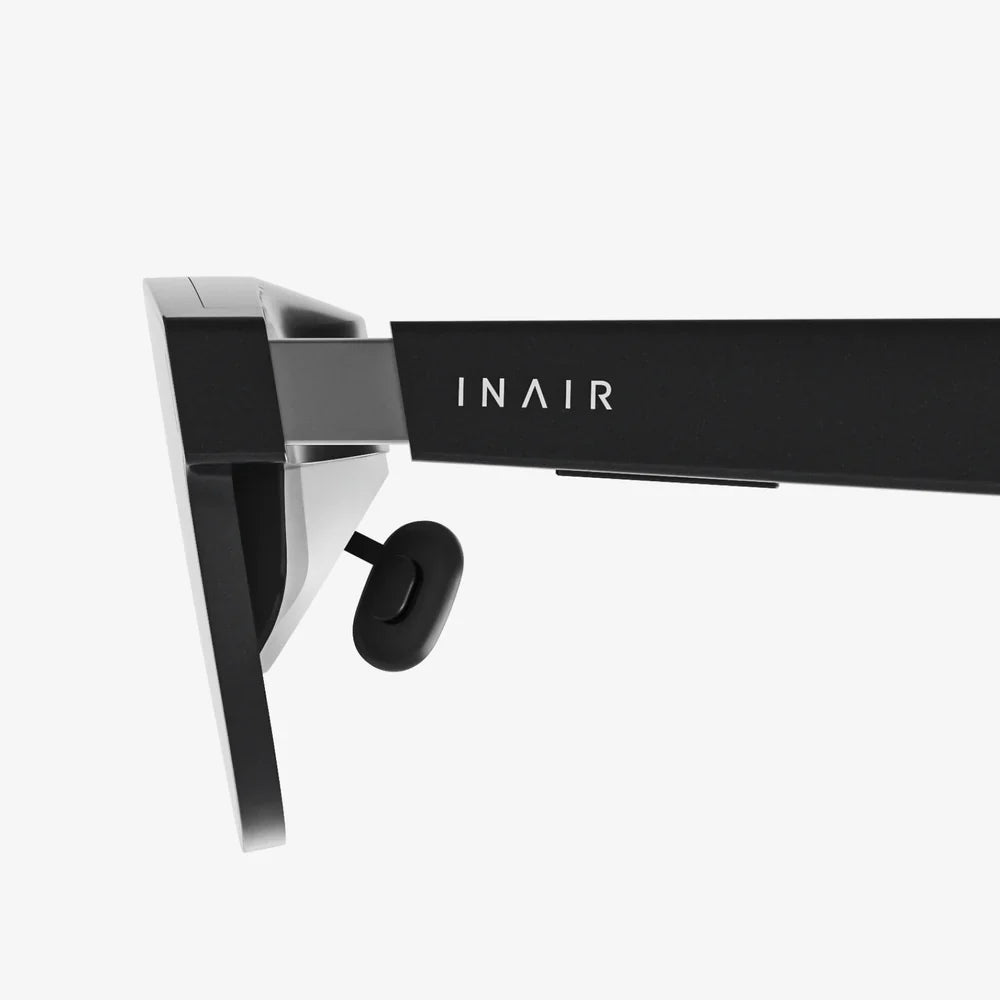
In industrial settings, interactive AR objects are supercharging productivity and safety. A field technician wearing AR-enabled smart glasses can see a holographic schematic overlaid on a malfunctioning piece of equipment. Interactive arrows can guide them through repair steps, while live data streams can display temperature, pressure, and diagnostics directly in their line of sight. This hands-free, information-rich environment minimizes errors, speeds up complex tasks, and provides expert guidance to personnel anywhere in the world.
Artists and designers are using interactive AR objects to create entirely new forms of expression. Sculptors can design and manipulate virtual clay in mid-air before committing to physical materials. Museums are creating immersive exhibits where historical artifacts tell their own stories, and visitors can interact with long-lost civilizations. This technology turns every space into a potential canvas, blurring the lines between the gallery and the everyday world and democratizing access to creative experiences.
Despite its immense potential, the widespread adoption of interactive AR faces significant obstacles. The hardware conundrum remains a primary barrier. While smartphone-based AR is accessible, it is often a cumbersome experience, requiring users to hold up a device. Dedicated AR glasses that are socially acceptable, comfortable, powerful, and affordable have yet to hit the mainstream. Battery life, processing power, and field of view are all areas requiring continued innovation.
Furthermore, the creation of high-fidelity, truly interactive AR objects is a complex and resource-intensive process. It requires expertise in 3D modeling, animation, spatial audio, and user interface design. The industry needs more robust and accessible development platforms that allow creators without deep technical backgrounds to build compelling experiences, thereby accelerating content creation.
Finally, the issue of privacy and data ethics looms large. AR systems, by their very nature, are constantly scanning and processing the user's environment. This raises critical questions about what data is collected, how it is stored, and who has access to it. Establishing clear ethical guidelines and robust security frameworks is not an option but a necessity for earning public trust.
As we look ahead, the evolution of interactive AR objects points toward a world even more deeply intertwined with digital information. The concept of the AR cloud—a persistent, shared digital layer over the entire world—will allow interactive objects and experiences to be permanently anchored to locations, accessible and modifiable by multiple users simultaneously. This will enable collaborative design sessions in empty rooms, persistent art installations in city parks, and complex multi-player games that unfold across your entire neighborhood.
Advancements in Artificial Intelligence will make these objects smarter and more context-aware. An AR object will not just respond to commands but will anticipate needs based on the environment and the user's behavior. The convergence of AR with the burgeoning metaverse will further erode the distinction between physical and digital spaces, creating a seamless continuum of reality where interactive objects are the fundamental building blocks of experience.
The journey is just beginning. The technology will become lighter, faster, and more intuitive, eventually evolving toward contact lenses or neural interfaces that make the digital layer indistinguishable from reality itself. The focus will shift from creating novel experiences to building indispensable tools that enhance our human capabilities, augment our memories, and connect us to information and to each other in ways we are only starting to imagine.
The world around you is about to become a dynamic canvas, waiting for your command. The empty space in your home, the street you walk down, the manual you're trying to decipher—all of them are poised to become portals to a deeper, more interactive understanding of reality. Interactive AR objects are the keys to unlocking this new dimension, transforming every patient into a medical student, every living room into a showroom, and every user into a creator. The boundary between what is real and what is possible is dissolving, and the power to shape your reality is literally at your fingertips.