


Imagine a world where your living room floor becomes a teeming prehistoric jungle, where you can disassemble and study the engine of a jumbo jet hovering silently before you, or where a master sculptor thousands of miles away can guide your hands as you mold digital clay into a physical masterpiece. This is no longer the stuff of science fiction. It is the palpable, awe-inspiring promise of interactive mixed reality experiences, a technological revolution that is poised to dismantle the barriers between the digital and the physical, forever altering how we work, learn, play, and connect.
The Spectrum of Immersion: From AR to VR and the MR Sweet Spot
To understand mixed reality, one must first navigate the spectrum of immersive technologies. On one end lies Augmented Reality (AR), which superimposes digital information—images, text, animations—onto our view of the real world through a device, like a smartphone screen or smart glasses. It adds a layer to our reality but doesn't necessarily interact with it in a spatially aware way. On the opposite end is Virtual Reality (VR), which completely immerses the user in a synthetic, digital environment, occluding the physical world entirely. It's transportive but isolating.
Interactive Mixed Reality (MR) exists as the sophisticated convergence of these two, occupying the crucial middle ground. It doesn’t just overlay digital content; it anchors it intelligently to the physical world, allowing for real-time interaction and coexistence. An MR headset uses advanced sensors, cameras, and algorithms to continuously map and understand your environment. This spatial awareness allows a digital character to convincingly hide behind your real sofa, or for a virtual control panel to remain fixed to your real wall. The digital and physical objects don't just coexist; they co-interact. This creates a profound sense of presence and believability that pure AR or VR struggles to achieve, making the experience truly mixed.
The Engine Room: The Technology Powering the Blend
The magic of MR is underpinned by a suite of cutting-edge technologies working in concert. At its core is a process called spatial mapping. Using depth-sensing cameras and LiDAR scanners, the device constructs a real-time, 3D mesh of your surroundings. It understands the geometry of your room—the floors, walls, tables, and chairs—down to the millimeter.
This environmental understanding is paired with precise inside-out tracking. Unlike early VR systems that required external sensors, MR headsets have cameras on the device itself that track its position in space by observing the world around it. This allows for six degrees of freedom (6DoF) movement: you can move forward/back, up/down, left/right (translation), and also rotate your head by pitch, yaw, and roll. This precise, un-tethered movement is fundamental to convincing immersion.
Finally, the bridge between the user and the digital world is built on intuitive input systems. These go beyond traditional controllers. Advanced hand-tracking algorithms allow users to reach out and manipulate holograms with their bare hands, using natural pinching, grabbing, and dragging motions. Eye-tracking and voice command integration further reduce the friction of interaction, making the technology feel less like a tool and more like an extension of oneself.
Transforming Industries: The Practical Power of MR
While the entertainment value is obvious, the most profound impact of interactive MR is happening in enterprise and professional fields, revolutionizing workflows and unlocking new possibilities.
Revolutionizing Design and Manufacturing
In architecture and industrial design, MR is a game-changer. Designers can step inside a full-scale, holographic model of a building before a single brick is laid, assessing sightlines, spatial flow, and lighting. Engineers can collaborate on a complex 3D model of a new engine from different parts of the globe, each seeing the same hologram in their own physical space. They can disassemble it, annotate components with virtual notes, and identify potential design flaws in a way a 2D screen could never allow. This accelerates prototyping, reduces costly errors, and enhances collaboration.
The Future of Medicine and Surgery
The medical field is embracing MR for everything from medical training to complex surgery. Medical students can practice procedures on interactive, life-like holographic patients, gaining valuable muscle memory without risk. Surgeons can use MR to overlay critical patient data—like MRI or CT scans—directly onto their field of view during an operation, providing an “X-ray vision" effect that enhances precision and safety. Remote experts can also “beam in" as holograms to guide less-experienced surgeons through novel procedures, democratizing expertise.
Supercharging Education and Training
Interactive MR turns learning from a passive activity into an active exploration. Instead of reading about ancient Rome, history students can walk through a faithfully reconstructed holographic Forum. Chemistry students can safely combine volatile virtual elements to see the reactions unfold on their desk. Mechanics in training can learn to repair a complex piece of machinery with step-by-step holographic instructions overlaid onto the actual equipment. This experiential learning dramatically improves retention and understanding.
Redefining Remote Collaboration
MR promises to be the ultimate tool for remote work, moving far beyond video calls. Imagine a virtual meeting where all participants, represented as photorealistic avatars or even volumetric videos, share the same virtual workspace. You can collaboratively edit a 3D model, brainstorm on a virtual whiteboard that feels physically present, or review architectural plans together, all while feeling a tangible sense of shared presence that flat screens cannot provide. It makes geographical distance irrelevant to effective collaboration.
The Human Factor: Psychology and Social Dynamics in a Blended World
As these technologies become more pervasive, they will inevitably reshape human psychology and social interaction. The phenomenon of presence—the genuine feeling of "being there" in a virtual environment—is incredibly powerful and can evoke real emotional and physiological responses. This can be harnessed for good, such as in exposure therapy for phobias, but it also raises questions about attachment, dissociation, and the nature of reality itself.
Social dynamics will also evolve. Shared MR experiences could strengthen bonds between people separated by vast distances, allowing families to share virtual vacations or grandparents to read holographic storybooks to their grandchildren. Conversely, there is a risk of further social isolation or the creation of a new digital divide between those who can afford these experiences and those who cannot. The etiquette of interacting in MR spaces—when to make eye contact with a real person versus an avatar, how to navigate shared physical-digital spaces—is a social protocol that has yet to be written.
Navigating the Ethical Labyrinth
This powerful technology does not come without significant ethical challenges that society must proactively address.
- Data Privacy and Security: MR devices are data collection powerhouses. They are, by necessity, constantly scanning and processing the most intimate details of your personal environment—your home, your workplace, your habits. This data is incredibly valuable and incredibly sensitive. Who owns this spatial data? How is it stored, used, and protected from misuse? The potential for surveillance is unprecedented.
- Physical Safety and Reality Blurring: When users are deeply immersed in a blended world, they can become unaware of physical hazards. Furthermore, as experiences become more realistic, the potential for manipulation increases. The ability to alter or obscure someone's perception of reality has serious implications for misinformation, propaganda, and psychological manipulation.
- Accessibility and the Digital Divide: High-end MR hardware is currently expensive. There is a tangible risk that the benefits of this transformative technology will be available only to a wealthy few, exacerbating existing inequalities in education, healthcare, and economic opportunity.
Glimpsing the Horizon: What Comes Next?
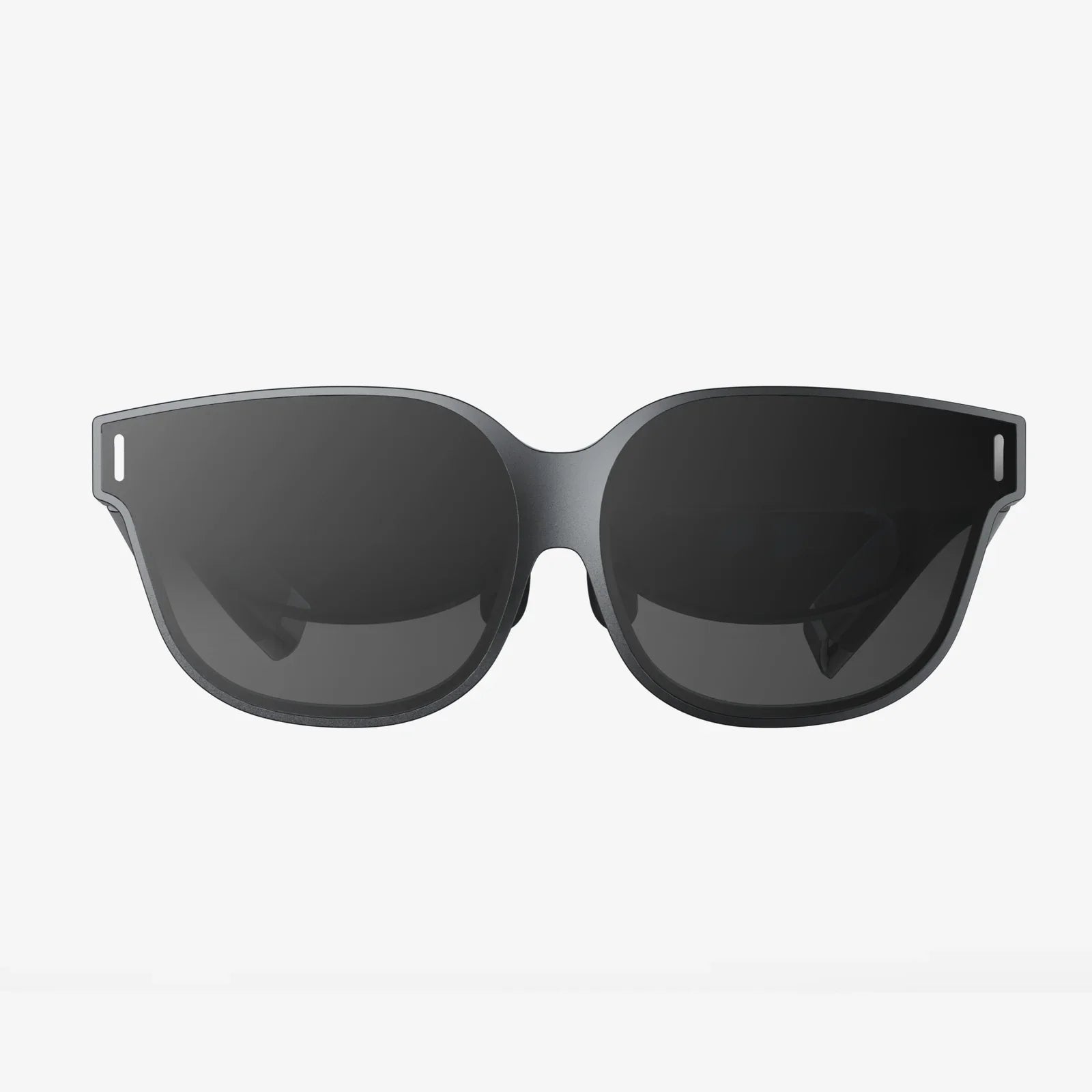
The current state of MR is impressive, but it is merely the foundation. The future points toward even more seamless integration. We are moving toward form factors that look like ordinary eyeglasses, making the technology socially acceptable and all-day wearable. Advances in haptic feedback will allow us not just to see digital objects, but to feel their texture and weight. Brain-computer interfaces, though far off, hint at a future where we could control digital elements with our thoughts alone. The ultimate goal is for the technology to fade into the background, leaving only the magic of the experience itself.
The journey into this blended world is already underway, and it is one of the most significant technological shifts of our generation. It holds the power to augment human potential in ways we are only beginning to imagine, from solving complex global problems to creating breathtaking new forms of art and storytelling. The challenge lies not in the technology itself, but in our wisdom to guide its development with a strong ethical compass, ensuring that these new realities we create are equitable, secure, and ultimately, human-centric.
The boundary between what is real and what is digital is dissolving, and in its place, a new canvas for human experience is emerging—one limited only by our imagination. The next time you look at an empty room, don't just see the space; see the potential for a universe of possibilities waiting to be unlocked, all through the transformative lens of interactive mixed reality.
Share:
Spatial Sound Mapping: The Invisible Architecture of Immersive Audio
Mobile Working vs Home Office: The Ultimate Guide to Choosing Your Workstyle