


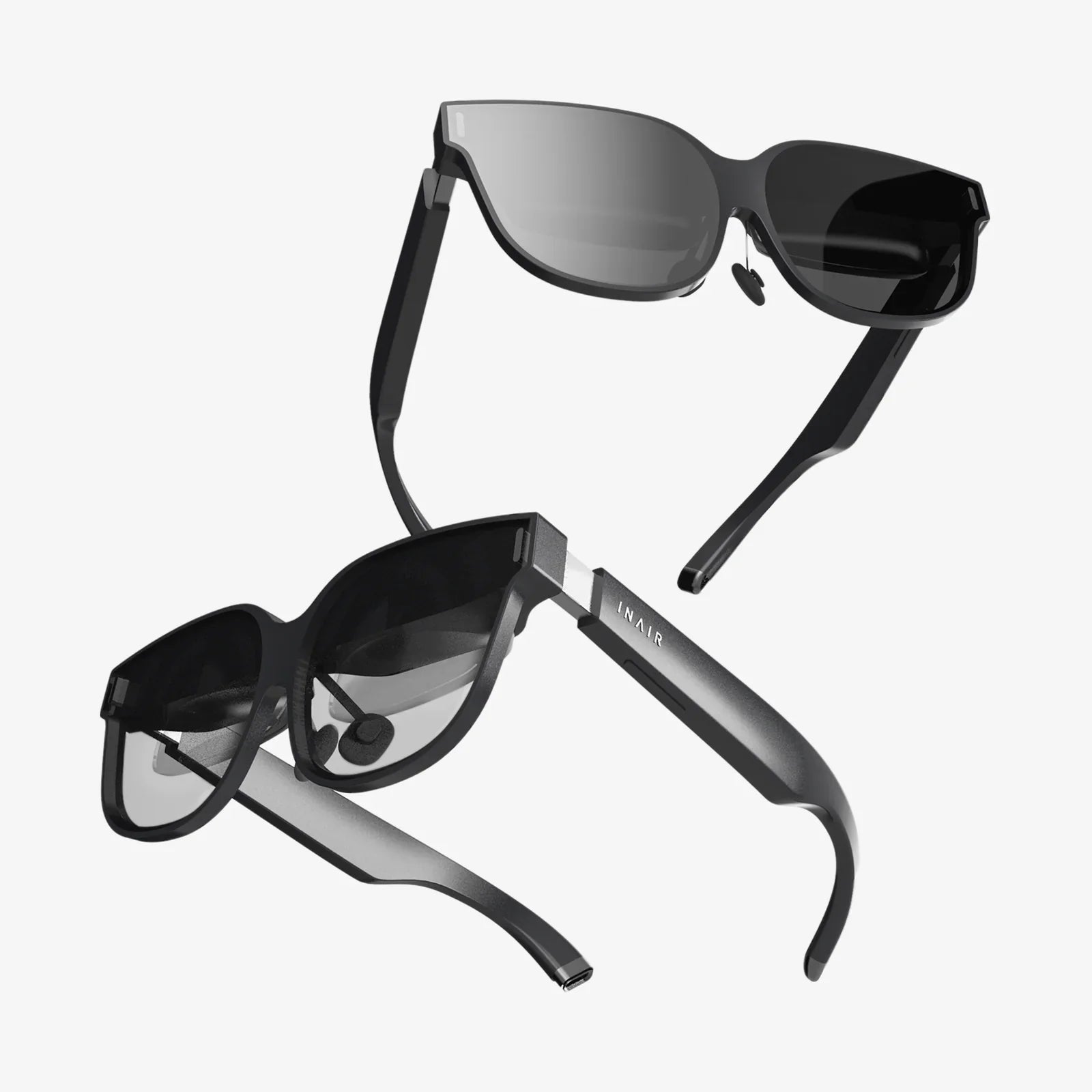
- by wangfred
Introduction of Augmented Reality: Merging Our Digital and Physical Worlds
- by wangfred
Imagine a world where digital information doesn’t just live on a screen but is seamlessly woven into the fabric of your everyday life, where the boundaries between the physical and the virtual blur into irrelevance. This is no longer the realm of science fiction; it is the promise and the rapidly unfolding reality of augmented reality (AR). This technology, which superimposes computer-generated sensory inputs onto our perception of the real world, is poised to revolutionize how we work, learn, play, and connect. The journey from a niche concept to a mainstream technological force is underway, and its implications are as profound as they are exciting. We stand at the precipice of a new era of computing, one that promises to augment not just our reality but our very human capabilities.
At its simplest, augmented reality is an enhanced version of the real world that is achieved through the use of digital visual elements, sound, or other sensory stimuli delivered via technology. It is this direct, real-time connection to a physical environment that distinguishes AR from its cousin, virtual reality (VR). Where VR seeks to replace the user’s world with a simulated one, AR aims to supplement the real world with contextual, interactive digital overlays.
The magic of AR lies in its ability to recognize its environment. Through a combination of cameras, sensors, and algorithms, an AR system can understand the world it's looking at—identifying flat surfaces like tables and floors, recognizing specific images or objects, and even mapping the geometry of a room. This environmental understanding allows the digital content to be placed and persist in the real world, appearing to interact with it physically. A digital character can hide behind your sofa, an instruction manual can be pinned to a malfunctioning engine, and a navigation arrow can appear to be painted on the road ahead of you.
While it feels like a modern innovation, the conceptual seeds of augmented reality were planted decades ago. In 1968, computer scientist Ivan Sutherland created the first head-mounted display system, nicknamed "The Sword of Damocles." It was a primitive and monstrously cumbersome apparatus that laid the foundational groundwork for both VR and AR. The term "augmented reality" itself was coined much later, in 1990, by researchers at a major aerospace company, who developed an AR system to assist assembly line workers.
The 2000s saw AR begin its slow crawl into public consciousness, primarily through experimental art installations and high-cost industrial and military applications. The true catalyst for its emergence into the mainstream, however, was the smartphone. The proliferation of powerful, sensor-packed mobile devices provided a perfect platform for AR. With a high-resolution screen, a camera, a gyroscope, an accelerometer, and GPS all in one pocket-sized package, the smartphone became the first mass-market AR viewer. This democratization of the technology allowed developers to create experiences that reached millions overnight.
The seemingly effortless blending of real and virtual worlds is made possible by a sophisticated stack of technologies working in concert. Understanding these components is key to appreciating the complexity behind the magic.
This is how the device "sees" and understands the world. Cameras capture the live video feed of the user's environment. Simultaneous Localization and Mapping (SLAM) algorithms process this visual data in real-time to map the environment and track the device's position within it. Other sensors, like LiDAR (Light Detection and Ranging) scanners, project invisible light dots to create a precise depth map of the surroundings, allowing for incredibly accurate object placement and occlusion (where digital objects can be hidden by real-world objects).
The raw data from the sensors is immense and must be processed at lightning speed. This requires significant computational power for tasks like image recognition, 3D rendering, and physics calculations. While early systems relied on connection to powerful external computers, today's advancements in mobile processors and dedicated AR chipsets have enabled this processing to happen on the device itself, enabling smoother and more responsive experiences.
This is the component that delivers the augmented view to the user. The most common methods include:
Not all AR experiences are created equal. They exist on a spectrum, defined by how they track and interact with the environment.
This is one of the earliest forms of AR. It relies on a specific, predefined visual marker (often a black-and-white QR-like code or a distinct image) to trigger the digital overlay. The camera identifies the marker, and the associated digital content is displayed on top of it. This method is highly reliable but limited to the presence of these specific markers.
This is the most common and powerful form of modern AR. It uses SLAM and other technologies to understand the environment without needing a predefined marker. This allows digital content to be placed on any surface the system deems suitable. Placing a virtual lamp on your floor or seeing how a new sofa would look in your living room are examples of markerless AR. This includes:
This form partially or fully replaces the original view of an object with an augmented view. It relies heavily on object recognition. For instance, a medical app might use AR to superimpose a view of a patient's skeleton or musculature over their body, or a mechanics app might replace a view of an engine with a labeled, transparent schematic.
The potential of AR extends far beyond fun filters and mobile games. It is already delivering tangible value and driving innovation across numerous sectors.
AR is solving one of the oldest problems of online shopping: the inability to try before you buy. Customers can now use their smartphones to see how a piece of furniture would fit and look in their home, virtually try on watches, glasses, or makeup, and even visualize a new coat of paint on their walls. This "see-it-in-your-space" functionality drastically reduces purchase uncertainty and product return rates, enhancing consumer confidence and engagement.
In industrial settings, AR is a powerful tool for improving efficiency and reducing errors. Technicians wearing AR smart glasses can have repair manuals, schematics, and live instructions overlaid directly onto the machinery they are fixing. Remote experts can see what the on-site worker sees and annotate their field of view with arrows and notes to guide them through complex procedures, reducing downtime and the need for travel. In manufacturing, AR can guide assembly line workers through intricate processes, highlighting the next part to install and the correct tools to use.
The applications in medicine are particularly compelling. Medical students can use AR to explore detailed, interactive 3D models of the human body. Surgeons can use AR overlays during procedures to visualize critical information like the location of tumors or blood vessels without taking their eyes off the patient. AR can also assist in vein detection for injections, physical therapy by guiding patient movements, and medical training through realistic simulations.
AR brings learning to life. Instead of reading about ancient Rome, students can walk through a digitally reconstructed Colosseum right in their classroom. Complex abstract concepts in chemistry, astronomy, or mechanics can be visualized and manipulated in 3D space, fostering deeper understanding and engagement. From K-12 to corporate training, AR provides an immersive, interactive, and memorable learning experience.
Point your phone at a city street, and AR can overlay historical information, restaurant reviews, or translation of street signs. Indoor navigation in large complexes like airports or museums becomes intuitive with arrows and directions laid over the live camera feed. This technology empowers explorers to engage with their surroundings in entirely new ways, unlocking layers of digital information hidden within the physical world.
Despite its immense potential, the widespread adoption of AR faces several significant hurdles that developers and society must address.
For AR to feel truly magical, it must be seamless. Current challenges include limited field of view in many headsets, battery life constraints for mobile and wearable devices, and the need for more robust and accurate spatial mapping, especially in dynamic environments. Processing power, while improving, still needs to advance to handle complex AR experiences without generating excessive heat or draining power.
As AR devices with always-on cameras become more prevalent, they raise legitimate concerns about privacy and data security. The technology's ability to continuously capture and analyze our surroundings could lead to unprecedented levels of data collection. Furthermore, the social etiquette of wearing AR glasses in public and the potential for digital distraction or "attention hacking" are issues that need careful consideration and the development of new social norms.
While many compelling AR applications exist, the search for a truly universal "killer app" that drives mass adoption of dedicated AR wearables continues. Beyond the app itself, the user interface and interaction models for AR are still being invented. Moving beyond touchscreens to gestures, voice commands, and gaze control requires intuitive and fatigue-free design to become mainstream.
The trajectory of AR points toward a future where digital information is seamlessly integrated into our perceptual field through lightweight, socially acceptable eyewear. This evolution, often referred to as "spatial computing" or the "metaverse," envisions a persistent digital layer over our entire reality.
We are moving toward context-aware AR that uses artificial intelligence to predict our needs and deliver information before we even ask for it. The convergence of AR with 5G and future 6G networks will enable cloud rendering, offloading heavy processing to remote servers and allowing for incredibly complex, shared AR experiences on lightweight devices. Furthermore, the development of more advanced holographic displays and neural interfaces could eventually eliminate screens altogether, projecting information directly into our field of vision.
This is not a distant future. The foundational layers are being built today. The introduction of augmented reality marks a fundamental shift in our relationship with technology, moving it from a tool we look down at to a partner that looks out at the world with us. It promises to enhance our cognition, amplify our creativity, and connect us to information and to each other in ways we are only beginning to imagine. The door to this enhanced world is now open, inviting us to step through and explore the limitless possibilities of a reality beautifully, intelligently, augmented.
Share:
Types of AI Glasses: A Comprehensive Guide to the Future on Your Face
Augmented Reality Growing: The Invisible Revolution Reshaping Our World