Imagine a world where the boundaries between the digital and the physical blur into irrelevance, where you can walk with dinosaurs, perform complex heart surgery from your living room, or see how a new sofa would look in your home before you buy it. This is no longer the realm of science fiction; it is the burgeoning reality being shaped by two of the most transformative technologies of our time: Virtual Reality and Augmented Reality. These parallel revolutions are not just changing how we play games or filter our selfies; they are poised to redefine every facet of human experience, from education and enterprise to social connection and personal identity. Strap on your headset and prepare to dive into the immersive digital frontier.
Defining the Realities: VR vs. AR
While often mentioned in the same breath, Virtual Reality and Augmented Reality represent distinct approaches to blending the human experience with computer-generated input.
Virtual Reality (VR) is the technology of complete immersion. It aims to shut out the physical world and transport the user into a fully digital, simulated environment. By wearing a head-mounted display (HMD) that covers the user's entire field of vision, VR replaces their reality with a computer-generated one. This environment can be a photorealistic recreation of a real place, a fantastical world born from pure imagination, or anything in between. The core principle of VR is immersion—the sensation of being physically present in a non-physical world. Advanced systems incorporate positional tracking, hand controllers, and haptic feedback to make this illusion as convincing and interactive as possible.
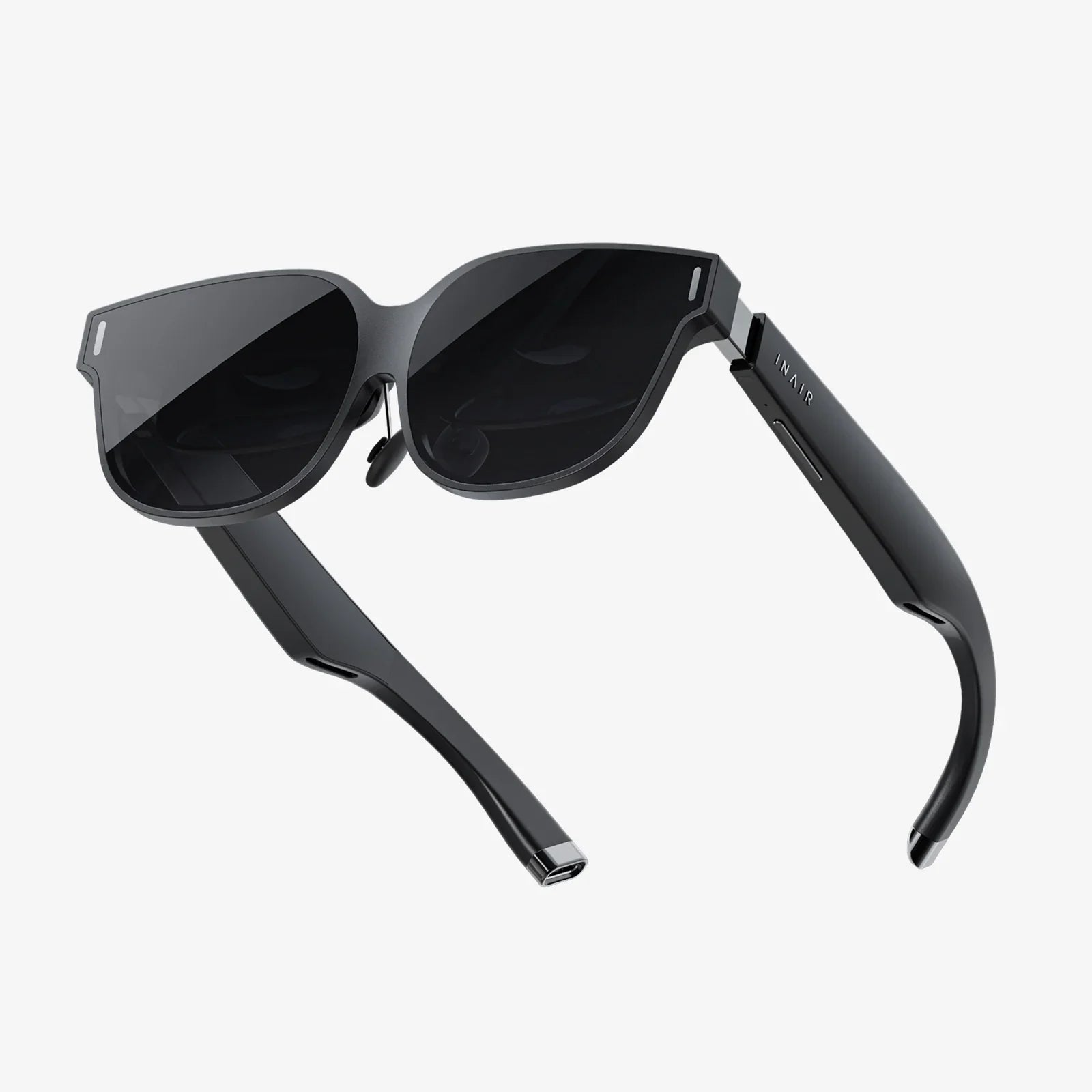
Augmented Reality (AR), in contrast, does not seek to replace the real world but to augment it. AR overlays digital information—images, text, 3D models, animations—onto the user's view of their immediate physical surroundings. The real world remains the foundation, but it is enhanced with a layer of interactive digital content. This is most commonly experienced today through the cameras on smartphones and tablets (e.g., using an app to see how virtual furniture fits in a room) or through specialized smart glasses that project information directly into the user's line of sight. The core principle of AR is integration—seamlessly blending the digital and the physical to provide contextually relevant information and experiences.
A related term often included in this spectrum is Mixed Reality (MR). MR is a more advanced form of AR where virtual objects are not just overlaid onto the real world but can interact with it in a physically believable way. A virtual character in MR could hide behind your real sofa, or a digital ball could bounce off your actual wall. MR requires a sophisticated understanding of the geometry and physics of the user's environment.
The Technological Pillars: How VR and AR Work
The magic of these immersive experiences is built upon a complex foundation of hardware and software working in concert.
Virtual Reality Technology
A modern VR system is an engineering marvel that tricks the human brain through several key components:
-
Head-Mounted Display (HMD): The primary interface. High-resolution screens are placed mere centimeters from the user's eyes, with lenses focusing and reshaping the image for each eye to create a stereoscopic 3D effect with a wide field of view.
-
Tracking Systems: Crucial for maintaining immersion. Systems use a combination of internal sensors (gyroscopes, accelerometers) and external cameras or base stations to precisely track the rotation and position of the user's head and, often, their hands in 3D space. This ensures that when the user moves their head, the virtual world responds in perfect, lag-free synchronization.
-
Audio Systems: Spatial or 3D audio is essential. Sounds in VR come from specific directions and distances, changing realistically as the user turns their head, adding a powerful layer of believability to the virtual environment.
-
Input Devices: These range from simple gamepads to sophisticated motion-tracked controllers that map the user's hand movements into VR. Haptic feedback on these controllers provides a sense of touch, simulating the feeling of grabbing an object or pulling a trigger.
Augmented Reality Technology
AR technology focuses on perception and integration rather than full immersion:
-
Display Technology: This varies widely. Smartphone/Tablet Displays use the device's screen as a viewport into an augmented world. Smart Glasses use optical projection systems to project light directly onto the user's retinas or onto special lenses, allowing them to see digital content superimposed on their normal vision.
-
Sensors and Cameras: The core of any AR system. Cameras continuously scan the environment. These feeds are processed by computer vision algorithms to understand the scene—identifying flat surfaces (for placing digital objects), recognizing objects (like a product box), and tracking motion.
-
Processing Power: The immense task of analyzing the real world in real-time and rendering coherent digital graphics on top of it requires significant processing power, often handled by a connected smartphone or a powerful onboard chip.
A World of Applications: Beyond Gaming and Gimmicks
While entertainment provided the initial spark, the applications for VR and AR now extend into nearly every professional and personal domain.
Enterprise and Industry
Businesses are rapidly adopting immersive tech to increase efficiency, reduce costs, and enhance safety.
-
Design and Prototyping: Automotive and aerospace engineers use VR to design and walk through full-scale 3D models of vehicles and cockpits long before a physical prototype is built. This allows for rapid iteration and collaboration across global teams.
-
Training and Simulation: VR is perfect for high-stakes, high-cost training. Surgeons can practice complex procedures, pilots can train for emergency scenarios, and warehouse workers can learn safety protocols—all in a risk-free virtual environment. AR can provide workers with real-time, hands-free instructions and data overlays while they assemble complex machinery or perform maintenance.
-
Remote Assistance and Collaboration: An expert in one location can use AR to see what a field technician sees and annotate their real-world view with arrows, notes, and diagrams to guide them through a repair, eliminating travel time and costs.
Healthcare and Therapy
The impact on health and wellbeing is profound.
-
Medical Visualization: Medical students can use VR to explore detailed, interactive 3D models of the human body. AR can project a patient's CT scan or ultrasound data directly onto their body during surgery, giving the surgeon "X-ray vision."
-
Exposure Therapy: VR is a powerful tool for treating phobias (fear of heights, flying, public speaking) and PTSD. Therapists can gradually and safely expose patients to triggering stimuli within a controlled virtual setting.
-
Rehabilitation: VR games can make physical therapy for stroke victims or those with motor impairments more engaging and measurable, turning repetitive exercises into motivating challenges.
Education and Retail
These technologies are revolutionizing how we learn and shop.
-
Immersive Learning: Students can take virtual field trips to ancient Rome, the depths of the ocean, or the surface of Mars. Complex abstract concepts in science and mathematics can be visualized and manipulated in 3D, leading to deeper understanding.
-
Virtual Try-On and Preview: The "try-before-you-buy" problem is being solved. Shoppers can use AR to see how glasses, makeup, or clothes will look on them. They can use their phone to see how a new appliance or piece of furniture will fit and look in their actual home, dramatically reducing purchase uncertainty.
Challenges and Considerations on the Road to Adoption
Despite the exciting potential, significant hurdles remain before VR and AR become ubiquitous.
-
Technical Limitations: For VR, achieving perfect visual fidelity, eliminating motion sickness for all users, and creating wireless systems with all-day battery life are ongoing challenges. For AR, creating stylish, socially acceptable glasses with a wide field of view, all-day battery, and powerful computing remains the holy grail.
-
Cost and Accessibility: High-end VR systems and the powerful computers needed to run them are still a significant investment. Making the technology affordable for the mass market is crucial for widespread adoption.
-
Social and Ethical Concerns: As these technologies become more pervasive, questions arise. How will prolonged immersion in virtual worlds affect our psychology and our connection to physical reality? How will AR change social interactions if people are constantly surrounded by digital distractions? The issues of data privacy, advertising, and the potential for misinformation in an augmented world are immense and require careful consideration.
-
Content Creation: Building compelling and useful experiences for these platforms is complex and expensive. The industry needs more tools to democratize content creation and a larger ecosystem of developers to fuel the growth of the medium.
The Future is Immersive: What Lies Ahead?
The trajectory of VR and AR points toward a future where these technologies converge and become as integrated into daily life as smartphones are today. We are moving towards lighter, more powerful, and more socially normalized devices. The line between AR and VR will likely blur, with devices capable of switching between full immersion and contextual augmentation. The concept of the "metaverse"—a persistent network of interconnected virtual spaces—represents a potential culmination of this technology, offering new frontiers for work, play, and social interaction. Advances in haptics, brain-computer interfaces, and artificial intelligence will further deepen the sense of presence and interaction, making the digital feel tangibly real.
The journey into virtual and augmented realities is just beginning. From transformative enterprise tools and revolutionary medical procedures to breathtaking new forms of storytelling and social connection, these technologies hold the key to unlocking experiences we have only just started to imagine. The digital frontier is vast, uncharted, and waiting to be explored. The question is no longer if these immersive realities will become a part of our world, but how quickly we will choose to embrace them and shape their incredible potential for a better future.


Share:
Sharper Image Virtual Reality Smartphone 360: The Ultimate Immersive Experience
What Are the Top AI Tools: A Comprehensive Guide to the Modern Digital Arsenal