


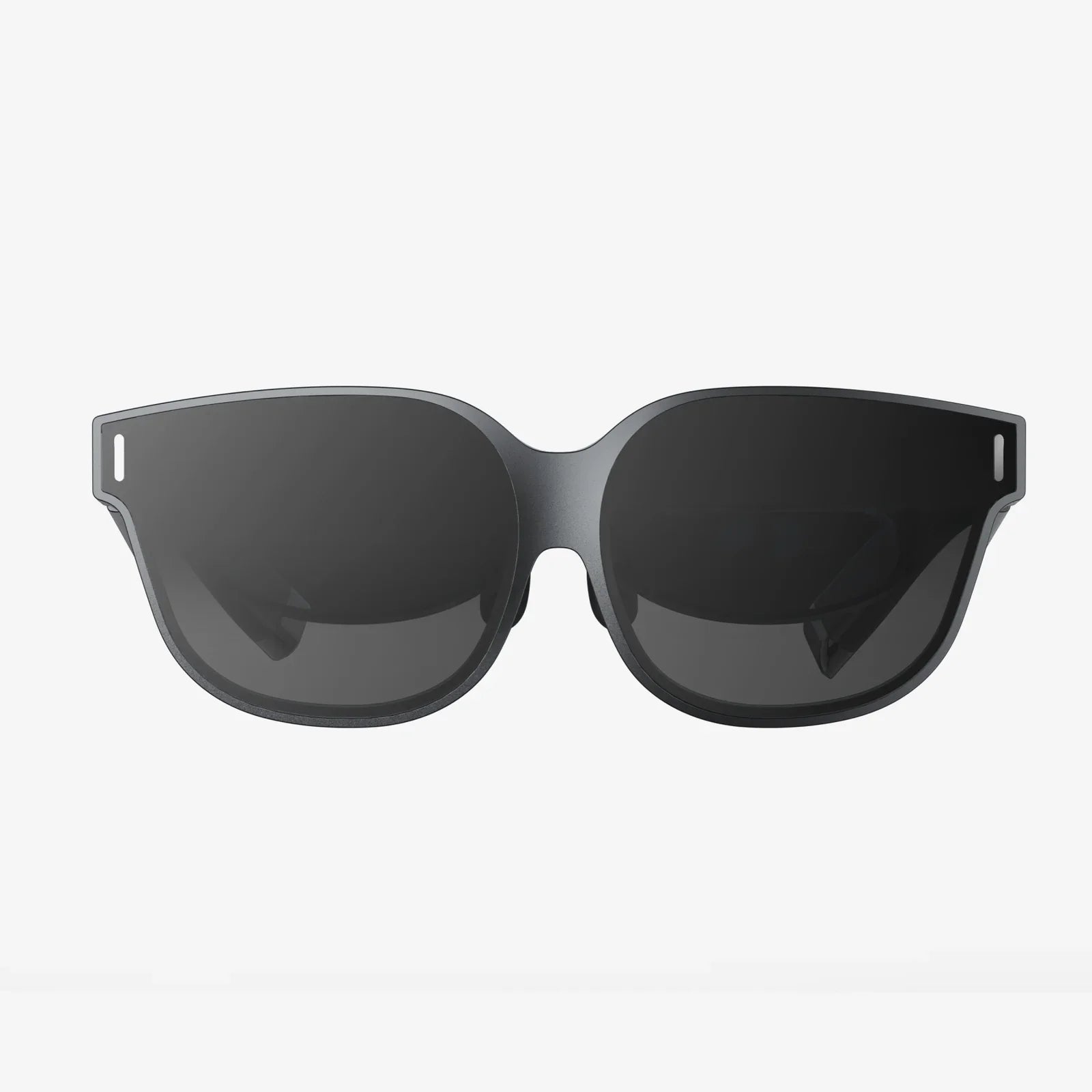
Imagine a world where your smartphone doesn't just connect you to the internet, but to entirely new realities. This is the promise held by the convergence of next-generation mobile technology and high-fidelity virtual reality. The potential pairing of a future device like the iPhone 16 with a dedicated, sophisticated VR headset represents more than a simple accessory launch; it signals a fundamental shift in how we interact with digital information, entertainment, and each other. This isn't science fiction—it's the impending future of personal technology, and it's closer than you think.
The Evolution of a Vision: From Prototype to Mainstream
The journey to this point has been one of incremental yet staggering advances. Early virtual reality was the domain of clunky, expensive hardware tethered to powerful desktop computers, accessible only to enthusiasts and developers. The concept of mobile VR began with simple cardboard viewers, offering a tantalizing but low-fidelity glimpse into immersive content. The technology then evolved into more robust, self-contained headsets, which housed their own processors, displays, and batteries. These all-in-one devices brought greater freedom but often at the cost of computational power and graphical fidelity, creating a ceiling for the experiences they could deliver.
Concurrently, smartphones have undergone their own revolution. They have transformed into pocket-sized supercomputers, equipped with incredibly powerful chipsets, high-resolution displays, advanced cooling systems, and sophisticated sensor arrays including LiDAR scanners and high-frame-rate cameras. The gap between the processing power in a flagship phone and the requirements for compelling VR has been narrowing rapidly. The stage is now set for a symbiotic relationship where the smartphone becomes the brain of the VR experience, and the headset becomes its window to new worlds.
The Power Within: The iPhone 16 as an VR Engine
While specific details remain speculative, we can extrapolate based on technological trajectories what a device like the iPhone 16 might bring to the VR table. The cornerstone of any immersive experience is processing power. The next iteration of mobile chipsets will likely feature even more powerful CPU and GPU cores, built on an advanced nanometer process for greater efficiency and performance. This raw power is essential for rendering two high-resolution displays at a buttery-smooth 90Hz or 120Hz refresh rate, a baseline for preventing motion sickness and ensuring immersion.
Beyond the core processor, other innovations will be critical. Advanced thermal management will be paramount; sustained VR workloads generate significant heat, and new cooling solutions, perhaps involving vapor chambers or advanced graphite pads, will be necessary to prevent performance throttling. The smartphone's role would extend beyond just processing. Its ultra-wideband (UWB) chip could enable precise inside-out tracking, allowing the system to map a room and understand its position within it without external sensors. The phone's high-resolution cameras could serve as pass-through cameras, enabling mixed reality experiences where digital objects are seamlessly overlayed onto the real world. This transforms the headset from a purely virtual escape into a tool for enhancing reality itself.
The Perfect Portal: Designing the Companion Headset
For this partnership to succeed, the headset itself must be a masterpiece of design and engineering. It cannot be an afterthought. The ideal companion headset for a flagship smartphone would likely be a sleek, minimalist visor. The primary function of this device would be to house high-quality lenses and provide a comfortable, balanced form factor. The smartphone would slot into the front of the headset, its screen positioned perfectly against the lenses.
Comfort is non-negotiable for adoption. This means using lightweight materials, distributing weight evenly across the head, and featuring plush, breathable facial interfaces. The headset would need its own complementary technology: a high-quality inertial measurement unit (IMU) for precise head tracking, built-in spatial audio speakers for immersive sound, and a dedicated battery pack. This external battery would serve a dual purpose: it would power the headset's accessories and offload the intense power draw from the phone, significantly extending the potential playtime. Controllers are another key consideration. They could be optional, with hand-tracking technology using the phone's cameras allowing for intuitive interaction, or they could be included as sleek, ergonomic motion controllers for more precise input in games and applications.
A World of Experiences: Beyond Gaming
While gaming will be a primary driver, the true potential of this ecosystem lies in its versatility. The fusion of a powerful mobile device and an immersive headset will unlock transformative applications across numerous fields.
- Immersive Entertainment: Imagine not just watching a movie on a virtual screen, but being inside the movie. Concert venues could be streamed live in 360 degrees, putting you in the front row of a performance across the globe. Social viewing experiences would allow friends to share a virtual cinema together, regardless of physical distance.
- Redefining Productivity: The concept of the mobile office would be revolutionized. Instead of a single laptop screen, you could be surrounded by infinite virtual displays, web browsers, and documents. This portable IMAX theater for productivity could enable focused work anywhere.
- Revolutionizing Education and Training: Students could take virtual field trips to ancient Rome, the bottom of the ocean, or the surface of Mars. Medical students could practice complex procedures on virtual anatomy, and mechanics could learn to repair engines with interactive 3D guides overlaid onto real equipment.
- Enhanced Social Connection: Social platforms will evolve into shared virtual spaces. Instead of video calls, you could meet avatars of friends and family in a digital recreation of a coffee shop, a park, or a fantasy world, communicating with body language and spatial audio that replicates the nuances of a real conversation.
Navigating the Challenges: The Path to Widespread Adoption
For all its promise, this vision faces significant hurdles. The number one barrier, beyond price, is the societal perception of VR headsets. They are often still seen as isolating, geeky, or nauseating. The design of both the phone and the headset must be so compelling and the user experience so seamless that it transcends this stigma. The setup must be effortless: drop the phone into the headset and you're immediately in your virtual home space.
Content is king. A robust library of killer apps that demonstrate clear value beyond gaming is essential to attract a mainstream audience. Developers must be empowered with powerful and intuitive tools to create for this platform. Furthermore, privacy and security must be baked into the foundation of the platform. The amount of biometric and environmental data these devices can collect is unprecedented, requiring a transparent and robust framework for user data protection.
The Ripple Effects: Shaping the Broader Tech Landscape
The successful launch of a high-end mobile VR system would send shockwaves through the technology industry. It would instantly validate the mobile-VR model, pushing other manufacturers to follow suit and accelerating competition and innovation. It would create a massive new market for developers, spurring a gold rush of creative and practical applications. This ecosystem would also drive demand for new forms of content creation, from 360-degree video production to 3D spatial audio engineering.
Perhaps most importantly, it would act as a gateway drug to more advanced computing. By leveraging a device people already own and understand, it dramatically lowers the barrier to entry for experiencing virtual and augmented reality. This widespread adoption is the key to moving spatial computing from a niche interest to a central pillar of our digital lives, fundamentally changing how we work, learn, play, and connect.
The magic of this potential pairing lies in its elegant simplicity. You already carry an incredibly powerful computer in your pocket. The missing piece is the window. A dedicated, well-designed VR headset for the iPhone 16 wouldn't just be another accessory; it would be a key that unlocks the full, immersive potential of the device you already rely on every day, transforming it from a portal to the flat web into a gateway to infinite experiences. The future of computing isn't on your desk; it's in your pocket, waiting for the right headset to bring it to life.
Share:
How Much Is a VR Headset for PC - The Ultimate Price & Value Guide
Best 4K VR Headset: The Ultimate Guide to Ultra-High-Definition Immersion