


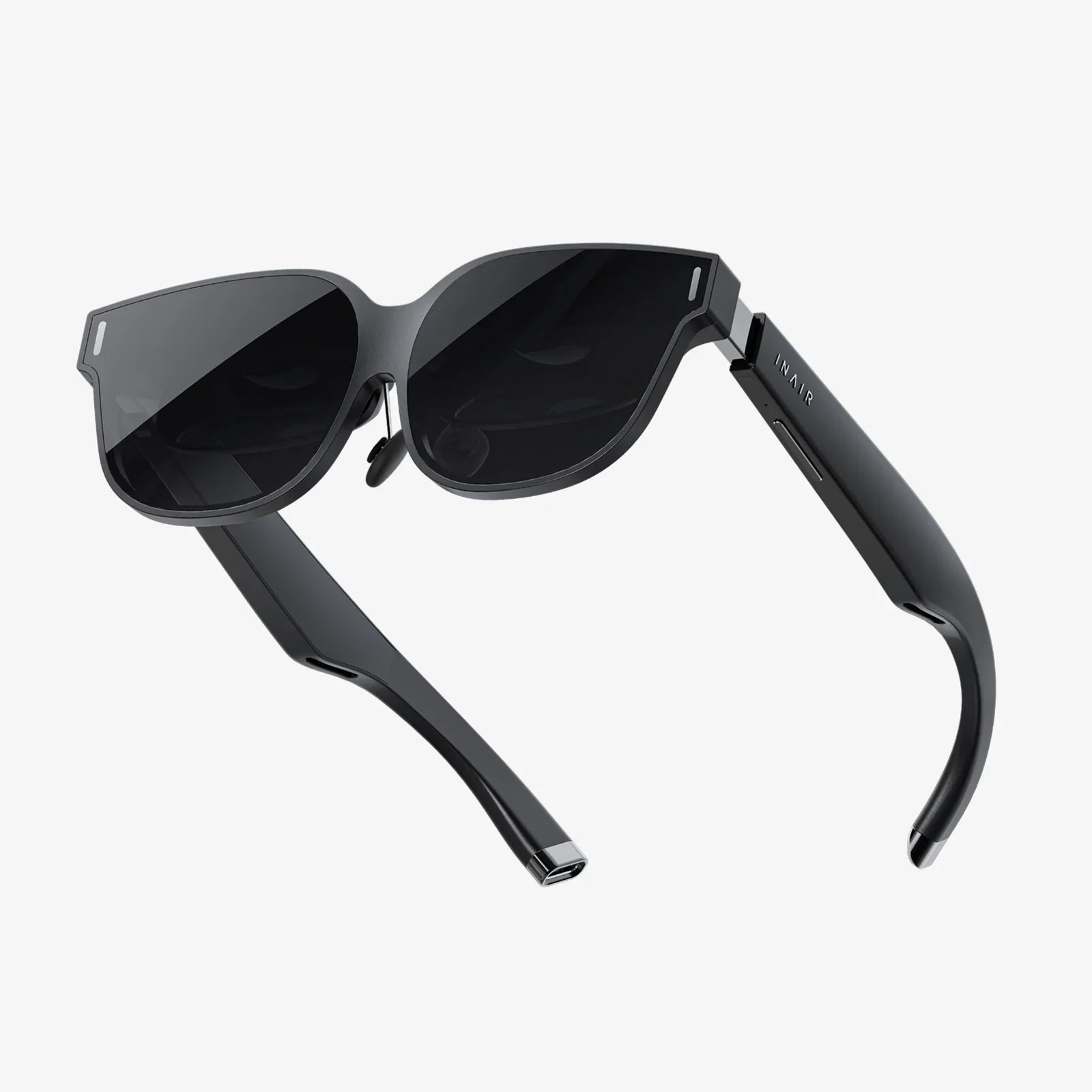
- by wangfred
iPhone 3D Glasses: The Next Frontier in Mobile Immersive Entertainment
- by wangfred
Imagine slipping on a pair of sleek, lightweight glasses and watching your iPhone screen explode into a vast, three-dimensional landscape where characters leap out, data visualizations float in mid-air, and your video calls feel like you're sitting in the same room. This isn't a distant sci-fi fantasy; it's the imminent future promised by the development of dedicated 3D glasses for the iPhone, a peripheral set to unlock a new dimension of mobile interaction. This technology represents more than just a novelty; it's the key to transforming the most ubiquitous personal computer on the planet into a true gateway for immersive experiences, reshaping everything from how we consume media to how we connect with each other and the digital realm.
The concept of 3D viewing is not new, but its marriage with the smartphone, particularly a device with the computational prowess of the iPhone, is a game-changer. The iPhone provides a unique and powerful foundation for this technology to thrive, built upon several critical pillars.
First is raw processing power. Rendering stereoscopic 3D content, especially at high resolutions and frame rates, is computationally intensive. Modern mobile chipsets, with their advanced GPUs and neural engines, are more than capable of handling the complex rendering pipelines required to create two distinct, perspective-correct images for each eye. This on-device processing eliminates the need for bulky external hardware, pushing the intelligence into the phone itself and keeping the glasses simple and affordable.
Second is the sophisticated sensor suite. A standard iPhone is packed with LiDAR scanners, depth-sensing cameras, gyroscopes, and accelerometers. These components are crucial for head and positional tracking. The glasses can work in tandem with the phone's sensors to understand the precise orientation and movement of the user's head, allowing the 3D scene to remain stable and responsive. This creates a convincing illusion of looking into a static window or a world that moves naturally with you, preventing the disorientation that plagued earlier VR and 3D attempts.
Finally, the ubiquitous high-resolution, high-pixel-density Retina displays provide a crystal-clear canvas. The sharpness of these screens is essential because the image is effectively split for each eye, and any visible pixels or screen door effects would instantly shatter the immersion. The combination of powerful silicon, intelligent sensors, and a pristine display creates an ecosystem ripe for a glasses-based 3D revolution.
While immersive movie trailers and games that pop out of the screen are the obvious and exciting first applications, the true potential of iPhone-compatible 3D glasses lies in their utility across a wide range of activities.
The entertainment industry will be fundamentally altered. Imagine streaming services offering a dedicated library of 3D films and series that you can enjoy anywhere, without being tethered to a large television and requiring expensive active-shutter glasses. The experience becomes personal, portable, and profoundly engaging. Gaming enters a new era. Mobile games could evolve from touch-based interactions to experiences where you peer into intricate diorama worlds or engage in combat with enemies that seem to fly around your living room. The phone's motion controls, combined with head tracking, could create entirely new genres of gameplay.
The impact on productivity and professional workflows could be even more significant. For architects and engineers, 3D glasses could allow them to walk clients through building models and mechanical designs that are superimposed onto the real world through a transparent lens mode, or explored in full 3D. Data scientists could manipulate complex 3D graphs and charts floating in space, identifying patterns and correlations that are difficult to see on a flat screen. Medical students could study detailed, interactive 3D models of human anatomy, peeling back layers of muscle and bone with a gesture, turning their iPhone into a portable learning lab.
Video calling is due for a monumental upgrade. Current technology flattens us into two-dimensional rectangles. 3D glasses, coupled with advanced depth-sensing front cameras, could transmit a volumetric, lifelike 3D model of the caller. This would recreate the feeling of eye contact and presence that is missing from today's calls, making remote conversations feel significantly more natural and authentic. It's a step beyond a simple video call towards a true holographic communication experience, all powered by the device in your pocket.
For all its promise, the path to perfect, widespread adoption of iPhone 3D glasses is fraught with technical and design challenges that must be elegantly solved.
The foremost challenge is miniaturization and comfort. The glasses must be as lightweight, comfortable, and socially acceptable as a standard pair of sunglasses. They cannot be cumbersome, wired, or require frequent charging. The ideal design would be a pair of passive glasses that receive a wireless signal from the iPhone, leveraging its battery, but this requires incredibly low-latency, high-bandwidth connectivity, likely a proprietary wireless standard to avoid compression and lag.
Next is the issue of visual fidelity and latency. Any noticeable lag between head movement and the movement of the on-screen image will lead to nausea and user fatigue—a problem known as simulator sickness. The system must operate at a high, consistent frame rate with imperceptible latency. Furthermore, achieving true depth perception without causing eye strain over long viewing sessions is a complex optical challenge. Techniques like using lenses to project a virtual image that appears farther away, thus allowing the user's eyes to focus more naturally, will be critical.
Finally, there is the question of content. A hardware peripheral is useless without a robust software ecosystem. Widespread developer buy-in is essential. This would require providing them with powerful and easy-to-use software development kits (SDKs) that seamlessly integrate with existing game engines and creative software, lowering the barrier to entry for creating 3D experiences.
The development of iPhone 3D glasses is not an endpoint; it is a crucial stepping stone. It represents the democratization of spatial computing, taking it out of the realm of expensive, specialized headsets and putting it into the hands of billions. This technology is the most logical and accessible on-ramp to the much-discussed concept of the metaverse—a persistent network of interconnected 3D virtual worlds.
While full virtual reality headsets offer complete immersion, they also isolate the user from their physical environment. 3D glasses for the iPhone could offer a blended experience. They could function as AR glasses, overlaying helpful information onto the real world, and then with a tap, transform into a private 3D cinema or a portal to a virtual meeting space. This flexibility is key. It allows users to dip in and out of digital layers without becoming completely disconnected, making the technology more practical for all-day use.
This approach turns the iPhone into the brain of the operation—the computer in your pocket—and the glasses into a dumb, high-resolution display. This bifurcation is strategically brilliant, allowing users to upgrade their viewing experience without needing to replace the most expensive component, the phone's processor, every year. It future-proofs the investment and accelerates adoption.
The journey towards seamless augmented reality and ubiquitous spatial computing is a long one, but it is built on a series of evolutionary steps. The integration of LiDAR, the proliferation of AR apps, and the relentless increase in processing power were all precursors. The logical and most exciting next step is a dedicated wearable display that unlocks the full potential of these technologies. It’s the missing piece that bridges the gap between the flat, touch-based interaction of today and the immersive, three-dimensional digital future of tomorrow.
We stand on the brink of a paradigm shift, where the line between the screen and reality will begin to dissolve, not through a bulky headset, but through a pair of elegant glasses connected to the most powerful computer most people own. The iPhone will cease to be just a device we look at and will instead become a lens through which we see a richer, deeper, and more astonishing world.