


Imagine pointing your phone at a city street and seeing it come alive with digital ghosts—historical figures walking where you stand, reviews floating above restaurant doors, and directions painted onto the sidewalk like golden breadcrumbs. This isn’t a scene from a distant sci-fi future; it’s the nascent reality blooming today, powered by the sophisticated marriage of advanced mobile technology and Augmented Reality. This convergence is not just another feature; it’s the beginning of a fundamental shift in how we perceive and interact with the information that surrounds us, all accessible from the device in your pocket.
The Foundation: More Than Just a Camera
The leap from simple face filters to complex, world-locked digital experiences didn't happen overnight. It was built upon a decade of relentless innovation in mobile hardware. The true magic of modern AR lies in its ability to understand the environment, a feat accomplished by a suite of sensors working in concert.
High-resolution cameras capture the visual world, but the real heroes are often the LiDAR scanners and sophisticated depth-sensing systems. These components fire out invisible dots of light, measuring the time it takes for them to bounce back to create a precise, real-time 3D map of the surroundings. This depth data allows digital objects to not just appear in a space, but to truly occupy it—occluding behind real-world objects, casting accurate shadows, and resting on surfaces with convincing physicality. This environmental understanding is the bedrock upon which all compelling AR is built.
Furthermore, powerful mobile processors provide the necessary computational horsepower to handle this immense data stream instantaneously. They perform complex simultaneous localization and mapping, anchor digital content to specific GPS coordinates or visual markers, and render high-fidelity graphics seamlessly. This combination of sophisticated sensing and immense processing power, packaged into a sleek, portable form factor, has democratized a technology that once required specialized and expensive equipment.
Transforming Everyday Tasks: The Practical Revolution
While the potential for games and entertainment is obvious, the most profound impact of this technology is often found in its practical, everyday applications. It is quietly solving real-world problems and enhancing mundane tasks with a layer of intuitive, visual information.
Navigation and Exploration
Gone are the days of staring at a frustrating blue dot on a abstract 2D map, spinning in circles to orient yourself. AR-powered navigation overlays large, clear arrows and directions directly onto the live view of the street in front of you. It intuitively shows you to turn left at the next corner or confirms that your destination is the building just ahead. For tourists, pointing a device at a monument can bring up historical information, fun facts, or even reconstruct ancient ruins in their former glory, creating a deeply immersive and educational experience.
Shopping and Interior Design
The dilemma of whether a new piece of furniture will fit in a room or match the décor is virtually eliminated. Users can now place true-to-scale 3D models of sofas, tables, and lamps into their living space. They can walk around the virtual object, see how light from their window falls on it, and get a genuine sense of its presence before committing to a purchase. This extends to trying on accessories like watches and glasses, or even visualizing how a new coat of paint would look on the walls, drastically reducing purchase anxiety and returns.
Learning and Skill Development
Education is being revolutionized by bringing abstract concepts to life. Students can dissect a frog, explore the solar system with planets orbiting around them, or watch a historical event unfold on their desk. For manual skills, AR can provide interactive, step-by-step instructions overlaid directly onto the machinery or object being repaired. A mechanic might see wiring diagrams superimposed onto an engine block, and a novice cook could see recipe instructions and timers floating beside their mixing bowl, making complex tasks more accessible and less error-prone.
The Social and Creative Dimension: Sharing New Realities
Humans are inherently social creatures, and any transformative technology inevitably finds a powerful expression in how we connect with others. AR is forging new pathways for shared experience and creative expression that transcend physical location.
Multi-user AR experiences allow people in different parts of the world to inhabit the same virtual space. They can collaborate on a 3D model, play a board game on a virtual table, or simply share an experience like watching a virtual concert together. This creates a powerful sense of co-presence, a feeling of "being there" together that video calls cannot replicate.
Furthermore, AR has unleashed a new wave of creator-driven content. Artists are using these tools to create interactive sculptures in public parks, filmmakers are telling stories that blend the real world with narrative elements, and musicians are performing concerts for virtual avatars in real-world venues. This blurs the line between audience and performer, consumer and creator, empowering individuals to leave their own digital mark on the world around them.
Challenges and the Road Ahead
Despite its incredible potential, the widespread adoption of AR faces significant hurdles. For the experience to feel truly magical and not like a tech demo, it must be seamless. Battery life remains a constant battle, as the combination of camera, GPS, and high-performance processing is notoriously power-intensive. Developers also face the challenge of designing intuitive user interfaces for this new medium—interactions that feel natural in a 3D space rather than relying on traditional 2D touch controls.
Perhaps the most significant challenges are societal and ethical. The concept of spatial computing raises serious questions about digital litter and visual pollution. Who decides what digital content is visible in a public space? How do we prevent our world from becoming a chaotic mess of overlapping advertisements and notifications? Privacy concerns are also paramount, as these devices are constantly scanning and processing our most intimate environments. Establishing clear norms, permissions, and perhaps even digital zoning laws will be crucial for building an AR future that is beneficial and respectful for all.
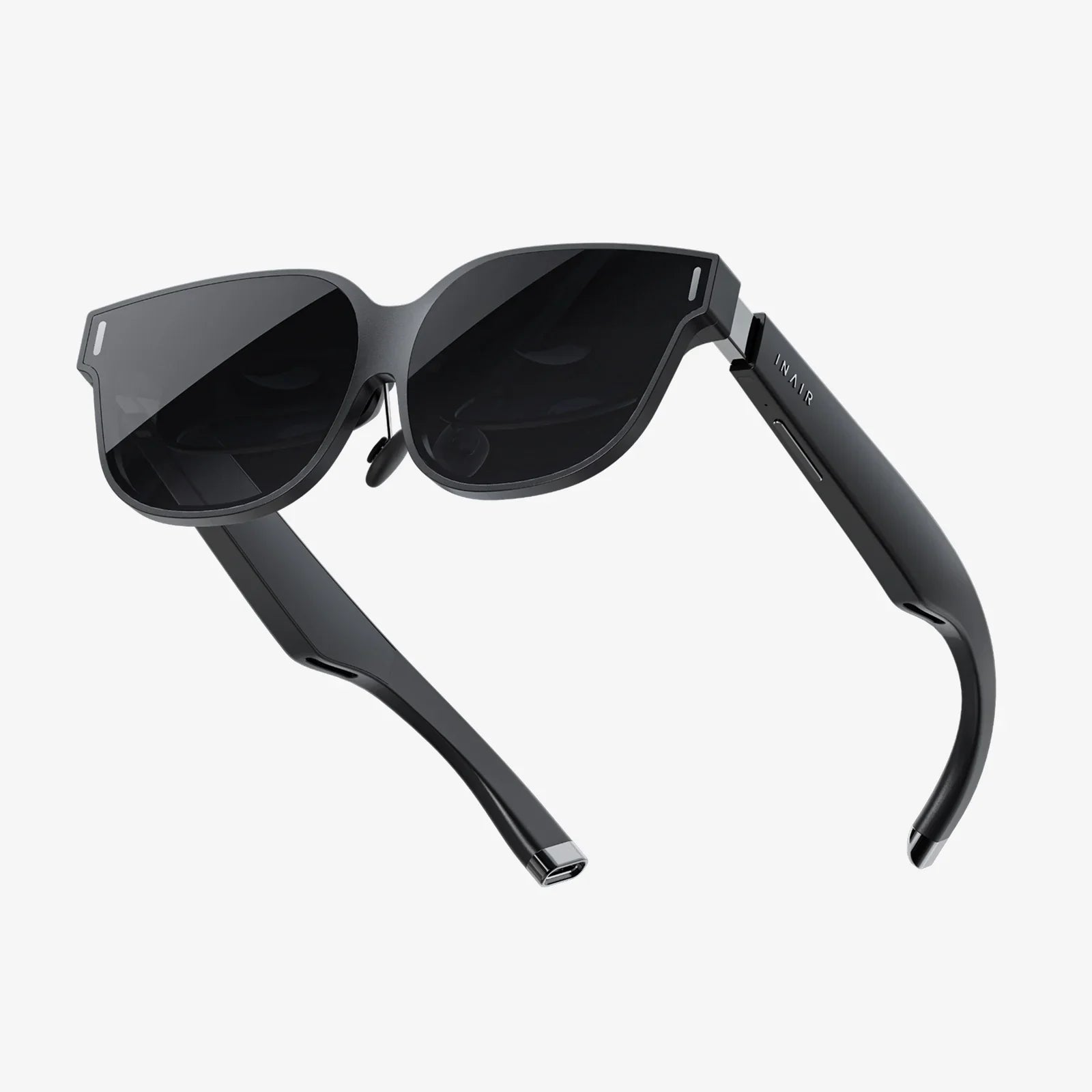
The next evolutionary step points toward wearable technology—smart glasses that free the experience from the hand-held screen. The ultimate goal is a lightweight, socially acceptable pair of glasses that can overlay digital information onto your field of view all day long. This will mark the true dissolution of the boundary between digital and physical, creating a world where information is contextually available exactly when and where you need it.
A World Remixed and Re-enchanted
The journey of mobile AR is a testament to a quiet revolution. It began as a novelty, a parlor trick of floating cartoon characters, but is rapidly maturing into an indispensable utility and a new canvas for human creativity. It is a tool for practical problem-solving, a bridge for deeper human connection across distances, and a medium for artists to redefine public spaces.
This technology holds the promise of a world that is not replaced by the digital, but enhanced by it. It’s a world where every surface can be a screen, every object can tell a story, and every location can be a portal to another time or a shared experience. We are standing at the precipice of this new layered reality, and the device we already carry is our key to stepping into it. The world is about to get a lot more interesting, and all you have to do is look up.
You’ve been living in a 2D world of screens, but a new dimension of interaction is waiting just beyond the glass. The next time you raise your device, remember you’re not just taking a picture—you’re opening a window to a universe of invisible data, ready to reshape your reality with a single tap. The revolution isn't coming; it's already in your hand, waiting for you to see the potential.
Share:
Extended Reality (XR) Technologies Are Blurring the Lines Between Our Digital and Physical Worlds
Affordable VR Headset for PC: Your Gateway to Immersive Gaming on a Budget