


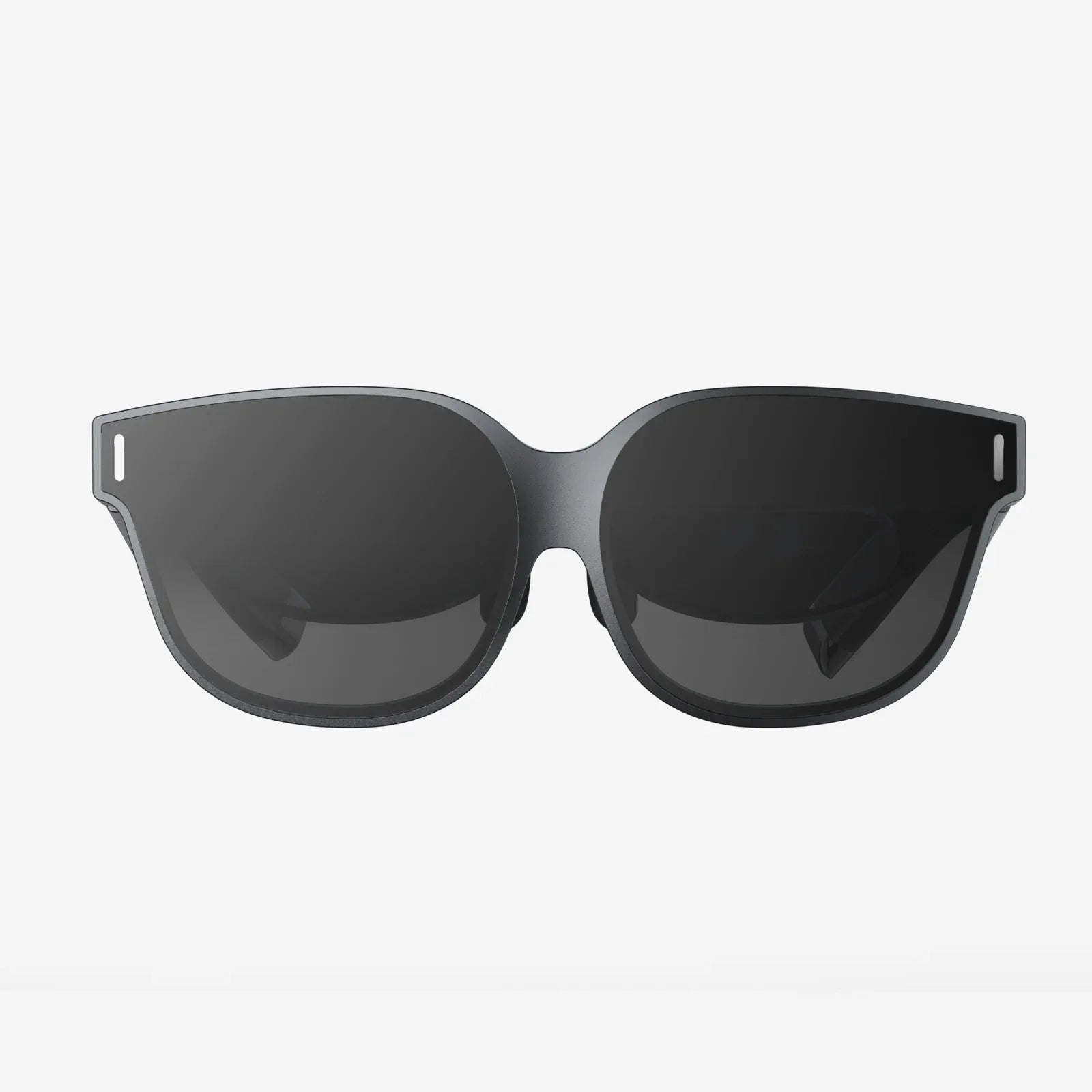
Imagine holding a portal to another dimension in your pocket. With the powerful computer we call a smartphone and a specially designed headset, the worlds of fantasy, education, and social connection are no longer confined to science fiction. The fusion of a high-performance mobile device and an immersive viewing apparatus has democratized virtual reality, making it more accessible than ever before. This isn't about a distant future; it's about the transformative power you can unlock today, starting with the device you likely already own.
The Evolution of Mobile Virtual Reality
The dream of virtual reality is decades old, but for much of its history, it was shackled to monstrously expensive and cumbersome hardware, the exclusive domain of well-funded labs and military simulations. The concept of a mobile VR experience was a fantasy. The turning point arrived not with a single piece of dedicated equipment, but with the explosive advancement of the smartphone. These devices, packed with high-resolution displays, precise motion sensors, powerful processors, and robust graphics capabilities, contained all the essential ingredients for a VR experience. They just needed a window—a lens—to step through.
The first wave of modern consumer VR headsets were simple, often cardboard-based holders that did little more than strap a phone to your face. They proved the concept was viable. The subsequent generation, often called mobile VR headsets, evolved into sophisticated plastic shells with adjustable head straps, integrated focal adjustment, and crucially, advanced lens systems. These lenses are the unsung heroes, warping the flat image from the phone's screen into a stereoscopic, 360-degree panorama that feels expansive and deep. This evolution transformed the smartphone from a communication tool into the beating heart of a personal virtual reality system.
How a Smartphone-Powered Headset Works
At its core, the magic of a smartphone-based headset is a elegant division of labor. The headset itself is a passive, yet brilliantly engineered, piece of hardware. Its primary jobs are optical and mechanical:
- Housing the Lenses: The high-quality, custom-ground lenses are the most critical component. They refract the light from the phone's screen, placing the focal point at a distance that is comfortable for the eyes to view for extended periods, effectively creating a wide-field-of-view image that appears to be meters away rather than centimeters.
- Creating Immersion: The headset's design blocks out all ambient light, sealing you into the virtual world and preventing the real world from breaking the illusion.
- Providing Comfort: Padded interfaces, adjustable straps, and balanced weight distribution are essential for comfort, allowing for longer, more enjoyable sessions.
- Holding the Phone Securely: A secure docking system ensures the phone's display is perfectly aligned with the lenses for a crisp, clear image.
The smartphone, on the other hand, is the active powerhouse. It handles the immense computational load:
- The Display: It provides the high-resolution, high-refresh-rate screen. A higher resolution is critical to combat the "screen-door effect" (seeing the gaps between pixels), while a high refresh rate (90Hz or 120Hz) ensures smooth motion, reducing latency and the potential for motion sickness.
- The Processor: The phone's System-on-a-Chip (SoC) renders the complex 3D environments twice—once for each eye—at a stable, high frame rate. This is an incredibly demanding task that leverages the same graphics capabilities found in modern mobile games.
- The Sensors: This is where the true magic of mobile VR lies. The phone's built-in gyroscope, accelerometer, and magnetometer work in tandem to track the rotation of your head with incredible speed and precision. Tilt your head up, and the virtual world tilts with you; look left, and the scene pans accordingly. This is known as 3-Degrees-of-Freedom (3DoF) tracking, and it provides the fundamental, immersive link between your physical movement and the virtual world.
- The Software: A dedicated VR platform or app launcher on the phone manages the experience, providing a home environment, access to content, and handling the unique system-level requirements of VR.
The Mobile VR Experience: What Can You Actually Do?
The potential of a smartphone-powered headset is vast, limited only by the creativity of developers and the power of the device. The content ecosystem is rich and varied, offering something for everyone.
Gaming and Interactive Experiences
This is often the first entry point for many users. VR gaming is a revelation, transporting you from your living room into the heart of the action. Instead of moving a character with a joystick, you are the character. You lean to peek around corners, physically dodge incoming projectiles, and aim your weapons by moving your head and, when paired with a Bluetooth controller, your hands. From heart-pounding horror titles and intricate puzzle games to rhythm-based experiences where you slash notes flying toward you, the sense of presence and physicality is unmatched by traditional flat-screen gaming.
360-Degree Videos and Films
Storytelling is reinvented in VR. You are no longer a passive observer looking at a rectangle; you are placed inside the scene. Documentary filmmakers can drop you onto the surface of Mars, into the depths of the ocean, or onto the front lines of history. Travel journalists can offer genuine virtual tours of exotic locations. Narrative filmmakers experiment with placing the viewer as a silent character within the story, able to look anywhere and discover details for themselves. It's a powerful empathetic tool, making you feel not like you're watching something, but that you are there.
Social and Educational Applications
The future of communication may very well be in shared virtual spaces. Social VR platforms allow you to meet friends, family, or strangers from around the world as customizable avatars. You can watch movies together in a virtual cinema, play games, attend live concerts, or simply chat as if you were in the same room. Educationally, the applications are profound. Students can take a field trip to ancient Rome, walk through a human heart, or manipulate complex molecular structures in 3D space, transforming abstract concepts into tangible, memorable experiences.
Choosing the Right Headset for Your Device
Not all headsets are created equal, and the best choice depends heavily on your goals and your specific smartphone model. The market offers a spectrum from simple viewers to advanced standalone-like experiences.
Basic Viewers: These are the most affordable entry point. They are lightweight, often made from simpler materials, and rely entirely on the phone's sensors for head tracking. They are perfect for consuming 360-degree videos and trying out simple VR apps. However, they often lack features like adjustable lenses for different eye distances (IPD), which can lead to a blurry image for some users, and they typically have no input method beyond a magnetic slider or a single button.
Advanced Headsets: This category represents the peak of the smartphone-powered VR experience. These units feature rigid, comfortable designs, high-quality optical systems with IPD adjustment, and—most importantly—their own integrated tracking systems. Often using external cameras or sensors, these headsets can track a limited form of positional movement, allowing you to lean your body in and out of the virtual space. This adds a crucial layer of immersion. Furthermore, they almost always come bundled with a dedicated wireless controller, unlocking the full potential of interactive games and applications. They represent the most complete and satisfying way to experience mobile VR without stepping into a fully standalone system.
Limitations and Considerations
While the accessibility of a phone-based system is its greatest strength, it also comes with inherent limitations that are important to understand.
Processing Power and Battery Life: VR is computationally intensive. Running a high-end VR experience will drain your phone's battery rapidly and generate significant heat, which can sometimes cause the device to throttle performance to cool down, potentially leading to a less smooth experience.
Limited Tracking: Most smartphone-based systems are limited to 3-Degrees-of-Freedom (3DoF), meaning they only track head rotation (pitch, yaw, roll). They cannot track your movement through physical space (forward/back, up/down, left/right), known as 6-Degrees-of-Freedom (6DoF). This limits the types of experiences possible and is the primary technological divide between mobile and premium PC-connected or standalone VR systems.
Potential for discomfort: As with any VR system, some users may experience motion sickness, especially in experiences with artificial locomotion (moving with a joystick instead of physically walking). This is often referred to as VR-induced nausea, and it's caused by a disconnect between what your eyes see (movement) and what your inner ear feels (stationary). It's advisable to start with stationary experiences and take frequent breaks.
The Future is in Your Pocket
The landscape of personal technology is constantly converging. The line between dedicated standalone VR headsets and smartphones is already blurring, with some modern headsets offering the ability to dock a phone for media consumption while also functioning as a full 6DoF standalone device for games. The future likely holds even deeper integration. Imagine a headset that uses the phone's processing power but adds its own inside-out tracking cameras for full positional freedom, or one that leverages new phone-based spatial computing features to blend the virtual and real world seamlessly. The smartphone, a device we upgrade every few years, ensures that the core processing unit for our VR experiences is always getting faster, more efficient, and more capable. The headset becomes the timeless portal, while the phone is the ever-evolving engine.
You are already carrying the key to countless virtual worlds. It buzzes with notifications, captures photos, and connects you to a global network. Slip it into a headset, and that connection becomes an immersion. The classroom, the concert, the alien planet, and the front row seat are no longer destinations to travel to; they are experiences waiting to be unlocked. The barrier to entry has never been lower, and the adventure has never been more real. All you have to do is take the phone from your pocket and take a look.
Share:
Best VR Goggles for iPhone 7 Plus - A Complete Buyer's Guide to Mobile Immersion
Budget VR Headset Price: Your Ultimate Guide to Affordable Immersion