


- by wangfred
Is AR a Type of VR? Unraveling the Reality Spectrum
- by wangfred
You’ve seen the headlines, heard the buzzwords, and maybe even experienced the technology yourself. Virtual Reality and Augmented Reality are no longer the stuff of science fiction; they are rapidly becoming integrated into our daily lives, from how we work and play to how we learn and connect. But in the whirlwind of innovation and marketing, a critical question often emerges, blurring the lines between these two distinct experiences: is AR simply a type of VR? The answer is a definitive no, and understanding the profound difference between layering digital information onto our world and replacing it entirely is the key to unlocking the potential of the next computing revolution.
At its most fundamental level, the difference between AR and VR is a philosophical one about the user's relationship with their environment. It is the core dichotomy that separates the two technologies.
Virtual Reality (VR): The Digital Escape
Virtual Reality is an immersive, all-encompassing technology. Its primary goal is to transport the user, sensorially and psychologically, into a completely computer-generated environment. By wearing a head-mounted display that blocks out the physical world, the user's vision and hearing are hijacked by the digital realm. Advanced systems incorporate haptic feedback and motion tracking, further convincing the brain that it is present in this virtual space—a phenomenon known as "presence." Whether exploring a fantastical landscape, undergoing virtual training for a high-risk job, or attending a concert on the other side of the world, the user's reality is entirely synthetic. The physical world ceases to exist for the duration of the experience.
Augmented Reality (AR): The Digital Overlay
Augmented Reality, in stark contrast, does not seek to replace the real world but to enhance it. AR technology superimposes digital information—images, text, 3D models, animations—onto the user's view of their immediate physical surroundings. The real world remains the primary stage, and the digital elements are actors upon it. This is achieved through devices like smartphones, tablets, or transparent glasses-style displays. The key differentiator is that AR requires a constant understanding of the user's environment. Using cameras and sensors, it maps the space, identifies surfaces and objects, and anchors digital content to them in a believable way. This allows for practical applications like visualizing how a new piece of furniture would look in your living room, getting real-time translation of text through your phone's camera, or seeing navigation arrows painted onto the road as you walk.
While their end goals are different, AR and VR are not entirely alien to one another. They are cousins, sharing a significant amount of underlying technology and together forming a broader category often referred to as "Extended Reality" (XR) or "immersive technology." This shared DNA is the primary source of confusion and leads to the question of their relationship.
Shared Hardware and Tracking
Both technologies rely on advanced processors, high-resolution displays (though of different types), and sophisticated tracking systems. Inside-out tracking, where cameras on the device itself map the environment to understand its own position and orientation, is a crucial technology for both untethered VR headsets and effective AR systems. The algorithms that interpret sensor data for positional tracking are often variants of the same core technology.
The Software Foundation
From a development perspective, many of the software development kits and game engines used to create VR experiences are the same ones used to build AR applications. The skills required for 3D modeling, spatial audio design, and user interaction in a three-dimensional space are highly transferable between the two fields. This creates a ecosystem where developers and companies often work on both AR and VR, further blending the line in the public consciousness.
The Spectrum of Reality
The relationship is best understood not as a binary but as a spectrum. Imagine a continuum:
This spectrum, collectively termed XR, shows that while pure AR and pure VR sit at opposite ends, there is a vast and exciting space in the middle where the boundaries are deliberately blurred. This is why the simple question "is AR a type of VR?" is flawed; it implies a hierarchy or containment that doesn't exist. A more accurate statement is that AR and VR are both types of XR.
The distinct nature of AR and VR leads them to solve fundamentally different problems. Their value is unlocked in specific, often non-overlapping, contexts.
When to Choose Virtual Reality
VR excels in situations where total control of the user's sensory input is a benefit. This makes it ideal for:
When to Choose Augmented Reality
AR's strength lies in its ability to provide contextual information and digital assistance within the user's actual workflow and environment. It is perfect for:
The future of immersive technology is not a winner-takes-all battle between AR and VR. Instead, we are moving towards a world where we will fluidly move between these different modes of computing depending on the task at hand. You might start your day in a VR meeting room with remote colleagues, then use AR glasses throughout the day to manage your schedule and access information hands-free, and finally unwind in the evening with an immersive VR game.
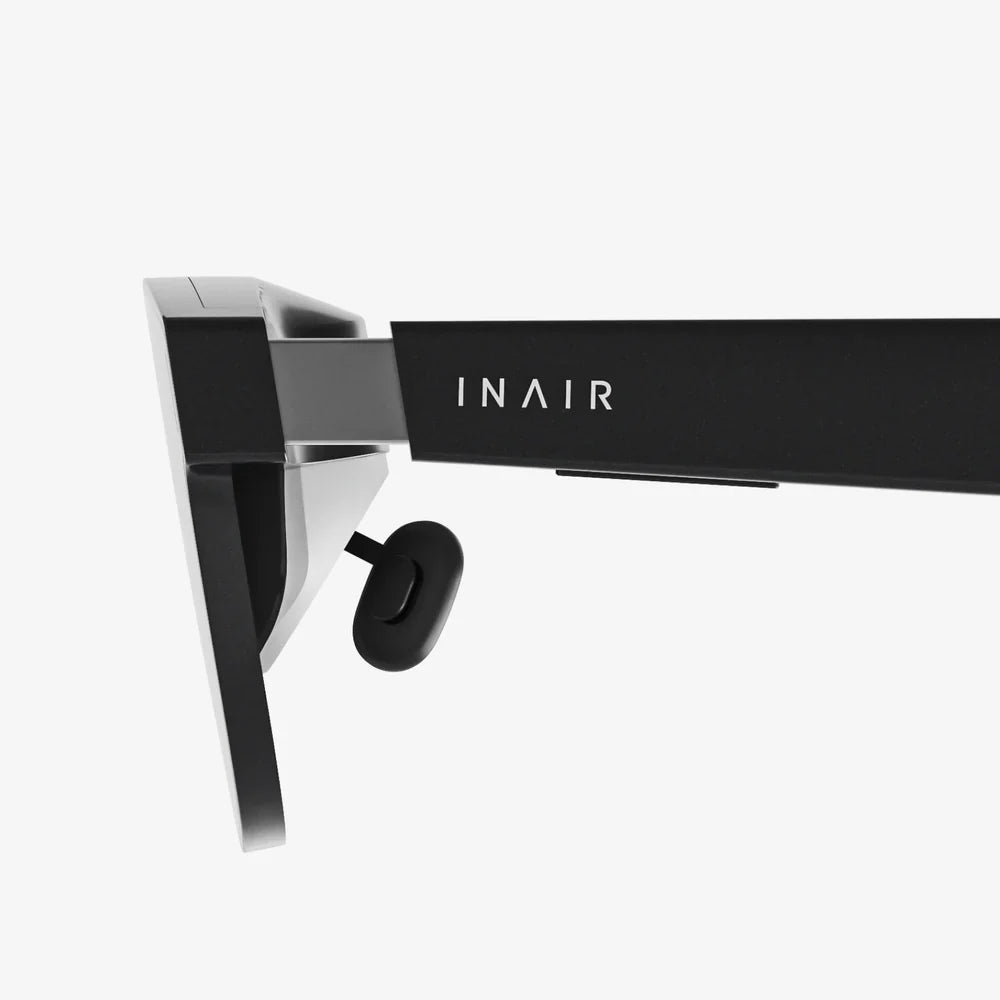
The ultimate goal of XR is to create a seamless blend of our digital and physical lives. This will likely manifest in a single, general-purpose device—perhaps a pair of stylish glasses—capable of shifting across the reality spectrum. In "transparent" or "passthrough" mode, it would function as an AR device, enriching your world. With a click of a button or a voice command, it could "opaque" the displays, plunging you into a full VR experience for work or entertainment. This convergence at the hardware level will finally make the technical distinctions between AR and VR invisible to the user, who will only care about the experience itself.
So, the next time you hear the terms, remember: AR is not a type of VR. They are two powerful, parallel paths on the journey to more intuitive and powerful computing. One seeks to bring the digital into our world to make us more capable, while the other seeks to bring us into the digital world to make us more connected and empowered. The real magic will begin when we can effortlessly dance between both.
Share:
AR VR Metaverse Technology Trends 2025: The Dawn of a New Digital Epoch
Metaverse VR AR Market Size Forecast: A Deep Dive into the Next Digital Frontier