


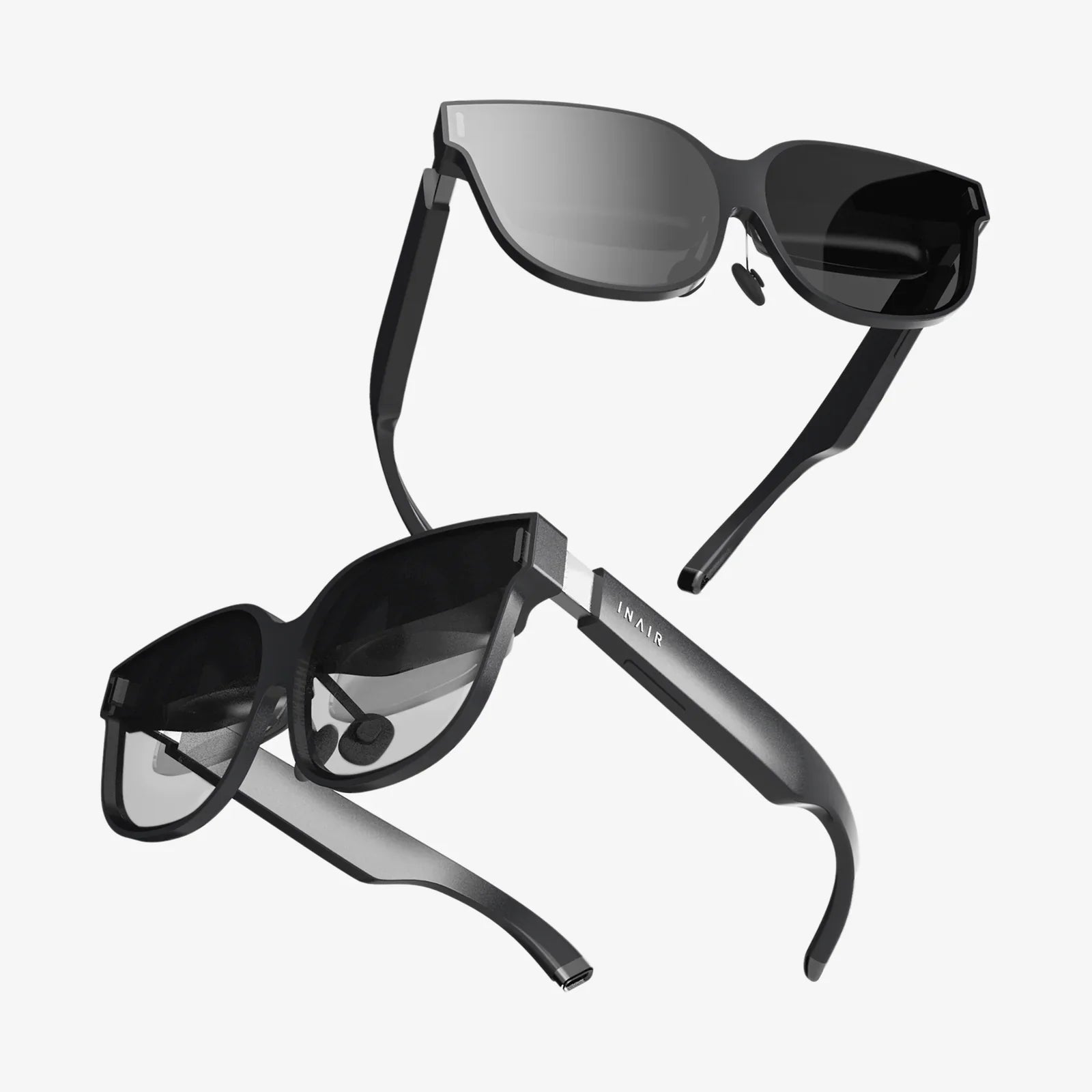
Imagine a world where your morning run is guided by digital arrows superimposed on the pavement, where a mechanic can see the inner workings of an engine simply by looking at it through smart glasses, or where a surgeon has a patient's vital statistics and 3D anatomical models floating in their field of vision during a complex procedure. This is not the distant future of science fiction; it is the rapidly materializing present of augmented reality. The line between what is real and what is digital is blurring at an astonishing pace, prompting a crucial inquiry into the very nature of this transformative force: is augmented reality an emerging technology, or has it already emerged? The answer is a fascinating paradox, revealing a technology both deeply entrenched in our current ecosystem and yet still very much in its infancy, poised on the cusp of its most revolutionary phase.
Defining the Digital Overlay: What Exactly is Augmented Reality?
At its core, augmented reality is a technology that superimposes a computer-generated image, video, or 3D model onto a user's view of the real world, thus providing a composite view that augments the physical environment with digital information. It is crucial to distinguish AR from its close cousin, virtual reality (VR). While VR seeks to immerse the user entirely in a simulated digital environment, disconnecting them from their physical surroundings, AR aims to enhance the real world by adding a layer of interactive, contextual data. This fundamental difference is what makes AR so powerful and applicable to a vast array of everyday scenarios. It doesn't require a complete escape from reality; instead, it seeks to make reality itself more informative, efficient, and engaging.
The concept itself is not brand new. The term "augmented reality" was coined in 1990 by Boeing researcher Tom Caudell, but the ideas and primitive applications date back even further. Morton Heilig's Sensorama simulator in the 1950s and Ivan Sutherland's "Sword of Damocles" head-mounted display system in 1968 are often cited as philosophical and technological precursors. For decades, AR remained largely confined to research labs and high-budget industrial or military applications due to prohibitive costs and technological limitations. It was the explosive proliferation of powerful smartphones, equipped with high-resolution cameras, precise sensors, and fast processors, that truly brought AR to the masses, transforming it from a niche concept into a widely accessible tool.
The Engine Room: Core Technologies Powering the AR Revolution
For AR to work seamlessly, it relies on a sophisticated symphony of hardware and software components working in perfect harmony. Understanding these components is key to appreciating why AR is both a present-day reality and a still-evolving field.
Sensors and Cameras
These are the eyes of any AR system. Cameras capture the user's real-world environment, while a suite of sensors—including accelerometers, gyroscopes, and magnetometers—work together to understand the device's position, orientation, and movement in space. More advanced systems now incorporate LiDAR (Light Detection and Ranging) scanners, which use laser pulses to create a precise depth map of the surroundings. This allows digital objects to not only appear in a space but to accurately occlude behind and interact with real-world geometry, a leap forward in creating believable integrations.
Processing Power
The raw data from sensors and cameras is meaningless without immense computational power to process it. This involves simultaneous localization and mapping (SLAM), a complex algorithm that allows a device to understand its environment and track its position within it in real-time. It also handles the rendering of high-fidelity 3D graphics, ensuring they are anchored stably to the real world without lag or jitter, which is essential for user comfort and immersion.
Display Technology
This is the final frontier of AR development. Current displays range from the familiar screens of smartphones and tablets to more immersive head-mounted displays (HMDs) like smart glasses. These displays use various methods, such as optical projection systems, screens with combiners, and most promisingly, waveguides that pipe light directly into the user's eye. The holy grail is a pair of lightweight, socially acceptable glasses that can deliver a high-resolution, wide field-of-view image all day on a single charge—a challenge that remains a primary focus of research and development.
Connectivity
For many complex AR applications, especially those leveraging vast datasets or powerful cloud-based AI, robust and low-latency connectivity like 5G is indispensable. It allows for offloading intensive processing tasks to the cloud, enabling thinner, lighter devices while still delivering rich, dynamic AR experiences that can update in real-time based on vast amounts of data.
The Proof is in the Pixel: AR's Current Real-World Impact
To argue that AR is still emerging, one must first acknowledge how profoundly it has already emerged. Its applications are no longer limited to playful social media filters; they are driving tangible value across the global economy.
Transforming Retail and E-Commerce
The retail sector has been one of the earliest and most enthusiastic adopters of AR. Customers can now visualize how a new sofa would look in their living room, try on watches or makeup virtually, or see how a new shade of paint would transform a wall—all from their phone. This "try before you buy" capability reduces purchase uncertainty, decreases return rates, and creates a more engaging and confident shopping experience, effectively bridging the gap between online and in-store retail.
Revolutionizing Industrial and Manufacturing Fields
In factories and warehouses worldwide, AR is already a mission-critical tool. Technicians wearing AR glasses can see step-by-step repair instructions overlaid directly on the machinery they are fixing, highlighting specific components and displaying torque settings. Designers and engineers can visualize and interact with full-scale 3D prototypes long before physical models are built, facilitating collaboration and identifying potential issues early in the design process. This application dramatically improves accuracy, reduces training time, and enhances worker safety.
Advancing Healthcare and Medicine
In medicine, AR is moving from novelty to necessity. Surgeons use AR guidance systems to visualize a patient's anatomy, such as the precise location of tumors or blood vessels, during procedures, effectively giving them "X-ray vision." Medical students can practice complex surgeries on detailed holographic models, and AR can assist in providing more accurate and less invasive intravenous injections by highlighting veins. These applications are improving patient outcomes and revolutionizing medical training.
Enhancing Education and Training
AR brings learning to life. Textbooks can be augmented with interactive 3D models of the human heart or the solar system, allowing students to explore and dissect complex subjects from every angle. Historical events can be reenacted on a student's desk, and complex mechanical processes can be animated in mid-air. This interactive, visual form of learning caters to different learning styles and dramatically improves information retention and engagement.
The Hurdles Ahead: Challenges Keeping AR "Emerging"
Despite these impressive advancements, significant technological and social challenges persist, firmly anchoring AR in the "emerging" category. Overcoming these hurdles is the key to its ultimate ubiquity.
The Hardware Conundrum
As mentioned, the ideal AR device—socially acceptable, all-day wearable, high-resolution, and powerful—does not yet exist at a consumer price point. Current smart glasses often suffer from limited field of view, short battery life, bulkiness, or high cost. Resolving the trade-offs between performance, form factor, and affordability is the single biggest challenge for the industry.
User Experience and Interaction
How do we intuitively interact with digital objects in our physical space? While voice commands and hand-tracking are improving, a perfect, universally intuitive interface has not been standardized. Overcoming user fatigue, avoiding information overload, and designing interfaces that feel natural and helpful rather than distracting and intrusive is a constant design challenge.
Privacy and Security Concerns
AR devices, by their very nature, are data-collection powerhouses. They have cameras and sensors constantly scanning our homes, workplaces, and public spaces. This raises profound questions about data ownership, privacy, and security. Who has access to this continuous stream of visual and locational data? How is it stored and used? Establishing robust ethical frameworks and legal regulations is paramount for public adoption.
The Content Chasm
For any platform to thrive, it needs a thriving ecosystem of content. While major platforms have AR development tools, creating high-quality, persistent, and truly useful AR experiences still requires significant expertise and investment. Bridging the gap between experimental proofs-of-concept and scalable, valuable everyday applications is an ongoing process.
The Next Frontier: Where is AR Headed?
The trajectory of AR points toward a future even more integrated into our daily lives. We are moving toward a world of the "pervasive interface," where digital information is contextually available wherever we look, accessed through lightweight, always-on glasses. This will give rise to the "spatial web," where the internet is mapped onto the real world, and information is tied to locations and objects rather than URLs on a screen. This evolution will be powered by advancements in Artificial Intelligence, which will allow AR systems to not only display information but to truly understand the context of a scene, anticipate user needs, and offer proactive assistance.
So, is augmented reality an emerging technology? The evidence presents a compelling duality. It has unequivocally emerged from the realm of science fiction to become a practical, value-driven tool reshaping major industries today. Its foundations are laid, and its impact is already being felt. Yet, it remains undeniably emerging because its most transformative, ubiquitous, and seamless form is still on the horizon. The core hardware is still evolving, the killer app for consumers may not yet exist, and the societal rules for its use are still being written. AR is not a technology that has finished emerging; it is one that is continuously emerging, iterating, and unlocking new possibilities with each passing year. It exists in a state of perpetual becoming, which is precisely what makes it one of the most exciting and dynamic fields in the entire technology landscape.
The journey of augmented reality is a testament to the fact that a technology's most profound emergence is not its initial appearance, but its gradual, relentless integration into the very fabric of our existence, transforming how we work, learn, play, and see the world around us. The overlay has begun, and the boundaries of our reality are set to expand in ways we are only just beginning to imagine.
Share:
XR Glasses for People with Glasses: The Ultimate Guide to Immersive Vision
Where to Find Augmented Reality: Your Ultimate Guide to the Digital Overlay