


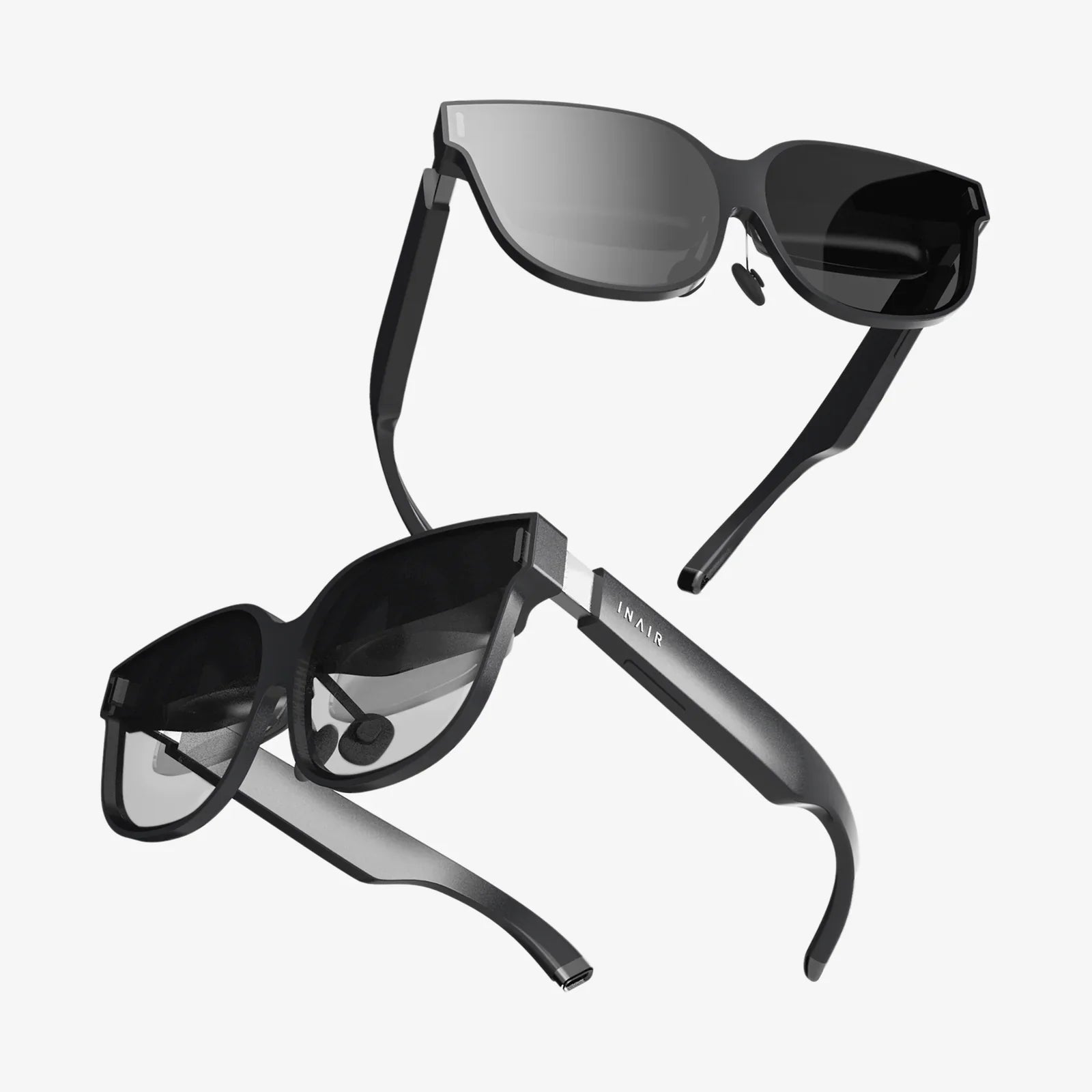
Imagine a world where the line between the digital and the physical blurs into irrelevance, where information dances before your eyes, and digital creatures nap on your actual sofa. This isn't the distant future of science fiction; it's the emerging present, powered by a technology that challenges our very perception of reality. The question on everyone's mind is a deceptively simple one, yet its answer unravels a complex tapestry of technology, philosophy, and human experience that is fundamentally altering our existence.
Defining the Spectrum of Reality
To grapple with the question "Is Augmented Reality real?" we must first dissect what we mean by "real." Traditionally, reality has been understood as the state of things as they actually exist, independent of an observer. A rock is real because you can touch it, it has mass, and it exists in the objective world. A dream, while experientially vivid, is not considered real in the same tangible, shareable way.
Augmented Reality (AR) exists in a fascinating middle ground on this spectrum. Unlike Virtual Reality (VR), which seeks to replace the user's environment with a completely simulated one, AR aims to supplement the real world with digital overlays. It doesn't create a new reality; it enhances the one we already inhabit. The digital dragon perched on your desk isn't physically there—you can't feel its scales or its heat—but the visual and auditory experience of it is undeniably happening in your real-world space, mediated through a lens or screen. This creates a hybrid reality, a blend of the objectively real and the digitally constructed, which is experienced as a cohesive whole by the user.
The Technological Wizardry Behind the Illusion
The magic of AR feels like pure fantasy, but its foundation is firmly rooted in sophisticated, real-world technology. The creation of a convincing AR experience relies on a complex symphony of hardware and software working in perfect harmony.
Sensing the World
For a digital object to convincingly inhabit your space, the AR system must first understand that space. This is achieved through a suite of sensors. Cameras capture the live video feed of your environment. LiDAR (Light Detection and Ranging) scanners, accelerometers, and gyroscopes work together to perform simultaneous localization and mapping (SLAM). In essence, the device is constantly building a 3D map of the room while simultaneously tracking its own position within that map. This allows it to understand depth, recognize surfaces like floors and walls, and precisely anchor digital content so it doesn't drift or float unnaturally.
Processing and Projection
Once the environment is mapped, powerful processors take over. They render high-fidelity 3D graphics in real-time, calculating the correct perspective, lighting, and occlusion (where a real-world object should logically block a digital one). This processed image is then projected to the user. This can be done through various means: on the screen of a smartphone or tablet, where the world is viewed through the device's camera, or through more advanced optical head-mounted displays like smart glasses. These glasses use waveguides or other systems to project light directly into the user's eyes, seamlessly blending digital imagery with their unaltered view of the real world.
Beyond the Novelty: The Tangible Impact of AR
While playful filters and games brought AR into the public consciousness, its true power and "realness" are most evident in its practical, transformative applications across critical industries. This is where AR stops being a parlor trick and starts being a fundamental tool for human advancement.
Revolutionizing Medicine and Surgery
In the medical field, AR is quite literally saving lives and improving outcomes. Surgeons can now wear AR headsets that overlay critical patient data—such as MRI or CT scans—directly onto their field of view during an operation. This means a surgeon can "see through" the patient's tissue to visualize tumors, blood vessels, or bone structures without ever looking away from the surgical site. This enhances precision, reduces risk, and shortens procedure times. Medical students use AR to practice complex procedures on hyper-realistic digital holograms, gaining valuable experience in a zero-risk environment.
Transforming Manufacturing and Repair
On factory floors and in repair shops, AR is becoming an indispensable assistant for complex tasks. A technician repairing a sophisticated engine can wear AR glasses that project step-by-step instructions, highlight specific components with arrows, and display torque specifications directly onto the machinery in front of them. This reduces errors, slashes training time, and allows less experienced workers to perform complex tasks with expert-level guidance. Designers and architects can project full-scale 3D models of their creations into a physical space, allowing them to assess proportions, identify design clashes, and make decisions long before physical construction begins.
Reshaping Retail and Education
AR is bridging the gap between imagination and reality for consumers. You can see how a new sofa would look in your living room, try on watches or makeup virtually, or visualize a fresh coat of paint on your walls. This tangible preview reduces purchase anxiety and returns. In education, AR brings textbooks to life. Students can explore the solar system in their classroom, dissect a frog without the ethical concerns, or walk through ancient historical sites, transforming abstract concepts into immersive, memorable experiences.
The Philosophical and Psychological Divide
The profound implications of AR force us to confront deep philosophical questions about the nature of reality and perception. If our senses are the primary gateway to our understanding of reality, and technology can now generate convincing sensory input, what does that mean for our shared experience of the world?
Philosophers might argue that AR is not ontologically real—the digital objects do not possess independent existence. They are data, light, and code. However, from a phenomenological standpoint (the study of conscious experience), the experience is utterly real to the user. The emotional response of fear, joy, or wonder triggered by a digital experience is as neurologically valid as one triggered by a physical event. This creates a fascinating paradox: an experience can be subjectively real without its trigger being objectively real.
This challenges the concept of a universal, objective reality. With AR, my reality and your reality, viewed through our own devices, could be vastly different. We might be standing in the same physical park, but I see historical figures reenacting a battle while you see a guided botanical tour highlighting the names of plants. This has immense implications for shared experiences, consensus, and even truth itself.
Navigating the Challenges of an Augmented World
This powerful technology does not come without significant challenges and ethical considerations that we must address as a society.
Privacy in a Mapped World
AR devices, by their very nature, are data collection machines. They are constantly scanning, recording, and analyzing environments. This raises alarming privacy concerns. Who owns the 3D map of your home? Could advertisers use data about your living room to target you more effectively? The potential for constant, pervasive surveillance in both public and private spaces is a serious threat that requires robust legal and ethical frameworks.
The Blurring of Truth and Fiction
As AR content becomes more convincing, the potential for misuse grows. Malicious actors could create AR experiences that overlay false information onto real locations—altering street signs, creating fake public alerts, or defacing property virtually. This could be used to spread misinformation, incite panic, or commit fraud. Differentiating between what is physically present and what is digitally augmented will become a critical new form of media literacy.
Social and Psychological Effects
Widespread adoption of always-on AR wearables could further erode our connection to the physical world and to each other. If everyone is constantly engaged with a digital layer of information, will we become less present? Will our real-world interactions suffer? There is a risk of creating a new digital divide, not just in access to technology, but in the very perception of our shared environment.
The Future is a Blended Experience
The trajectory of AR points toward a future where the technology becomes smaller, more powerful, and more seamlessly integrated into our daily lives. We are moving toward lightweight glasses, and eventually contact lenses, that can overlay information without obscuring our natural vision. The goal is an "invisible interface" that feels like a natural extension of our own cognition.
This evolution will see AR converge with other technologies like Artificial Intelligence and the Internet of Things. Your AR glasses will not only show you information but will anticipate your needs. They might highlight the friend you're looking for in a crowd, translate a foreign menu in real-time, or warn you of a potential hazard on the road before you even see it. The digital layer will become a contextual, intelligent companion that enhances our abilities and simplifies our lives.
So, is augmented reality real? The digital entities it creates lack physical substance, but their impact is profoundly tangible. They are real in their utility, revolutionizing how we work, learn, and heal. They are real in their economic effect, creating new industries and disrupting old ones. Most importantly, they are real in our experience, generating genuine emotions and shaping our perception of the world around us. Augmented Reality may not be real in the way a stone is real, but it is undeniably real in its consequences, making it one of the most significant and reality-altering technologies of our time. The digital layer is here, and it's permanently changing the fabric of our everyday existence.
Share:
What Brands Make AI Glasses: The Ultimate Guide to Smart Eyewear Innovators
What Is the Difference Between VR and AR? A Complete Guide to Immersive Realities