


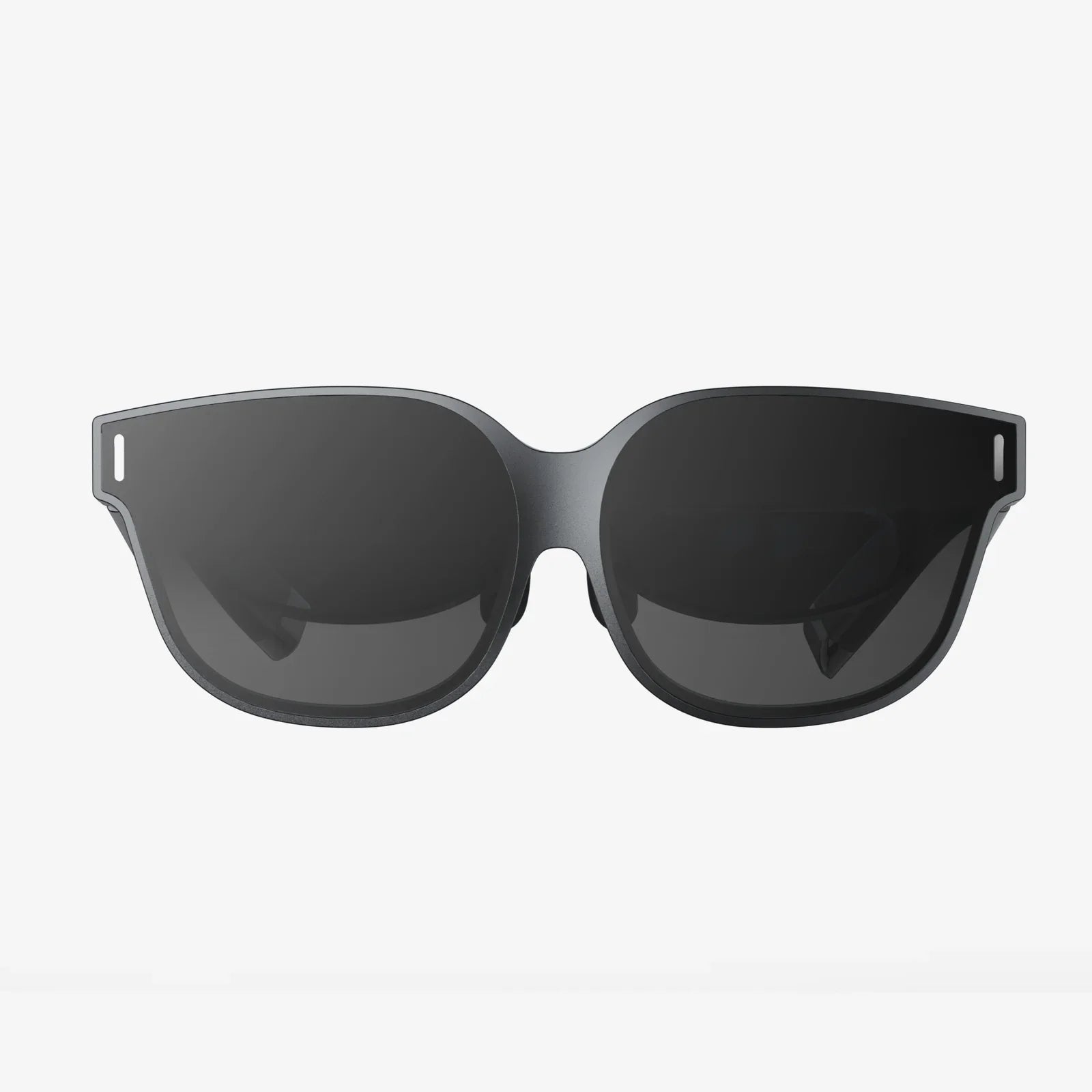
- by wangfred
Is Full Immersion Virtual Reality Possible? Exploring the Ultimate Digital Frontier
- by wangfred
Imagine a world where you can climb Mount Everest, explore the ruins of ancient Rome, or converse with a digitally-rendered historical figure, all from your living room. Not as a spectator on a screen, but as a true participant, feeling the chill of the wind, the strain in your muscles, and the awe of the moment as if it were undeniably real. This is the tantalizing promise of full immersion virtual reality—a concept that has captivated scientists, technologists, and science fiction enthusiasts for decades. The question, however, remains: is such a complete and utter deception of our senses truly within our reach, or is it a technological mirage forever on the horizon?
Before we can assess its possibility, we must first define our terms. Full immersion virtual reality is not merely putting on a headset and playing a game. It is the concept of a seamless, all-encompassing simulation that engages all human senses to such a degree that the user's brain accepts the virtual environment as genuine reality. It is the ultimate suspension of disbelief, not as a conscious choice but as a perceptual fact. This involves several critical components:
This definition sets a phenomenally high bar. It's not about creating a convincing experience; it's about creating an indistinguishable one.
The greatest challenge to full immersion is not just technological; it is biological. Our perception of reality is not a perfect recording of the outside world but a constructed model built by our brain from a constant stream of noisy sensory data.
The human visual system, for instance, is not a simple camera. It involves complex processes like saccades (rapid eye movements), microsaccades (tiny, involuntary eye movements that prevent image fading), and accommodation (the refocusing of the lens). Current VR systems often cause vergence-accommodation conflict, where the eyes converge on a virtual object but must focus at the fixed distance of the headset screen, leading to eye strain and a subconscious cue that the world is not real.
Similarly, our sense of balance and spatial orientation, governed by the vestibular system in the inner ear, is acutely sensitive. Any latency or mismatch between visual motion and the body's perceived movement can instantly trigger simulator sickness, shattering any sense of immersion. The brain is an expert fraud detector, constantly cross-referencing signals from different senses. For VR to be truly immersive, it must achieve a level of synchronicity and fidelity that perfectly mimics the brain's expected input from the real world. This requires not just advanced hardware, but a deep, fundamental understanding of human neuroscience.
Modern consumer virtual reality has made astounding progress in a short time. High-resolution displays, inside-out tracking, and improved controllers have created deeply engaging experiences. Yet, they remain a far cry from full immersion. Let's break down the current state of the key technologies:
Today's best headsets offer high-resolution displays, but they still suffer from the "screen door effect" (albeit greatly reduced), limited field of view (typically 90-120 degrees), and fixed-focus optics. Achieving retinal resolution—pixel density so high the human eye cannot discern individual pixels—requires displays with thousands of pixels per inch, a feat still in its infancy. Furthermore, solving the vergence-accommodation conflict requires revolutionary display technology like light field displays or varifocal lenses, which dynamically adjust focus based on eye-tracking. These are active areas of research but are not yet commercially viable.
This is arguably the most underdeveloped area. While advanced haptic suits and gloves can provide general pressure and vibration feedback, they cannot replicate the nuanced sensation of different textures—the silkiness of water versus the grittiness of sand. True tactile immersion requires a method to simulate the complex interactions of skin receptors with surfaces. Research into ultrasonic haptics, which uses focused sound waves to create pressure sensations on the skin, and neuromuscular electrical stimulation, which tricks muscles into feeling force and weight, shows promise. However, creating a full-body haptic system that is affordable, comfortable, and effective remains a monumental challenge.
Audio technology is perhaps the closest to being solved. High-quality head-related transfer function (HRTF) modeling can create incredibly convincing 3D spatial audio, allowing users to pinpoint the location of sounds with remarkable accuracy. The main limitation is personalization; a generic HRTF model doesn't work perfectly for everyone due to the unique shape of each person's head and ears. Personalized audio profiles, created through scanning or calibration, are the next frontier.
Olfactory and gustatory interfaces are the least developed. Some prototypes exist that can release a limited palette of pre-loaded scents, but they are slow to change between smells and struggle with scent lingering. Creating a device that can generate the complex and dynamic aromas of a real-world environment on demand is a formidable chemical engineering puzzle. Taste is even more complex, likely requiring direct stimulation of taste buds or nerves, a technology that currently exists only in rudimentary lab experiments.
If stimulating the senses through external hardware is too clumsy and imprecise, what if we went straight to the source? Brain-Computer Interfaces (BCI) represent the most radical and potentially the only viable path to true full immersion. The concept is to bypass the body's sensory organs entirely and feed artificially generated neural signals directly into the brain.
BCIs today are primarily used in medical settings, allowing paralyzed individuals to control robotic limbs or communicate. These are often one-way interfaces, reading brain signals to output commands. For full immersion VR, we would need a high-resolution, bidirectional interface: both reading neural activity to understand the user's intent and writing complex sensory information back into the brain.
The challenges are, to put it mildly, immense. We do not yet fully possess the "neural code"—the language the brain uses to represent sensory information. Mapping the precise patterns of neural firing that create the sensation of the color red, the sound of a violin, or the feeling of warmth is a task of almost incomprehensible complexity. Furthermore, any interface would require millions of connection points with individual neurons, likely requiring non-invasive or minimally invasive technology that does not currently exist. While companies are investing heavily in BCI research, the timeline for a consumer-ready, full-immersion neural interface is measured in decades, if not longer.
The pursuit of full immersion is not merely a technical challenge; it forces us to confront profound philosophical and ethical questions. If we achieve a reality indistinguishable from our own, what becomes of our base reality? The concept of the "experience machine," a thought experiment proposed by philosopher Robert Nozick, questions whether we would plug into a machine that could provide us with any desirable experience if it meant disconnecting from actual reality. Full immersion VR is a steps towards that machine.
Issues of agency, identity, and truth would become paramount. Could a user's actions and experiences in a virtual world be considered their own? If a trauma occurs in VR that feels completely real, what is the psychological impact? The potential for misuse is staggering—from perfectly convincing propaganda and misinformation to new forms of psychological torture or addiction. Establishing a legal and ethical framework for such a technology is as important as building the technology itself. The line between reality and simulation, once crossed, can never be uncrossed.
Given the staggering biological, technological, and philosophical hurdles, some researchers argue that the goal should not be a perfect, indiscernible replica of reality. Instead, the future of VR may lie in what is known as "presence"—the compelling feeling of being in a place, even if you know intellectually that you are not. Our brains are highly suggestible and can be tricked into a state of presence with clever design, even with imperfect technology.
This suggests that full immersion exists on a spectrum. We may never achieve a perfect simulation that engages every facet of human perception without a single flaw, but we can get asymptotically closer. Each breakthrough in display resolution, haptic feedback, or audio fidelity will deepen the sense of presence, making the experience more powerful and believable. The journey itself, not just the destination, will yield transformative applications in therapy, education, social connection, and entertainment.
The dream of full immersion virtual reality represents one of humanity's most audacious ambitions: to become the architects of our own experience. While the path is littered with obstacles that seem insurmountable with our current understanding, history has shown that humanity's technological progress is often a story of achieving the impossible. The question is not just if we can build it, but if we are ready for the world it will create. The answer will define not just the future of technology, but the future of human experience itself.
Share:
How to Set Up a Virtual Reality Headset: The Ultimate Step-by-Step Guide for an Immersive Experience
Augmented Reality App Development: The Ultimate Guide to Building the Future