


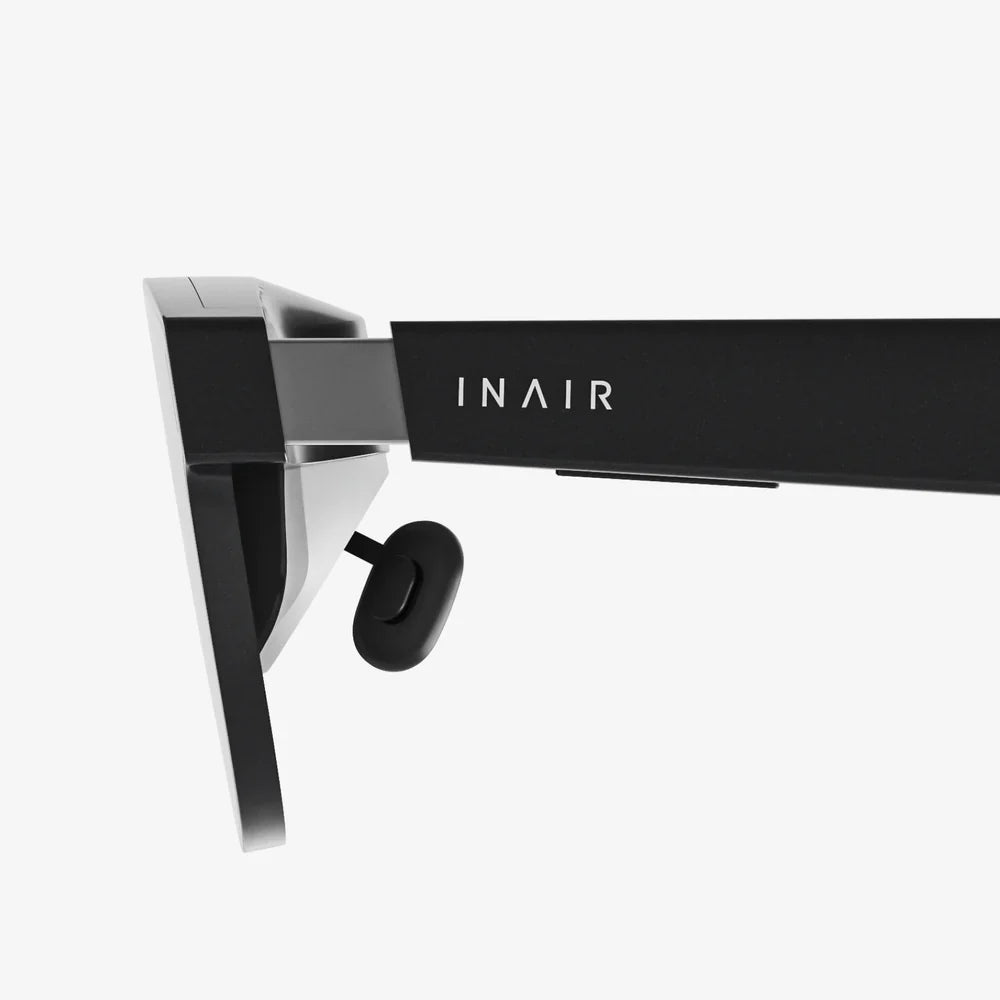
Remember when smart glasses were a joke? A clunky, awkward, and socially awkward piece of tech that promised the future but delivered little more than a privacy nightmare and a punchline? Forget all that. The landscape has shifted, the technology has matured, and the question on everyone's mind is no longer 'if' but 'is smart glasses now' a viable, powerful, and integrated part of our digital ecosystem? The answer, increasingly, is a resounding yes. We are standing at the precipice of a silent revolution, one where computing doesn't happen in our pockets or on our desks, but floats seamlessly in our field of vision, augmenting our reality without obstructing it. This isn't about looking like a cyborg; it's about enhancing what it means to be human in a digital world.
The Evolution from Novelty to Necessity
The journey of smart glasses is a masterclass in technological iteration. The initial forays into the market were, to be charitable, ambitious but flawed. They were often large, expensive, battery-hungry, and featured obvious cameras that raised immediate and valid concerns about consent and surveillance. They were a solution in search of a problem, a piece of hardware that screamed for attention rather than offering subtle utility.
Today, the paradigm has completely flipped. The driving question for designers and engineers is no longer "how much can we put into a pair of glasses?" but rather "how can we make the technology disappear?" This focus on minimalism and user experience has been the key to unlocking their potential. Advancements in micro-optics, waveguide displays, and battery technology have been nothing short of revolutionary. Modern smart glasses can now look almost indistinguishable from high-end traditional eyewear. The displays are brighter and more efficient, projecting crisp information onto tiny, transparent waveguides that are embedded within the lens itself. This allows the user to see digital overlays without completely blocking their view of the real world—a concept known as augmented reality (AR).
This shift from obtrusive to invisible is the single most important factor in answering 'is smart glasses now.' It has moved the category from a niche gadget for tech enthusiasts to a potential mainstream accessory. The goal is no longer to be a computer on your face, but to be a pair of glasses first, and a computer second.
Under the Hood: The Magic of Modern AR Glasses
So, how do these modern marvels actually work? The magic lies in a symphony of miniaturized components working in perfect harmony.
- Waveguide Displays: This is the core technology that makes everything possible. Instead of a bulky screen in front of your eye, tiny projectors fire light into a transparent piece of glass or plastic (the waveguide). This light bounces through the waveguide using principles of diffraction or reflection until it is directed into your pupil. The result is a bright, digital image that appears to float in the world in front of you, all while you maintain a completely clear view of your surroundings.
- Spatial Audio: Audio is just as important as visual input. High-quality, miniature speakers are built into the arms of the glasses, often using bone conduction or directional audio technology. This allows you to hear notifications, take calls, and listen to music or podcasts without blocking your ear canals, keeping you aware of ambient sounds for safety and social interaction.
- Advanced Sensors: A suite of sensors, including high-resolution cameras, microphones, accelerometers, gyroscopes, and sometimes even LiDAR scanners, act as the eyes and ears of the device. They understand the world around you—tracking your head movement, mapping surfaces for AR placement, and processing voice commands.
- On-Device AI: All this sensor data is processed by powerful, yet incredibly efficient, chipsets. Onboard artificial intelligence is crucial for understanding context. It can translate foreign text in real-time, identify objects, provide navigation cues, and filter out background noise during calls, all without needing a constant connection to the cloud.
The integration of these technologies is what separates the current generation from its predecessors. It’s a seamless blend of hardware and software designed for all-day comfort and utility.
Beyond Gimmicks: Real-World Applications Taking Root
The true test of any technology is its application. 'Is smart glasses now' more than just a fancy way to check the time? Absolutely. The use cases are expanding rapidly across numerous fields.
Professional and Industrial Revolution
This is where smart glasses are already delivering immense value. For field technicians, having schematics, instruction manuals, or a live video feed from a remote expert overlaid on the machinery they are repairing is transformative. It increases efficiency, reduces errors, and improves safety. In healthcare, surgeons can access patient vitals and imaging data without looking away from the operating table. In logistics and warehousing, workers can see picking lists and navigation instructions hands-free, dramatically speeding up fulfillment processes. For these professionals, the technology is not a novelty; it's a critical tool that enhances their capabilities.
The Seamless Consumer Experience
For the everyday user, the value proposition is centered on convenience and context. Imagine:
- Walking through a foreign city and having translated street signs and menus appear instantly in your native language.
- Following a recipe in the kitchen with step-by-step instructions floating right next to your mixing bowl, without ever touching a screen with flour-covered hands.
- Getting subtle, turn-by-turn navigation cues projected onto the sidewalk in front of you, eliminating the need to constantly glance down at your phone.
- Listening to a podcast on a walk while still being fully aware of your surroundings, and having the ability to pause it just by tapping the side of your glasses.
- Capturing photos and videos from a first-person perspective, perfectly framed and completely hands-free, to document life's moments without a barrier.
These applications move computing from an interruptive experience to an assistive one. The information comes to you when you need it, then disappears, leaving you to engage with the world.
Navigating the Ethical Minefield: Privacy and the Social Contract
This new capability is not without its profound challenges. The very feature that makes smart glasses so powerful—the ability to capture the world passively—is also their greatest point of contention. The specter of constant, undetectable surveillance is a legitimate societal fear. The question of 'is smart glasses now' must be accompanied by 'how do we use them responsibly?'
Manufacturers are addressing this with clear hardware indicators. Many modern devices feature a prominent LED light that activates whenever the camera is in use, providing a visible signal to those nearby. This is a crucial first step in establishing a social contract. Furthermore, robust privacy controls within the software are non-negotiable. Users must have granular control over what data is collected, how it is processed (preferably on-device), and who it is shared with.
The onus is also on us, as a society, to develop new norms and etiquette. Is it polite to wear them during a conversation? When is it appropriate to record? These are conversations we need to have openly. The technology will continue to advance; our social and ethical frameworks must advance with it to ensure this powerful tool is used for good and not for intrusion.
The Future is Transparent: What's Next for Wearable Computing?
If today's smart glasses are impressive, the future is truly breathtaking. We are moving towards a world where the technology will become even more integrated and intuitive. We can expect displays with wider fields of view and full color, making AR experiences more immersive and realistic. Haptic feedback in the arms could provide subtle tactile notifications. Advancements in AI will lead to a true contextual assistant that anticipates your needs based on what you're looking at and what you're doing.
The ultimate goal is the complete dissolution of the interface. The device will understand your intent through a combination of gaze tracking, ambient context, and subtle voice commands. You won't need to 'use' the glasses; you will simply interact with the information they provide as if it were a natural part of your environment. This will redefine our relationship with technology, moving us from users to partners in a digitally augmented reality.
The revolution won't be announced with a fanfare; it will arrive quietly, perched on the noses of millions. It will change how we work, how we learn, how we navigate, and how we connect with information. The barrier between the digital and the physical is dissolving, and the gateway is a pair of glasses. The future is not in your hand; it's right in front of your eyes.
Share:
Lens AR Translate: The Invisible Bridge to a Borderless World
Free Virtual Office Space: The Ultimate Guide to Professionalism Without the Overhead