


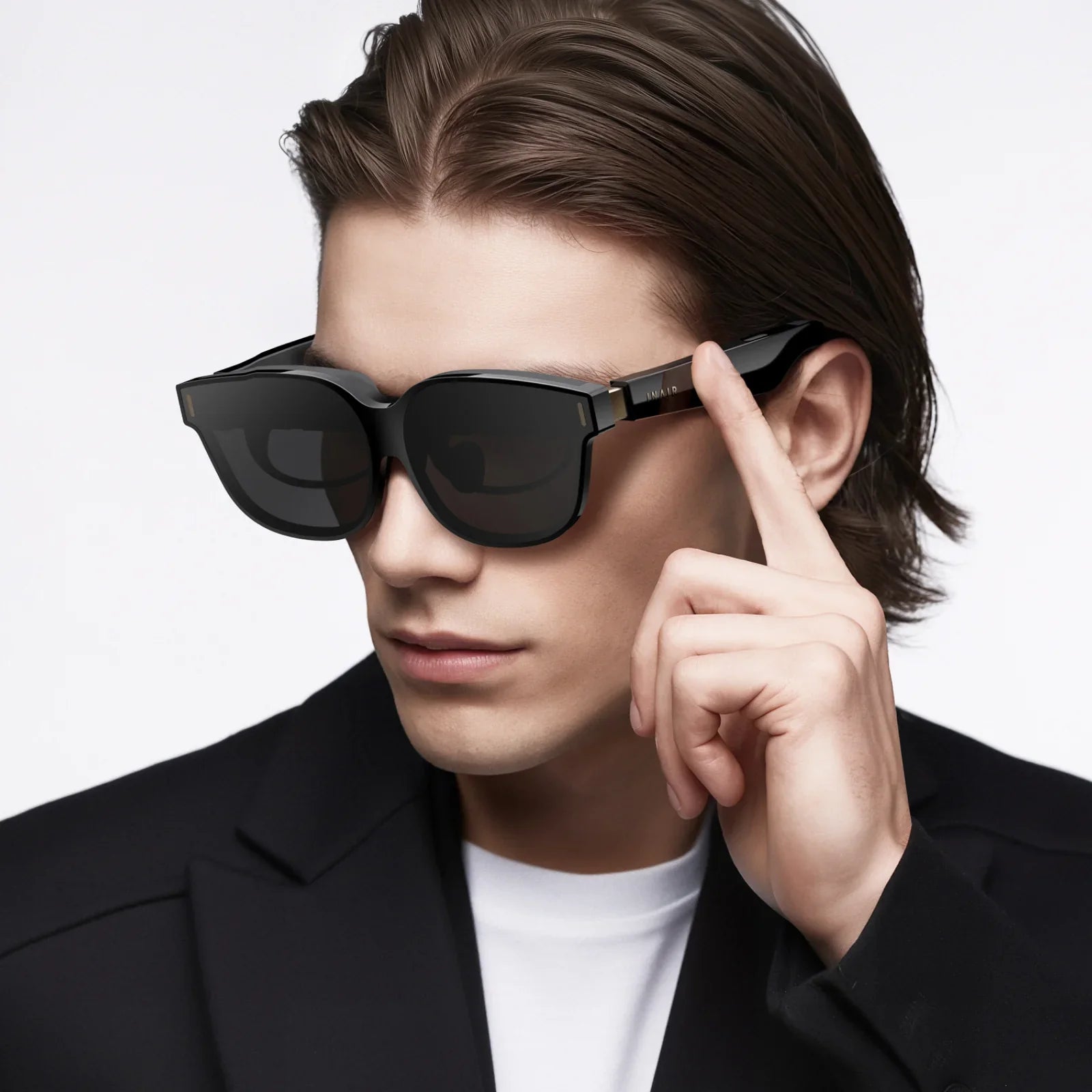
The digital world is expanding, quite literally, before our very eyes. As virtual and augmented reality technologies surge from niche gaming peripherals to mainstream tools for work, education, and social connection, a pressing question emerges from the haze of pixels and promise: is plunging our vision into these manufactured worlds a recipe for long-term ocular harm? The allure is undeniable—exploring fantastical landscapes, attending meetings as a hologram, or touring ancient ruins from your living room. But this technological leap forward is accompanied by a very human concern, a quiet anxiety that nags at every user who feels that familiar post-session dryness or fatigue. Is this the cost of admission to the future, or are the risks merely specters in the machine?
The Mechanics of Sight and the VR Illusion
To understand the potential impact of VR on our eyes, we must first understand how both natural vision and the headset's artificial simulation work. Human vision is a breathtakingly complex process. Our eyes are not mere cameras; they are dynamic organs that constantly adjust and work in tandem.
In the real world, our eyes employ two key mechanisms to perceive depth and focus:
- Vergence: This is the coordinated movement of both eyes inward (convergence) to look at a nearby object, or outward (divergence) to focus on something far away. Think of it as the pointing of the two eyeballs.
- Accommodation: This is the process by which the eye's lens changes shape, thickening to focus on close objects and flattening for distant ones. It's the internal focusing mechanism.
In a healthy visual system, vergence and accommodation are neurologically linked—they work in perfect synchrony. When you look at your nose, your eyes converge and your lenses accommodate for a near object. When you gaze at the horizon, they diverge and relax accommodation.
This is where the VR headset introduces a fundamental conflict, known as the Vergence-Accommodation Conflict (VAC). A VR headset presents a 3D world on two 2D screens placed very close to your eyes, typically just a few centimeters away. Your eyes must accommodate (focus) on the fixed distance of these physical screens. However, the software creates a convincing illusion of depth. A virtual dragon might look like it's flying toward you, and your eyes will try to converge on that perceived near point.
The result? A sensory mismatch. Your brain receives conflicting signals: the focusing system says "the object is close," while the converging system might be saying "the object is far." For many users, especially new ones, this conflict is the primary source of eye strain, headaches, and general visual fatigue. It's not that the technology is inherently damaging, but rather that it asks our visual system to do something unnatural it did not evolve to do.
Common Short-Term Effects: Discomfort vs. Damage
The immediate sensations users report after a VR session are often misinterpreted as signs of damage. It is crucial to differentiate between temporary discomfort and permanent harm.
Digital Eye Strain (Computer Vision Syndrome)
VR eye strain is an extension of the same phenomenon experienced after long hours at a computer or on a smartphone, often termed Digital Eye Strain. Symptoms are nearly identical and include:
- Dry, itchy, or burning sensations
- Blurred vision
- Headaches
- Neck and shoulder pain
- Difficulty re-focusing on real-world objects
The causes in VR are amplified. Users tend to blink significantly less—up to 50% less—while immersed in a virtual environment, leading to rapid evaporation of the tear film and dry eyes. The intense cognitive and visual engagement, combined with the VAC, demands more effort from the ocular muscles, leading to fatigue.
Motion Sickness (Visually Induced Motion Sickness)
Another common short-term effect is a feeling of nausea, dizziness, or vertigo, often called "sim sickness." This occurs when there is a disconnect between what your eyes see and what your vestibular system (your inner ear balance center) feels. Your eyes might be telling your brain you're running through a spaceship or racing on a track, but your body is standing still. This sensory contradiction can quickly lead to discomfort. While not directly an eye problem, it is a significant side effect of visual immersion that can deter use.
The Long-Term Question: Separating Speculation from Science
This is the core of the anxiety: not the temporary headache, but the fear of a lifetime of worsened eyesight. The truth is, long-term, large-scale longitudinal studies on VR use are still in their infancy because the consumer technology is relatively new. However, we can extrapolate from well-established research in related fields like ophthalmology and optometry.
The Myopia (Nearsightedness) Concern
A major area of focus is the potential link between extensive near-work and the development or progression of myopia, especially in children and adolescents. There is strong evidence that spending too much time focusing on close objects (like books, phones, and, by extension, VR screens) can influence the elongation of the eyeball, leading to myopia.
The concern for VR is that it represents the ultimate form of near-work. Even though the virtual objects may appear distant, the eyes are still physically focused on a screen mere inches away. For developing eyes, this prolonged near-focus could theoretically contribute to myopia progression. This is why most manufacturers and experts strongly recommend strict time limits for younger users.
Impact on Binocular Vision Development
For very young children (under the age of 6-7), whose visual systems are still rapidly developing, there is a theoretical risk that the consistent VAC could interfere with the normal development of binocular vision—the brain's ability to combine images from both eyes into a single 3D picture. While concrete evidence is lacking due to ethical constraints on studying children with VR, the potential risk is considered significant enough to warrant complete avoidance of these headsets for this age group.
Blue Light Exposure
Like all digital screens, VR displays emit blue light. The debate over blue light is ongoing. While high-energy blue light from the sun can contribute to retinal damage over a lifetime, the amount emitted by screens is a fraction of that. The primary proven effect of screen-based blue light is its impact on circadian rhythms, potentially disrupting sleep if used before bed. The risk of physical retinal damage from VR headset use is considered extremely low by most ophthalmological bodies.
Mitigating the Risks: A Guide to Healthy VR Habits
The potential for discomfort does not mean VR must be avoided. Instead, it should be used mindfully. Adopting healthy habits can drastically reduce short-term strain and mitigate any potential long-term risks.
- The 20-20-20 Rule is Your Best Friend: This classic rule for digital device use is even more critical in VR. Every 20 minutes, take a 20-second break and look at something at least 20 feet away. This forces your eyes to break their fixed near-focus, relax accommodation, and re-calibrate.
- Blink Consciously: Remind yourself to blink fully and frequently. This spreads tears evenly across the eye surface, preventing dryness and irritation.
- Limit Session Length: Especially when starting out, keep sessions short. Begin with 15-30 minutes and gradually increase as your comfort allows. Avoid marathon sessions.
- Prioritize Proper Fit and Calibration: An improperly fitted headset is a fast track to discomfort. Ensure the head strap is snug but not tight. The most important step is the Interpupillary Distance (IPD) adjustment. This slider changes the distance between the two lenses to match the distance between your pupils. A correct IPD setting is essential for a clear, comfortable image and reduces strain. If your headset doesn't have a physical IPD adjustment, ensure the software calibration is done meticulously.
- Optimize Your Environment: Use VR in a well-lit room (though avoiding direct light into the lenses) to reduce the intensity of the contrast when you remove the headset.
- Listen to Your Body: At the first sign of eye strain, headache, or nausea, stop immediately. Do not "push through" the discomfort.
A Look to the Future: Evolving Technology
The industry is acutely aware of the VAC and its associated problems. Next-generation headsets are actively exploring technological solutions. These include:
- Varifocal Displays: These systems use eye-tracking to determine where you are looking in the virtual space and then physically or electronically adjust the focus of the lenses to match the virtual distance, thereby resolving the conflict by making accommodation and vergence match.
- Light Field Technology: This more advanced approach aims to mimic how light behaves in the real world, projecting light rays that enter the eye from different angles, allowing the eye's natural lens to focus as it normally would.
- Higher Resolution and Refresh Rates: As displays get sharper (higher pixels-per-degree) and smoother (higher refresh rates above 90Hz or 120Hz), the image becomes more lifelike and less taxing on the visual system, reducing one source of strain.
These innovations promise a future where the visual experience in VR is as comfortable and natural as looking at the real world, effectively eliminating the primary source of ocular discomfort.
Expert Verdict and Final Recommendations
Leading ophthalmological organizations, including the American Academy of Ophthalmology (AAO), generally state that there is no evidence that VR headsets cause permanent damage to adult eyes. The consensus is that the technology is safe for moderate use. The key takeaways are that the primary risks are short-term discomfort and that the long-term unknowns primarily apply to children, whose visual systems are still plastic and developing.
The answer to "Is using a VR headset bad for your eyes?" is not a simple yes or no. For the vast majority of adult users, it is not bad in the sense of causing permanent injury. It is, however, demanding. It asks our eyes to work in a novel way that can lead to significant fatigue and strain. The technology, in its current form, has a known and measurable "comfort cost." This cost, however, can be managed almost entirely through informed, moderate usage. The real danger lies not in the headset itself, but in ignoring the clear signals your body sends you. By treating immersive technology not as a passive pastime but as an active experience requiring breaks and boundaries, we can safely explore these incredible new worlds without losing sight of our own.
So the next time you power up your headset, remember you're not just a player or user—you're the curator of your own visual well-being. The future of immersion is incredibly bright, but it's a future best viewed with clear, comfortable, and carefully protected eyes.
Share:
Best VR Headset for Office Work: Transforming Your 9-to-5 with Immersive Technology
Best VR Headset for Office Work: Transforming Your 9-to-5 with Immersive Technology