


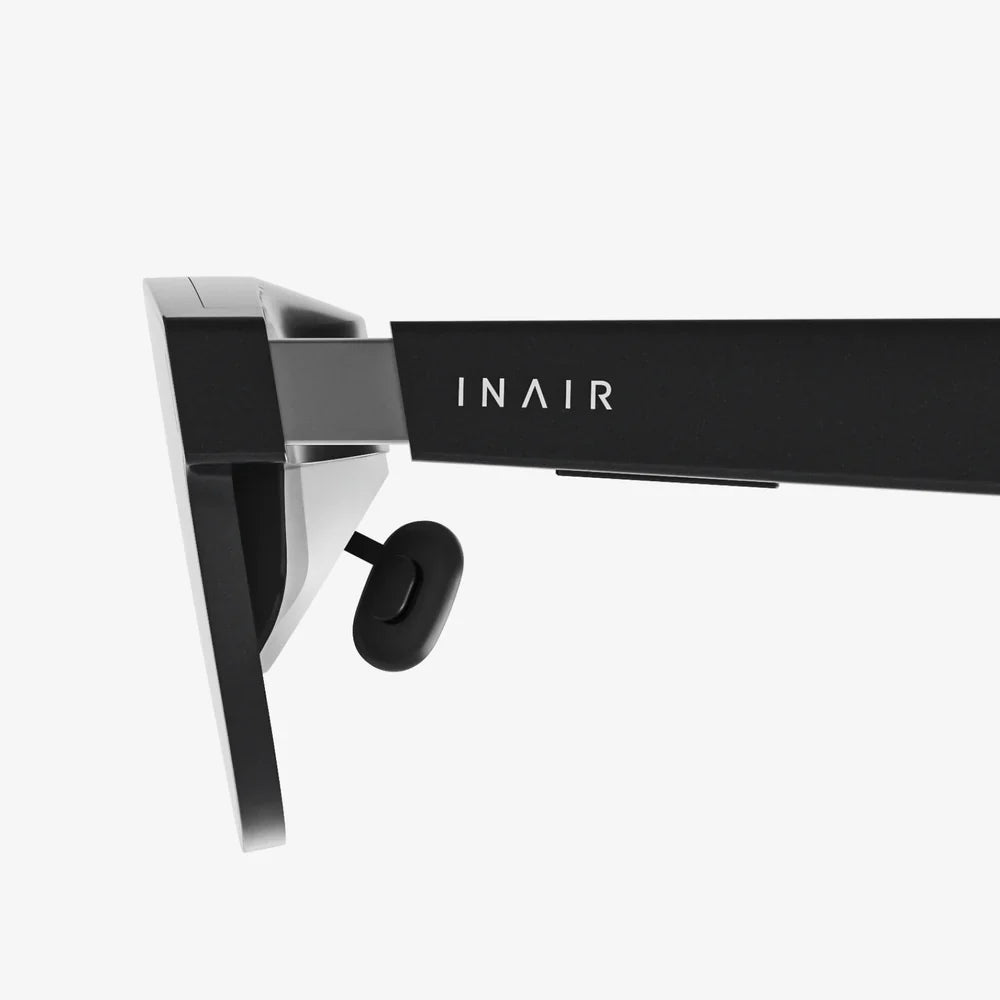
- by wangfred
Is Virtual Reality Good or Bad? The Double-Edged Sword of Immersive Technology
- by wangfred
You strap on the headset, and the real world dissolves. One moment you’re in your living room; the next, you’re walking on the surface of Mars, performing a complex heart surgery, or facing down a mythical beast. This is the unparalleled promise of Virtual Reality (VR), a technology that has catapulted from science fiction to consumer reality. But as this digital frontier expands, a critical question emerges from the immersive haze: are we building a gateway to incredible new human experiences or constructing a gilded cage that detaches us from reality itself? The answer, it turns out, is far from simple.
The potential benefits of VR are not merely incremental improvements but paradigm shifts in how we learn, heal, and connect. Its power lies in its core principle: presence. Unlike any medium before it, VR can trick the brain into believing it is somewhere else, creating experiences that are not just observed but felt and lived.
Imagine a history class where students don’t just read about ancient Rome but can walk through a meticulously reconstructed Forum, hearing the echoes of senators and feeling the scale of the architecture. Envision medical students practicing delicate surgical procedures on hyper-realistic virtual patients, making critical mistakes without any real-world consequences. This is the educational potential of VR.
It moves learning from passive absorption to active participation. Complex abstract concepts in fields like astronomy, molecular biology, or mechanical engineering become tangible and interactive. Training for high-risk professions—from pilots and surgeons to firefighters and welders—can be conducted in safe, controlled, yet highly realistic environments. This drastically reduces costs, eliminates risk, and allows for the repetition of rare scenarios until mastery is achieved.
The therapeutic applications of VR are perhaps its most profound good. Clinicians are using it as a powerful tool for exposure therapy, helping patients with phobias (like fear of heights, flying, or spiders) confront their triggers in a gradual, controlled manner. For patients suffering from Post-Traumatic Stress Disorder (PTSD), VR can safely recreate traumatic environments to help them process and manage their memories under guided supervision.
Beyond mental health, VR is a godsend for physical rehabilitation. Exercises that are monotonous and painful in a clinical setting can be transformed into engaging games. A patient recovering from a stroke might be motivated to repeatedly move their arm by playing a virtual game of tennis, accelerating their recovery through what is known as "motivated rehabilitation." Furthermore, VR serves as a potent distraction tool, significantly reducing perceived pain and anxiety during painful medical procedures like wound care or chemotherapy.
This is perhaps VR’s most unexpected virtue. By literally placing someone in another person’s shoes, it can be a powerful engine for empathy. Projects have been created that allow users to experience a day in the life of a homeless person, a refugee fleeing a conflict zone, or even a cow in a slaughterhouse. These experiences can generate a deeper, more visceral understanding of another’s plight than any news article or documentary ever could.
For those separated by vast distances, VR social platforms offer a sense of presence that video calls cannot match. Families separated by oceans can feel like they are sitting in the same virtual living room, sharing a space and not just a screen. For individuals with mobility issues or social anxiety, these virtual spaces can provide a lower-stakes environment to connect with others.
For all its promise, VR’s immersive intensity carries significant risks. Its power to captivate is also a power to addict, isolate, and manipulate. The very strength that makes it a tool for good can, if left unchecked, make it a potent force for harm.
The most immediate drawback is a collection of physical symptoms known as "cybersickness," a form of motion sickness caused by a disconnect between what the eyes see (movement) and what the body feels (stationary). While this is improving with better technology, it remains a barrier for many users.
More concerning are the potential long-term psychological effects. Prolonged immersion in a virtual world can lead to a phenomenon known as "derealization," where the line between the virtual and the real becomes blurred. Users might experience a sense of disorientation or dissatisfaction with the real world after spending time in a perfectly curated, high-stimulation virtual one. This can fuel escapism, where individuals retreat into VR to avoid real-world problems, responsibilities, or social interactions, potentially exacerbating issues like anxiety and depression.
If smartphones are privacy black holes, VR headsets are supermassive ones. They are not just cameras and microphones; they are sophisticated biometric monitoring devices. They can track your eye movement, gaze, and pupil dilation (revealing what holds your attention and even your emotional response). They map your precise movements, gestures, and even the unique geometry of your living space.
This unprecedented dataset is a goldmine for advertisers and a nightmare for privacy advocates. Imagine a future where advertisers not only know what you look at but how you physically react to it, allowing for hyper-manipulative targeted advertising. This level of intimate data collection raises alarming questions about who owns this data, how it is used, and how it might be secured against breaches.
While VR can connect people across the globe, it can also atomize individuals in the same room. If family members are each plugged into their own private virtual worlds, what happens to shared physical experiences and the subtle nuances of face-to-face interaction? There is a tangible risk that VR could further erode community bonds and deepen a sense of loneliness, even as it offers digital companionship.
Furthermore, VR technology is expensive, potentially creating a new digital divide. A society could split between those who can afford to escape, educate, and enhance themselves in virtual realms and those who are left behind in an increasingly neglected physical world. This socioeconomic stratification could have profound consequences.
So, is virtual reality good or bad? The technology itself is neutral; it is a canvas. The portrait that emerges—whether a utopia of connection and understanding or a dystopia of isolation and control—will be painted by us. The outcome depends entirely on the ethical frameworks, regulations, and social norms we establish around it now.
We need robust data privacy laws specifically written for biometric data harvested by VR and other immersive technologies. Users must have clear, transparent control over their information. Educational institutions and corporations must implement VR not as a mere gadget, but as a tool with specific pedagogical and operational goals, ensuring its use is purposeful and effective.
On an individual level, it calls for digital mindfulness. Using VR with intention—setting time limits, prioritizing real-world relationships, and critically evaluating the experiences we consume—is crucial. We must be the architects of our immersion, not its prisoners.
The headset offers a choice: a retreat from reality or a tool to enhance it. The future of this captivating technology hinges not on the code it runs, but on the humanity we bring to it. The ultimate verdict on whether virtual reality is a heaven or a hellscape won’t be delivered by engineers in a lab, but by us, in how we choose to live with it, one immersive experience at a time.
Share:
Are Virtual Reality Headsets Safe? An In-Depth Look at the Risks and Rewards
Are Virtual Reality Headsets Safe? An In-Depth Look at the Risks and Rewards