


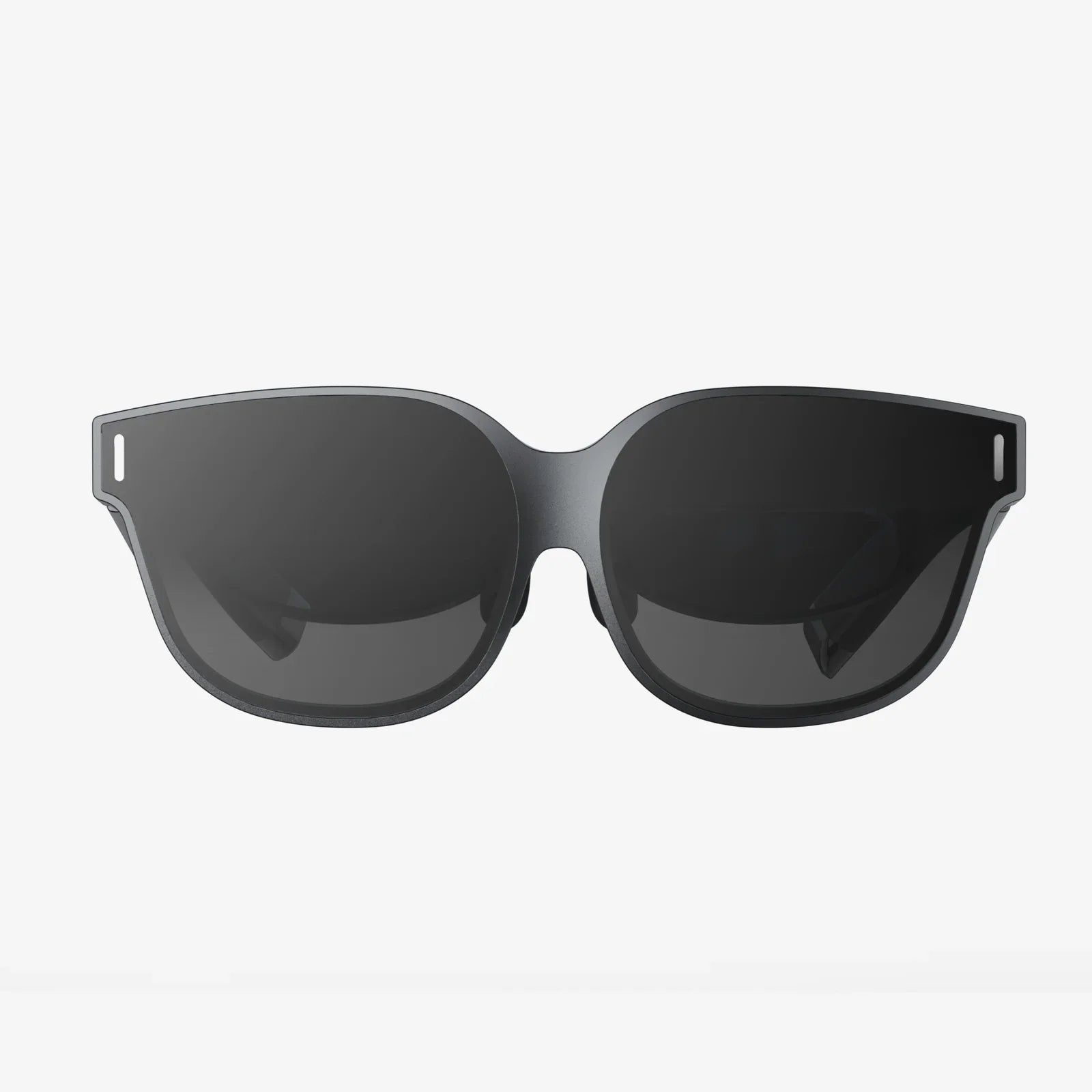
You’ve seen the hype, you’ve heard the terms, and you’ve probably asked yourself the very question this article seeks to answer: is virtual reality the same thing as augmented reality? The line seems blurry, the marketing is often confusing, and the future they promise is both thrilling and perplexing. The short answer is a definitive no, but the long answer is a fascinating journey into how we perceive and interact with the digital world. This deep dive will not only clarify the crucial distinctions but also explore the powerful synergy between these two transformative technologies, revealing how they are reshaping everything from entertainment and education to industry and human connection.
Defining the Realms: Core Concepts and Foundational Differences
To understand why VR is not AR, we must first establish clear, fundamental definitions for each technology. They represent two different approaches to merging the digital and the physical, each with its own philosophy and technical requirements.
Virtual Reality: The Complete Digital Escape
Virtual Reality (VR) is the technology of total immersion. Its primary goal is to replace your reality. By wearing a head-mounted display that completely blocks out your physical surroundings, you are visually and audibly transported to a fully computer-generated environment. This environment can be a photorealistic simulation of a real place, a fantastical world from a game, or an abstract digital space for work or socializing.
The key characteristics of a true VR experience are:
- Immersion: The user's senses are dominated by digital stimuli, creating a powerful sensation of "presence"—the convincing feeling of being in the virtual space.
- Isolation: The physical world is intentionally shut out. You cannot see your own hands or the room you are standing in without digital representations.
- Interactivity: Users can navigate and manipulate the virtual world, often using motion-tracked controllers or gloves, making the experience dynamic and engaging.
Augmented Reality: The Digital Overlay on Reality
Augmented Reality (AR), in stark contrast, aims to augment or enhance your reality. Instead of replacing the world around you, AR superimposes digital information—images, data, 3D models, animations—onto your view of the real world. This is typically achieved through transparent lenses in smart glasses or, more commonly today, through the camera and screen of a smartphone or tablet.
The defining traits of AR are:
- Integration: Digital content is seamlessly blended with the real environment, appearing to coexist within it.
- Contextual Awareness: AR systems understand the physical world through cameras and sensors, allowing digital objects to interact with real surfaces (e.g., a virtual dinosaur hiding behind your real sofa).
- Accessibility: It enhances your current reality without removing you from it, making it useful for real-time information, navigation, and instruction.
The simplest analogy is this: VR is like being inside a video game or a movie. AR is like having a game character or a holographic assistant in your living room with you.
The Technological Chasm: How VR and AR Devices Work
The philosophical difference between replacing reality and augmenting it leads to a significant divergence in the hardware required to power these experiences. The underlying technology is what makes one experience VR and the other AR.
The VR Hardware Stack: Building a World from Scratch
Creating a convincing virtual reality requires immense computational power and sophisticated hardware focused on immersion and tracking.
- Display: VR headsets use two high-resolution screens (one for each eye) placed very close to the user's face, viewed through precision lenses that warp the image to fill your field of view.
- Tracking: Precise "6 Degrees of Freedom" (6DoF) tracking is non-negotiable. This uses a combination of internal sensors (gyroscopes, accelerometers) and external cameras or base stations to track the position and rotation of your head and controllers in real-time. This allows you to lean, dodge, and walk around within a defined space.
- Processing: Rendering two high-frame-rate, high-resolution views simultaneously is incredibly demanding. This requires powerful processors and graphics units, often housed in a connected computer or a compact but high-performance system within the headset itself.
The AR Hardware Challenge: The See-Through Problem
AR hardware faces a unique and complex challenge: it must see the world to understand it, and then project digital images onto it in a way that looks natural.
- Optics: The holy grail of AR is comfortable, stylish glasses with transparent waveguides or holographic optical elements that project light directly into the eye, making digital images appear in the real world. This is far more difficult to achieve than the closed-off displays of VR.
- Computer Vision: AR is nothing without its ability to see. Cameras and sensors constantly scan the environment to perform "simultaneous localization and mapping" (SLAM). This creates a real-time 3D map of the space, understanding surfaces, planes, and objects so digital content can be placed and occluded correctly.
- Processing: This real-time environmental processing, combined with rendering, requires significant on-device processing power, often with specialized chips for machine learning and computer vision tasks. The goal is to do this without draining a small battery or overheating.
This technological divide explains why compelling, all-day AR glasses are still an emerging consumer product, while high-fidelity VR headsets are already commercially available. One is trying to create a world, the other is trying to understand and enhance ours.
The Spectrum of Experience: Where MR and XR Fit In
The question "is VR augmented reality?" often arises because the landscape is not a simple binary. It's more accurate to visualize these technologies on a spectrum, often referred to as the "Virtuality Continuum." This continuum spans from the completely real environment to a fully virtual one.
Somewhere in the middle of this spectrum lies Mixed Reality (MR). MR is not just a buzzword; it represents a significant leap. It describes experiences where real and virtual worlds are not just overlaid but truly interact with each other in real-time. In a true MR experience, a virtual ball can bounce off your real table, and your real hand can push a virtual button. It requires the environmental understanding of AR with the immersive capabilities of VR. High-end headsets often achieve this by using outward-facing cameras to pass a video feed of the real world into the headset, and then compositing virtual objects into that feed with realistic physics and occlusion.
This brings us to the umbrella term: Extended Reality (XR). XR is not a type of experience but a catch-all term that encompasses VR, AR, and MR. It's a convenient way to refer to the entire industry and all technologies that blend the physical and virtual worlds. So, while VR is not AR, they are both crucial parts of the broader XR field.
Practical Applications: How VR and AR Are Used Today
The different strengths of VR and AR naturally lend themselves to different applications. Their value is proven not in abstract concepts but in real-world utility.
The VR Domain: Training, Simulation, and Deep Engagement
VR excels in situations where complete focus and a controlled environment are paramount.
- Training and Simulation: Surgeons practice complex procedures without risk to patients. Pilots train for emergency scenarios in a perfect flight simulator. Factory workers learn to operate dangerous machinery in a safe virtual space. The total immersion allows for muscle memory and procedural knowledge to be built effectively.
- Therapeutic Applications: VR is used for exposure therapy to treat phobias (fear of heights, flying) and PTSD in a controlled, gradual way. It's also used for pain distraction in burn units and during physical rehabilitation.
- Design and Prototyping: Architects and engineers walk through building designs at a 1:1 scale before a single brick is laid, identifying issues and experiencing the space in a way blueprints cannot convey.
- Entertainment: This is the most well-known use case: deeply immersive video games and narrative experiences that make you the protagonist inside the story.
The AR Domain: Information, Instruction, and Context
AR shines when information needs to be delivered contextually, within the user's immediate environment.
- Industrial Maintenance and Repair: A technician wearing AR glasses can see schematics overlaid on a broken machine, receive step-by-step instructions, and even have a remote expert annotate their field of view to guide them.
- Retail and Try-Before-You-Buy: See how a new sofa would look in your living room, try on virtual makeup, or see how a pair of glasses fits your face—all through your phone's screen or future glasses.
- Navigation: Arrow overlays and directions can be painted onto the real world through your phone or windshield display, making urban navigation intuitive.
- Education: A student pointing a tablet at a textbook can see a 3D model of the solar system spring to life, or a historical battle can be reenacted on their classroom desk.
The Future is Convergent: The Blending of Realities
The most exciting development on the horizon is not the triumph of one technology over the other, but their convergence. We are moving towards all-in-one XR devices that can seamlessly switch between VR, AR, and MR modes. Imagine a single pair of glasses that can become opaque for a fully immersive VR meeting, then turn transparent to show you a contextual AR translation of a street sign, and then enable an MR experience where you can physically manipulate 3D data models on your real desk.
This future device will require breakthroughs in display technology (like varifocal lenses that can adjust on the fly), processing power, and battery life. But the trajectory is clear. The question will evolve from "is VR augmented reality?" to "what blend of realities best serves my current need?"
The ultimate goal of XR is to make computing and digital information a natural, intuitive, and contextual part of our human experience, seamlessly woven into the fabric of our daily lives rather than confined to a slab of glass in our pockets. This isn't about escaping reality or merely annotating it; it's about enhancing human capability and connection in ways we are only beginning to imagine.
So, the next time someone conflates the two, you can confidently explain the thrilling divide and the even more exciting convergence. The journey into these digital dimensions is just beginning, and understanding the map is the first step to exploring its limitless potential. The real magic starts when we stop seeing them as separate paths and begin to see them as different tools for building a richer, more informed, and more connected human experience.
Share:
VR Headset Info: The Ultimate Guide to Immersive Technology
Best VR for iPhone: The Ultimate Guide to Immersive Mobile Experiences in 2024