


- by wangfred
Key Features of Virtual Reality: The Core Components Powering Digital Immersion
- by wangfred
Imagine stepping through a portal into another world—a digital realm where the only limit is imagination, where you can walk on Mars, perform heart surgery, or battle dragons, all from your living room. This is the promise of virtual reality, a technology that has captured our collective imagination for decades but is now finally delivering transformative experiences. The magic doesn't happen by accident; it's the direct result of sophisticated technological features working in perfect harmony to trick your brain into accepting the virtual as real. As we stand on the brink of widespread VR adoption, understanding these core components becomes essential to appreciating how this technology will reshape everything from entertainment to education, healthcare to heavy industry.
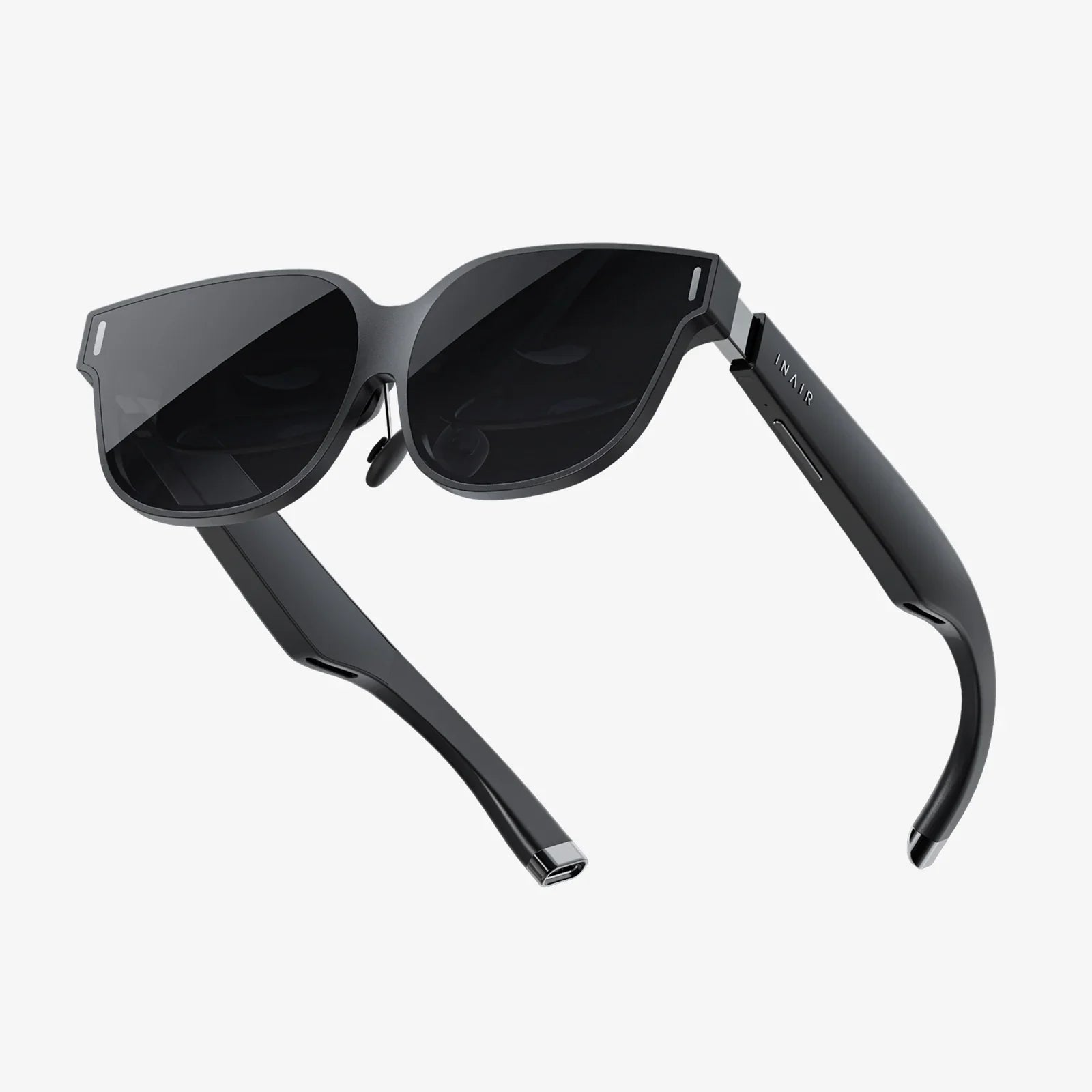
At the heart of any virtual reality experience lies the hardware, a sophisticated collection of devices designed to replace your sensory inputs with digital alternatives. The most visible component is the head-mounted display (HMD), which serves as your window into the virtual world. These devices contain high-resolution displays for each eye, creating the stereoscopic 3D effect that provides depth perception. Advanced optics focus and reshape the image across the curved surface of the lens, ensuring a wide field of view that fills your peripheral vision. Without this comprehensive visual immersion, the sense of "being there" would instantly collapse.
Beyond visual display, modern systems incorporate precise positional tracking through a combination of internal and external sensors. Inside-out tracking uses cameras and sensors mounted directly on the headset to map the physical environment, while outside-in tracking relies on external base stations or cameras to monitor the position of the headset and controllers. This constant, millimeter-precise tracking ensures that as you move your head, the virtual world responds in perfect synchrony, maintaining the crucial connection between your physical movements and digital feedback.
Input devices represent the third critical hardware component, serving as your hands within the virtual environment. Modern controllers go far beyond traditional gamepads, incorporating their own tracking sensors, haptic feedback mechanisms, and finger-tracking capabilities. Some advanced systems even employ hand-tracking technology that eliminates controllers entirely, using computer vision to translate your actual hand movements into the digital realm. This natural interface significantly enhances presence—the feeling of actually inhabiting the virtual space—by allowing for intuitive interactions that mirror real-world physics.
The visual presentation within virtual reality constitutes perhaps the most immediately noticeable feature, with several technical specifications working together to create believable worlds. Display resolution directly impacts the clarity and sharpness of the virtual environment. Early systems suffered from the "screen door effect," where visible gaps between pixels reminded users they were looking at a screen. Modern high-resolution displays have largely eliminated this issue, with pixel densities approaching retinal levels that make digital text readable and distant objects clearly defined.
Field of view (FOV) determines how much of the virtual world you can see without turning your head. Natural human vision encompasses approximately 180-220 degrees horizontally, while most consumer systems offer between 90-110 degrees. While this falls short of biological reality, it represents a careful balance between immersion and practical considerations like rendering performance, form factor, and cost. Wider FOV creates more compelling immersion but requires significantly more computational power to render additional visual information at high frame rates.
The refresh rate of displays plays a crucial role in maintaining comfort and presence. Virtual reality systems typically operate at 90Hz or higher, meaning the image refreshes 90 times per second. This high refresh rate, combined with low persistence (where pixels are only illuminated for a fraction of each refresh cycle), eliminates motion blur and reduces latency between user movement and visual updates. When refresh rates drop too low or latency increases, users may experience simulator sickness—a form of motion sickness caused by discrepancies between visual motion and the vestibular system's sense of movement.
While visual elements often receive the most attention, audio represents an equally critical component of virtual reality immersion. Spatial audio technology mimics how sound behaves in the physical world, creating three-dimensional soundscapes that respond to head position and movement. Through head-related transfer function (HRTF) processing, systems can make sounds appear to come from specific directions and distances, whether it's footsteps approaching from behind or a bird chirping high above and to the left.
Advanced audio systems also simulate environmental acoustics, accounting for how sound waves reflect, absorb, and diffract within virtual spaces. A voice echoes differently in a marble cathedral than it does in a dense forest or a small carpeted room. These subtle acoustic properties provide powerful subconscious cues about the size, composition, and nature of virtual environments, significantly enhancing the sense of presence. Without proper spatial audio, even the most visually stunning virtual world feels flat and unconvincing, like watching a movie with monaural sound through cheap speakers.
Integration of audio with other systems creates particularly powerful effects. When positional audio aligns perfectly with visual elements and haptic feedback—hearing a crash while seeing glass break and feeling a controller vibrate—the brain more readily accepts the experience as genuine. This multisensory integration forms the foundation of presence, making users feel they've truly stepped into another reality rather than simply observing a simulation.
The sensation of touch provides perhaps the most fundamental connection to physical reality, and replicating this digitally represents one of virtual reality's most challenging frontiers. Basic haptic feedback through controller vibration has evolved into sophisticated systems that can simulate texture, resistance, impact, and even temperature changes. These technologies range from simple eccentric rotating mass (ERM) motors that provide general vibration to linear resonant actuators (LRAs) that deliver precise, directional haptic responses with minimal latency.
Advanced haptic systems go beyond controllers to include vests, gloves, and full-body suits equipped with arrays of actuators. These can simulate everything from the impact of a bullet to the gentle pressure of a handshake or the directional flow of water and wind. Some experimental systems use ultrasonic arrays to create haptic feedback in mid-air, allowing users to "feel" virtual objects without wearing any specialized equipment. While these technologies remain in development, they point toward a future where virtual interactions engage the complete sensory spectrum.
The psychological impact of haptic feedback cannot be overstated. Studies consistently show that adding appropriate touch sensations significantly increases presence and emotional engagement with virtual experiences. The gentle nudge of a virtual character brushing past, the recoil of a virtual weapon, or the subtle vibration of a virtual vehicle—all these tactile cues reinforce the illusion of reality, creating deeper emotional connections and more memorable experiences than visual and auditory inputs alone can achieve.
Behind every compelling virtual reality experience lies sophisticated software that manages the complex interplay between hardware components and digital content. Real-time rendering engines must generate stereoscopic high-resolution imagery at consistently high frame rates, often employing advanced techniques like foveated rendering (which prioritizes image quality where users are looking) and asynchronous timewarp (which adjusts the image during head movement to maintain smooth perception). These technical solutions address the enormous computational demands of creating believable worlds without noticeable lag or distortion.
Physics engines simulate the behavior of objects within virtual environments, governing how they move, collide, and interact according to established rules. Beyond basic Newtonian mechanics, advanced systems simulate fluid dynamics, soft body physics, cloth behavior, and destructible environments. When combined with haptic feedback, these physics simulations create convincing interactions—pushing a virtual box requires appropriate force, throwing a virtual ball follows a natural arc, and breaking virtual glass produces appropriately scattered fragments.
Interaction systems define how users manipulate the virtual world, with design paradigms evolving from simple point-and-click interfaces to complex gesture-based systems that mimic real-world actions. Natural interaction patterns—reaching out to grab an object, using both hands to manipulate tools, making gestures to activate commands—reduce the cognitive load on users, allowing them to focus on the experience rather than the interface. Well-designed interaction systems feel intuitive within minutes, while poorly implemented controls can ruin otherwise impressive technological achievements.
As virtual reality evolves from solitary experiences to social platforms, features that enable human connection have become increasingly important. Avatar systems allow users to represent themselves within digital spaces, with sophistication ranging from simple cartoonish representations to photorealistic digital doubles. Advanced systems incorporate full-body tracking to translate physical movements to digital avatars, while eye and facial tracking technologies capture subtle expressions that convey emotion and intention far more effectively than voice alone.
Eye tracking technology serves multiple purposes in social virtual reality. Beyond enabling more expressive avatars (where digital eyes blink, focus, and dilate naturally), it enables foveated rendering for improved performance and more intuitive interfaces where users can select objects simply by looking at them. In social contexts, eye contact and shared attention create powerful connections between users, making conversations feel more genuine and collaborative activities more effective. The knowledge that someone in the virtual space is making eye contact with you creates a psychological impact far beyond traditional video conferencing.
Emotional expression systems complete the social picture, capturing and transmitting the subtle nonverbal cues that comprise the majority of human communication. Facial tracking cameras map muscle movements around the eyes, mouth, and cheeks, translating smiles, frowns, and expressions of surprise into digital form. Combined with vocal intonation analysis and gesture recognition, these systems can convey complex emotional states that make remote interactions feel surprisingly personal and authentic. This emotional bandwidth represents perhaps the most revolutionary aspect of social virtual reality, potentially transforming how we maintain relationships across distances.
For all its technological marvels, virtual reality remains useless if users cannot comfortably engage with it for meaningful periods. Comfort features address the physiological challenges of wearing headsets and interacting with digital environments. Ergonomic design distributes weight properly to avoid pressure points, while ventilation systems manage heat and prevent lens fogging. Adjustable interpupillary distance (IPD) settings ensure the image remains clear and comfortable for users with different eye spacing, reducing eye strain and headaches.
Locomotion systems present particular comfort challenges, as movement through virtual spaces without corresponding physical movement can trigger simulator sickness. Various solutions have emerged, including teleportation mechanics, redirected walking techniques, and virtual vehicles that provide visual motion cues matching the vestibular system's expectations. Comfort modes reduce potential triggers by limiting field of view during movement, providing stable visual reference points, and implementing acceleration curves that minimize sensory conflict.
Accessibility considerations ensure virtual reality can be enjoyed by users with different physical abilities and needs. Customizable control schemes accommodate limited mobility, while visual and audio alternatives support users with sensory impairments. Text-to-speech and speech-to-text systems facilitate communication for those who cannot use standard input methods, while customizable interfaces address cognitive differences. These inclusive design principles recognize that immersion means different things to different users, and that the most powerful virtual experiences are those that can be shared by everyone.
Current virtual reality features represent just the beginning of a technological revolution that will continue to accelerate in coming years. Brain-computer interfaces show promise for eventually bypassing traditional input methods altogether, allowing users to manipulate virtual environments through thought alone. Haptic technologies continue advancing toward full-body feedback that can simulate temperature, pressure, and texture with increasing fidelity. Wireless systems with higher bandwidth will eliminate the last physical tethers to the real world, enabling truly free movement within expansive virtual spaces.
Photorealistic graphics powered by real-time ray tracing and artificial intelligence will blur the line between virtual and physical reality, while volumetric capture techniques will allow real people and places to be faithfully recreated within digital environments. These advancements will unlock applications far beyond entertainment, transforming how we work, learn, and connect. Surgeons will practice complex procedures on virtual patients, engineers will collaborate on virtual prototypes, and families separated by oceans will share holiday celebrations in virtual living rooms that feel nearly as genuine as physical togetherness.
The ultimate destination remains the creation of experiences indistinguishable from physical reality—the famous "holodeck" concept where users cannot consciously tell the difference between virtual and actual experiences. While this goal may remain years or decades away, each innovation in display technology, haptic feedback, audio engineering, and interaction design brings us closer to this threshold. What begins as technological novelty gradually becomes practical tool, then everyday utility, and eventually seamless extension of human capability.
We stand at the precipice of a new dimension of human experience, where the key features of virtual reality are quietly assembling into something extraordinary—a parallel existence limited only by our collective imagination. The hardware will shrink until it disappears altogether, the software will become intelligent enough to anticipate our desires, and the experiences will become so compelling that we'll choose them over physical reality for certain activities. This isn't about escaping our world, but about expanding it; not about rejecting reality, but about enhancing it with infinite possibilities. The virtual frontier awaits, and its gates are opening faster than anyone predicted.