


- by wangfred
Latest Advancements in Virtual Reality 2025: The Year Reality Was Redefined
- by wangfred
Imagine slipping on a headset and stepping into a world indistinguishable from our own, not as a passive observer but as a fully embodied presence, feeling the sun's warmth and the texture of a virtual stone, collaborating with colleagues who feel physically next to you, or learning complex surgery by performing it with haptic precision. This is no longer the stuff of science fiction; this is the breathtaking reality of the latest advancements in virtual reality in 2025, a year that has fundamentally shattered every previous boundary of the medium.
The most immediate and profound shift in 2025 is the hardware itself. The clunky, tethered, and isolating headsets of the past have been rendered obsolete. This year's flagship devices are marvels of miniaturization and engineering, prioritizing comfort and social integration over raw, bulky power.
Micro-OLED and emerging Laser Beam Scanning (LBS) displays now achieve an astonishing 8K resolution per eye, pushing pixel density far beyond the human eye's ability to discern individual pixels, a state known as 'retinal resolution.' This eliminates the screen-door effect completely, creating a visual fidelity that is seamlessly crisp and clear. More importantly, these displays support a full 140-degree field of view, enveloping the user's entire peripheral vision and erasing the distinct 'goggle-vision' that previously reminded users they were in a simulated environment. The result is a profound and uninterrupted sense of immersion.
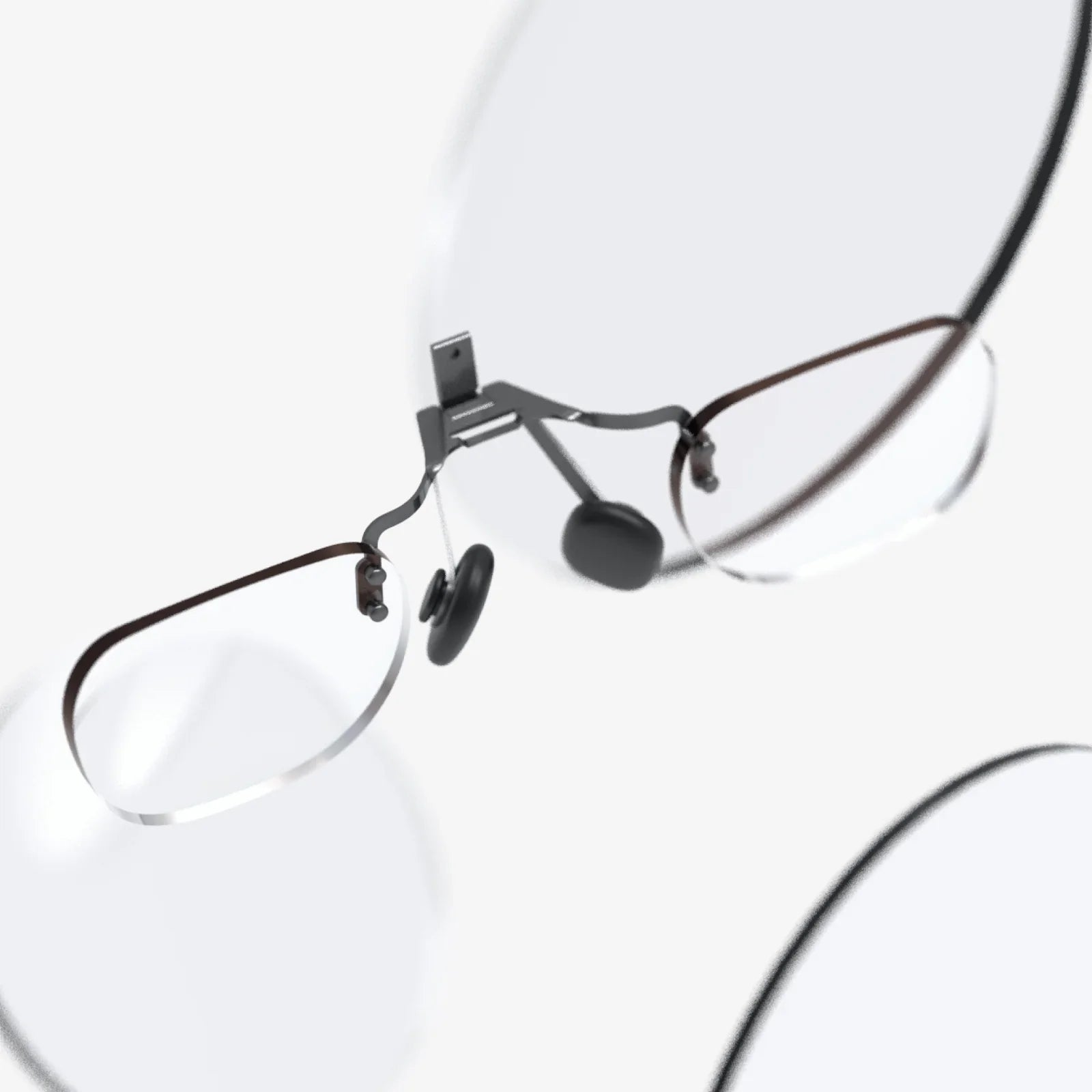
Perhaps the most significant hardware leap is in form factor. The dominant paradigm is now a sleek, lightweight pair of glasses, not unlike high-end sunglasses. Through advanced computational photography and AI-driven passthrough technology, these devices offer a mixed reality experience that is perfectly blended. Users can switch from a fully immersive virtual world to a perfectly clear, high-definition view of their physical surroundings with a simple voice command or gesture, allowing for natural social interaction and spatial awareness. The 'black box' effect is gone, making VR a socially acceptable and all-day technology.
While visual and auditory immersion have seen incredible gains, 2025 is the year VR truly became a multi-sensory experience. The focus has expanded to include touch, smell, and even proprioception—the body's sense of its own position and movement.
Haptic technology has evolved from simple rumble controllers to sophisticated full-body solutions. Next-generation haptic suits, now more affordable and comfortable, feature a dense array of micro-actuators that can simulate a vast range of sensations, from the gentle patter of rain and the rough texture of a brick wall to the impact of a virtual object. These suits integrate with lightweight gloves that provide nuanced finger tracking and resistance, allowing users to feel the shape, weight, and compliance of digital objects they interact with.
Breakthroughs in olfactory feedback, once a novelty, have entered the mainstream. Small, peripheral devices can now generate and disperse a complex library of primary scents, which can be mixed in real-time to create specific aromas relevant to the experience—be it the salty sea air of a virtual beach, the sterile scent of a hospital, or the gunpowder smoke of a historical battlefield. This layer of sensory information deeply enhances emotional connection and memory recall within virtual environments.
The most cutting-edge research, now seeing its first commercial applications, involves non-invasive neural interfaces. Using high-density electroencephalography (EEG) and functional near-infrared spectroscopy (fNIRS), headsets can now interpret rudimentary brain signals. This allows for subtle control mechanisms—thinking 'select' or 'open'—and, more importantly, begins to measure and adapt to user cognitive load, focus, and emotional state, creating experiences that are dynamically responsive to the user's mind.
Social interaction has long been a goal of VR, but it has been hampered by the 'uncanny valley' of cartoonish or creepy avatars. In 2025, that problem has been decisively solved. The creation of photorealistic, emotionally expressive digital humans is now a reality.
Using a combination of smartphone lidar scanners and AI generative models, users can now create a perfect 1:1 digital double of themselves in minutes. These avatars are driven by advanced inside-out tracking that captures not just head and hand movement, but the subtle nuances of facial expression, eye gaze, and body language. Machine learning algorithms extrapolate this data to animate the entire avatar in real-time, conveying sarcasm, empathy, curiosity, and joy with stunning accuracy. This has monumental implications for remote work, social platforms, and telehealth, as it restores the critical non-verbal communication lost in traditional video calls.
Furthermore, real-time translation and voice synthesis have become seamless. In a multinational virtual meeting, participants can each speak their native language, and the system will render their avatar's speech in the listener's preferred language, perfectly lip-synced and in the user's own vocal tone, breaking down the final barriers to global collaboration.
The software paradigm of VR has undergone a radical transformation. The concept of isolated 'apps' that users launch is fading, replaced by the concept of the 'spatial web' or 'persistent world engine.'
Users now enter a continuous, persistent digital layer over reality. Instead of opening a dedicated app for a meeting, then closing it to play a game, users navigate a coherent spatial environment. Your virtual workspace is a permanent office floating in your physical living room. You walk from there into a virtual art gallery, then into a friend's custom-built virtual home, all without loading screens or context switches. This is powered by global-scale cloud streaming and edge computing, which handles the immense graphical load, making the local hardware focused on display and interaction.
Artificial Intelligence is the invisible architect of this world. AI non-player characters (NPCs) are no longer scripted entities but sophisticated large language models with persistent memory and evolving personalities. They can serve as teachers, guides, assistants, or companions, capable of engaging in open-ended, meaningful dialogue and adapting their behavior based on interactions. Furthermore, AI is used to generate vast, dynamic environments on the fly, creating unique and endless experiences for exploration and storytelling.
The impact of these advancements extends far beyond entertainment. The 'Enterprise Metaverse' is where these technologies are generating the most significant ROI and driving adoption.
With such profound power comes a host of ethical and societal questions that 2025 is only beginning to grapple with. The line between the virtual and the physical is not just blurring; it is in some cases dissolving, raising critical issues.
Data privacy and biometric security are paramount. The technology now collects unprecedented data—not just what you look at, but your gait, pupil dilation, emotional responses, and even neural patterns. The secure and ethical handling of this 'biometric soul' is the subject of intense regulatory debate.
The potential for hyper-realistic misinformation and deepfakes within VR is terrifying. How does one discern a real person from a malicious AI-generated avatar? Furthermore, the psychological effects of prolonged immersion and 'real life augmentation' are unknown. Could we see a rise in reality rejection or new forms of addiction? Establishing a legal and ethical framework for identity,行为, and commerce within these persistent virtual worlds is the next great challenge for policymakers and technologists alike.
The latest advancements in virtual reality in 2025 have done more than just improve a piece of technology; they have initiated a fundamental shift in human-computer interaction. We are no longer users of a tool; we are inhabitants of a new layer of reality. This is not a future promise; it is a present-day revolution, redefining the very fabric of communication, creativity, and human experience itself, and it's an invitation to a world waiting just beyond the lens.