


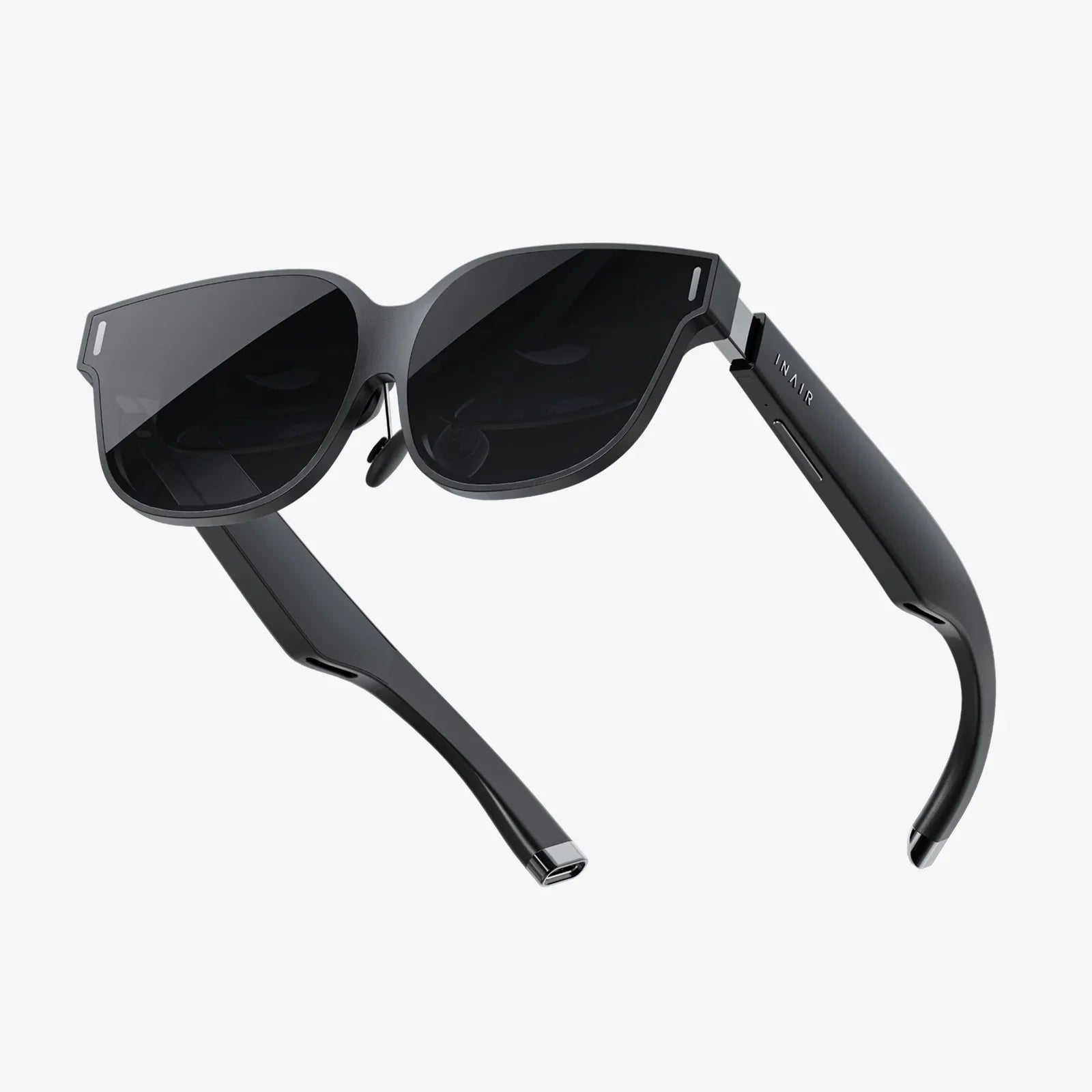
Imagine a world where information flows as effortlessly as a glance, where the digital and physical realms are seamlessly stitched together not by a device in your hand, but by a intelligent companion on your face. This is no longer the stuff of science fiction; it is the promise of the latest AI glasses technology in 2025, marking a pivotal leap from clunky prototypes to sophisticated wearables poised to redefine human-computer interaction.
The Architectural Shift: From Assisted to Ambient Intelligence
The fundamental evolution in 2025's AI glasses is a move away from simple command-based assistance and toward a state of continuous, contextual, and ambient intelligence. Earlier iterations functioned like a voice-activated smartphone for your face, requiring explicit prompts. The latest systems, however, are proactive and perceptive. They leverage a combination of powerful on-device neural processing units (NPUs), ultra-low-latency 5G/6G connectivity, and sophisticated sensor arrays to understand the user's environment, intent, and even emotional state without constant verbal instruction. This creates a computing experience that feels less like using a tool and more like having a knowledgeable partner subtly enhancing your perception of the world.
Breakthroughs in Visual Fidelity: The Invisible Display
A critical barrier to mass adoption has always been the display technology. Bulky optics, dim projections, and limited fields of view are being consigned to history. The year 2025 is defined by several key advancements:
Holographic Waveguide and Light Field Technology
Next-generation waveguides are now remarkably efficient, allowing for brighter, sharper, and full-color images that are seamlessly overlayed onto the real world. These are coupled with nascent light field technology, which projects images at varying depths, allowing your eyes to focus naturally on digital content as if it were a physical object in the distance. This eliminates the vergence-accommodation conflict—a major source of eye strain and disorientation in earlier models—making for comfortable, all-day use.
Micro-LED and Laser Beam Scanning (LBS)
For the image source, Micro-LED arrays have become the gold standard. They are incredibly small, energy-efficient, and offer exceptional brightness and contrast ratios, ensuring digital overlays are visible even in direct sunlight. Competing LBS systems use miniature lasers to "paint" images directly onto the retina with stunning precision and minimal power draw. Both technologies have finally enabled sleek, fashionable form factors that are indistinguishable from conventional high-end eyewear.
The Sonic Landscape: Audio AR and Personalized Sound
Visuals are only half the experience. Advanced audio augmented reality (Audio AR) is a cornerstone of the 2025 AI glasses ecosystem. Using sophisticated bone conduction or miniature directional speakers, these glasses create rich, immersive soundscapes that only the wearer can hear. This allows for spatial audio—where a notification might sound like it's coming from your left, or a navigation cue from directly ahead—deeply integrating audio cues with the physical environment. Furthermore, AI-powered acoustic beamforming can amplify the voice of the person you're speaking to in a noisy room while simultaneously dampening background chatter, a revolutionary tool for social and professional interactions.
The Engine Room: On-Device AI and Contextual Understanding
The true "intelligence" in these glasses comes from a distributed AI architecture. While cloud connectivity remains important for complex queries, the emphasis is now on powerful on-device processing. Dedicated NPUs handle tasks like real-time object recognition, scene segmentation, and natural language processing locally. This is crucial for three reasons: speed (instantaneous responses), privacy (sensitive data like live video feed never leaves the device), and reliability (functionality persists without a network connection).
Multimodal AI Models
These glasses are not just processing one type of data; they are fusing multiple streams simultaneously. The AI cross-references data from the camera, microphone, inertial measurement unit (IMU), and even biometric sensors to build a nuanced understanding of context. It doesn't just see a restaurant; it recognizes it, checks your calendar to see if you have a reservation, and overlays reviews from a critic you trust. It doesn't just hear a language; it identifies it and can provide real-time subtitles or translations directly into your field of view, facilitating effortless cross-cultural communication.
Neural Interfaces: The Dawn of Subtle Control
Interacting with this flood of information has moved far beyond basic voice commands or clumsy touchpads. The most cutting-edge 2025 models are incorporating nascent neural interface technology. Using non-invasive sensors, often built into the arms of the glasses that rest against the temple, they can detect subtle bio-electrical signals from the brain and facial muscles.
- Intent-Based Navigation: A slight furrow of the brow or a thought to "scroll down" can be interpreted as a command, allowing for incredibly fast and hands-free control of menus.
- Emotional Intelligence: The AI can gauge user engagement, confusion, or stress levels from physiological signals and adapt its interactions accordingly—perhaps simplifying information if it detects frustration or offering to take a note if it senses focused interest.
Powering the Future: All-Day Battery Life and Wireless Charging
Such advanced compute would be meaningless without a robust power solution. Innovations in solid-state battery chemistry have dramatically increased energy density. Coupled with the extreme efficiency of new display and NPU technologies, the latest glasses can now easily last a full waking day on a single charge. Furthermore, wireless charging has been perfected. A sleek charging case that doubles as a protective carrying accessory provides multiple full charges, while emerging technologies like solar-harvesting coatings on the lenses or frames can provide a trickle of supplementary power outdoors.
Navigating the Human Terrain: Privacy, Security, and the Ethics of Always-On Sensing
This technology does not arrive without profound challenges. A device that can see and hear everything you do raises monumental privacy concerns. The industry has responded with a hardware-first approach to privacy. Prominent physical camera shutters and microphone kill switches are now standard, providing users with unambiguous visual and auditory confirmation that their sensors are disabled. Data is encrypted end-to-end, and on-device processing ensures that the most personal data is never uploaded. Furthermore, new ethical frameworks and "AR etiquette" norms are emerging, such as visual indicators on the glasses' exterior that signal when recording is active, helping to build trust in social settings.
A Glimpse Into the Applications: Transforming Industries
The potential applications are vast and extend far beyond consumer convenience.
- Healthcare: Surgeons can access vital patient statistics and imaging data hands-free during procedures. Technicians can receive guided, step-by-step augmented overlays for complex equipment repairs.
- Education: Students on a field trip can look at a historical monument and see it digitally reconstructed to its former glory, complete with historical narratives.
- Manufacturing and Logistics: Warehouse workers can see optimal picking routes and inventory data overlaid on shelves, drastically improving efficiency and reducing errors.
- Accessibility: For individuals with visual or hearing impairments, these glasses can describe scenes, identify obstacles, and transcribe conversations in real-time, offering a new level of independence.
We are standing at the precipice of a new era of personal technology. The latest AI glasses of 5 are not merely an accessory; they are the beginning of a fundamental shift in how we perceive and interact with information. They promise to dissolve the barrier between the digital self and the physical experience, offering a future of enhanced memory, effortless communication, and boundless learning. The question is no longer if this future will arrive, but how quickly we will adapt to and shape the immense possibilities—and responsibilities—it brings into clear view.
Share:
Augmented Reality Detailed Explanation of Its Core Mechanics and Future Impact
What Are Three Examples of Augmented Reality? Exploring the Digital Overlay Reshaping Our World