


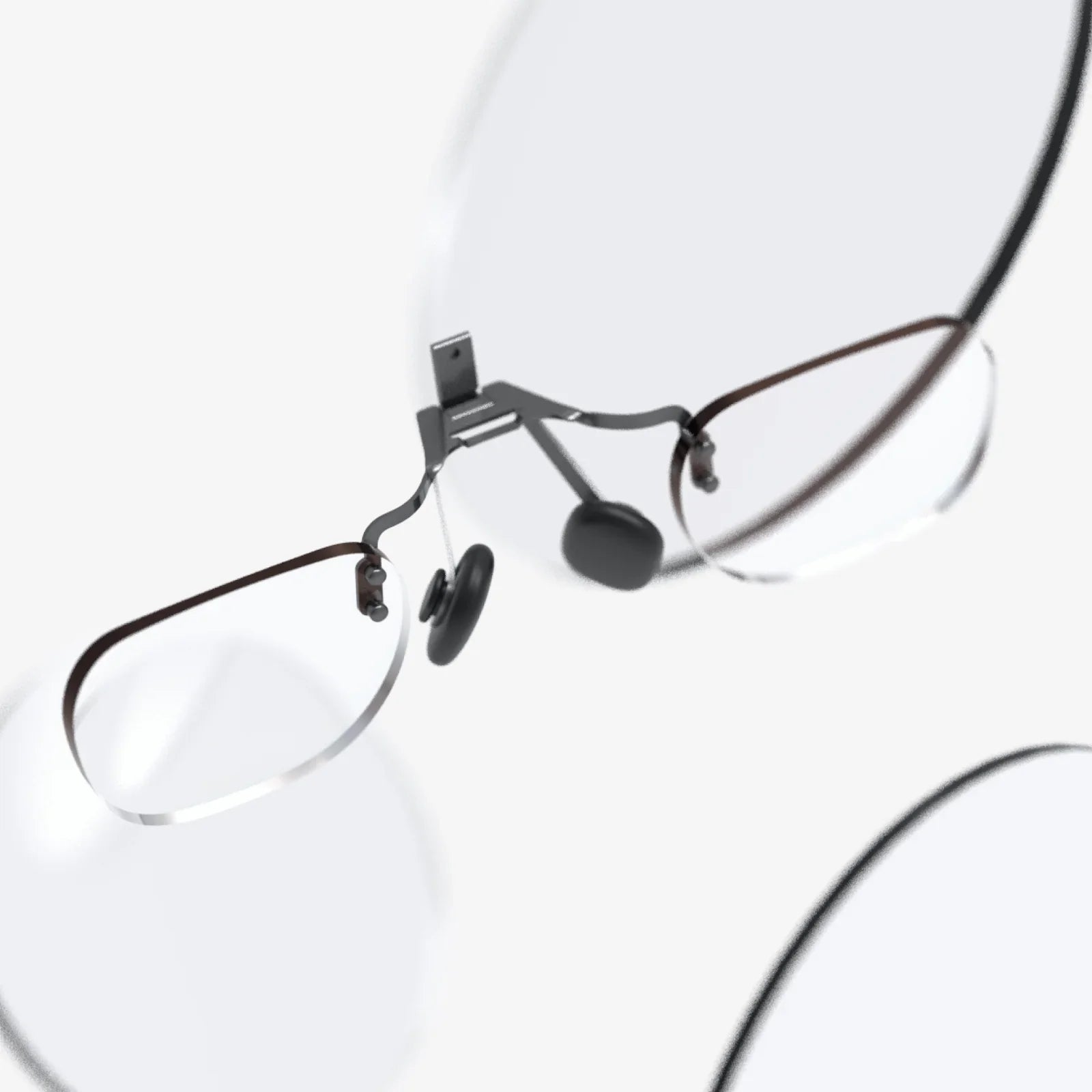
Imagine a world where digital information doesn't live on a screen in your hand, but is seamlessly woven into the fabric of your reality. This isn't a distant sci-fi fantasy; it's the promise being delivered by the latest AR glasses of 2025, a release cycle that is finally turning the corner from promising prototype to indispensable personal technology. This year’s models are lighter, smarter, more powerful, and, crucially, more accessible, signaling a definitive shift towards a future where augmented reality is as commonplace as the smartphone.
The 2025 Hardware Revolution: Invisible Technology, Visible Potential
The most immediate and noticeable evolution in the latest 2025 AR glasses is the hardware itself. For years, the trade-off was stark: either accept a bulky, obtrusive form factor for high performance or settle for a limited, underwhelming experience in a sleeker frame. The 2025 releases have shattered this compromise through a series of engineering breakthroughs.
At the heart of this transformation are next-generation waveguide displays. These optical systems are now significantly thinner, brighter, and offer a vastly expanded field of view (FoV). Where previous generations often felt like looking through a small, floating postage stamp of digital content, the 2025 models present a canvas that occupies a much larger portion of the user's natural field of vision. This creates a far more immersive and practical experience, whether for navigating a city with turn-by-turn directions overlaid on the street or watching a video that feels like it's playing on a massive, virtual screen.
Complementing the visual output is a suite of advanced sensors that act as the eyes and ears of the device. High-resolution RGB cameras, depth sensors, and LiDAR scanners work in concert to map and understand the user's environment in real-time with unprecedented accuracy. This allows digital objects to not only appear in a space but to interact with it convincingly—a virtual pet can hide behind your real sofa, and a digital chessboard can sit steadfastly on your physical coffee table.
The AI Co-Pilot: Intelligence That Understands Context and Intent
Powerful hardware is meaningless without sophisticated software to drive it. The true genius of the 2025 AR glasses lies in their integrated artificial intelligence. This is not a simple voice assistant transplanted from a smartphone; it is a contextual, on-device AI co-pilot designed specifically for spatial computing.
This AI leverages the continuous sensor data stream to understand not just what you ask, but where you are and what you're doing. It can proactively surface relevant information without a single spoken command. For instance:
- Walk into a kitchen, and your favorite recipe automatically appears, floating beside the ingredients you need to gather.
- Glance at a complex piece of machinery, and interactive schematics and maintenance history materialize next to it.
- Sit down in a meeting, and the AI discreetly displays the names and roles of everyone in the room, pulled from your calendar and professional networks.
This shift from command-based to context-aware interaction is what makes the 2025 generation feel less like a tool and more like a seamless extension of the user's own cognition. Privacy remains paramount, with much of this processing happening directly on the device, ensuring sensitive visual and location data isn't needlessly transmitted to the cloud.
A Universe of Experiences: From Productivity to Pure Play
The applications for this technology are as diverse as human activity itself. The 2025 releases are being supported by a mature and rapidly expanding ecosystem of developers creating experiences that span every aspect of life.
Revolutionizing the Workspace
The concept of the mobile office is being redefined. Professionals can now have multiple virtual monitors, a web browser, and communication apps arrayed around them in any physical space, from a coffee shop to a park bench. Remote collaboration reaches new heights as teams can interact with 3D models and data visualizations as if they were physically present in the same room, manipulating shared holograms with natural hand gestures.
Transforming Learning and Training
Education becomes deeply experiential. Medical students can practice procedures on detailed, interactive holograms of human anatomy. History students can walk through digitally reconstructed ancient civilizations. Field technicians can receive expert guidance with complex annotations overlaid directly onto the equipment they are repairing, reducing errors and training time dramatically.
Redefining Entertainment and Social Connection
Entertainment is unshackled from the television. Users can place a virtual television on their wall, play immersive games that transform their living room into another world, or watch a sports game with live stats and player information hovering over the action. Social media evolves into a shared spatial experience, where friends can leave virtual notes and artwork in specific locations for others to discover, creating a new layer of context-aware, digital interaction atop the physical world.
The Path to Your Face: Design, Accessibility, and the Mainstream Market
A critical hurdle for any wearable technology is social acceptance. The latest 2025 AR glasses have made a monumental leap in this regard. Designers have prioritized creating devices that people would actually want to wear all day. This has resulted in frames that are indistinguishable from high-end fashion eyewear, with a variety of styles, colors, and lens options (including prescription). The technology is becoming invisible, allowing the user, not the device, to remain the focus.
Furthermore, the market is diversifying. While premium models with cutting-edge specs exist, there is a growing range of more affordable options focused on core functionality like notifications, navigation, and basic AR interactions. This tiered approach is crucial for attracting a broad user base beyond early adopters and tech enthusiasts. Wireless connectivity, robust all-day battery life (often through a discreet, pocketable battery pack), and seamless integration with existing smartphone ecosystems make the barrier to entry lower than ever before.
Navigating the New Reality: Privacy, Safety, and Ethical Considerations
As with any transformative technology, the rise of always-on, camera-equipped AR glasses brings important questions to the forefront. The industry has learned from the missteps of previous tech cycles and is proactively addressing these concerns.
Privacy features are now a central selling point. Clear, physical recording indicators (like LED lights) are mandatory to signal when a camera is active. Privacy zones, where devices automatically disable recording and scanning, are being implemented in sensitive locations like bathrooms and changing rooms. Robust permission systems give users complete control over what data apps can access. The conversation around digital etiquette is also evolving, establishing social norms for when it is and isn't appropriate to use such devices.
Safety, particularly concerning distracted walking or driving, is addressed through intelligent UI design. Critical information is placed in the peripheral vision to maintain situational awareness, and notifications are minimized during activities like crossing a street or operating a vehicle. The technology is being designed to enhance awareness, not detract from it.
The Invisible Becomes Indispensable
The 2025 release of AR glasses represents more than just a product launch; it is the crossing of a chasm. The technology has finally matured to a point where its utility vastly outweighs its novelty. It's moving from a cool trick to a fundamental tool for seeing, understanding, and interacting with the world in a richer way. The once-clunky headsets have evolved into elegant, intelligent companions that empower us to be more productive, more connected, and more creative. They are not about replacing reality, but about augmenting it, adding a layer of magic and efficiency to our everyday lives. This isn't just the next gadget; it's the beginning of a new platform for human experience, and it's finally ready for its close-up.
The world is about to get a new layer, and it's one you'll never want to take off. The seamless fusion of bits and atoms is no longer a laboratory dream but a reality you can wear, offering a glimpse into a future where our digital and physical lives are finally, and beautifully, intertwined.
Share:
Most Useful AI Tools: A Comprehensive Guide to Revolutionizing Your Workflow
AI Distortion Filter: Reshaping Reality Through Algorithmic Art