


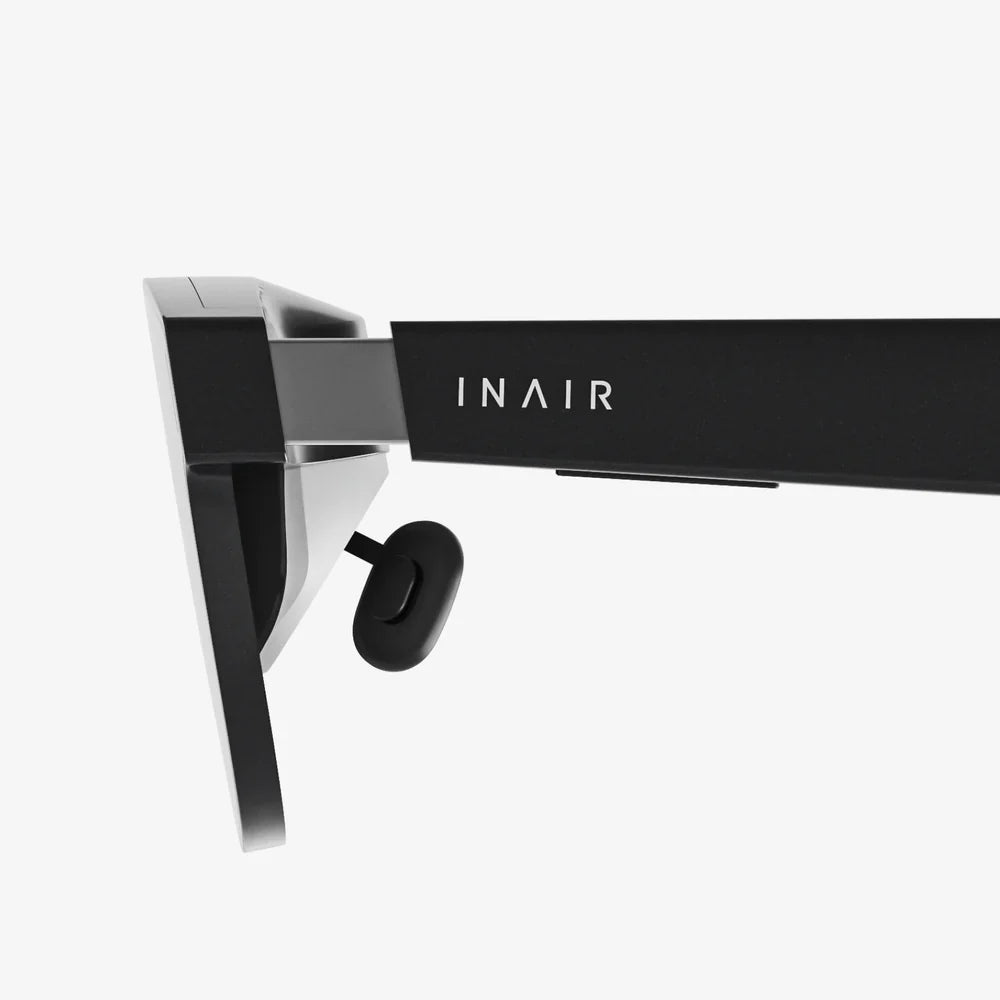
Imagine a world where the digital and the physical are no longer separate realms, but a single, intertwined experience. Where information floats before your eyes as you fix a complex machine, where you can consult with a doctor a continent away as if they are standing in the room, and where your workspace is limited only by your imagination. This is not a distant sci-fi fantasy; it is the reality being forged today by the latest advancements in augmented and virtual reality technology. The pace of innovation is staggering, pushing these tools beyond novelty and into the realm of indispensable professional and personal transformation.
The Great Convergence: AR and VR on a Shared Trajectory
For years, augmented reality (AR) and virtual reality (VR) were often discussed as distinct siblings. VR offered total immersion in a digital world, while AR layered digital information onto our own. The latest technology, however, reveals a fascinating convergence. The line between the two is blurring, giving rise to a spectrum of mixed reality (MR or XR) experiences. The core hardware and software advancements are benefiting both domains simultaneously, driven by a shared goal: to make interactions with digital content more intuitive, powerful, and seamless.
The most significant leap enabling this is in the realm of visual fidelity and display technology. We are moving past the era of screen door effects and nausea-inducing latency. Modern high-end headsets boast micro-OLED displays with resolutions that approach the limits of human visual acuity, creating stunningly crisp and realistic images. This is coupled with dramatic increases in field of view, pulling users deeper into the virtual world without the feeling of looking through binoculars.
Seeing the World Anew: Breakthroughs in Tracking and Sensing
A truly immersive experience is about more than just a sharp picture; it's about how the digital world reacts to you. This is where inside-out tracking has become a game-changer. Early systems relied on external sensors or lighthouses placed around a room to track a user's movement. The latest technology embeds all the necessary sensors—cameras, accelerometers, gyroscopes, and LiDAR scanners—directly into the headset itself.
This allows for unprecedented freedom and ease of use. Users can set up their virtual playground anywhere, without calibration. The headset continuously maps the environment in real-time, understanding the geometry of the room, the position of furniture, and even the texture of surfaces. This environmental understanding is the foundation for convincing MR, allowing virtual objects to be occluded by real-world coffee tables and digital characters to sit convincingly on your physical sofa.
Furthermore, eye-tracking and facial expression tracking are moving from experimental features to core components. By knowing precisely where a user is looking, a system can employ foveated rendering—a technique that concentrates processing power and rendering detail only on the central point of vision, dramatically improving performance without sacrificing quality. This data also enables more lifelike avatars in social and professional settings, as your digital representative can now mirror your blink, frown, or smile, adding a crucial layer of non-verbal communication to virtual interactions.
The Invisible Engine: AI and the Cloud's Crucial Role
While the hardware dazzles, the silent revolution powering the latest AR and VR experiences is happening in the cloud and within on-device AI chips. The computational demands of rendering photorealistic graphics, understanding complex environments, and running advanced physics simulations are immense. Edge computing—processing data on the headset itself—is vital for minimizing latency, which is critical for avoiding motion sickness.
Modern AR/VR processors are specialized neural processing units (NPUs) designed to handle these AI-driven tasks efficiently. They can perform real-time semantic understanding of your surroundings, instantly identifying a wall, a floor, a window, or a specific tool on a workbench. This allows the system to interact with the environment intelligently.
However, for the most complex tasks, the cloud is indispensable. Cloud rendering can stream incredibly dense and detailed experiences to lighter, more comfortable headsets, effectively turning them into high-powered display terminals. This model, similar to video game streaming, promises to make top-tier VR and AR accessible without requiring a bulky, expensive computer. Furthermore, cloud-based AI can train and run massive models for object recognition, natural language processing, and predictive analytics, feeding relevant information into a user's AR field of view in real-time. Imagine a technician seeing the entire service history and a step-by-step repair guide overlaid on a malfunctioning engine, all powered by AI parsing a massive database in the cloud.
Transforming Industries: The Enterprise Metaverse is Already Here
While consumer applications often grab headlines, the most profound impact of the latest AR and VR technology is occurring in enterprise and industrial settings. Companies are leveraging these tools to solve real-world problems, boost efficiency, reduce costs, and enhance safety.
Revolutionizing Design and Manufacturing
In automotive, aerospace, and architecture, VR has become an essential tool for design and prototyping. Designers and engineers can step inside a full-scale, 1:1 model of a new car or building long before a single physical prototype is built. They can examine ergonomics, sightlines, and the integration of complex systems in an immersive space, identifying and resolving issues that would be impossible to spot on a 2D screen. This "digital twin" concept saves millions of dollars and shaves months off development cycles. AR, on the factory floor, guides assembly line workers with precise digital instructions overlaid on the physical components, drastically reducing errors and training time.
Advancing Medical Frontiers
The healthcare sector is experiencing a revolution. Surgeons use AR to visualize a patient's anatomy, such as CT scans or MRI data, projected directly onto their body during procedures, improving accuracy and minimizing invasiveness. VR is a powerful tool for medical training, allowing students to practice complex surgeries in a risk-free environment, and for therapy, helping patients overcome phobias, manage pain, and treat PTSD through controlled exposure.
Redefining Remote Collaboration and Training
The concept of the "metaverse" finds its first truly practical application in enterprise collaboration. Instead of a flat video call, engineers from different continents can meet inside a shared virtual model of a jet engine. They can point, manipulate components, and annotate the model as if they were standing in the same room. This context-rich collaboration is far superior to sharing a screen on a video call. Similarly, field service technicians can receive remote expert guidance; a senior engineer can see what the on-site technician sees through their AR glasses and draw arrows or highlight components in their real-world view, enabling complex repairs by less experienced staff.
The Path Forward: Challenges and the Next Frontier
Despite the incredible progress, significant challenges remain on the path to ubiquitous adoption. Form factor is a major hurdle. While lighter and more balanced, most high-end headsets are still too bulky for all-day wear. The quest for the perfect blend of high performance, all-day battery life, and a small, glasses-like form factor is the industry's holy grail. Advances in pancake lenses, which allow for a much shorter distance between the display and the eye, are a key step in this direction.
Another frontier is haptic feedback. Truly convincing immersion requires engaging more than just sight and sound. The latest haptic gloves and vests are beginning to provide a sense of touch, from the gentle push of a virtual button to the recoil of a virtual tool. This technology, while still early, is crucial for applications requiring precise manual interaction, such as surgical simulation or complex assembly training.
Finally, the issue of interoperability and open standards looms large. For a truly connected metaverse to emerge, users need to be able to move their avatars and digital assets seamlessly between different platforms and experiences, much like we move between websites today. The industry is still grappling with this challenge, with competing ecosystems vying for dominance.
We are standing at the precipice of a fundamental shift in how we compute and connect. The latest AR and VR technology is not about escaping reality, but about enhancing it, augmenting our human capabilities with a seamless layer of digital intelligence. The devices are becoming more powerful, more aware, and more invisible, moving us toward a future where the question won't be if you use AR or VR, but how you choose to experience the enhanced world around you. The next time you look at an empty space, just imagine what could be there—because soon, it will be.
Share:
Best Chinese AI Glasses: The Ultimate Guide to Smart Eyewear in 2024
Augmented Reality AR News: The Future of Information is Overlaying Your World