


- by wangfred
Latest Augmented Reality Technology: A New Digital Layer on Our Physical World
- by wangfred
Imagine a world where the digital and the physical are no longer separate realms, but a seamless, interactive tapestry. This is no longer the stuff of science fiction; it is the promise being delivered today by the latest augmented reality technology. This isn't about clunky headsets or gimmicky phone filters anymore. We are standing at the precipice of a fundamental shift in how we compute, communicate, and perceive reality itself. The latest advancements are moving AR out of the novelty phase and into a powerful, ubiquitous toolset that is quietly revolutionizing everything from the factory floor to the living room.
The dramatic evolution of AR is not due to a single breakthrough, but a confluence of several technologies reaching maturity simultaneously. Understanding these core components is key to appreciating the current capabilities.
At the heart of any AR experience is its ability to understand and interact with the physical environment. Early AR struggled with flat surfaces and simple geometries. The latest augmented reality technology employs highly advanced Simultaneous Localization and Mapping (SLAM) algorithms. These systems use a combination of cameras, sensors, and LiDAR (Light Detection and Ranging) scanners to create a rich, millimeter-accurate 3D map of a space in real-time. This goes beyond just recognizing a table; it understands the texture of the wood, the precise location of a coffee cup on it, and can occlude a virtual object realistically behind it. This depth awareness is what makes digital objects feel truly present.
AR is becoming intelligent. The integration of on-device and cloud-based Artificial Intelligence (AI) and Machine Learning (ML) is a game-changer. AI models can now instantly recognize objects: point your device at a plant, and AR can overlay its species and care instructions; look at a complex piece of machinery, and it can highlight components and display live diagnostic data. This contextual understanding allows AR to move from pre-programmed experiences to dynamic, responsive interactions that understand user intent and the environment's content.
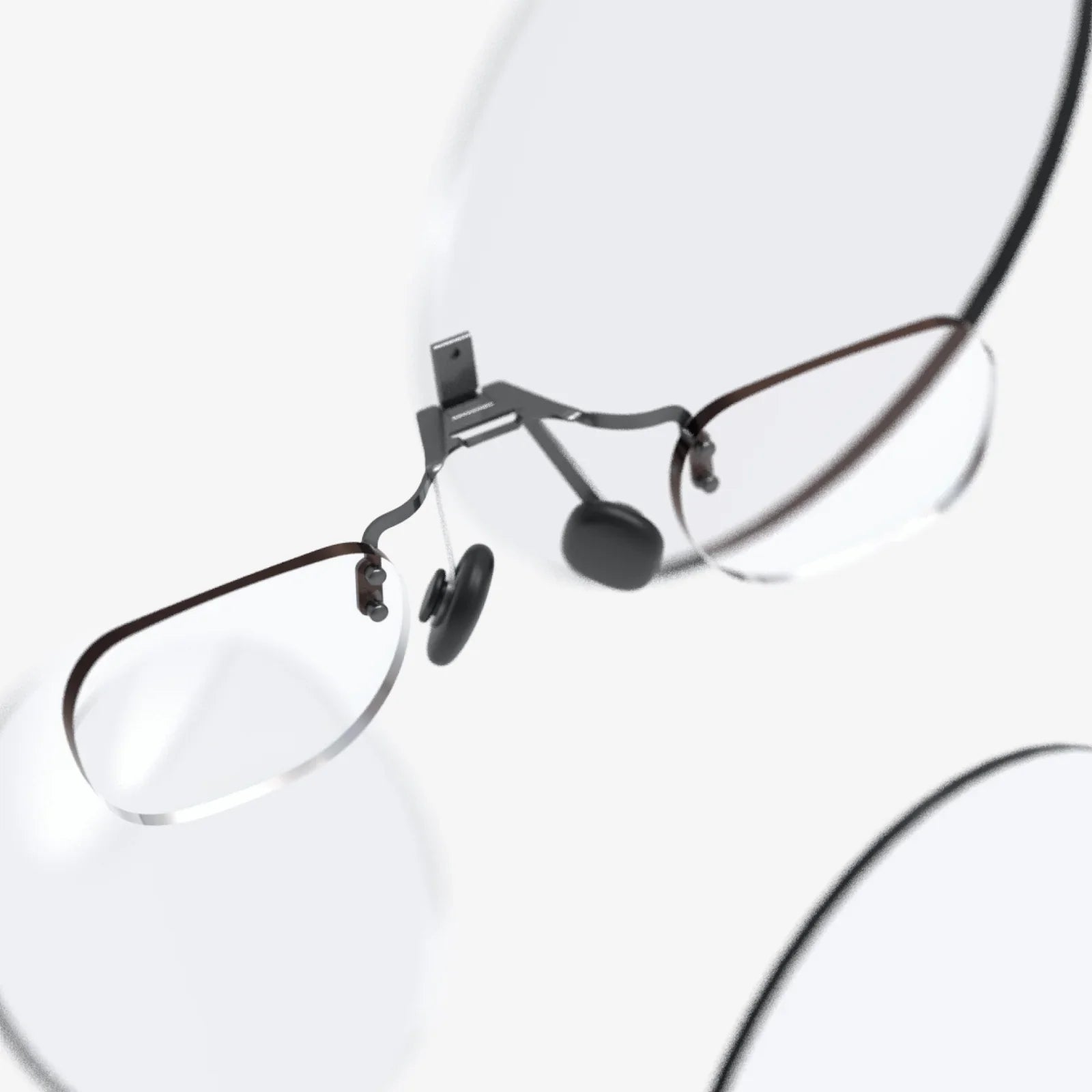
While smartphones democratized AR access, they are a transitional technology. The true potential of the latest augmented reality technology is unlocked through wearable devices. We are seeing a rapid evolution in AR glasses and headsets, which are becoming lighter, more powerful, and socially acceptable. These devices feature:
Processing complex AR environments requires immense computational power. 5G networks, with their ultra-low latency and high bandwidth, allow this processing to be offloaded to the cloud (edge computing) seamlessly. This means a lightweight AR wearable doesn't need to house a supercomputer; it can stream complex, photorealistic 3D models and environments in real-time, enabling experiences that were previously impossible on mobile hardware.
The value of this technology is most evident in its practical, real-world applications that are solving tangible problems and boosting efficiency across sectors.
In industrial settings, the latest augmented reality technology is a powerhouse. Technicians wearing AR glasses can see digital work instructions overlaid directly onto the equipment they are repairing. They can access schematics, receive remote expert guidance from a specialist who can literally draw instructions into their field of view, and perform complex assembly tasks with higher accuracy and speed. This reduces errors, cuts down on training time, and minimizes downtime.
Try before you buy has taken on a new meaning. Customers can use their smartphones or AR mirrors to see how furniture will look and fit in their home, how clothes will drape on their body, or how a new shade of paint will transform a room. This immersive shopping experience drastically reduces purchase uncertainty and return rates, bridging the gap between online and in-store shopping.
In healthcare, AR is saving lives. Surgeons can use AR overlays to visualize a patient's anatomy, such as arteries and tumors, directly on their body during procedures, improving precision and safety. Medical students can practice complex surgeries on detailed holographic patients, and patients themselves can use AR to better understand their conditions and treatment plans through interactive 3D models.
Education is being transformed from passive learning to active exploration. History students can walk through a reconstructed ancient Rome in their classroom. Biology students can dissect a virtual frog or watch a human heart beat in 3D. Mechanics can learn the intricacies of an engine by taking apart a holographic model. This experiential learning dramatically improves engagement and knowledge retention.
As this technology becomes woven into the fabric of society, it brings forth a host of important questions and considerations that we must address proactively.
The latest augmented reality technology is the key that will unlock the true potential of the metaverse—not as a virtual world we escape to, but as a persistent layer of information and interaction over our own world. Social AR will allow us to share experiences in real-time: watching a movie with a friend's avatar on our couch, leaving virtual notes for family members around the house, or attending a concert where digital effects are seamlessly blended with the real stage. It promises to redefine remote collaboration and social presence.
AR devices, by their very nature, are data collection powerhouses. They have always-on cameras and microphones constantly scanning their environment. This raises profound privacy questions. Who owns the spatial data of your home? How is your visual and auditory data being used and stored? The industry must prioritize privacy-by-design principles, with clear user controls and transparent data policies, to avoid a dystopian future of perpetual surveillance.
There is a risk that AR could exacerbate the digital divide. If crucial information, services, and social interactions begin to migrate to an AR layer, those who cannot afford the hardware or lack the digital literacy could be left behind. Conversely, AR also holds immense promise for accessibility, providing real-time captions for the hearing impaired, navigation for the visually impaired, and translation overlays for non-native speakers. The technology must be developed inclusively from the start.
The trajectory of AR points towards even greater integration. We are moving towards contact lens AR and even more subtle form factors. Brain-computer interfaces could allow us to manipulate AR environments with our thoughts. The line between what is real and what is digital will continue to blur, potentially giving rise to new art forms, new economies, and new ways of being human. The challenge won't be technological; it will be philosophical, ethical, and social, forcing us to renegotiate our relationship with reality itself.
The door to this blended world is now open, and the latest augmented reality technology is inviting us to step through. The potential to enhance human capability, democratize knowledge, and connect us in deeper ways is unparalleled. This is more than an upgrade to our devices; it's an upgrade to our reality, and it's happening right before our eyes—if we know where to look.
Share:
What is AR and VR in Computer: A Deep Dive into Digital Realities
Global AR VR Market Size 2024: A Deep Dive into the Numbers Shaping Our Digital Future