


Imagine a world where your entire field of vision is a canvas for digital information, where data doesn't just live on a screen but is woven seamlessly into the fabric of your reality, enhancing every interaction, from the mundane to the monumental. This is no longer the stuff of science fiction; 2025 has ushered in a series of seismic shifts in augmented reality (AR) that are fundamentally altering our perception of what is possible. The barriers between the digital and the physical are crumbling, and the implications are nothing short of revolutionary.
The Dawn of True Spatial Computing: Beyond the Screen
For years, AR was largely confined to the screens of smartphones and tablets, a fascinating but limited peek into a blended world. The most significant development of 2025 is the maturation of true spatial computing. This evolution moves AR from a visual overlay to an intelligent, contextual understanding of space. Advanced sensor fusion, combining LiDAR, radar, and new types of photon-sensing chips, allows devices to perceive depth, texture, and physical properties with unprecedented accuracy. This means digital objects don't just appear in your room; they understand your room. A virtual lamp casts realistic shadows that change with the time of day on your phone, a digital ball bounces off your real sofa with correct physics, and virtual paint accurately covers the rough texture of your brick wall.
This environmental understanding is powered by on-device neural processing units (NPUs) that have become powerful enough to run complex simultaneous localization and mapping (SLAM) algorithms in real-time, without a constant cloud connection. This eliminates the jitter and drift that plagued earlier AR experiences, creating a rock-solid, believable integration of the virtual and the real. The result is a profound sense of presence—the undeniable feeling that these digital creations are truly sharing your space.
The AI Co-Pilot: Contextual and Predictive Augmentation
If spatial computing provides the eyes, then artificial intelligence is the brain of the 2025 AR revolution. The integration of sophisticated large language models (LLMs) and multimodal AI systems has transformed AR from a passive display into an active, intelligent assistant. These systems don't just process what they see; they interpret it, understand context, and predict user intent.
Imagine walking through a foreign city. Your AR glasses don't just superimpose street names; the AI analyzes the architecture, cross-references it with a vast database, and whispers a historical anecdote about the building you're admiring. In a hardware store, you can look at a broken faucet, and the AI instantly identifies the model, highlights the likely faulty part with a digital overlay, and streams an annotated repair guide into your vision, step-by-step.
This predictive augmentation is a game-changer. The system learns from your habits and preferences. It might proactively highlight a new coffee shop it knows you'll love based on your past choices or warn you that you're about to miss a crucial turn on your drive by subtly altering the path displayed on your windshield. The UI is no longer a set of menus; it's a contextual stream of information that feels less like using a tool and more like having a super-powered intuition.
The AR Cloud Goes Mainstream: A Persistent Digital Layer
Perhaps the most foundational development of 2025 is the widespread commercial deployment of the AR Cloud. Often described as a "digital twin of the world," the AR Cloud is a persistent, 3D map of the planet that allows digital content to be anchored to specific physical locations, universally accessible and consistent for everyone.
This means the experiences are no longer isolated to a single device or app. A sculptor can place a digital statue in a town square, and anyone else with AR capabilities can see it, walk around it, and interact with it, days or even years later. Navigation arrows painted on the road for a package delivery driver persist for the next driver. The history of a battlefield can be experienced right on the landscape where it happened, with reenactments playing out around visitors.
This creates a shared, collaborative layer of reality. Friends can leave virtual notes for each other on park benches, artists can create city-wide scavenger hunts, and businesses can maintain persistent virtual storefronts in physical locations. The AR Cloud turns the entire world into a shared, editable canvas, unlocking new forms of social interaction, storytelling, and commerce that are tethered to place and time.
The Form Factor Revolution: From Bulky Headsets to Socially Acceptable Wearables
Technology is only as powerful as its accessibility, and 2025 has finally cracked the code on AR hardware design. The bulky, geeky headsets of the past have given way to a new generation of wearables designed for all-day comfort and social acceptance. The key breakthroughs have been in holographic waveguides, micro-LED displays, and ultra-low-power chipsets.
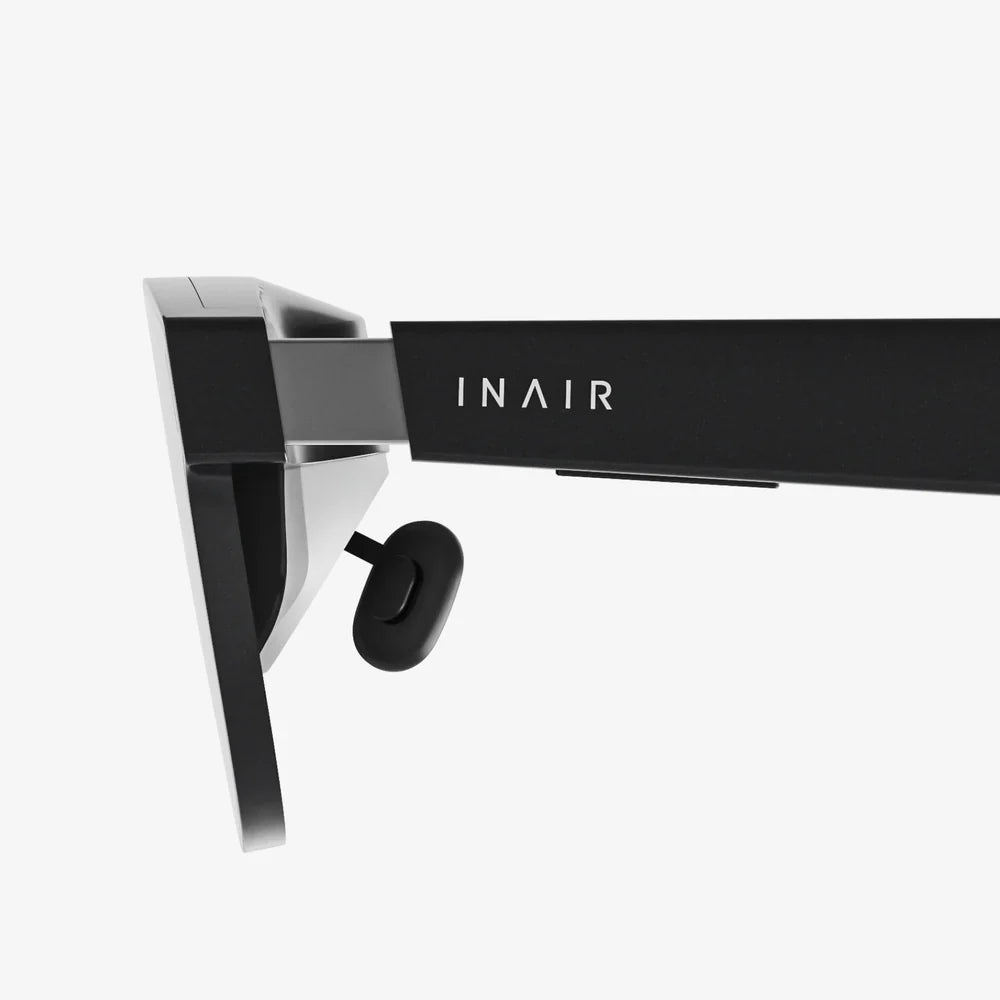
The most popular form factors now resemble stylish, slightly oversized eyeglasses or sleek sports sunglasses. They offer a wide field of view, full-color, high-resolution displays, and all-day battery life, often supplemented by a discreet, pocketable compute pack. Some even feature electrochromic lenses that can transition from transparent to opaque, allowing the user to switch between AR mode and a fully immersive virtual reality experience seamlessly.
This normalization of the form factor is critical. It moves AR out of the developer's lab and the gamer's den and into the boardroom, the classroom, the construction site, and the coffee shop. People are wearing them not because they are a novelty, but because they are a genuinely useful and integrated part of daily life.
Transforming Enterprise and Industry
While consumer applications capture the imagination, the most immediate and profound impact of these 2025 developments is in enterprise and industry. AR is driving a new wave of productivity and efficiency gains.
- Manufacturing and Repair: Technicians working on complex machinery, from wind turbines to MRI machines, use AR glasses to see schematics overlaid directly on the equipment. They receive remote expert guidance from a specialist thousands of miles away, who can literally "see what they see" and draw arrows and annotations into their field of view in real-time. This slashes training time, reduces errors, and minimizes downtime.
- Healthcare and Surgery: Surgeons visualize 3D scans of a patient's anatomy directly over the surgical site, improving precision and outcomes. Medical students practice procedures on holographic patients, and nurses use AR to instantly identify veins for blood draws or display vital signs hands-free while attending to a patient.
- Architecture and Construction: Architects walk clients through life-size, interactive holograms of unbuilt designs. Construction crews see the digital blueprint perfectly aligned with the physical structure, identifying potential clashes before they become costly mistakes.
- Retail and Logistics: Warehouse workers are guided by AR visuals to exactly the right shelf with optimal picking paths, dramatically speeding up fulfillment. Customers can visualize how furniture will look and fit in their home with photorealistic accuracy before making a purchase.
Ethical and Societal Implications: Navigating the New Reality
With such powerful technology comes a host of complex ethical and societal questions that 2025 has forced into the public discourse.
Data Privacy: These devices are arguably the most intimate data collection tools ever created. They see what you see, hear what you hear, and know where you are and what you're looking at. The potential for misuse by corporations or governments is staggering. Robust new frameworks for "augmented data rights" are being debated, focusing on who owns the data collected about your physical environment and your interactions within it.
Reality Divide: There is a growing concern about a new socio-economic divide—not just between those who can and cannot afford the technology, but between those who can filter their reality and those who cannot. Will public spaces become cluttered with virtual ads and spam? Will we be able to choose whose digital layer we see? The concept of "reality rights" is emerging, questioning whether individuals have a right to an un-augmented view of their environment.
Digital Addiction and Perception: As the digital layer becomes richer and more compelling, there is a risk of further withdrawal from physical social interaction and a potential blurring of the lines between memory of real events and digitally augmented experiences. The psychological long-term effects of perpetually mediating the world through a digital filter are still unknown.
These challenges are not insignificant. They require proactive collaboration between technologists, policymakers, ethicists, and the public to ensure that this powerful technology is developed and deployed responsibly, maximizing its benefits while mitigating its risks.
The augmented world of 2025 is not a distant promise; it is a present reality, reshaping our lives with a quiet but relentless force. We are standing at the precipice of a new era of human-computer interaction, one where the technology doesn't demand our attention but instead enhances our perception, amplifies our abilities, and deepens our understanding of the world around us. The future is not something we will watch on a screen; it is something we will step into and help create, one digital layer at a time.
Share:
VR Glasses for Android Phone: Your Ultimate Immersive Entertainment Portal
VR Glasses Technology: A New Reality is Coming Into Focus