


- by wangfred
Latest Developments in Augmented Reality Reshaping Our Digital and Physical Worlds
- by wangfred
Imagine a world where the digital and the physical are no longer separate realms, but a single, seamless tapestry of experience. This is no longer the stuff of science fiction; it is the rapidly unfolding reality driven by the latest developments in augmented reality. The pace of innovation is breathtaking, pushing beyond simple smartphone filters into a future where AR is an invisible, intelligent layer enhancing every aspect of our lives, from how we work and learn to how we connect and create. The next era of human-computer interaction is being written not on our screens, but in the world around us.
The journey of augmented reality has been one of fits and starts. Early iterations, while impressive, were often clunky, requiring specialized hardware or offering limited, gimmicky applications. The true turning point was the widespread adoption of powerful smartphones with advanced cameras and sensors, which democratized AR and placed a basic version of the technology in billions of pockets. However, the latest developments signify a move beyond this accessory phase. AR is maturing into a robust, standalone platform, driven by a convergence of several critical technologies.
This new paradigm is defined by a shift from superimposition to integration. Instead of merely overlaying a digital object onto a video feed, the next generation of AR understands the environment contextually. It doesn't just see a flat surface; it recognizes walls, floors, objects, and their relationships in three-dimensional space. This allows for persistent digital content that feels truly anchored in the real world, occluded correctly by physical objects and remaining in place even when you look away and return. This leap in environmental understanding is the bedrock upon which all other modern AR advancements are built.
Perhaps the most significant catalyst for recent progress is the deep integration of artificial intelligence and machine learning. AI acts as the brain of AR, endowing it with perceptual abilities that were previously impossible.
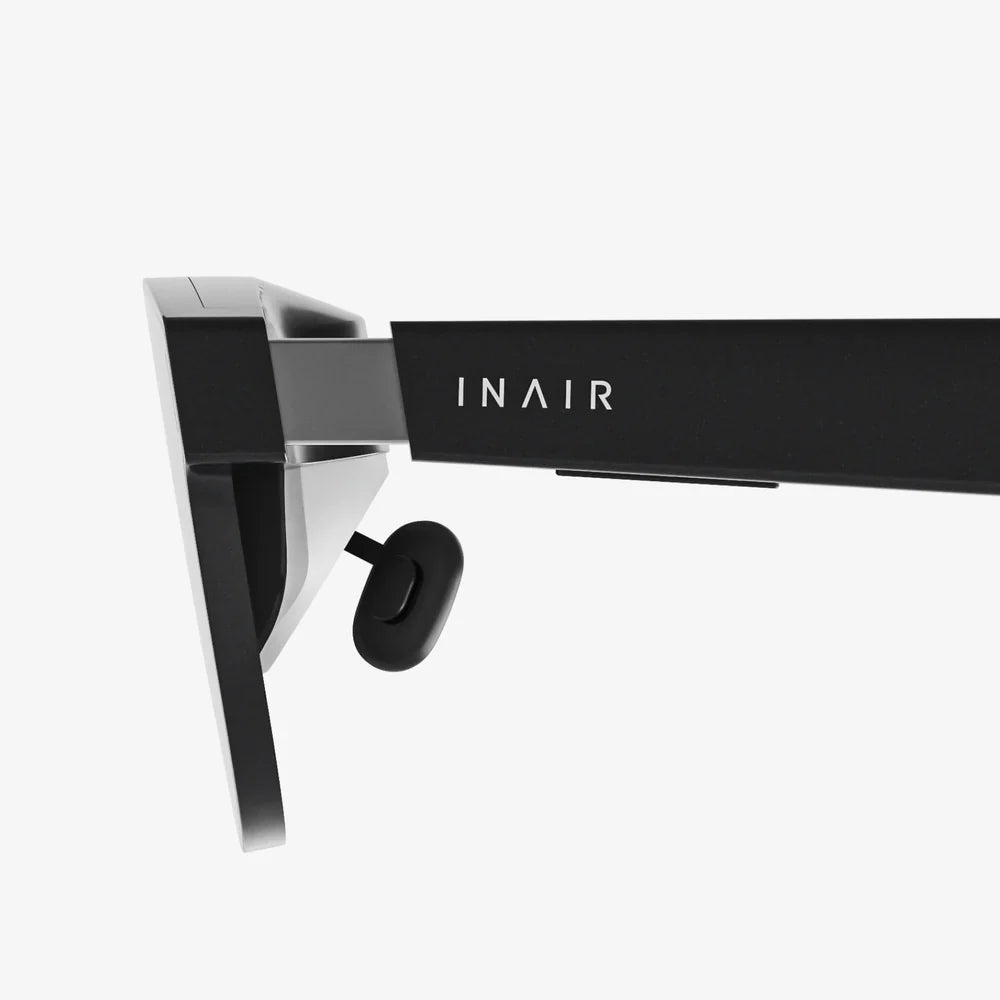
The dream of AR has always been a pair of lightweight, stylish glasses that provide a full-color, high-resolution display without isolating the user from their surroundings. While consumer-ready versions of this are still on the horizon, the hardware landscape is advancing at a remarkable rate.
Standalone AR headsets are becoming more powerful, with better processors, longer battery life, and more sophisticated tracking systems that combine visual-inertial odometry with depth-sensing LiDAR and SLAM (Simultaneous Localization and Mapping) technology. These sensors work in concert to create a precise, real-time 3D map of the environment, which is essential for stable occlusion and interaction.
Furthermore, significant research is being poured into waveguides, micro-LED displays, and holographic optics to create thinner, more efficient lenses. The goal is to make the technology itself disappear, moving from headsets to sleek glasses and eventually to contact lenses, fulfilling the ultimate promise of augmented reality: information and digital assets available instantly, at a glance, without the barrier of a device.
One of the most profound latest developments is the conceptualization and early implementation of the AR Cloud, often described as a digital twin of the real world or the backbone of the spatial web. The AR Cloud is a persistent, 3D digital copy of places and things, stored in the cloud and accessible to anyone.
This means the digital content you place in your living room—a virtual sculpture on your mantelpiece or a sticky note on your fridge—could be seen days later by someone else wearing AR glasses, provided they have permission. It enables shared, multi-user experiences on an unprecedented scale. Imagine historical tours where groups of people see a battle reenacted on the very field where it happened, or city-wide art installations and games that exist as a permanent layer over our urban environments. The AR Cloud transforms the world itself into a shared canvas, blurring the lines between public and private digital space.
While consumer applications capture the imagination, it is in enterprise and industrial settings where AR is already delivering immense, tangible value. This is where the technology is proving its ROI and driving adoption today.
With such powerful technology comes a host of ethical and societal questions that we are only beginning to grapple with. The creation of a persistent AR layer over reality raises critical issues about data privacy, digital vandalism, and consent. Who owns the digital space above your private property? How do we prevent an overwhelming onslaught of virtual advertisements from polluting our visual field? What safeguards are needed to prevent deepfakes from being projected into the real world?
Furthermore, the digital divide could evolve into an experiential divide, where those who can afford advanced AR access have significant advantages in information, social connection, and economic opportunity over those who cannot. Establishing norms, regulations, and a framework for ethical design will be as important as the technological developments themselves to ensure AR benefits all of humanity.
The frontier of augmented reality is expanding at light speed, moving us toward a future where our reality is not replaced, but richly augmented. It promises a world of enhanced productivity, deeper learning, and全新的连接形式。The boundary between what is real and what is digital is set to become the most fascinating and transformative space of the 21st century.
Share:
Kinesthetic and Augmented Reality The Future of Immersive Learning and Experience
AR VR Setup: The Ultimate Guide to Building Your Immersive Reality