


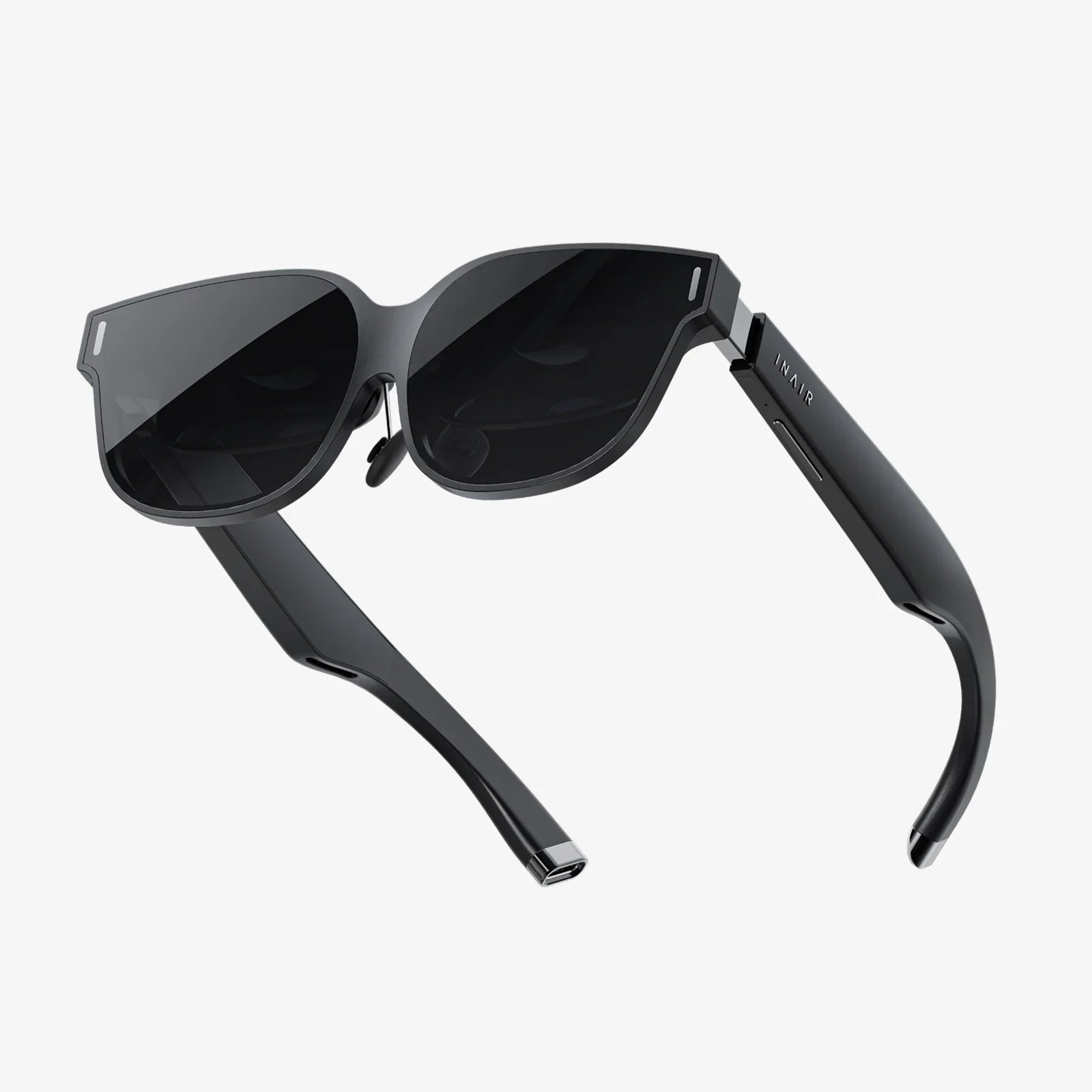
The digital frontier is expanding at a velocity once confined to science fiction, and as we step into 2025, the latest developments in virtual reality are not just evolving; they are fundamentally rewriting the rules of human interaction, perception, and possibility. The headset is becoming a portal, and the world on the other side is more breathtaking, more intuitive, and more consequential than ever before. This is no longer a niche for gamers and tech enthusiasts; it is the dawn of a new reality, and it demands your attention.
The End of the Screen: Photorealism and Hyper-Immersion
For years, the promise of VR was tethered to the limitation of its visual fidelity. The dream was always total immersion, but the reality was often a pixelated, nauseating approximation. 2025 marks the year that barrier finally crumbles. Driven by staggering leaps in micro-OLED and laser-beam scanning displays, modern headsets achieve visual clarity that borders on photorealism. We are witnessing the effective eradication of the screen-door effect, where individual pixels become indistinguishable to the human eye, creating a seamless, continuous visual field.
This leap is powered by more than just hardware. The real magic lies in the sophisticated software and rendering techniques now in play. Foveated rendering, which uses eye-tracking to dedicate maximum processing power only to the exact point of a user's gaze, has matured into a flawless technology. This allows for incredibly complex scenes to be rendered with lifelike detail without requiring unimaginable computational power. Furthermore, AI-powered super-resolution and dynamic lighting models work in tandem to create environments that react to light and shadow with physical accuracy. The result is a profound and often unsettling sense of presence—the undeniable feeling of actually being in another place.
Beyond Controllers: The Rise of Neural and Haptic Interfaces
If 2025's visual revolution is about making the virtual world look real, the interaction revolution is about making it feel real. The clunky handheld controllers of yesteryear are rapidly being relegated to history. The new paradigm is one of natural, intuitive, and embodied interaction.
The most significant leap comes from the commercialization of advanced haptic feedback systems. We are moving beyond simple vibration motors to full-body haptic suits and gloves equipped with sophisticated arrays of actuators. These devices can simulate a startling range of tactile sensations: the gentle pressure of a handshake, the rough texture of a brick wall, the recoil of a tool, or even the subtle rush of wind. This is complemented by ultrasonic and force-feedback technology embedded in the environment itself, allowing users to 'feel' virtual objects without needing to wear a device on every part of their body.
Even more transformative is the emergence of non-invasive neural interfaces. While not yet reading complex thoughts, consumer-grade electroencephalogram (EEG) and electromyography (EMG) sensors built into headset straps can now detect subtle neural signals and micro-muscle movements. This allows for control schemes that feel telepathic: navigating a menu with a flick of your eyes, selecting an object by simply intending to grab it, or manipulating a complex 3D model with nuanced hand gestures, all without lifting a finger. This direct pathway from brain to machine dramatically lowers the cognitive load, making prolonged VR experiences more comfortable and infinitely more magical.
The Operating System for Reality: The Spatial Computing Framework
Hardware is meaningless without software, and the most critical development of 2025 is the establishment of a true spatial computing operating layer. This is the invisible architecture that allows the digital and physical worlds to coexist and interact. Think of it as the Windows or macOS for blended reality.
This framework is built upon a trifecta of technologies:
- Precise Inside-Out Tracking: Headsets now feature a constellation of high-resolution cameras, LiDAR, and depth sensors that map a user's physical environment with centimeter accuracy in real-time. This allows virtual objects to be placed on your real-world desk where they stay locked in place, even if you walk away and return.
- Persistent World Mapping: This digital twin of your environment is no longer wiped clean each session. The OS remembers the layout of your room, the position of your furniture, and the placement of your virtual apps, creating a persistent and personalized spatial workspace.
- Cross-Platform Interoperability: A major hurdle has been the walled gardens of different VR platforms. 2025 sees the rise of open standards that allow assets, identities, and experiences to flow seamlessly between different devices and ecosystems. Your avatar and digital possessions can travel with you, from a high-end headset at home to a more lightweight pair of glasses on the go.
This robust spatial framework is the bedrock upon which the next generation of applications is being built, transforming VR from an isolated experience into a ubiquitous utility.
The Immersive Internet: Social and Collaborative Spaces Reborn
The two-dimensional internet of flat web pages and video calls is giving way to a three-dimensional immersive internet. Social interaction, the most human of needs, is being redefined in virtual space. Platforms have evolved into vast, user-generated worlds where the primary activities are not just play, but connection, creation, and commerce.
These are not just gamified chat rooms. They are persistent digital nations with their own economies, powered by blockchain and digital ownership. Users can design and sell virtual fashion for their avatars, purchase digital land and build upon it, and attend live concerts and events with thousands of others, sharing the experience as if they were in the same physical venue. The key development is the sophistication of spatial audio and avatar expressiveness. Avatars now mirror user facial expressions and body language with stunning accuracy through headset sensors, conveying nuance, emotion, and intent that is lost in a traditional video call. Business collaboration is also being transformed. Engineers on different continents can stand inside a full-scale 3D model of a new jet engine, medical students can perform collaborative virtual dissections, and architects can walk clients through a building long before the foundation is poured.
The Enterprise Metaverse: Revolutionizing Industry and Training
While consumer applications capture headlines, the most profound and valuable developments in VR for 2025 are occurring in enterprise and industry. The concept of the industrial metaverse has moved from pilot program to core infrastructure.
Companies are using digital twin technology to create perfect virtual replicas of their factories, supply chains, and retail stores. Executives and engineers can step into these simulations to optimize workflows, train employees on dangerous machinery in a consequence-free environment, and stress-test new layouts or processes without incurring downtime or cost. The ROI is undeniable: drastically reduced training times, enhanced safety, and a significant drop in costly errors.
Beyond manufacturing, fields like healthcare are experiencing a revolution. Surgeons practice complex procedures on hyper-realistic virtual patients, medical professionals train for high-stress emergency room scenarios, and therapists use controlled VR environments to treat PTSD, phobias, and anxiety with unprecedented efficacy. This professional adoption is driving hardware innovation towards lighter, wireless, all-day comfortable headsets designed for productivity, not just play.
The Invisible Machine: AI as the Architect of Virtual Worlds
Underpinning every one of these advancements is the silent, omnipresent force of artificial intelligence. AI is no longer just a tool; it is the architect, the animator, and the guide within virtual worlds. Generative AI models are now capable of building entire 3D environments from a simple text prompt or a rough sketch. Want to explore a cyberpunk marketplace at night in the rain? Describe it, and the AI generates it in minutes, complete with interactive elements and non-player characters (NPCs) that behave with believable autonomy.
These NPCs are powered by advanced large language models, allowing for natural, unscripted, and context-aware conversations. This makes VR training scenarios dynamic and unpredictable and creates social spaces that feel alive and populated. Furthermore, AI acts as a personal assistant within VR, helping users navigate complex interfaces, find information contextually, and even create their own content through intuitive voice and gesture commands. The virtual world is becoming a responsive, intelligent partner in the human experience.
Navigating the New Frontier: Ethics, Access, and the Path Forward
With such transformative power comes immense responsibility. The developments of 2025 force a critical societal conversation about the ethical framework of this new reality. Issues of data privacy are magnified a thousandfold; these devices collect unprecedented biometric and behavioral data, from eye-tracking to neural signals. Robust regulations and transparent data policies are not optional; they are essential for public trust.
Furthermore, the potential for a new digital divide is real. As critical work, education, and social interaction move into high-fidelity virtual spaces, ensuring equitable access to the necessary hardware and bandwidth is a pressing challenge. The industry must prioritize affordability and inclusive design to prevent a future where reality itself becomes a premium commodity. Finally, the long-term psychological effects of prolonged immersion in hyper-realistic virtual environments are still unknown. Establishing norms for healthy usage and continued research into the effects on human cognition and social bonds is paramount. The technology has raced ahead; our social and ethical frameworks must now catch up to ensure this new reality benefits all of humanity.
We are standing at the precipice of a fundamental shift in human experience, one where the line between our physical and digital lives doesn't just blur—it disappears. The latest developments in virtual reality for 2025 are not merely incremental updates; they are the foundational pillars of a world being built around us, offering a glimpse into a future where our only limit is the breadth of our imagination. The portal is open, and what awaits on the other side will redefine everything.
Share:
Virtual Reality Visualization: The Next Frontier in Data Interaction and Immersive Understanding
Screen Virtual Terminal: The Unsung Engine Powering the Invisible Digital World