


- by wangfred
Latest Digital Product Trends 2025: The Dawn of a Seamless, Intelligent Future
- by wangfred
Imagine a world where your environment anticipates your needs, your devices communicate not with you, but for you, and the line between the physical and digital realms dissolves into nothingness. This isn't a scene from a distant science fiction novel; it's the palpable future being built today, set to redefine our reality by 2025. The relentless march of technology is converging in unprecedented ways, promising a leap in convenience, personalization, and capability that will make our current digital lives feel archaic. The trends emerging are not just about newer, faster gadgets; they herald a fundamental shift in our relationship with technology itself, moving from interactive tools to intuitive partners. The next wave of digital innovation is poised to touch every aspect of our existence, and understanding these currents is key to navigating the thrilling, transformative year ahead.
The most profound trend for 2025 is the move away from screens-as-portals and towards an environment where computing is omnipresent yet unseen. We are entering the age of ambient computing, where intelligence is woven into the very fabric of our surroundings—our homes, cars, offices, and cities. The goal is no longer to create a device that demands our attention, but to create an ecosystem that understands our context and serves our needs without a conscious command.
This manifests through advancements in sophisticated sensor arrays, low-power, high-performance processors, and edge computing that allows data to be processed locally and instantly. We will see a proliferation of smart surfaces, where any wall or tabletop can become an interactive display, and audio interfaces that can distinguish between voices in a crowded room and respond to whispered commands. The technology will recede into the background, creating a calm, responsive environment that minimizes friction and cognitive load. The user interface becomes the world itself.
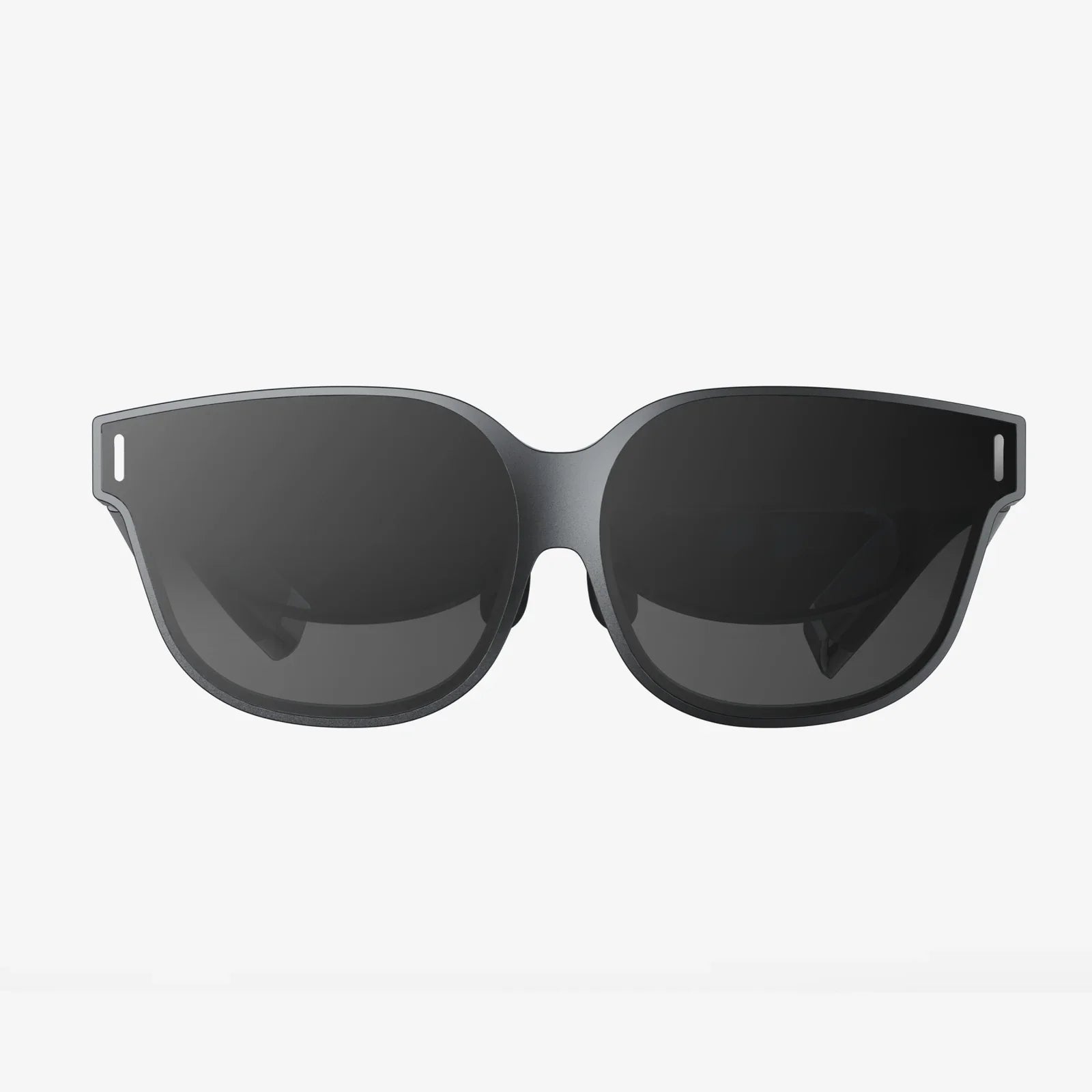
Closely intertwined with ambient computing is the maturation of the Spatial Web. This is the next evolution of the internet, moving from a vast library of interconnected pages viewed on a flat screen to a vast, persistent, and three-dimensional digital layer overlaid onto our physical world. Accessed through increasingly lightweight and powerful augmented reality (AR) glasses and eventually even contact lenses, the Spatial Web will allow digital information, objects, and experiences to interact with and enhance our real-world environment.
By 2025, we will see this move beyond gaming and niche industrial applications into mainstream consumer and enterprise use. Imagine walking through a city and seeing navigation arrows painted on the sidewalk, historical facts floating next to a monument, or a virtual mechanic guiding you through a car repair. In retail, you could see how a new sofa would look in your living room at full scale before you buy it. This convergence of the physical and digital, often colloquially grouped under the term 'metaverse', will begin to redefine social interaction, remote work, and e-commerce, creating new economies and forms of digital expression.
Artificial Intelligence, particularly generative AI, will cease to be a novelty and become the core engine driving personalization across all digital products. In 2025, AI won't just recommend a song or a movie; it will actively create and tailor unique experiences, interfaces, and content in real-time for each individual user. This goes far beyond algorithmic curation.
We are moving towards a model of adaptive user experiences (AUX). Your music streaming service won't just have playlists; its AI could generate a completely original piece of music tailored to your current mood, detected through biometric sensors. Your productivity software will reorganize its interface and suggest tasks based on your workflow patterns. Your news feed will synthesize articles from multiple sources into a single, coherent briefing written in your preferred tone of voice. This level of hyper-personalization will make digital products feel like extensions of our own minds, deeply understanding our preferences, habits, and even our unstated intentions.
As digital lives become more integrated and data-rich, a powerful counter-trend is gaining momentum: digital sovereignty. Consumers are becoming increasingly aware of the value and vulnerability of their personal data. In response, 2025 will see a significant push towards products and platforms that prioritize user ownership and control. This is fueled by decentralized technologies like blockchain, which enable new paradigms for identity and data management.
The concept of decentralized identity (DID) will move towards the mainstream. Instead of logging into services with a username and password managed by a large corporation, users will hold their own verified credentials in a personal digital wallet. You will have the power to choose what pieces of your identity (e.g., proof of age, payment details, professional certifications) to share with a service, without handing over your entire profile. This shift empowers the sovereign individual, reducing reliance on big tech as identity providers and giving users true ownership over their digital selves, their data, and their creative outputs.
With greater connectivity and data fluidity comes an expanded attack surface for malicious actors. The cybersecurity strategies of the past are no longer sufficient. In 2025, the trend will be towards autonomous and predictive security systems powered by AI. These systems will move beyond simply building higher walls and detecting known threats. They will use behavioral analytics and machine learning to establish a baseline of normal activity for every user and device on a network.
Any deviation from this baseline—a login from an unusual location, a device accessing data it never has before, or subtle changes in network traffic—will be flagged and investigated automatically by AI agents. These systems can then initiate containment protocols in milliseconds, far faster than any human team could respond. This shift from human-led, reactive security to AI-driven, proactive defense will be critical for protecting not just corporate data, but the integrity of the ambient computing and spatial web environments we will come to depend on.
The environmental impact of the technology sector is coming under intense scrutiny. By 2025, a product's sustainability will not be an afterthought or a marketing bullet point; it will be a fundamental design requirement from the earliest stages of development. This trend encompasses the entire product lifecycle.
We will see a greater emphasis on energy-efficient hardware, powered by ultra-low-power chipsets and renewable energy sources. Software will be optimized not just for speed, but for minimal processor cycles and energy consumption. The concept of the circular economy will be deeply integrated, with products designed for easy disassembly, repair, and recycling. Companies will increasingly adopt transparent supply chains and provide detailed carbon footprint reports for their devices. Digital products will also be leveraged to solve environmental challenges, from AI optimizing smart grid energy distribution to AR assisting in complex repair processes, extending the life of physical goods.
Perhaps the most futuristic of the trends, human augmentation, will take significant steps forward in 2025. This involves technology that enhances human cognitive and physical capabilities. We are moving from wearables to nearables and embedables. Smart clothing with woven sensors will monitor biomechanics and provide haptic feedback to improve athletic form. Advanced neural interfaces, while still in early stages, will begin to show practical applications beyond medicine, perhaps in controlling complex machinery or communicating silently.
This bio-digital convergence represents the deepest level of integration, where technology interfaces directly with the human body's systems. The focus will be on continuous health monitoring, predicting potential ailments before symptoms appear, and enhancing human potential. While fraught with ethical questions, this trend points to a future where technology is not just something we use, but something that becomes a part of us, blurring the definition of humanity itself.
The digital landscape of 2025 is being sculpted by a powerful fusion of intelligence, immersion, and invisibility. It promises a world that is more intuitive, personalized, and responsive than ever before, but it also demands a new compact around data ownership, security, and ethical design. The companies that will lead this charge are those building not for the spotlight of a keynote stage, but for the quiet, seamless integration of technology into the human experience. They are crafting a future where the most powerful technology is the kind you no longer notice, because it works in perfect harmony with your intentions, your environment, and your life. The door to this new era is already creaking open; the next steps we take will determine whether we walk into a world of greater agency and connection or one of greater dependency and control. The power of these trends is immense, and their responsible stewardship is the defining challenge of the coming decade.